Hardtail vs Full Suspension: Choosing Your Mountain Bike (2026)
Front suspension only, or suspension front and rear? Here's how each rides, what each costs to own and which suits your trails.
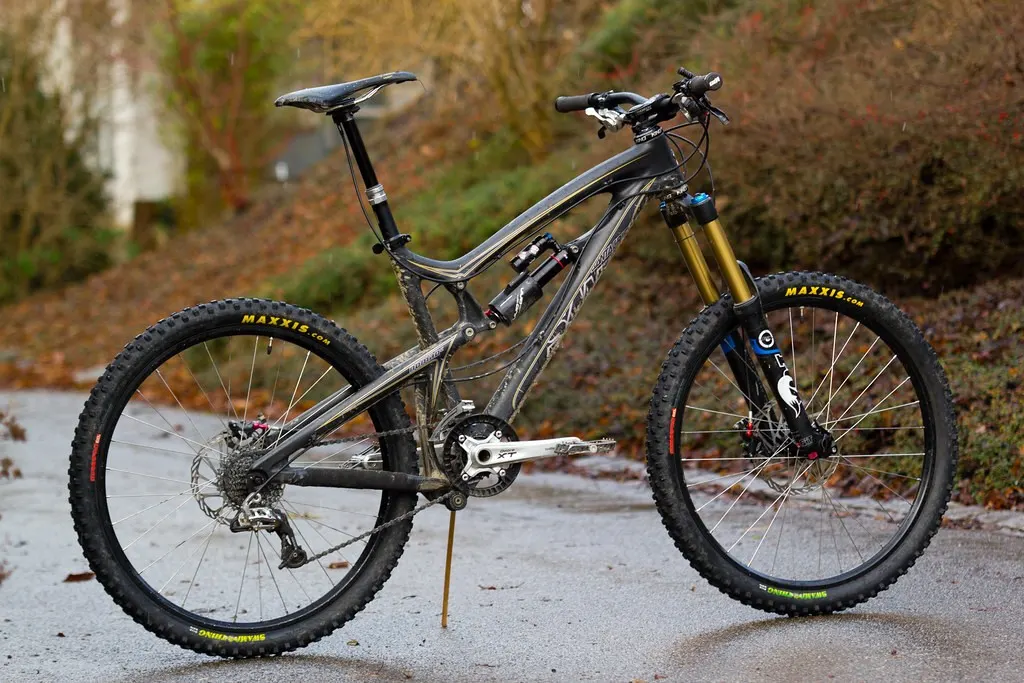
The Basic Difference
A hardtail has a suspension fork up front and a rigid rear end. A full-suspension (or "full-sus") bike adds a rear shock and linkage so the rear wheel can move too. That rear suspension adds comfort, traction and control on rough trails, but also weight, cost and maintenance.
At a Glance
| Hardtail | Full Suspension | |
|---|---|---|
| Comfort on rough trails | Lower | Higher |
| Traction and control | Good | Better on rough ground |
| Climbing on smooth trails | Efficient | Good (with modern designs and lockouts) |
| Weight | Lighter | Heavier |
| Maintenance | Simpler | Shock and pivot service |
| Value | Better components per dollar | More cost for suspension |
| Best for | Beginners, XC, smooth trails, budgets | Rough, technical trails, descending |
Why Choose a Hardtail?
- Value: more of your money goes into brakes, fork and drivetrain.
- Simplicity: fewer parts to service.
- Efficiency: the rigid rear end transfers pedaling power directly.
- Skills: rough trails make you pick good lines.
See hardtail mountain bikes and mountain bikes under $1,000.
Mongoose Tyax
A trail hardtail with a 100mm fork, 12-speed drivetrain and hydraulic disc brakes.
Check Price on AmazonWhy Choose Full Suspension?
- Comfort: less fatigue on long, rough rides.
- Traction: the rear wheel stays on the ground on roots and rocks.
- Confidence: more control on steep, technical descents.
- Speed on rough ground: you can carry more speed through chunk.
See full-suspension mountain bikes.
Mongoose Impasse
A budget full-suspension bike with an aluminum frame and an RST Blaze fork with 100mm of travel and lockout, best for paths and easy trails.
Check Price on AmazonWhich Should You Choose?
| If You... | Consider |
|---|---|
| Ride smooth trails, gravel and paths | Hardtail |
| Have a tight budget | Hardtail |
| Ride rocky, rooty, technical trails | Full suspension |
| Want to ride bike parks or enduro | Full suspension |
| Want low maintenance | Hardtail |
| Have back or joint discomfort on rough rides | Full suspension |
Other Things That Matter More Than You'd Think
- Fit: see the mountain bike size chart.
- Geometry: modern, slacker bikes feel more stable on descents.
- Brakes and tires: often transform how a bike rides.
- Test rides: ride both types if you can.
Learn more in types of mountain bikes and the bike buying guide.
Frequently Asked Questions
Is a hardtail or full suspension better for beginners?
Many beginners start on a hardtail for value and simplicity, and it teaches good line choice. On rough trails, a full-suspension bike can feel more confidence-inspiring.
Are full-suspension bikes slower?
On smooth climbs, a hardtail can feel more efficient. On rough terrain, full suspension often keeps you faster and more in control.
Are hardtails cheaper?
Usually. At the same price, a hardtail typically has better components than a full-suspension bike.
Do full-suspension bikes need more maintenance?
Yes. Rear shocks and pivot bearings need regular service.
Which is better for cross-country racing?
Both are used. Light hardtails and short-travel full-suspension bikes are common in XC.