Mountain Bike Fork Upgrades: Picks, Specs and Fit Checks (2026)
Seven suspension forks from budget XC to long-travel trail, and the travel, axle, steerer, offset and axle-to-crown checks that decide whether a fork fits your bike.
Do You Need a New Mountain Bike Fork?
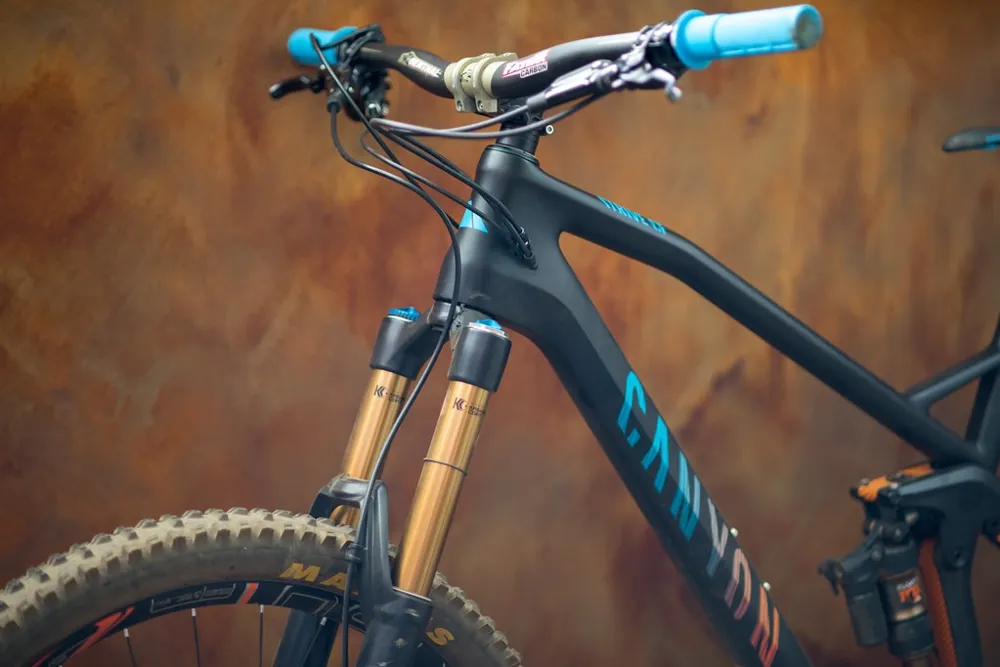
The fork is the single part that changes how a mountain bike rides more than any other. It decides how much the front wheel can move, how well the tire stays on the ground over roots and rocks, and how stiff and precise the steering feels. Riders upgrade a fork for three main reasons: to replace a heavy, basic coil fork on an entry-level hardtail, to replace a worn or damaged fork, or to move to a stiffer, better-damped fork that suits harder riding.
A fork is also one of the easiest parts to get wrong. It has to match your wheel size, axle, steerer tube, brake and frame geometry. This guide lists seven forks across budget, XC and trail categories, then walks through every check that decides whether a fork fits your bike. If you're still choosing a whole bike, start with hardtail vs full suspension and types of mountain bikes; our parts of a mountain bike guide explains how the fork fits into the rest of the bike.
RockShox Recon Silver RL
Best budget air upgrade
- Solo Air spring with lockout
- 100–150mm travel options
- Boost or quick-release versions
Manitou Markhor
Best budget XC upgrade
- TS Air spring with lockout
- Travel adjusts 80–120mm
- Tapered or straight steerer, QR or Boost
RockShox Judy Gold RL
Best for keeping a QR front wheel
- Solo Air spring
- 80, 100 and 120mm options
- 9mm QR or 15 x 110mm Boost versions
Mountain Bike Forks Compared
Specs below are from the maker's pages or the Amazon listing title for the version we link. Most forks come in several travel, wheel-size, axle and offset versions, so always check the exact listing before you buy.
| Fork | Best For | Travel (Maker Range) | Stanchions | Spring | Axle Options |
|---|---|---|---|---|---|
| RockShox Recon Silver RL | Budget trail hardtails | 100–150mm | 32mm | Solo Air | 15 x 110mm Boost or 9mm QR |
| RockShox 35 Gold RL | Longer-travel trail, e-MTB | 100–160mm | 35mm | DebonAir | 15 x 110mm Boost |
| Fox 36 Float Performance | Aggressive trail, enduro | 160mm (listed version) | 36mm | Float air | 15 x 110mm (listed version) |
| Manitou Machete | Trail hardtails | 120mm (listed version) | See maker | See maker | 15 x 110mm (listed version) |
| Manitou Markhor | XC and light trail | 80–120mm (internally adjustable) | 30mm | TS Air | 15 x 110mm Hexlock or 9mm QR |
| RockShox Judy Gold RL | XC, older QR bikes | 80, 100 or 120mm | 30mm | Solo Air | 15 x 110mm Boost or 9mm QR |
| SR Suntour Raidon | Budget XC upgrade | 100mm (listed version) | See maker | Air | 15mm thru-axle (listed version) |
The Best Mountain Bike Forks
1. RockShox Recon Silver RL
The Recon Silver RL is RockShox's all-round air fork for mountain bikes and e-MTBs. SRAM lists 27.5-inch and 29-inch versions with 100, 120, 130, 140 or 150mm of travel, 32mm upper tubes and a Solo Air spring. The Motion Control damper has low-speed compression adjustment that runs all the way to a lockout, plus a blow-off valve, with a crown adjuster or a remote. Steerers come in 1.5-inch tapered or straight 1-1/8 inch, axles in 15 x 110mm Boost or 9mm quick release, and offsets of 37, 42, 46 or 51mm depending on wheel size. The version we link is the 29-inch, 100mm, 15 x 110mm, 51mm-offset fork.
Good to Know
- Wide range of travel, steerer, axle and offset versions
- SRAM says 15 x 110mm versions clear tires up to 2.8 inches
- Listed as E-bike Approved
Watch Out For
- SRAM lists no volume-reducer or damper tune options
- Needs at least a 160mm rotor
2. RockShox 35 Gold RL
The 35 Gold RL brings 35mm aluminum stanchions and RockShox's DebonAir spring to a lower price tier, and SRAM pitches it at bigger bikes, both e-powered and not. It comes in 27.5-inch and 29-inch versions with 100 to 160mm of travel, a 15 x 110mm Boost axle, and offsets of 37 or 44mm (27.5-inch) and 44 or 51mm (29-inch). The Motion Control damper has low-speed compression adjustment to lockout, and the air spring accepts volume reducers. Steerers are 1.5-inch tapered or 1.8-inch tapered (the larger size suits some e-bike frames). The version we link is the 29-inch, 140mm, 44mm-offset fork.
Good to Know
- 35mm stanchions for a stiffer chassis than XC forks
- Volume reducers let you tune progression
- E-bike Approved with full or short fender mounts
Watch Out For
- Boost only, so not for older 15 x 100mm or QR wheels
- Needs at least a 180mm rotor
Not available on Amazon when we checked (November 2026); check bike shops and SRAM dealers.
3. Fox 36 Float Performance
The Fox 36 is one of the most common forks on trail and enduro bikes, and mbr lists its stanchions at 36mm. The Performance version we link is listed as the 2025 Fox 36 Float Performance: 29-inch, 160mm of travel, a GRIP damper, 44mm offset and a 15 x 110mm axle. It's a much heavier-duty fork than the XC options here, built for riders who descend hard on a trail or enduro bike designed around a fork of this length.
Good to Know
- 36mm chassis suits aggressive trail riding
- GRIP damper (per the listing)
- Boost axle and 44mm offset match many current 29er trail bikes
Watch Out For
- Only suits frames rated for this travel
- Check the listing's steerer length, model year and offset
Not available on Amazon when we checked (November 2026); check Fox dealers and bike shops.
4. Manitou Machete
Manitou forks are sold through Hayes Bicycle. The Machete is a Manitou thru-axle fork, and the version we link is listed as 27.5/29-inch, 120mm of travel, 15 x 110mm and a 44mm offset. That makes it a candidate for trail hardtails built around a 120mm fork. Manitou sells several Machete trims, so check the listing for the spring, damper and steerer before buying.
Good to Know
- Boost axle with 120mm of travel suits trail hardtails
- An alternative to the RockShox and Fox options
Watch Out For
- Fewer shops stock Manitou service parts than RockShox or Fox
- Confirm wheel size, steerer and trim on the listing
Not available on Amazon when we checked (November 2026); check Manitou dealers and bike shops.
5. Manitou Markhor
The Markhor is Manitou's budget XC and light trail fork. Hayes lists 30mm straight-wall aluminum legs, a TS Air spring, Kwik Toggle compression damping with an on/off lockout and an adjustable TPC rebound cartridge. Travel is internally adjustable from 80 to 120mm on the 27.5-inch and 29-inch versions, with a 1.5-inch tapered or straight 1-1/8 inch steerer and a 9mm QR or 15 x 110mm Hexlock thru-axle. Hayes lists axle-to-crown lengths of 490–530mm and a maximum tire width of 80mm for the 29-inch thru-axle version, with a claimed weight of about 1.9kg. The version we link is 29-inch, 100mm, 15 x 110mm, 51mm offset.
Good to Know
- Travel adjusts internally between 80 and 120mm
- Simple adjustments: air pressure, rebound and lockout
- QR version suits older hardtails
Watch Out For
- 30mm legs are XC-stiff, not built for hard trail riding
- 160mm post mount (203mm maximum rotor)
6. RockShox Judy Gold RL
The Judy Gold RL is RockShox's XC-oriented air fork with 30mm straight-wall aluminum upper tubes and a Solo Air spring. SRAM lists 80, 100 and 120mm travel options for 27.5-inch and 29-inch wheels, a Motion Control damper with low-speed compression to lockout and a blow-off valve, and a remote included on some versions. Axles are 15 x 110mm Boost or 9mm quick release, and steerers 1.5-inch tapered or straight 1-1/8 inch. The version we link is 29-inch, 100mm, 9 x 100mm QR, 51mm offset, which makes it one of the few current air forks that drops straight into an older quick-release hardtail.
Good to Know
- QR version keeps your existing front wheel
- Lighter-duty XC fork with a simple lockout
Watch Out For
- 30mm stanchions flex more than trail forks
- Check the steerer type on the listing (straight and tapered versions exist)
7. SR Suntour Raidon
SR Suntour forks are common on budget and mid-range stock bikes. The Raidon is one of its air XC forks. The version we link is listed as 29-inch, 100mm of travel, a 1-1/8 to 1.5-inch tapered steerer, a remote lockout and a 15mm axle. It's an option for riders replacing a basic coil fork on a tapered-head-tube hardtail.
Good to Know
- Air spring and remote lockout
- Tapered steerer suits most modern hardtail frames
Watch Out For
- Check the hub spacing on the listing (100mm or 110mm Boost) against your wheel
- Won't fit straight head tubes
Higher-end forks are worth knowing about too. BikeRadar's and mbr's fork roundups include the RockShox Pike, Lyrik, ZEB and SID, the Fox 34 and 38, Marzocchi Bomber Z1 and Z2, Öhlins RXF and RXC models, Cane Creek Helm, Formula Selva and Belva, Manitou Mattoc and Mezzer, DVO Diamond and Onyx, X-Fusion Trace and SR Suntour's Durolux and Axon. They're mostly sold through bike shops and specialist retailers, so check the maker's site for current versions.
How Much Travel Do You Need?

Travel is how far the fork can compress. More travel absorbs bigger hits and keeps the wheel tracking on rough descents, but it adds weight, raises the front of the bike and can make climbing feel less efficient. The right number depends on how and where you ride, and above all on what your frame was designed for.
| Discipline | Typical Fork Travel | Typical Stanchions | Typical Bikes |
|---|---|---|---|
| Cross-country (XC) | About 80–120mm | About 30–34mm | Race hardtails and short-travel full-suspension bikes |
| Trail | About 120–160mm | About 34–36mm | Trail hardtails and mid-travel full-suspension bikes |
| Enduro | About 150–180mm | About 35–38mm | Long-travel full-suspension bikes |
| Downhill and freeride | About 180–200mm | About 38–40mm | Dual-crown downhill bikes |
| Dirt jump | About 80–100mm | Varies | Small, strong hardtails |
Travel ranges are from BikeRadar and overlap between categories. Short-travel "downcountry" bikes often run about 110–130mm. Hardtail forks are typically around 100mm for XC and up to about 150mm on aggressive trail hardtails. Downhill forks use a dual crown that clamps above and below the head tube; those forks only fit frames built for them. See types of mountain bikes for how the categories differ.
Don't just add travel. Frames are designed around a specific fork length. A longer fork raises the front end, slackens the head angle and steepens the seat angle, and it puts more leverage on the head tube. BikeRadar notes that going about 10mm over stock (say 150mm to 160mm) usually won't upset geometry much, but going beyond the frame maker's maximum can void the frame warranty. Check your frame maker's rated fork travel first.
Wheel Size, Axle and Hub Standards
A fork is made for one wheel size: 26-inch (mostly older bikes and dirt jumpers), 27.5-inch or 29-inch. Some forks are sold as "27.5/29" or "27.5+/29" because the same chassis clears both; the offset and axle-to-crown length still differ, so pick the version for your wheel. Mixed-wheel "mullet" bikes use a 29-inch fork. Our mountain bike wheel sizes guide compares them.
The fork also has to match your front hub. These are the common front-axle standards:
| Front Standard | Axle Type | Where You See It |
|---|---|---|
| 9 x 100mm | Quick release skewer | Older and budget bikes |
| 15 x 100mm | 15mm thru-axle | Mountain bikes from before Boost |
| 15 x 110mm Boost | 15mm thru-axle | Most current XC, trail and enduro bikes |
| 20 x 110mm | 20mm thru-axle | Downhill and some freeride forks |
Boost (15 x 110mm) moves the hub flanges outward for a stiffer wheel and more tire clearance, and it isn't directly compatible with 15 x 100mm hubs. If your bike has a quick-release or 15 x 100mm front wheel and you buy a Boost fork, you'll need a new front hub or wheel (some hubs can be converted with end caps; check with the hub maker). Our mountain bike wheels guide covers hub standards.
Thru-axles also differ in how they fasten (Fox's Kabolt and Manitou's Hexlock are two examples), but the hub only has to match the axle diameter and width.
Steerer Tubes and Headsets
The steerer is the tube that runs up through the head tube and clamps into the stem. There are two main types:
- Straight 1-1/8 inch: the same diameter from top to bottom. Common on older and budget bikes.
- Tapered 1.5 to 1-1/8 inch: 1.5 inches at the crown, narrowing to 1-1/8 inches at the top. This is the norm on modern mountain bikes and is claimed to add stiffness.
A straight-steerer fork can go into a tapered head tube with an adaptor lower headset cup, but a tapered fork will not fit a straight head tube. Some brands have used non-standard steerers (Giant's Overdrive2 and Cannondale's designs, for example), and some e-bike frames use a 1.8-inch tapered steerer, which forks like the RockShox 35 Gold RL offer. Check your frame's headset type before ordering; the headset maker's fit finder or your frame maker's spec sheet will list it.
Steerer length: new forks come with a long uncut steerer. Measure your old steerer (or head tube height plus headset stack, spacers and stem height) before cutting. You can always cut more, but you can't add length back. Carbon or alloy, the cut must be square; a bike shop can do it if you don't have a cutting guide. You'll also need a new crown race (some forks include one; otherwise it comes with the headset) and a star nut or expansion plug.
Fork Offset Explained
Offset (also called rake) is the distance the axle sits in front of the steering axis. It changes trail, a geometry figure that affects how steering feels. Makers usually offer two offsets per wheel size, and across current forks they range from about 37mm to 51mm.
- Shorter offset (for example 44mm on a 29er) adds trail. mbr says it adds stability and can feel like a slacker head angle without a longer wheelbase.
- Longer offset (for example 51mm on a 29er) reduces trail for quicker, lighter steering.
The safest choice is the offset your frame was designed around, which is usually listed in the geometry chart or the stock fork spec. Offset is fixed on most forks, so you choose it when you buy.
Air vs Coil Springs
The spring holds you up; the damper controls how fast the spring moves. Almost all current mountain bike forks use an air spring, and coil forks are rare outside budget bikes and a few high-end models such as Cane Creek's Helm Coil.
| Spring | How You Tune It | Strengths | Trade-Offs |
|---|---|---|---|
| Air | Shock pump; volume tokens for progression | Light, adjustable for any rider weight, progressive toward the end of travel | Needs pressure checks; seals add some friction |
| Coil (performance) | Swap to a different spring rate | Consistent, smooth feel; strong traction | Heavier; changing stiffness means buying a spring |
| Coil (basic) | Preload dial only | Cheap and simple | Heavy, little damping, hard to tune for heavy or light riders |
BikeRadar describes coil springs as linear and air springs as progressive. In air forks, volume spacers (also called tokens or volume reducers) fill part of the air chamber to make the spring ramp up more toward the end of travel, which helps riders who bottom out. Removing spacers makes the fork more linear. Many air forks also have a negative spring (air or coil) that helps the fork start moving over small bumps.
The basic coil forks fitted to many low-cost bikes are a big reason riders upgrade. See are Walmart mountain bikes good for why those forks are a common weak point.
Dampers and Adjustments
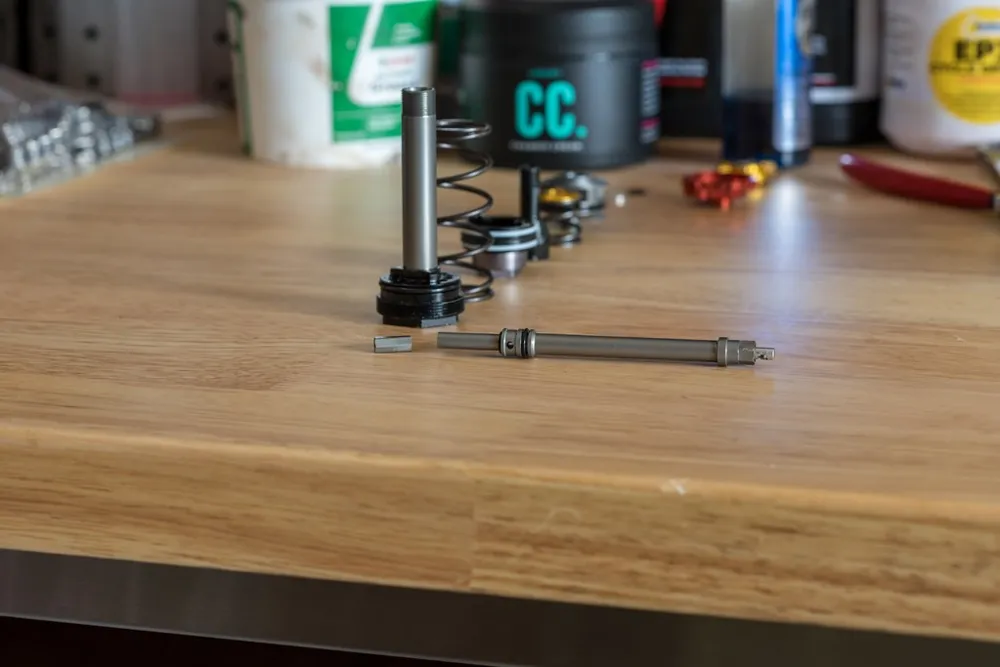
The damper uses oil flowing through valves to control the spring, so the fork doesn't bounce like a pogo stick. It's where most of the difference between budget and premium forks lies.
- Rebound: controls how fast the fork extends after a hit. Too fast feels bouncy; too slow and the fork "packs down" over repeated bumps and feels harsh. Some high-end forks split it into low- and high-speed rebound.
- Low-speed compression (LSC): affects slow movements such as braking dive, berms and take-offs. More LSC adds support but reduces small-bump sensitivity.
- High-speed compression (HSC): controls fast, hard impacts and helps prevent harsh bottom-outs. It's usually only adjustable on higher-end forks.
- Lockout: firms the fork for smooth climbs and roads. Budget forks often combine LSC and lockout on one dial (RockShox's Motion Control works this way); a blow-off valve lets a locked fork move on a big hit.
- Remote: a bar-mounted lever for the lockout, common on XC forks.
Damper names vary by brand: SRAM uses Motion Control on budget RockShox forks and Charger on higher models, Fox uses GRIP, GRIP2 and GRIP X, and Öhlins, DVO, Formula and X-Fusion each have their own designs.
Stanchion Diameter and Stiffness
Stanchions are the shiny upper tubes. Wider stanchions make a stiffer chassis, which keeps steering precise under braking and in rough corners, but they add weight. Fork model names often give the number away: the Fox 34, 36 and 38 and the RockShox 35 Gold have 34, 35, 36 and 38mm stanchions respectively.
- 30–32mm: budget and XC forks such as the Judy, Markhor and Recon.
- 34–35mm: modern XC race and trail forks. mbr notes that 34mm legs are stiff enough for most 130–140mm trail bikes.
- 36–38mm: aggressive trail and enduro forks, and e-MTBs.
- 38–40mm and dual crown: downhill.
Heavier riders and e-MTB riders often go a size up for stiffness. Check that the fork is approved for e-bikes if you ride one: RockShox marks this as "E-bike Approved" on its spec pages.
Will a New Fork Fit Your Frame?
Run through these checks before buying. Most fork returns come from one of them.
- Wheel size: 26, 27.5 or 29 inches, matching your front wheel.
- Axle and hub: 9 x 100mm QR, 15 x 100mm, 15 x 110mm Boost or 20 x 110mm. Change the hub or wheel if they don't match.
- Steerer type and length: straight or tapered (or another standard) to match the head tube, and long enough for your head tube, headset and stem stack.
- Travel and axle-to-crown: stay within the frame maker's rated fork travel. Axle-to-crown (A2C) is the distance from the axle center to the bottom of the crown with the fork fully extended. Two forks with the same travel can have different A2C, so compare it with your current fork: a longer A2C raises the front end. To find your current fork's travel, look for it printed on the back of the lowers, or look up the serial number under the crown.
- Offset: match the frame's designed offset where you can.
- Brake mount and rotor: most forks are post mount with a minimum rotor size (160mm on the Recon and Judy, 180mm on the 35 Gold) and a maximum. You may need a different rotor or adaptor.
- Tire clearance: check the maker's maximum tire width, especially for plus tires.
- Rigid or very old bikes: a frame built for a rigid fork usually has a much shorter A2C, and a suspension fork will change geometry a lot. Some older bikes also have rim brakes, which most modern forks can't mount.
If you're not sure, measure your current fork (wheel size, axle, A2C and steerer) and take the numbers to a shop. Our mountain bike size chart covers frame fit if you're still deciding on a bike.
Budget Fork Upgrades: Are They Worth It?
Replacing a basic coil fork with an entry-level air fork such as the Recon, Judy, Markhor or Raidon is a common first upgrade on an entry-level hardtail. It saves weight, lets you set the fork for your weight and adds real damping. It's usually worth it when:
- The frame has a tapered head tube and a modern axle standard, so the fork fits without a pile of adapters.
- The rest of the bike (brakes, wheels, drivetrain) is in good shape, and you plan to keep it.
- Your current fork is heavy, has no rebound adjustment, or is worn and knocking.
It's often not worth it on a very low-cost bike with a straight head tube, quick-release wheels and rim brakes, where the fork plus a new wheel can cost a large share of a better bike. In that case, compare with our budget mountain bike and beginner mountain bike picks, or a complete hardtail. Avoid unbranded "suspension forks" with no published specs.
On a full-suspension bike, a fork upgrade makes sense when it keeps the bike's design travel and offset; matching front and rear travel keeps the bike balanced.
Mountain Bike Rear Shocks
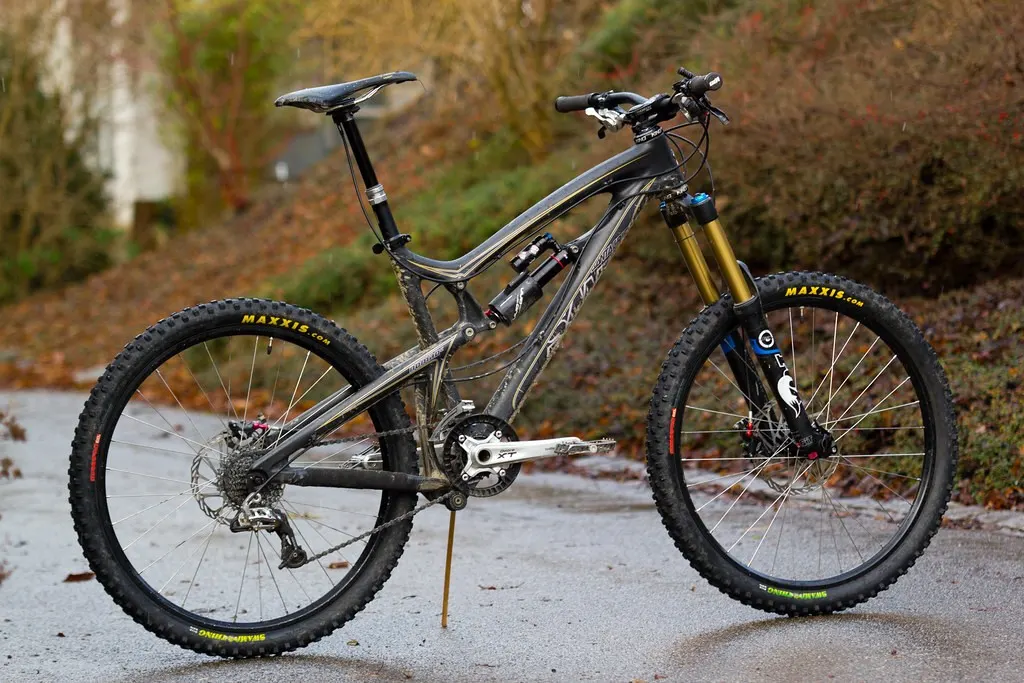
Full-suspension bikes add a rear shock between the frame and the rear linkage. Rear shocks are far more frame-specific than forks, so check every number before buying a replacement:
- Eye-to-eye length and stroke: shocks are sized by the distance between their mounting points and by how far the shaft travels. A shock listing reads like "185 x 50mm". Your frame maker's manual or spec sheet lists the right size, and the size is usually printed on the current shock.
- Metric or imperial sizing: Bikerumor reported the suspension industry's move to metric shock sizes in 2016; many newer frames use them, while older frames often use imperial (inch) sizes.
- Mount type: a standard eyelet at each end, or a trunnion mount where the shock body bolts in from the sides. The mounting hardware (bushings or bearings, and their width) must match your frame.
- Air or coil: air shocks are light and tunable by pressure; coil shocks feel consistent on long descents but need the right spring rate for your weight. Not every frame suits a coil shock, so check the frame maker's guidance.
- Adjustments: rebound on almost all shocks, plus a climb switch or lockout, and compression adjustment on higher-end models.
Fox (Float, Float X, DHX), RockShox (Deluxe, Super Deluxe, Vivid) and other makers sell each model in many sizes, so search by your exact size and mount rather than the model name. If you're shopping for a new full-suspension bike instead, see best full-suspension mountain bikes.
Setting Up a New Fork
- Air pressure: start from the maker's pressure chart (printed on the leg of many forks, or in the manual) for your weight in riding gear. You'll need a dedicated shock pump, not a tire pump.
- Sag: with the lockout open, sit on the bike in riding position and check how far the fork sinks. A common starting point is about 20–25% of travel at the fork (check your manual for the maker's figure). Use the O-ring on the stanchion to read it.
- Rebound: start in the middle of the range, or at the maker's recommendation for your pressure, then adjust so the fork returns quickly without bouncing.
- Compression and tokens: add low-speed compression for more support in berms and under braking. If you use full travel too often on normal trails, add a volume spacer before raising pressure.
- Bolts and brakes: torque the stem, axle and brake caliper bolts to spec, and check the brake rotor is centered after fitting.
Write down your settings. Our mountain bike tire pressure guide covers the other half of front-end grip.
Fork Care and Service
Suspension forks need regular care to keep working and to protect the stanchions, which are expensive to replace if scratched.
| When | What to Do |
|---|---|
| After every ride | Wipe the stanchions and seals clean, especially after mud or dust |
| Every few rides | Check air pressure and sag; look for oil on the stanchions or a knock in the front end |
| At the maker's lower-leg interval | Lower-leg service: new foam rings, oil and often wiper seals |
| At the maker's damper interval | Full damper and air spring service, usually at a shop |
Service intervals are set by ride hours and differ between brands and models, so follow your fork's manual. Signs your fork needs attention include oily stanchions, a fork that doesn't fully extend, lost air between rides, a clunk over bumps or a sudden change in feel. A knock can also come from a loose headset, so check that first. Basic home tools are covered in best bike multi-tools and bike repair stands.
More component guides: dropper posts, MTB handlebars, wheels and tires.
Frequently Asked Questions
How do I know what fork fits my mountain bike?
Match the wheel size, axle standard (for example 15 x 110mm Boost), steerer type and length, brake mount and rotor size, and keep travel and axle-to-crown length close to what your frame maker specifies.
Can I put a longer-travel fork on my mountain bike?
Usually only a small change is safe. BikeRadar notes that about 10mm more travel rarely upsets geometry much, but going past the frame maker's maximum can void the frame warranty, so check its rating first.
Is an air fork better than a coil fork?
Air forks are lighter and you tune them with a shock pump, which is why most modern forks use air. Coil forks feel very consistent but need a different spring to change stiffness.
Can I fit a tapered fork in a straight head tube?
No. A straight 1-1/8 inch steerer can go into a tapered head tube with an adaptor headset cup, but a tapered steerer will not fit a straight head tube.
What fork offset should I choose?
Pick one of the offsets the maker lists for your wheel size, ideally the one your frame was designed around. Shorter offsets feel more stable; longer offsets steer a little quicker.
Is it worth upgrading the fork on a cheap mountain bike?
A basic air fork can transform a bike with a heavy coil fork, but on a very low-cost bike the fork can cost a large share of the bike's value. Check the frame's head tube and axle first, and weigh the upgrade against a better bike.
How often should a suspension fork be serviced?
Follow the service intervals in your fork's manual. Wipe the stanchions after every ride and have the lowers serviced regularly, more often if you ride in mud or dust.