Step On and Quick-Entry Snowboard Bindings Compared (2026)
Every quick-entry system explained: which ones need special boots, which work with the boots you own, and how to pick the right one for your riding.
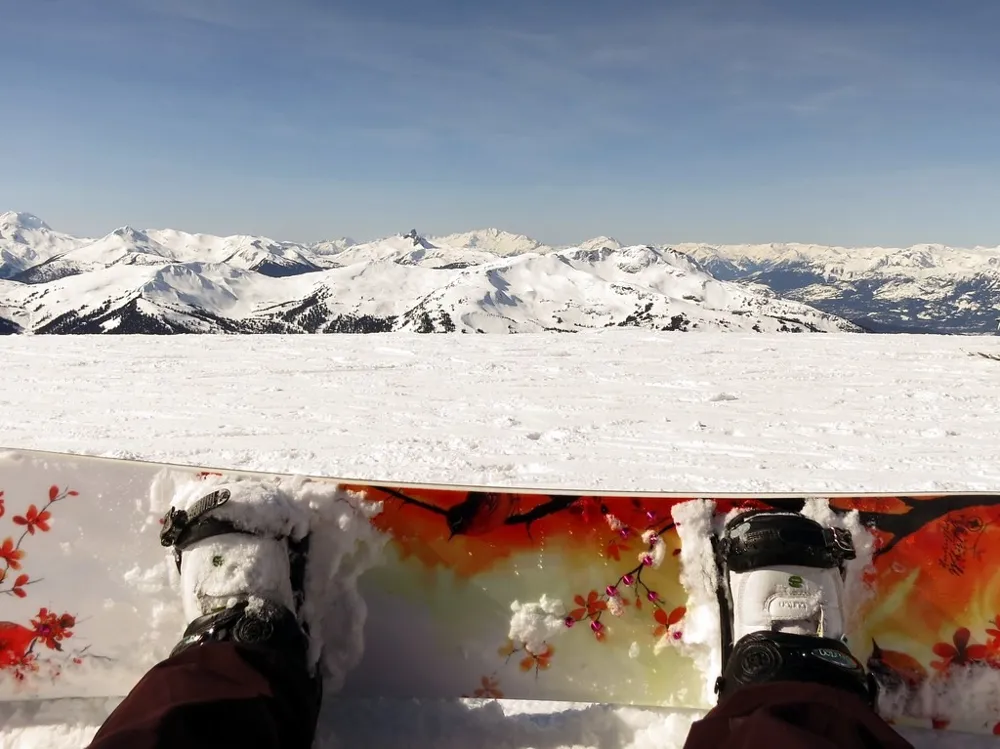
What Are Step-In Snowboard Bindings?
Step-in snowboard bindings let you get on your board without sitting down to ratchet two straps at the top of every run. "Step-in", "step on", "clip-in" and "quick entry" are used loosely for several different designs, and the difference matters because some need special boots and some don't. There are four main types:
- True step-in systems such as Burton Step On and K2 Clicker X HB: cleats on a matching boot lock into the binding. No straps, but you need that brand system's boots.
- Rear-entry bindings such as Flow: the highback folds down, you slide a regular boot in from behind under pre-set straps, then flip the highback up.
- Auto-closing strap bindings such as Nidecker Supermatic and FASE models: a strap binding that closes itself (fully or partly) when you step in. Regular boots work.
- Hybrid designs such as Clew: the highback and straps stay on your boot all day, and a baseplate stays on the board.
This guide covers how each system works, what it's compatible with, and who it suits. For traditional strap bindings, see our best snowboard bindings guide.
Burton Step On Re:Flex
Best Step On binding for most riders
- Clicks in at two toe points and one heel point
- Medium flex for all-mountain riding
- Re:Flex mounting fits 2x4, 4x4 and Channel boards
Flow Fenix
Best rear-entry option with your own boots
- Highback drops down so you slide in from behind
- Works with standard snowboard boots
- Straps stay set between runs
Burton Felix Step On
Best women's Step On boot
- Toe and heel cleats for Step On bindings
- Sequence BOA dial and heat-moldable liner
- Regular and wide widths listed
Quick-Entry Snowboard Bindings Compared
| System | How You Get In | Boots Needed | Straps? | Best For |
|---|---|---|---|---|
| Burton Step On | Press heel then toes; cleats click into hooks | Step On boots only (Burton, plus licensed DC and Nitro models) | No | Fastest entry, resort riders, limited mobility |
| K2 Clicker X HB | Proprietary boot cleat clicks in | Clicker X HB boots only | No | Riders already in the K2 system |
| Flow rear-entry | Drop highback, slide in, flip highback up | Any snowboard boot | Yes, pre-set | Quick entry with your own boots |
| Nidecker Supermatic | Slide in, step on heel pedal; binding closes itself | Any snowboard boot | Yes, auto-closing | Hands-free entry with your own boots |
| FASE (Rome, Bataleon, Jones, thirtytwo and others) | Highback closes as you step in; ratchet ankle strap one-handed | Any snowboard boot | Yes | Two-strap feel with faster entry |
| Bent Metal Speed-In | Recline highback, slide in, flip up | Standard boots (check listing) | Yes | Set-and-forget strap fit |
| Clew | Highback and straps stay on boot; step onto baseplate | Worn over standard boots | Yes, on the boot | Riders who want straps but fast lift laps |
Compatibility and model names are from each maker's or retailer's listing as of November 2026; check the current season's version before buying.
The Best Step On and Quick-Entry Bindings
1. Burton Step On Re:Flex
Burton's core Step On binding. Two toe hooks and a heel clip lock onto the cleats of a Step On boot, giving three points of contact. REI lists it as a medium-flex, unisex all-mountain binding in sizes M (men's 8.5–10.5) and L (men's 11–13), with Re:Flex mounting for 2x4, 4x4 and Channel boards, a FullBED cushioned footbed and tool-adjustable forward lean. Burton gives the baseplate a lifetime warranty and other parts one year.
Good to Know
- No straps to adjust or clear of snow
- Fits most current boards
- Release lever on the heelcup
Watch Out For
- Needs Step On boots
- Fewer boot choices than strap bindings
2. Flow Fenix
Flow, now sold under the Nidecker name, is the best-known rear-entry brand. The highback hinges down, you slide your boot in under straps you've already set, then pull the highback up to lock in. The Fenix is Flow's value model and works with standard snowboard boots, so you can keep the boots you already own.
Good to Know
- Any snowboard boot
- Straps stay set between runs
- Can still adjust like a strap binding
Watch Out For
- Highback is closed by hand, not automatically
- Strap fit takes some setting up
3. Burton Felix Step On (Women's Boot)
A Step On binding needs a Step On boot, and the Felix is Burton's women's option. It has toe and heel cleats for Step On bindings, a Sequence BOA dial, a heat-moldable Women's Imprint 3 liner and a Vibram outsole, with regular and wide widths listed. Our women's snowboard boots guide covers it alongside regular-binding boots.
Good to Know
- Women's-specific fit
- Wide width offered
Watch Out For
- Works only with Step On bindings
4. Union Atlas Step On
Union builds its all-mountain Atlas around the Step On connection, so it pairs with Step On boots. REI lists a medium flex, sizes M (men's 8–10) and L (men's 10.5–13), adjustable forward lean and gas pedal, Hi-Flex EVA bushings and a pair weight of about 3 lb 12 oz. A women's version, the Union Astra Step On, is also listed. Check mounting compatibility for your board on Union's listing.
Good to Know
- A non-Burton binding for Step On boots
- Union's all-mountain build
Watch Out For
- Still needs Step On boots
5. Nidecker LT Supermatic
The Supermatic is the hands-free option for riders who want to keep their own boots. Per the REI listing, you push your foot in from the back and step down on the heel pedal; the highback closes and Active Strap tech returns the straps to your preset tension. An Offset Multi-Disk mounts on 2x4, 4x4, 3-hole and Channel boards, and LSR 2.0 Auto-Lock ratchets hold their setting. The range also includes the OG Supermatic and a stiffer Carbon Supermatic.
Good to Know
- Works with any snowboard boot
- Can still be strapped in by hand
- Wide mounting compatibility
Watch Out For
- Takes a few runs to dial in strap position and tension
- Premium price tier
6. Flow NX2 Hybrid
Flow's stiffer, more responsive rear-entry binding. REI lists a stiff flex, aluminum-alloy NX2 baseplates, Hybrid ExoKush straps and sizes M, L and XL. You can use it in "set it and forget it" SpeedEntry mode or open the buckles and enter from the side like a two-strap binding. The multidisc fits 2x4, 4x4 and Channel boards.
Good to Know
- Any boot, two ways to get in
- Stiffer feel for faster riding
Watch Out For
- Too stiff for most beginners
7. Clew Freedom 1.0
Clew takes a different route: the highback and straps stay attached to your boot, and only the baseplate stays on the board. You strap in once at the start of the day, then step onto the baseplate after each lift ride. The Good Ride lists it as Channel-compatible with a weight of about 2.4 lb, a release behind the highback and a two-step ladder so you can click in with some snow on the base. Extra base sets let you swap the same "binding" between boards, and Clew also sells an Independence 1.0 model.
Good to Know
- Keeps a strap-binding feel
- Fast board swaps with extra base sets
Watch Out For
- Walking and skating with a highback on your boot is awkward
- Little cushioning underfoot, according to The Good Ride review
- Smaller brand with limited retail availability
Burton Step On: How It Works and What Fits
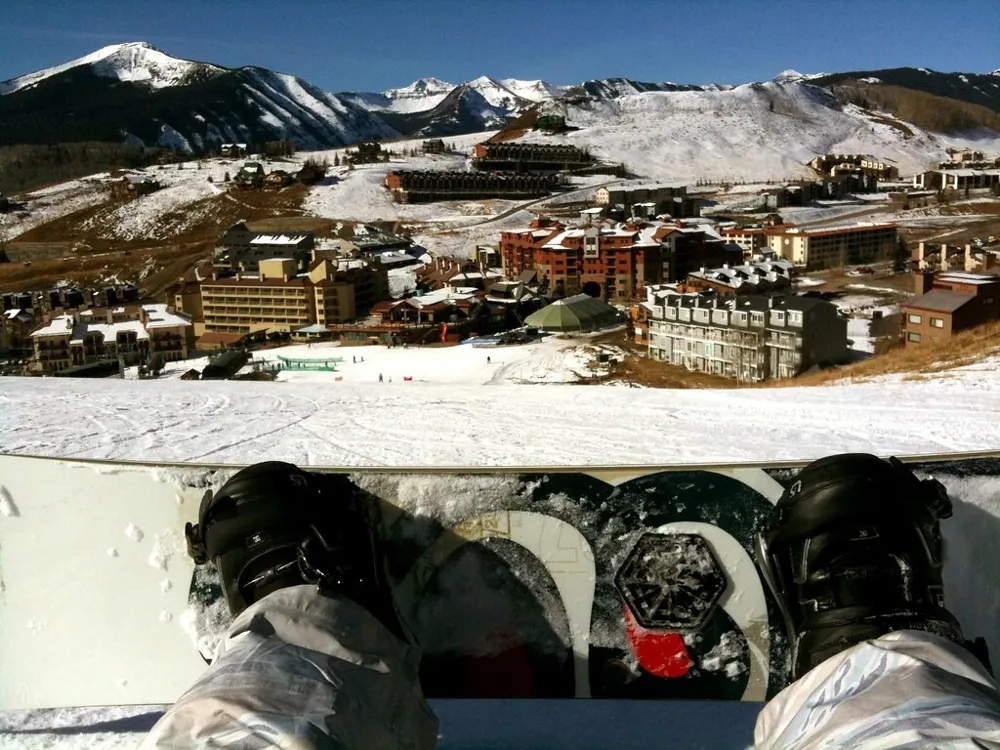
Burton launched Step On in 2017 after years of development; the company says Jake Burton Carpenter challenged its engineers to make snowboarding easier to learn. Earlier step-in bindings from Burton, K2 and others in the late 1990s and 2000s attached under the sole and didn't last, according to REI. Step On instead connects at the sides of the toe and at the heel.
The Three Connection Points
- Two toe cleats, one on each side of the boot's toe, hook into the binding's toe hooks.
- One heel cleat locks into a heel clip on the heelcup, which works like a ratchet buckle.
- To get out, pull up the release lever on the outside of the heelcup, then lift your heel with a slight twist. Burton notes that lifting straight up can leave the toe hooks engaged.
Which Boots and Bindings Work Together
Step On boots work only with Step On bindings, and regular boots don't fit Step On bindings. Burton has licensed the system to other brands: REI notes DC and Nitro, and as of November 2026 REI lists Step On boots from Burton and Nitro and Step On bindings from Burton and Union. Models listed include:
| Category | Example Models (as of November 2026) |
|---|---|
| Bindings, unisex/men's | Burton Step On Re:Flex, Step On X Re:Flex, Step On Cartel X EST, Genesis Step On EST; Union Atlas Step On |
| Bindings, women's | Burton Step On Escapade Re:Flex, Step On Lexa X; Union Astra Step On |
| Bindings, kids' and splitboard | Burton Step On Smalls Re:Flex (kids'); Burton Step On Splitboard bindings (men's and women's) |
| Boots, men's | Burton Photon Step On, Ruler Step On, Highshot Step On X, Highshot X Pro Step On, Waverange X Pro Step On; Nitro Team TLS Step On, Sentinel Step On; DC Judge Step On |
| Boots, women's | Burton Felix Step On, Limelight Step On, Highshot Plus Step On; Nitro Scala BOA Step On, Fate TLS Step On |
| Boots, kids' | Burton Smalls Step On |
Lineups change every season, so confirm the current version. Mixing brands within the Step On system (for example Nitro boots with Union bindings) is what licensing is meant to allow, but check each maker's compatibility note.
Mounting: Re:Flex vs EST
Re:Flex Step On bindings fit boards with 2x4 and 4x4 insert patterns and Burton's Channel, and 3D-pattern boards with the correct disc. EST Step On bindings fit Channel boards only. See types of snowboards if you're unsure what your board has.
Sizing
Step On bindings come in sizes matched to boot size ranges, and Burton color-codes the boxes so boots and bindings are easier to match in store. Burton says its Step On boots use the same materials and liners as its regular boots, so fit your boot first, then match the binding size. Footbed length adjusts with numbered "gas pedal" settings.
Rear-Entry Bindings: Flow and Nidecker
Rear-entry bindings have been around far longer than Step On, and Flow is the name most riders know. The idea is simple: the straps (or a one-piece strap) are set to your boot once, and the highback hinges down so your boot slides in from behind. Flip the highback up, lock its lever, and you're in.
- Boots: any snowboard boot. That's the main advantage over Step On.
- Feel: it's still a strap binding, so the feel is close to a two-strap model once you're locked in.
- Trade-off: evo notes that Flow's highback closes by hand rather than automatically, unlike Supermatic or FASE.
- Flexibility: many Flow models, like the NX2, can also be opened at the buckles and entered from the side like a normal binding, which helps in deep snow.
Flow models are now listed under Nidecker (for example "Nidecker Flow NX2 Hybrid" and "Flow Fenix Fusion" at REI). The Fusion and Hybrid names refer to strap styles; check the listing for which one you're getting.
Nidecker Supermatic: Hands-Free With Any Boot
Supermatic is Nidecker's auto-closing binding. Press the release lever on the inside edge and the highback drops back with the straps opening. Slide your boot in and step on the heel pedal: the highback snaps up and the straps close at the tension you set. To get out, press the lever and lift your foot.
According to evo, you can also flip the highback forward and strap in manually when conditions call for it. The catch is setup: strap position, tension and highback angle take a few runs to dial in. Whitelines rates the OG Supermatic 6/10 and the LT 8/10 for flex, with a Carbon version above the LT.
FASE and Other Speed-Entry Strap Bindings
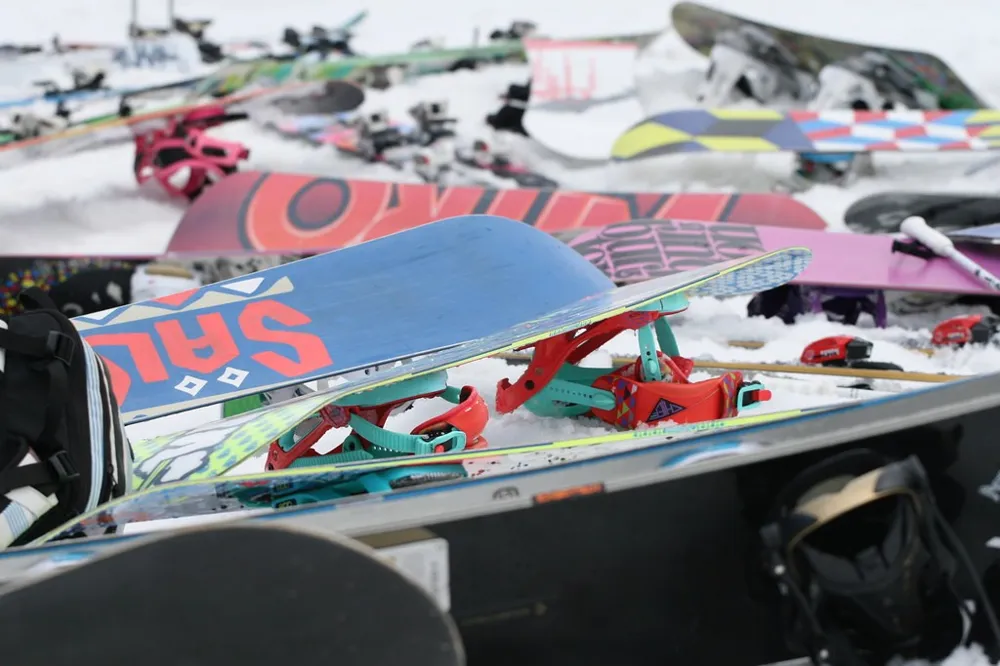
FASE (Fast Entry System) appears on bindings from Rome, Bataleon, Jones and thirtytwo, among others. Whitelines reports that it came out of the Nidecker group as a multi-brand collaboration. It has three parts:
- AutoBack highback that closes as your boot goes in.
- FastStrap ankle strap you tighten with one hand.
- Locked-in toe strap you set once and leave.
To get out, open the FastStrap, lift your heel and pull your boot out. FASE works with normal boots and keeps a familiar two-strap feel, though you still ratchet the ankle strap each time.
Bent Metal Speed-In is a similar idea: a reclining highback you drop to slide in and flip up to lock, with ratchets for fine-tuning. evo notes the Light Speed model adds Auto Open, which frees the upper strap as the highback reclines.
Clew, K2 Clicker and Other Quick-Entry Systems
Clew is the odd one out. Instead of a binding that grabs your boot, the strap unit lives on your boot and clicks onto a baseplate on the board. You get the hold of straps without ratcheting at every lift, and you can walk freely with the board off. The downside is walking and skating with a highback attached to your boot, and the system weighs a little more than many strap bindings.
K2 Clicker X HB is K2's current step-in, which evo describes as an evolution of a 1995 design. It uses a proprietary cleat interface and works only with Clicker X HB boots, which K2 has offered in models such as the Maysis Clicker X HB and the women's Kinsley Clicker X HB. Availability varies by season and region, so check K2's current lineup.
ISPO's step-in roundup also names SP Bindings (Mountain Multientry), mainly sold in Europe.
Step-In vs Strap Bindings: Pros and Cons
| Step-In (Step On, Clicker) | Rear-Entry / Auto-Closing | Traditional Straps | |
|---|---|---|---|
| Entry speed | Fastest; no sitting down | Fast; may need a hand to close | Slowest; sit or kneel to ratchet |
| Boots | System boots only | Any boot | Any boot |
| Feel | Very direct; some riders find it too locked in | Close to strap binding | Most adjustable, most freedom for tweaks |
| Choice of models | Smaller | Moderate | Largest |
| Steep slopes and deep snow | Harder to click in | Can usually be strapped manually | Works anywhere |
| Cost | Boots and bindings bought together | Binding only | Binding only |
Pros of step-in: no strapping in at the top of every run, a fast exit at the lift, and a responsive edge-to-edge feel that REI says riders often report. Burton also highlights the lack of straps and of metal underfoot. Cons: REI lists a feeling of being too locked in for presses and tweaks, stiffer boot tongues that cause pressure points for some, fewer boot choices, and harder entry on steep or deep terrain. Burton lists higher cost and limited options as the main drawbacks.
Who Should Ride Step-In Bindings?
- Beginners: new riders spend a lot of time getting in and out, so quick entry helps. REI suggests softer, more affordable options. Pair them with a beginner snowboard and our beginner tips.
- Riders with limited mobility: evo points out that riders who find bending to strap in difficult benefit most from Step On.
- Resort riders and families: lots of lift laps, short runs or riding with skiers who don't want to wait at the top.
- Park and freestyle riders: Burton says team riders use Step On in the park, but riders who want maximum freedom for presses and tweaks often stay with straps. See freestyle snowboards.
- Riders who love their current boots: choose Flow, Supermatic or FASE rather than Step On.
- Splitboarders: Burton sells Step On splitboard bindings; for touring, compatibility with your split interface matters more than entry speed.
- Kids: Burton's Smalls Step On boots and bindings make getting in easier for young riders who struggle with ratchets.
How to Choose a Quick-Entry System
- Decide on boots first. If you want to keep your boots, Step On and Clicker are out. If you're buying new boots anyway, Step On is open to you. Our snowboard boots guide covers fit.
- Check board mounting. Match the binding's disc to your board: 2x4, 4x4, 3-hole or Burton Channel. EST bindings are Channel-only.
- Match size to boot. Bindings are sized to boot size ranges, and those ranges differ by brand.
- Match flex to riding. Soft to medium for beginners and park, medium for all-mountain, stiff for speed and carving. Pair binding flex with boot flex.
- Think about conditions. If you ride lots of deep powder or steep entries, a binding you can also strap in by hand (Supermatic, Flow, FASE) gives you a backup.
- Set your stance. Quick entry doesn't change stance width or angles; see stance and binding angles.
How to Use Step On Bindings
- Practice at home first. Burton recommends about 10 minutes of practice before your first day on snow.
- On the hill, set the board on flat ground across the fall line.
- Clear snow from the binding base and the boot cleats.
- Set your heel into the heel clip and press down until it clicks.
- Press your toes down so both toe cleats engage, then wiggle to confirm you're locked.
- To get out, pull the heelcup lever and lift your heel with a slight twist.
Tuck your pant cuff into the clip on the back of the boot so fabric doesn't catch in the heel clip. In deep snow, pack a flat spot with your board first. For rear-entry bindings, the routine is similar: clear snow, slide your boot in, then pull the highback up and close the lever.
Care and Troubleshooting
- Clicking or creaking: Burton says some noise is normal friction, and rub-on wax on the toe area can help.
- Ice: knock snow and ice out of cleats and hooks before clicking in, and dry boots and bindings after each day.
- Screws: check mounting screws every few days of riding, as with any binding.
- Forward lean and fit: Step On forward lean adjusts with screw settings, and the gas pedal adjusts for boot length. Re-check both if you change boots.
- Warranty: Burton lists a lifetime warranty on Step On baseplates and one year on other parts; check terms for other brands.
Complete Your Snowboard Setup
Choosing the rest of your kit? Compare strap snowboard bindings, find the right length with the snowboard size chart, add a stomp pad for one-footed lift exits, and browse all our snowboarding guides.
Frequently Asked Questions
Do Step On boots work with regular bindings?
No. Burton states that Step On boots work only with Step On bindings, and regular boots don't fit Step On bindings either. Plan to buy the boots and bindings as a system.
Can I use my own boots with quick-entry bindings?
Yes, with rear-entry and auto-closing systems. Flow rear-entry bindings, Nidecker Supermatic and FASE bindings are sold for use with standard snowboard boots. Burton Step On and K2 Clicker X HB need their own boots.
Are step-in bindings good for beginners?
They can be. REI notes that quick entry and exit helps newer riders who spend a lot of time strapping in, and suggests softer, more affordable models. Practice clicking in at home before your first day.
Can you put Step On bindings on any snowboard?
Re:Flex Step On bindings fit boards with 2x4 and 4x4 insert patterns and Burton's Channel. EST Step On bindings fit Channel boards only. Check the mounting listed for the exact model.
Do step-in bindings work in powder?
Yes, but entry takes more care. Burton advises brushing snow out of the footbed and packing down deep snow with your board first. REI notes that getting in can be harder on steep slopes and in deep snow.
Are Flow bindings the same as step-in bindings?
Not quite. Flow bindings are rear-entry: the highback drops down, you slide your boot in from behind and flip the highback up. You keep regular boots, while true step-in systems lock special boots in with cleats.
What is the difference between Step On and Supermatic?
Step On locks cleats on a Step On boot into hooks on the binding, with no straps. Nidecker Supermatic is a strap binding with a heel pedal that closes the highback and straps automatically around any boot.