How to Stand on a Skateboard Without Wobbling (2026)
Put your front foot over the front bolts, your back foot over the back bolts or tail, bend your knees and keep your weight centered. Here's how that changes when you push, turn, stop and pop.
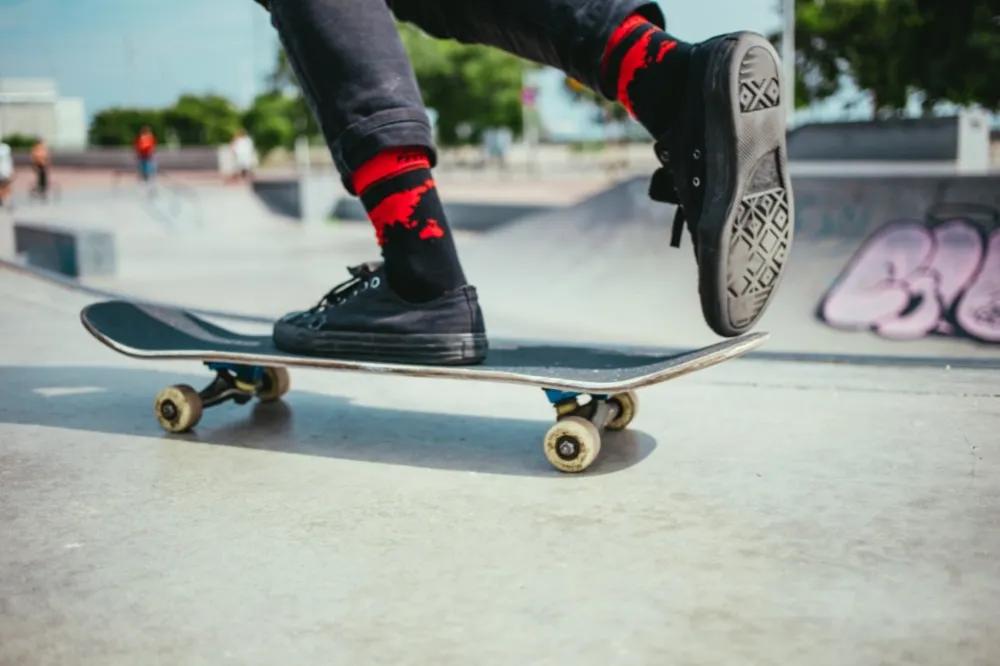
The Basic Skateboard Stance at a Glance
Standing on a skateboard comes down to where your feet go and where your weight sits. Get those right and the board feels steady instead of shooting out from under you. The short version:
| Body Part | Where It Goes |
|---|---|
| Front foot | Over or just behind the front truck bolts |
| Back foot | Over the back bolts, or on the tail when you want to lift the nose or pop |
| Foot spacing | About shoulder-width apart |
| Foot angle | Front foot about 45 degrees while pushing; both feet more sideways while riding |
| Weight | Centered between the trucks, slightly on the balls of your feet |
| Knees | Bent and relaxed |
| Head and eyes | Up, looking where you're going |
The trucks are the most stable spot because the wheels sit right under them. The nose and tail are not: weight there tips the board up onto two wheels.
Before You Step On
Find your stance first. Regular riders put the left foot forward; goofy riders put the right foot forward. Neither is better. If you're not sure, try the quick tests in our goofy vs regular guide, then go with what feels natural.
Check your board. A proper complete is far easier to stand on than a toy board. Make sure the bolts are tight, the wheels spin freely and the grip tape isn't worn smooth. Need one? See the best skateboards for beginners.
Wear flat-soled shoes. A flat, grippy sole lets you feel the board; thick, rounded running soles make balance harder (see do you need skate shoes). Wear a helmet from the first session; see skateboard safety gear.
Pick your surface. Grass or carpet keeps the wheels still for your very first try. Move to smooth, flat concrete soon, since getting used to a rolling board is the point.
How to Stand on a Skateboard, Step by Step
- Practice the stance on the ground. Stand sideways with your feet shoulder-width apart, knees slightly bent, weight even. Shift your weight gently from front leg to back leg.
- Place your front foot over the front bolts. Angle it about 45 degrees toward the nose, without twisting your knee.
- Weight that front foot. Lean onto it slowly until it feels secure, keeping your back foot on the ground.
- Bring your back foot up and place it over the back bolts in one smooth motion. Don't step onto the tail yet.
- Center your weight. Spread it evenly over both feet, slightly toward the balls of your feet, with your whole sole flat on the deck. Don't rise onto your toes or lift your heels.
- Bend your knees and relax. Let your hips sit back a little. Straight legs make the board feel twitchy.
- Look up. Turn your head toward the nose and look ahead, not down at your shoes. Hold your arms loosely out to the sides for balance.
- Rock gently. Lean a little onto your toes, then your heels, to feel the trucks tilt. That tilt is how you'll steer later.
Riding Stance, Turning and Stopping
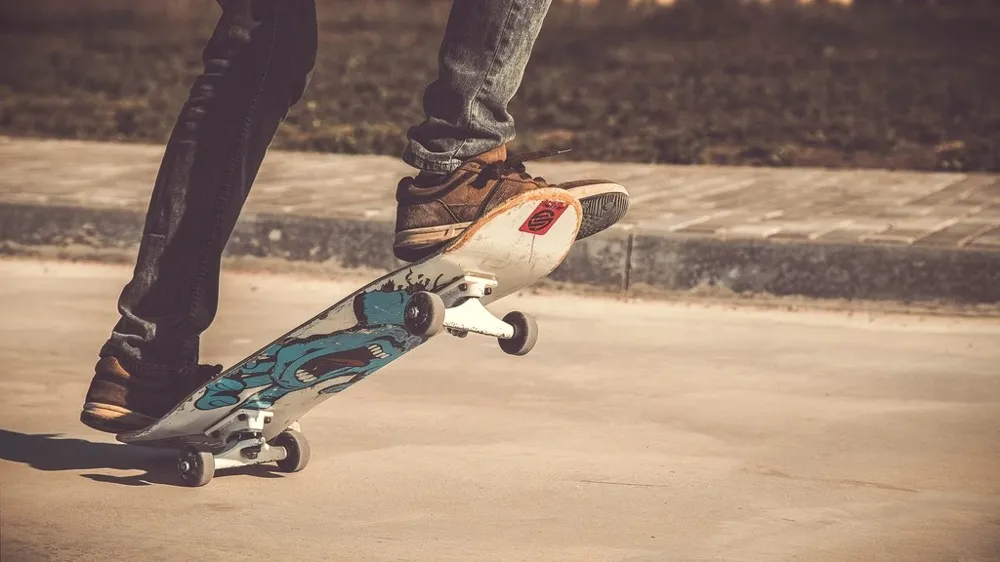
Cruising
Once you're rolling, turn your front foot so it points more across the board, between 45 degrees and fully sideways. Many skaters move the back foot onto the tail, just in front of where the tail kicks up, so it's ready to lift the nose. Keep the balls of both feet roughly over the deck's centerline and your knees soft to absorb cracks and bumps.
Turning
Keep the same stance and lean. Press your toes to turn toward your toe side and your heels to turn toward your heel side. For sharper turns, put your back foot on the tail, press it to lift the front wheels slightly and swing your shoulders. That's a kickturn; see how to turn on a skateboard and how to kickturn.
Stopping
For a foot brake, keep your front foot planted and angle it toward the nose, then lower your back foot and drag the sole flat along the ground. More pressure means more braking. For the tail drag and other methods, see how to stop on a skateboard.
Foot Placement for Pushing
- Put your front foot over or just behind the front bolts, pointing toward the nose at about 45 degrees.
- Bend your front knee so your weight stays over the board.
- Push off the ground with your back foot, placing it next to the board, not behind it.
- Use a few long, smooth pushes rather than many short stabs.
- When you're rolling, put your back foot on the tail or back bolts, then swivel your front foot sideways.
Avoid pointing the front foot straight ahead (parallel to the board) or fully sideways while you push. Both are awkward and less stable. If you push with your front foot instead of your back foot, that's called pushing mongo; our guide to pushing mongo explains it and how to switch.
Stance on Longboards, Cruisers and Electric Boards
Longboards: stand toward the middle of the platform. On top-mount boards you can stand over the trucks. On drop-through and drop-deck boards, keep your feet between the trucks and off the tails, where a foot can touch a wheel. See drop-through vs top-mount longboards and our beginner longboarding guide.
Cruisers: the same rules as a skateboard, with the back foot on the kicktail for quick turns. Short boards leave less room, so your feet may sit a little closer together. See cruiser skateboards.
Electric skateboards: use the same sideways stance with your feet over the trucks and knees bent. Lean slightly forward as the board speeds up and slightly back when it brakes, so the motor doesn't pull the board out from under you. Follow the maker's manual; see electric skateboards.
Foot Placement for Ollies and Other Tricks
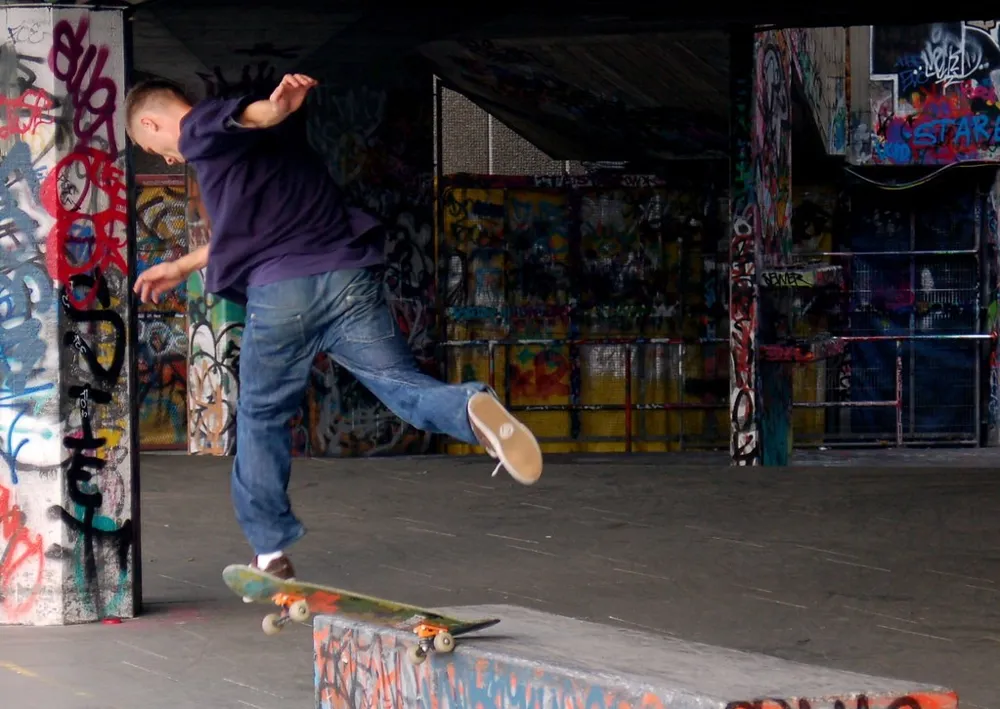
Trick setups move your feet away from the trucks. Your back foot goes on the tail to pop, and your front foot slides back toward the middle of the board. Both feet point more across the board than when cruising.
| Trick | Front Foot | Back Foot |
|---|---|---|
| Ollie | Just behind the front bolts, across the board; further back gives more room to slide | Ball of the foot on the tail, near the center |
| Kickflip | Behind the bolts, angled about 45 degrees, ball of the foot toward the heel edge | On the tail, near the center |
| Pop shove-it | Near the front bolts; it barely matters | In the tail pocket, toes slightly over the edge to scoop |
| Manual | Near the front bolts | On the tail, just enough to lift the nose |
| Kickturn | Over the front bolts | On the tail |
Switch, Fakie and Nollie
- Switch: your opposite stance, so a regular rider leads with the right foot.
- Fakie: your normal stance, rolling backward.
- Nollie: your normal stance shifted forward, with your front foot on the nose to pop. See ollie vs nollie.
Small shifts change how a trick feels, so adjust an inch at a time.
Common Foot Placement Mistakes
| Mistake | What Happens | Fix |
|---|---|---|
| Standing on the nose or tail | The board tips up and shoots out | Keep your feet over the trucks until you mean to lift an end |
| Feet too close together | Wobbly, easy to lose balance | Widen to about shoulder-width |
| Straight, stiff legs | Every crack knocks you off | Bend your knees and relax |
| Weight on the back foot | The board rolls away in front and you fall backward | Keep your chest over the board and weight centered |
| Front foot pointing straight ahead | Little control when turning or riding | Swivel it sideways once you're rolling |
| On your toes or heels | The deck tilts and the board turns by itself | Keep your whole sole flat on the grip |
When you lose balance, step off rather than fighting it. Our guide on how to fall on a skateboard covers bailing safely.
Drills, Gear and What to Learn Next
Drills
- Step-on reps: step on and off 20 times without looking down.
- Foot swaps: while rolling slowly, move your back foot from the bolts to the tail and back.
- Glide and crouch: push once, crouch low, then stand back up while rolling, eyes ahead.
Practice on smooth, empty ground away from traffic; see where to skateboard.
Gear That Helps
Santa Cruz Complete Skateboard
A factory complete from one of the oldest skateboard brands, fully assembled and ready to ride.
Check Price on AmazonVans Old Skool
A suede and canvas classic with Vans' waffle-tread vulcanized sole for grip. Vans also sells a skate-specific version with extra reinforcement; check which version a listing is for.
Check Price on AmazonNext Steps
Once standing and pushing feel natural, work through learn how to skateboard, then try easy beginner tricks such as the manual, kickturn and ollie.
Frequently Asked Questions
Where should your feet be on a skateboard?
For basic riding, put your front foot over or just behind the front truck bolts and your back foot over the back bolts or on the tail. Keep them about shoulder-width apart and centered across the deck.
Which way should my feet face on a skateboard?
When pushing, point your front foot toward the nose at roughly 45 degrees. When cruising and doing tricks, turn both feet more sideways, close to across the board.
Should I stand on the bolts of a skateboard?
The bolts are a good guide because they sit right over the trucks, which is the most stable spot. Many riders keep the front foot on or just behind the front bolts.
How far apart should my feet be on a skateboard?
About shoulder-width for most riders. Shorter riders and kids can stand a little closer together.
Is it better to practice standing on grass or concrete?
Grass or carpet stops the board from rolling, which helps on day one. Move to smooth, flat concrete soon, because getting used to a rolling board is part of learning.
Why do I keep falling backward when I stand on my board?
Your weight is too far back or your legs are straight. Bend your knees, keep your chest over the board and keep your weight centered between the trucks.