Bicycle Hand Signals Every Rider Should Know (2026)
Three signals cover almost every ride: left turn, right turn and stop. Here is how to give each one, which right-turn version the law accepts, and the extra signals riders use in a group.
The Three Basic Bike Hand Signals
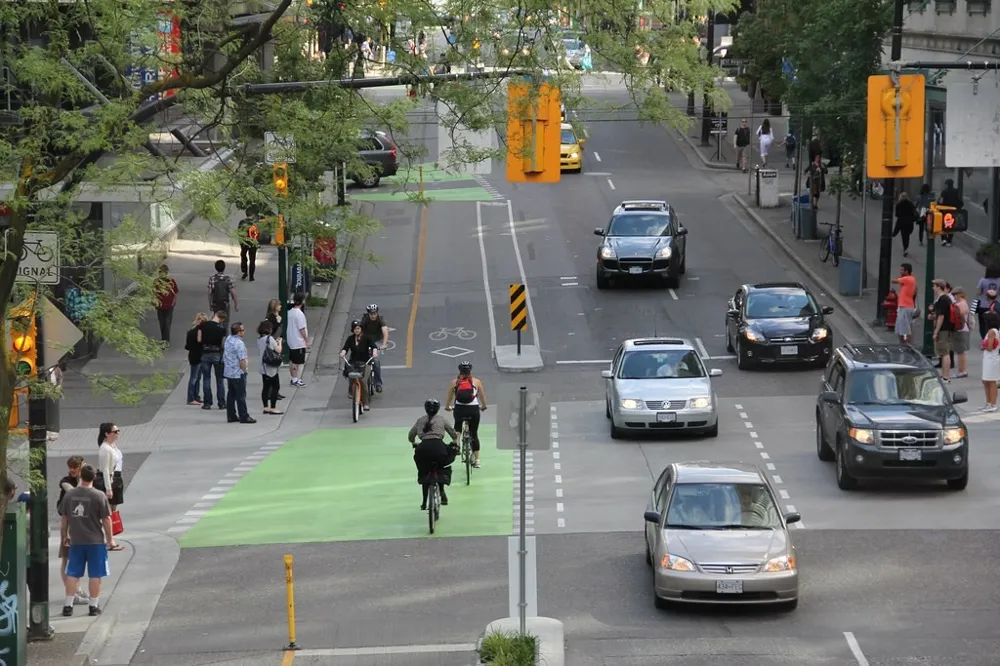
Bikes have no turn indicators or brake lights, so your arms do that job. Three signals cover nearly every situation on the road: left turn, right turn and stop or slow. They come from the hand-and-arm signals drivers once gave from the left side of a car, which is why the classic versions all use the left arm. Bicyclists in many states may also signal a right turn with the right arm.
| Signal | How to Give It | Notes |
|---|---|---|
| Left turn | Left arm straight out to the side, level with the shoulder | Hand flat or pointing; same in every state |
| Right turn (classic) | Left arm out, forearm bent straight up at the elbow | Accepted everywhere the traditional signals apply |
| Right turn (right arm) | Right arm straight out to the right side | Allowed for bicyclists in many states; easiest for drivers to read |
| Stop or slow | Left arm out, forearm bent straight down at the elbow, palm back | Covers stopping and sudden slowing |
The diagram below shows each one from behind, the way a driver following you sees it.
Left Turn Signal
Hold your left arm straight out to the left, roughly level with your shoulder. A flat hand or a pointed index finger both work; the Maryland Highway Safety Office lists either. This is the one signal that is the same everywhere in the US, because it is also the driver's left-turn signal.
Before you move left, look over your left shoulder, signal, and move into position for the turn: the left side of the lane, a left-turn lane or a two-stage turn box, depending on the street. Bring your hand back to the bar before you brake and lean into the turn.
Right Turn: Bent Left Arm or Right Arm Straight Out
There are two right-turn signals, and both are in common use:
- Classic (bent left arm): left arm out to the side with the forearm pointing straight up, making an L shape. It comes from the days when drivers signaled out of the left window, and it is the more widely known, traditional version.
- Right arm extended: right arm straight out to the right, pointing the way you will turn. The Maryland Highway Safety Office calls this the clearest right-turn signal and describes the bent-arm version as still acceptable but less intuitive.
The right-arm version is easier for most drivers to understand, because it points where you are going. The classic version has one advantage: drivers are taught to watch the rider's left side for signals, so it shows up where they expect to look. If you're not sure a driver behind you knows the classic version, the right-arm signal is the clearer choice where your state allows it.
Whichever arm you use, the other hand controls only one brake lever while you signal. Signal early, then put both hands back before you slow down.
Which States Accept the Right-Arm Signal
The Uniform Vehicle Code, the model law most state traffic codes follow, recognizes both right-turn signals, and most states allow bicyclists to use either arm. A few state codes list only the traditional left-arm signals, so the wording of your own state's code matters. Examples we checked:
| State | Right-Arm Signal for Bicyclists | Source |
|---|---|---|
| California | Allowed: "a bicyclist may extend the right hand and arm horizontally to the right side of the bicycle" | Vehicle Code §22111(b) |
| New York | Allowed: right turn is the left arm extended upward or the right arm extended horizontally | Vehicle and Traffic Law §1237 |
| Texas | Allowed: TxDOT's bicycle law FAQ lists the right arm extended horizontally or the bent left arm | TxDOT bicycle laws and regulations FAQ |
| Other states | Varies; most allow either arm | Your state's vehicle code or DMV bicycle guide |
Last checked November 2026. This is general information, not legal advice. State and local laws change, so confirm the current rule with your state DMV, department of transportation or vehicle code. Using the classic bent-left-arm signal keeps you within the traditional rule wherever you ride.
Stop and Slow Signals
The legal stop signal is the left arm out with the forearm bent straight down, palm facing back. California's code describes it as the hand and arm "extended downward" and uses it for a stop or a sudden decrease of speed; New York uses the same left-arm-down signal for stopping or slowing. Because bikes have no brake lights, this is the signal that most helps a driver behind you avoid a rear-end crash.
Riders also use two informal versions, mainly in groups:
- Slowing: hand held low by your side, palm down, patting the air up and down. BikeRadar describes it as patting an invisible dog.
- Stopping: a hand raised overhead with the palm facing forward, or an arm held straight down by your side, usually with a call of "Stopping!"
In traffic, give the stop signal before you brake hard, then put your hand back on the lever. Never hold a signal when you need both brakes.
When and How Long to Signal
Signal before you turn, change lanes, move out around an obstacle, slow down or stop. Several state laws set a distance. Illinois and Florida, for example, require a turn signal during the last 100 feet before the turn, and Illinois also requires it while you're stopped waiting to turn. Both states say a bicyclist doesn't have to hold the signal continuously if that hand is needed to control the bike.
In practice, Maryland's highway safety office suggests signaling about 100 feet before the maneuver and holding the signal for two to three seconds. That's long enough for a driver to see it and short enough to get your hand back for braking and steering.
- Look back over your shoulder to check traffic.
- Signal clearly, arm fully extended, for two to three seconds.
- Return your hand to the bar.
- Look again, then make the move when it is safe.
A signal shows your intent; it doesn't give you the right of way. If a driver hasn't seen you or isn't yielding, wait.
How to Signal Without Losing Control
- Practice one-handed riding in a parking lot or quiet street until you can hold a straight line with either hand off the bars.
- Signal on straight, smooth road, not while you're braking, turning, crossing tracks or riding over potholes.
- Finish shifting first. Change into the gear you need before you take a hand off; our guide to shifting bike gears covers when.
- Make it big. A straight, fully extended arm reads better than a half-raised hand, especially from a car.
- Use your voice too. A call such as "Turning left" or "Stopping" helps other riders and pedestrians on shared paths.
- Make eye contact with drivers at intersections when you can, and don't assume they've seen your signal.
Group Ride Hand Signals and Calls
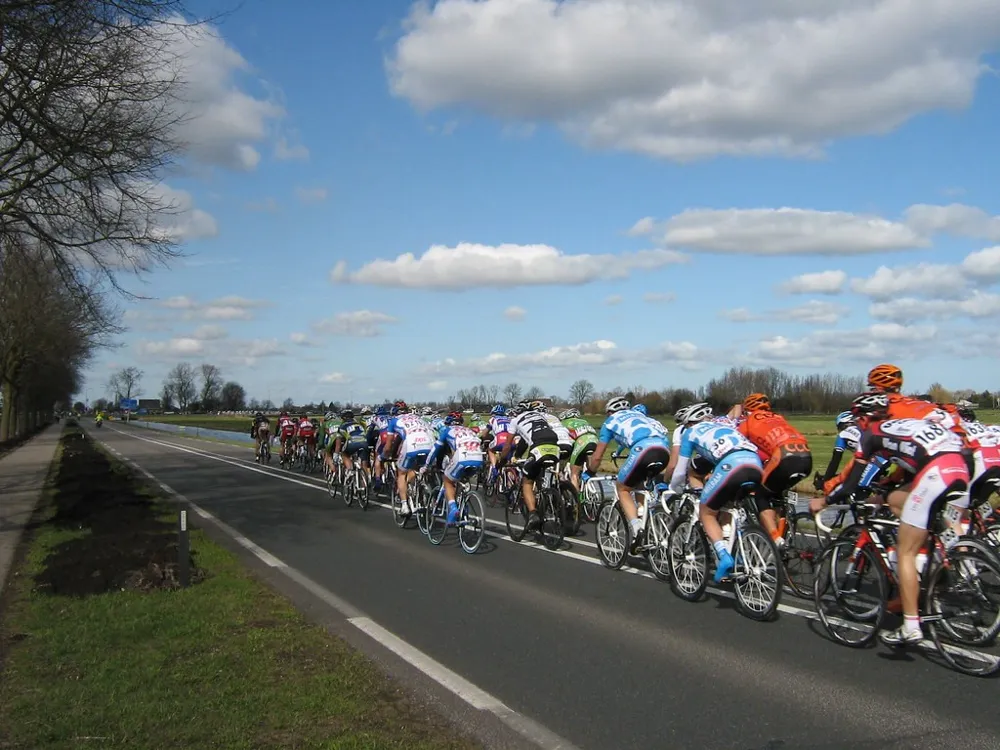
On a group ride, riders behind the leader can't see the road ahead, so the front riders point out hazards and changes of pace. Cycling UK's guide stresses that every rider shares the job of passing signals and calls along the line, front to back and back to front. Common signals:
| Signal | How It's Given | Meaning |
|---|---|---|
| Point down | Point at the hazard with the arm on that side; some riders circle the finger | Pothole, glass, rock or debris |
| Wave low, palm down | Arm down by your side, hand sweeping side to side | Loose gravel, water or a slippery patch |
| Arm behind back, pointing across | Bend the arm behind your back and point to the side the group should move to | Move out around a parked car, pedestrian or obstacle |
| Pat down | Hand low, palm down, patting up and down | Slowing |
| Hand up or arm down | Raised open hand, or arm straight down by your side | Stopping |
| Elbow flick | Flick the elbow out on one side | Rider behind should come through on that side |
| Arm straight out | Full arm in the direction of travel | Turning |
BikeRadar notes that in the US the move-out signal is usually given on the right, because obstacles such as parked cars sit on that side. It also warns against pointing at every small bump: fifteen riders taking a hand off the bars for nothing creates more danger than the bump.
Calls go with the signals. The ones you'll hear most:
- "Car back" / "Car up": a vehicle is coming from behind or ahead.
- "Car left" / "Car right": traffic approaching at a junction.
- "Clear": the junction is safe to cross. Only call it when you're sure, and each rider should still check.
- "Slowing" / "Stopping": said with the matching hand signal.
- "Hazard": a particularly large pothole or obstacle.
- "On the left" / "On the right": you are about to pass the rider ahead on that side.
Clubs often agree their own set before the ride, so ask the leader if you're new to a group.
Signaling on E-Bikes and Electric Scooters
E-bikes that fit the federal three-class model are generally treated like bicycles under state traffic rules, so the same hand signals apply. Our guides to e-bike classes and e-bike laws cover where each class can ride and the local exceptions. E-scooter riders commonly use the same arm signals; see how to ride an electric scooter and whether e-scooters are street legal where you live.
A few points are specific to powered rides:
- Ease off first. E-bikes and scooters are often faster and heavier than a pedal bike, so slow down before you take a hand off.
- Mind the throttle hand. On a throttle e-bike or scooter, the throttle is usually on the right, so the left-arm signals let you keep your right hand where it is. Signaling with the right arm means letting go of the throttle.
- Small wheels, less stability. Scooters are twitchier one-handed than bikes, so keep signals short and on smooth pavement.
- Built-in turn signals on some e-bikes, scooters and light-up helmets add visibility, especially at night. Whether a light signal counts in place of a hand signal depends on your state's law, so check it, and use your arm too when drivers may not see the lights.
Signaling at Night and in Bad Weather
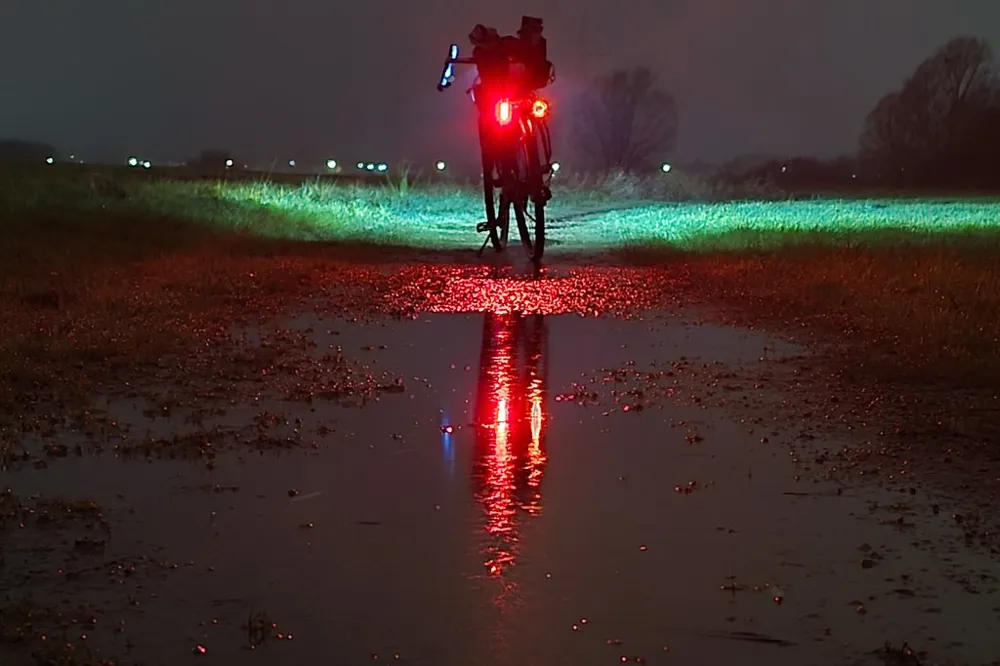
Hand signals are harder to see in the dark, in rain and in low sun. Bright bike lights front and rear make you visible in the first place; reflective or light-colored cycling gloves and reflective sleeves make your arm movement easier to pick out in headlights. A bike helmet with integrated lights or turn signals adds light at head height. At night, start signals a little earlier and hold them a moment longer, and pick roads with good lighting when you can.
Common Signaling Mistakes
- Signaling instead of looking. Always look over your shoulder before you signal and again before you move.
- Signaling too late, mid-turn, when the driver behind has no time to react.
- Riding one-handed through the turn. Get your hand back on the bar before you brake and steer.
- Pointing vaguely. A limp hand by the hip looks like stretching; extend the whole arm.
- Not signaling when nobody seems to be around. Signal every time so it becomes a habit and catches the car you didn't see.
- Forgetting the stop signal. Turns get signaled more often than stops, yet stopping without warning is how riders get hit from behind.
Kids can learn the three basic signals once they ride confidently one-handed; our guide on teaching a kid to ride a bike covers the steps before that.
Related Guides
New to road riding? Start with the biking hub, compare hybrid bikes for commuting, and read how to shift gears so you're in the right gear before you signal and stop.
Frequently Asked Questions
What are the 3 bike hand signals?
Left turn (left arm straight out), right turn (left arm bent up at the elbow, or right arm straight out where allowed) and stop or slow (left arm bent down at the elbow). These three come from the traffic signals drivers once gave from a car window.
Can I signal a right turn with my right arm?
In many states, yes. California, New York and Texas state sources all list the right arm extended horizontally as a valid right-turn signal for bicyclists, and the Uniform Vehicle Code recognizes both versions. Check your own state's vehicle code if you are unsure.
How far ahead should I signal a turn on a bike?
Illinois and Florida law, for example, call for a turn signal during the last 100 feet before the turn. Both also say you don't have to hold it continuously if you need that hand to control the bike.
Do I have to keep my arm out the whole time I turn?
No. Signal early, then put both hands back on the bars before you brake and turn. Several state laws say a hand signal need not be given continuously when the hand is needed to control the bicycle.
What does pointing down mean on a group ride?
It warns riders behind you of a hazard on the road, such as a pothole, glass or a rock, on that side. Point at it briefly and only for hazards that matter, so the whole group isn't riding one-handed.
Do e-bike and scooter riders use the same hand signals?
Generally, yes. E-bikes that fit the federal three-class model are usually treated like bicycles under state traffic rules, and e-scooter riders commonly use the same arm signals. Some states and cities set their own rules, so check locally.