How to Shift Bike Gears Smoothly, Step by Step (2026)
Which shifter does what, when to change gear before hills and stops, which gear combinations to avoid and how to fix a chain that skips or rattles.

How Bike Gears Work
Gears let you keep pedaling at a comfortable speed whatever the road does. An easy (low) gear makes each pedal stroke light but moves you only a short distance, which is what you want for steep hills and starting from a stop. A hard (high) gear takes more force per stroke but covers more ground, which suits flat roads, tailwinds and descents.
On a typical derailleur bike, the gears come from two sets of toothed rings. The chainrings are attached to the pedals at the front; the cassette is the stack of cogs on the rear wheel. A derailleur at each end pushes the chain from one ring or cog to the next when you move a shifter on the handlebar. The number of "speeds" is the number of chainrings multiplied by the number of rear cogs, so a bike with 2 chainrings and a 12-speed cassette has 24 combinations.
| Front Chainring | Rear Cog | How It Feels | Use It For | |
|---|---|---|---|---|
| Easiest gear | Smallest | Largest | Very light pedaling, slow | Steep climbs, starting on a hill |
| Middle gears | Middle or matching ring | Middle cogs | Moderate | Flat roads, gentle rolling terrain |
| Hardest gear | Largest | Smallest | Heavy pedaling, fast | Descents, strong tailwinds, sprints |
The simple rule: bigger cog at the back = easier; bigger ring at the front = harder. Mountain bikes usually have more low gears for steep trails, while road bikes have more high gears for speed. Upshifting means moving to a harder gear; downshifting means moving to an easier one.
Left Shifter vs Right Shifter
On most bikes the right-hand shifter controls the rear derailleur and the left-hand shifter controls the front derailleur. An easy way to remember it: right = rear.
| Shifter | Moves the Chain On | Size of Change | How Often You'll Use It |
|---|---|---|---|
| Right hand | Rear cassette | Small steps, fine-tuning | Most of the time |
| Left hand | Front chainrings | Big jumps in effort | When terrain changes a lot |
Think of the left shifter as choosing a range (climbing, cruising or fast) and the right shifter as fine-tuning within it. If your bike has no left shifter, it has a single front chainring (a "1x" drivetrain) and all your shifting happens on the right. Use one shifter at a time rather than moving both at once.
How to Use Each Type of Shifter
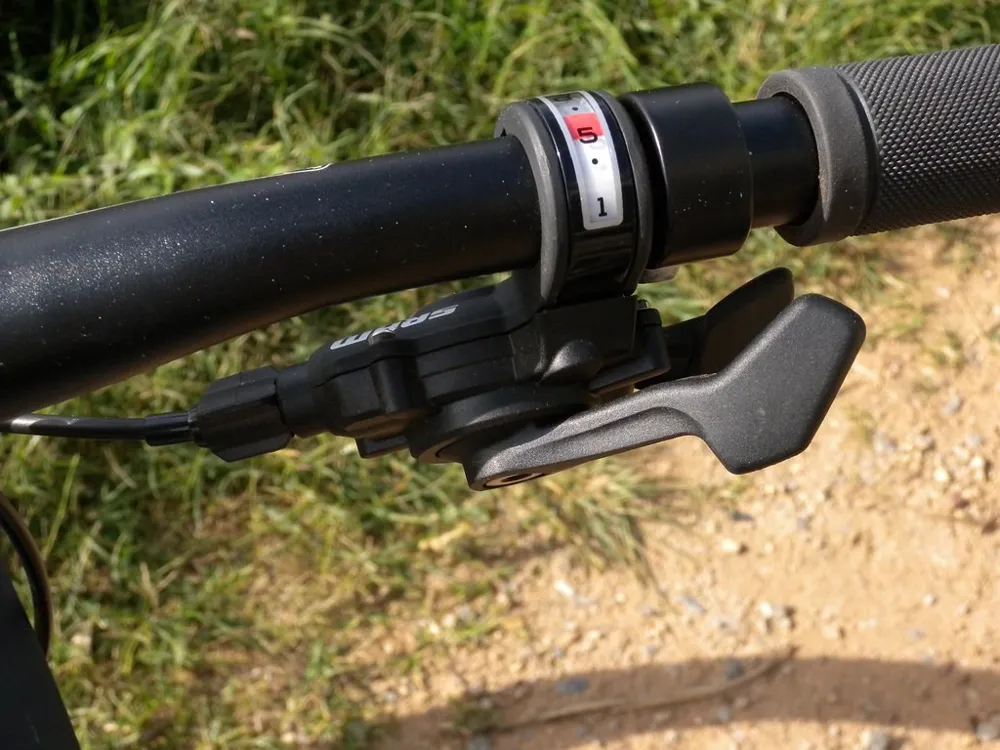
Shifters work in different ways depending on the bike. If you're unsure which lever does what, lift the rear wheel (or hang the bike on a stand), turn the pedals by hand and click each lever while watching the chain. The maker's manual for your shifter shows the exact layout.
Trigger Shifters (Flat Bars)
Most mountain bikes and many hybrids use trigger or thumb shifters that sit under the handlebar. Each side usually has two levers: one pushes the chain onto a bigger cog or chainring, and the other releases it to a smaller one. Shimano's manuals describe a quick-shift feature on many models where pressing the lever further moves two cogs in one push. On the right shifter, the lever that moves the chain to bigger cogs gives you easier gears; on the left, the directions are reversed because a bigger chainring is harder. Many trigger shifters have a small window showing which gear you're in.
Grip Shifters (Twist Shifters)
Grip shifters are a rotating collar next to the handlebar grip, common on comfort bikes, cruisers and some SRAM mountain bike groups. On the right side, twisting the grip toward you shifts to an easier gear and twisting it away shifts to a harder one. The left grip works in reverse. Don't force the twist past the last click, which can strain the cable.
Road Bike Shifters (STI and "Brifters")
Drop-bar road and gravel bikes combine the brake lever and shifter in one unit, often nicknamed "brifters". How they work depends on the brand:
- Shimano (STI): on the right lever, the small paddle behind the brake lever shifts to a smaller cog (harder) and swinging the whole brake lever inward shifts to a bigger cog (easier). On the left, the small paddle drops the chain to the smaller chainring and swinging the brake lever inward lifts it to the bigger ring. The left lever has a short "trim" click to stop the front derailleur rubbing the chain.
- SRAM (DoubleTap): one paddle behind each brake lever does both jobs. A short push shifts to a smaller cog or chainring; a longer push shifts to a bigger one.
- Campagnolo: the lever behind the brake lever shifts to a bigger cog or chainring, and a thumb button on the inside of the hood shifts to a smaller one.
Some older and touring bikes use bar-end or down-tube levers instead. These may be indexed (they click into each gear) or friction (you move the lever until the chain runs quietly).
Electronic Shifting
Electronic systems such as Shimano Di2, SRAM AXS and Campagnolo EPS replace the cable with a motor in the derailleur, so you press buttons instead of moving levers. Shimano Di2 keeps the same left-front, right-rear logic. By default SRAM's road AXS uses the right paddle for a harder gear, the left paddle for an easier gear and both paddles together to change chainrings. All three can be customized, so check how your bike is set up. Electronic shifting needs its battery charged.
When to Shift Gears
The biggest skill in shifting isn't which lever to press; it's timing. The goal is to keep your legs turning at a steady, comfortable rhythm, called cadence and measured in pedal revolutions per minute (RPM).
Before Hills, Not Halfway Up
Look ahead and shift to an easier gear just before a climb starts, while you still have momentum and can pedal lightly. Waiting until you've slowed down and are pushing hard means shifting under heavy load, which can grind, skip or drop the chain and is tough on your knees. If you have to shift on a hill, go one gear at a time and ease off the pedals for half a stroke as you click.
Keep a Comfortable Cadence
Spinning an easier gear at a higher cadence is generally more efficient than grinding a hard gear slowly. Cycling guides commonly suggest a range of roughly 70 to 100 RPM, a little lower on climbs, though the right number varies by rider. A simple test: if your legs feel like they're pushing through mud, shift easier; if they're spinning with almost no resistance, shift harder. A bike computer with a cadence sensor can help you learn the feel.
Before You Stop
As you roll up to a stop sign or red light, shift into an easier gear before you stop pedaling. Then you can pull away smoothly instead of standing on a heavy gear in traffic.
On Flats and Descents
As speed builds and pedaling feels too easy, shift to harder gears. On flat roads and downhills, when there's little load on the chain, it's fine to shift through several gears quickly.
How to Shift Gears Step by Step
Starting From a Stop
- Before you stop, shift to an easy gear (on a 2x or 3x bike, the small or middle chainring and a mid-to-large rear cog).
- Put your stronger foot on the pedal at about the 2 o'clock position.
- Push off and pedal, then shift one or two gears harder at a time as you pick up speed.
Climbing a Hill
- As the hill comes into view, shift to an easier rear cog while still pedaling smoothly.
- On a long or steep climb, shift the front to the small chainring before the slope bites, then fine-tune with the right shifter.
- Keep pedaling steadily. If you need to shift mid-climb, ease pressure for a moment on each click and go one gear at a time.
- At the top, shift back to harder gears as you gain speed.
Coming to a Stop
- Look ahead and start downshifting as you slow, a few gears before you stop.
- Keep pedaling lightly while shifting so the chain can move.
- Brake to a stop already in your starting gear.
Riding Downhill and on Flats
- Shift to the big chainring on longer descents or fast flat sections.
- Use the right shifter to move to smaller cogs as you speed up.
- If you run out of gears on a fast descent, coast and stay ready to brake.
Practice in an empty parking lot or quiet path until you can find the right gear without looking down. Keep your eyes on the road and know your bike hand signals before shifting in traffic.
Cross-Chaining: Which Gear Combinations to Avoid
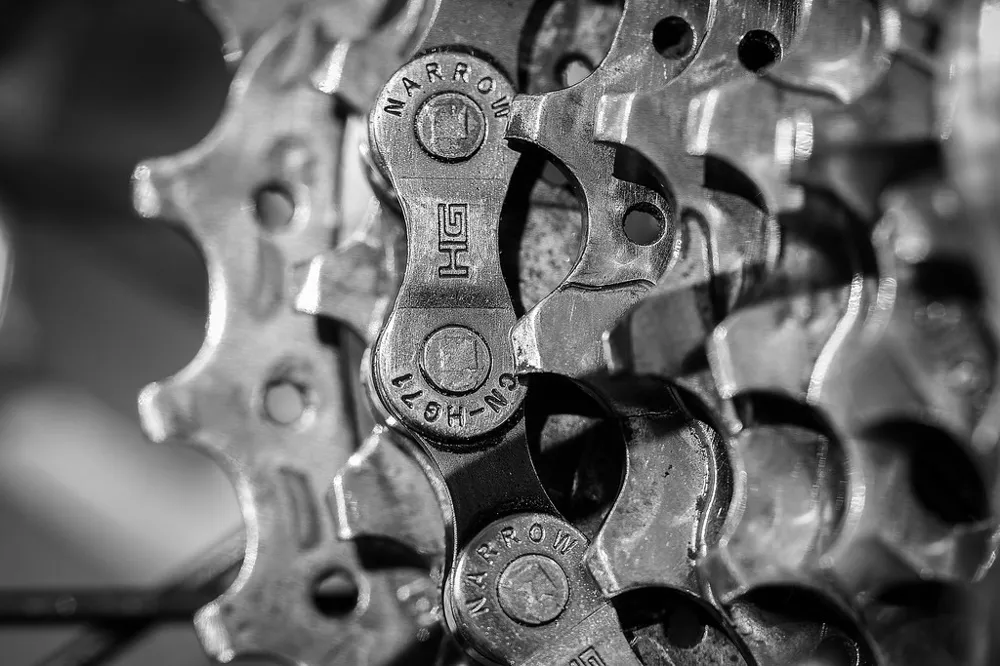
Cross-chaining means running the chain at a steep diagonal between the front and back: the big chainring with the biggest rear cogs, or the small chainring with the smallest rear cogs. The bike will still move, but the angle adds wear to the chain, chainrings and cassette, and often causes grinding noise or chain rub on the front derailleur.
| Front Chainring | Rear Cogs to Use | Rear Cogs to Avoid |
|---|---|---|
| Big ring (2x or 3x) | Middle to smallest cogs | The few biggest cogs |
| Middle ring (3x) | Most of the cassette | The very biggest and smallest cogs |
| Small ring (2x or 3x) | Middle to biggest cogs | The few smallest cogs |
You lose nothing by avoiding these combinations, because on a 2x or 3x bike other chainring-and-cog pairs give nearly the same gear. When you find yourself near the end of the cassette, shift the front instead. With one chainring (1x) there's no front gear to cross, so this advice mainly applies to 2x and 3x bikes.
1x vs 2x vs 3x: Shifting on Different Drivetrains
| Drivetrain | Shifters | How You Shift | Common On |
|---|---|---|---|
| 1x (one chainring) | Right only | All gear changes on the cassette; simplest to learn | Modern mountain bikes, many gravel bikes and hybrids |
| 2x (two chainrings) | Left and right | Big ring for speed, small ring for climbing; fine-tune on the right | Most road bikes, some gravel bikes |
| 3x (triple) | Left and right | Small ring for steep hills, middle for most riding, big for speed | Budget hybrids and older mountain bikes |
A 1x drivetrain uses a wide-range cassette and drops the front derailleur, so there's less to adjust and no cross-chaining to think about. The trade-off is bigger jumps between gears. A 2x or 3x setup gives closer steps and a wide total range but asks you to manage two shifters. Our hybrid bike guide compares these setups for commuters, and the bike buying guide covers how much gear range you need. Riding somewhere flat? A single-speed bike skips shifting altogether.
Internal Hub Gears
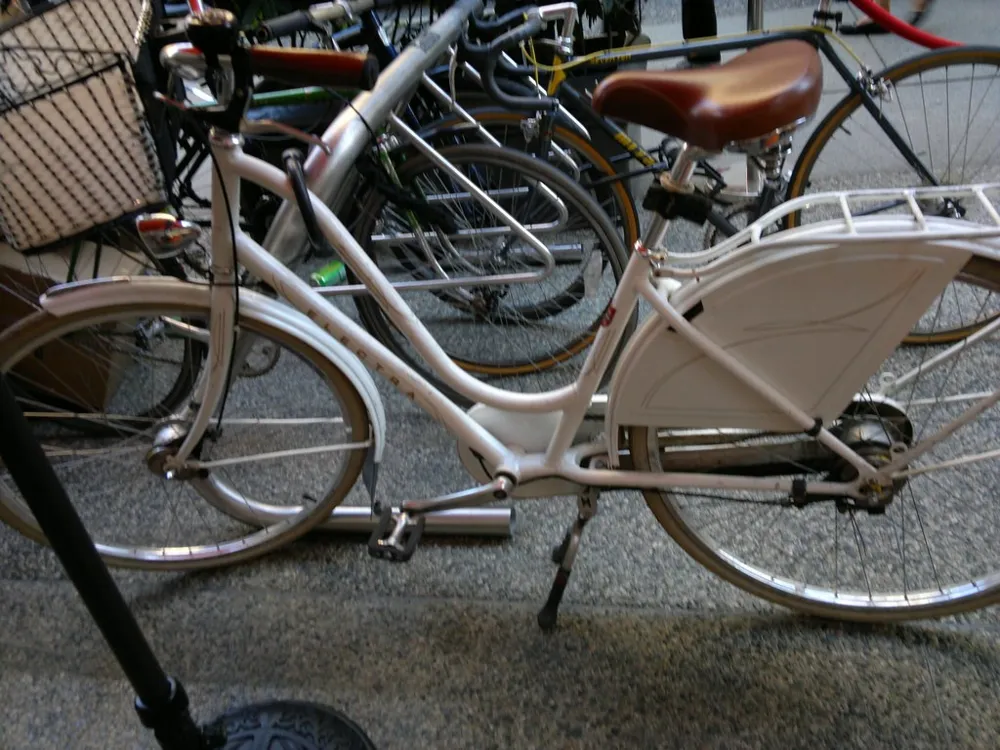
Many city bikes, cruisers and commuter e-bikes hide their gears inside the rear hub instead of using a derailleur and cassette. You'll usually see a single cog at the back and a twist or trigger shifter, often with a numbered gear display.
- You can shift while stopped. A big advantage of hub gears is that you can usually change gear while coasting or waiting at a light, so you can pick a starting gear after you've stopped.
- Ease off as you shift. When pedaling, lighten your pressure on the pedals for a moment as you click or twist. Tern's shifting advice for its hub-geared bikes, for example, is to ease off pedaling pressure at the moment of shifting.
- Stepless hubs (continuously variable hubs such as enviolo) have no separate gears. You twist the shifter toward you for easier pedaling and away for harder, and the change is smooth rather than in clicks.
- Trade-offs: hub gears need less maintenance and are simple to use, but usually have a narrower range than a derailleur system. Shift cables can still stretch and need occasional adjustment.
Shifting on an E-Bike
An e-bike with gears is shifted just like a regular bike: right shifter for the rear, left for the front if there is one, easier gears for hills and starts. The motor adds power, but choosing the right gear still matters for comfort, range and wear. Pedaling effort depends on both the gear and the assist level, so use them together: an easier gear plus a moderate assist level is usually smoother for steep starts than full power in a hard gear.
- Mid-drive motors drive the chain through the bike's gears (see how electric bikes work), so the chain carries the motor's force as well as yours. Easing off the pedals for a moment as you shift matters even more.
- Some systems help you. Bosch says its add-on Gearsensor GS briefly pauses or reduces motor support while you shift, and its eShift system can shift automatically or down-shift for you when you stop on compatible hub and Di2 drivetrains (as of November 2026; check your bike's manual).
- Hub-geared e-bikes can usually be shifted at a standstill, which makes picking a starting gear at lights easy.
Riding a throttle e-bike? Shifting still helps the motor on hills. See e-bike classes for how throttles and speed limits differ, and our best electric bikes for models with hub and derailleur gearing.
Troubleshooting: Skipping, Noise and Slow Shifts
Most shifting problems on cable-operated bikes come from the cable, the chain or a bent part rather than the shifter itself.
| Problem | Likely Causes | What to Try |
|---|---|---|
| Chain skips or jumps under load | Worn chain or cassette, cable tension slightly off, shifting while pushing hard | Check chain wear; small barrel-adjuster tweak; ease off when shifting |
| Constant clicking or ticking | Cable tension needs adjusting, bent derailleur hanger | Adjust indexing with the barrel adjuster; have the hanger checked |
| Grinding or rubbing in some gears | Cross-chaining, front derailleur position, trim not set | Avoid extreme combinations; use trim on road levers |
| Slow or sticky shifts | Dirty or worn cables and housing, dry or dirty chain | Clean and lube the chain; replace cables and housing |
| Gears change on their own (ghost shifting) | Cable tension, sticky cable, housing too short | Adjust tension or have cables replaced |
| Shifting got worse after a crash | Bent derailleur hanger | Have the hanger alignment checked before adjusting anything else |
| Chain falls off at either end | Limit screws set wrong | Set the limit screws or see a shop |
A brief click as the chain settles onto a new cog is normal. If shifting stays poor, start with the cheap fixes: clean and lube the chain, then check cable tension. Our guide to adjusting a rear derailleur covers indexing, limit screws and B-tension step by step, and the derailleur guide explains hangers and when a part needs replacing. Upgrading worn levers? See mountain bike shifters for compatibility rules. If you're not comfortable working on gears, a bike shop can usually fix shifting quickly.
Common Shifting Mistakes
- Shifting too late on hills: slowing to a crawl in a hard gear and then shifting under full pressure. Shift before the slope.
- Shifting under heavy pressure: grinding through gears while standing on the pedals wears the chain and cassette faster and can drop the chain.
- Stopping in a hard gear: leaves you struggling to restart. Downshift as you slow.
- Shifting while not pedaling on a derailleur bike. The chain only moves when the pedals turn; clicking while coasting or stopped makes it jump later.
- Cross-chaining: big-big or small-small combinations that add noise and wear.
- Moving both shifters at once: shift one side, let the chain settle, then the other.
- Grinding a hard gear slowly when a lighter gear at a quicker cadence would be easier on your legs.
- Not fully clicking the lever: a half-push can leave the chain between gears.
- Ignoring the chain: a dry, dirty or worn chain shifts poorly and wears the cassette.
Practice Drills and What to Learn Next
A few short sessions build the muscle memory that makes shifting automatic:
- Find your levers: on a quiet flat path, shift up and down the rear cassette one click at a time and notice how the pedaling changes.
- Stop-and-go: ride, downshift, stop, restart smoothly, and repeat until you always stop in an easy gear.
- Hill approach: pick a short hill and practice shifting before it starts, then try again shifting a little later to feel the difference.
- Front shifts (2x and 3x): practice changing chainrings on flat ground with light pedal pressure, then fine-tuning on the right.
Once shifting feels natural, the next steps are basic bike care and choosing the right bike for your rides. Browse more guides in our biking hub, compare mountain and road bikes, or see entry-level road bikes and gravel bikes. Teaching a young rider? Our guide on teaching a kid to ride covers the steps before gears.
Frequently Asked Questions
Which gear should I use to go uphill?
An easy (low) gear: the smallest front chainring with one of the largest rear cogs. Shift into it just before the climb starts, while you can still pedal smoothly.
Should I keep pedaling while I shift?
Yes, on a derailleur bike. The chain has to be moving for the derailleur to move it, so keep turning the pedals but ease off the pressure for a moment as the gear changes.
Can I shift gears while stopped?
Not on a derailleur bike; clicking the lever while stopped just makes the chain jump when you start pedaling. Internal hub gears are different and can usually be shifted while stopped or coasting.
What does 21-speed mean on a bike?
It's the number of front chainrings multiplied by the number of rear cogs, so 3 chainrings and 7 cogs gives 21 combinations. Some combinations overlap, so you get fewer truly different gears than the number suggests.
Can I shift more than one gear at a time?
Many modern shifters let you push the lever further to move two or more cogs in one go, which is handy before a sudden climb. On a hill, shifting one gear at a time with light pedal pressure is gentler on the drivetrain.
Why does my chain make noise in certain gears?
Often it's cross-chaining (big ring with big cog, or small ring with small cog), which runs the chain at a steep angle. If noise happens in every gear, the chain may be dry or dirty or the shifting may need adjusting.
Do I need to shift gears on an e-bike?
Yes, if it has gears. The motor assists your pedaling, but you still choose the gear to keep a comfortable cadence. Lower assist levels and easier gears are a good combination for steep starts.