Wakeboard Ropes and Handles That Won't Hold You Back (2026)
Low-stretch and no-stretch rope-and-handle combos from Ronix, Hyperlite, Airhead, O'Brien and Proline, plus wakesurf ropes and a guide to materials, length, handles and care.
How to Pick a Wakeboard Rope in 30 Seconds
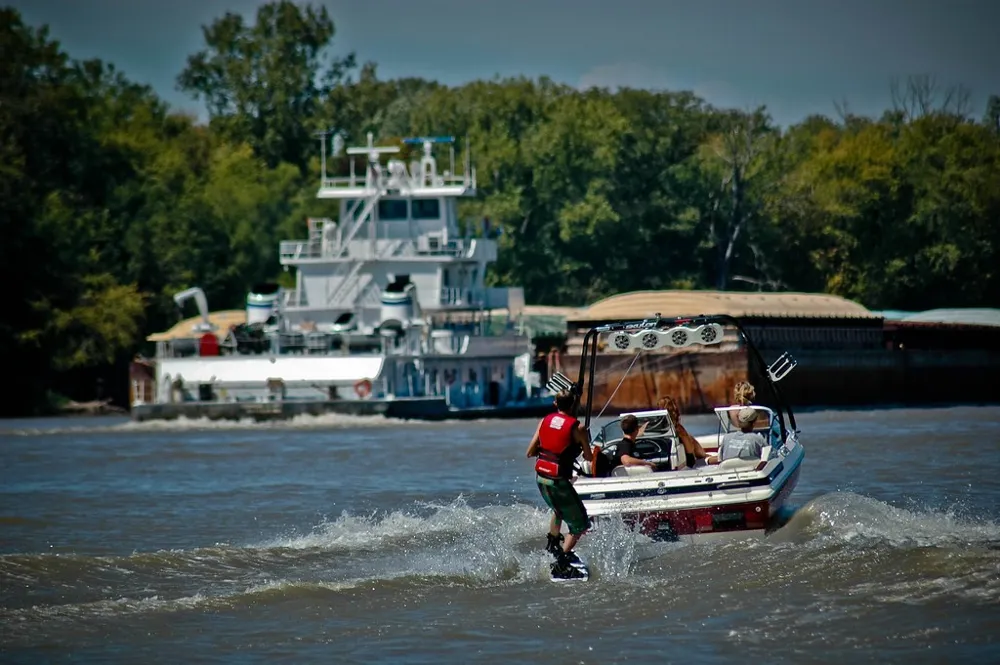
A wakeboard rope has one job: deliver a steady, direct pull so you can load the line and pop off the wake. That is why wakeboard ropes are built with little or no stretch, unlike the stretchier ropes used for water skiing and tubing. The quick version of how to choose:
- Just learning? A low-stretch poly-E combo is affordable and forgiving.
- Crossing the wake and jumping? Step up to a no-stretch Dyneema or Spectra mainline.
- Length: look for 65 to 75 feet with removable 5-foot sections, so you can start short and lengthen as you progress.
- Handle: about 13 to 15 inches wide, with a grip diameter that fits every rider's hands.
- Wakesurfing? You need a different, much shorter rope (see wakesurf ropes below).
The picks below are rope-and-handle combos plus two dedicated wakesurf ropes. Product specs are taken from the maker's descriptions on the Amazon listings as of November 2026; check the listing before you buy, since lengths and versions change.
Ronix Combo 3.0 Hide Grip
Best for most riders
- 15-inch handle, anti-roll BarLock
- 70 ft Solin hybrid line
- 4 take-off sections
Airhead Dyneema Flat Line
Best tangle-resistant line
- Thermal-coated flat Dyneema
- 70 ft, 4-section mainline
- Rope Keeper included
O'Brien 4-Section Poly
Best for beginners
- 50, 60, 65 or 70 ft settings
- EVA brick grip
- EVA floats on the line
Wakeboard Ropes and Handles Compared
| Rope | Mainline (as listed) | Length and Sections | Handle | Best For |
|---|---|---|---|---|
| Ronix Combo 3.0 Hide Grip | Solin hybrid | 70 ft, 4 sections | 15 in, embroidered hide grip, anti-roll | Most riders |
| Hyperlite SG X-Line Package | X-Line | 70 ft, three 5 ft sections | 15 in bar, Anti Roll System | All-round riding |
| Airhead Dyneema Flat Line | Thermal-coated flat Dyneema | 70 ft, 4 sections | 15 in EVA grip | Tangle resistance |
| Ronix Combo 5.0 Hide Grip | R6 rope | 80 ft, 6 sections | Hide grip, anti-roll | Advanced riders, long lines |
| O'Brien Fusion | Coated Dyneema | Several lengths | 15 in aluminum frame, padded grip | Light, stiff handle |
| Proline 75 ft Performance | 1/8 in Spectra | 75 ft, three removable 5 ft sections | 15 in leather grip | Floating no-stretch line |
| O'Brien 4-Section Poly | Poly | 50, 60, 65 or 70 ft | EVA brick grip | Beginners, family boats |
The Best Wakeboard Ropes and Handles
1. Ronix Combo 3.0 Hide Grip
A complete setup for riders who want one combo that handles everything from first wake crossings to bigger jumps. The listing describes a 15-inch handle with an embroidered hide grip, 3mm memory foam and a 1.15-inch diameter, a Dyneema "BarLock" anti-roll system, and a 70-foot Solin hybrid mainline with 4 sections. The handle is strung with 12-strand Dyneema.
Good to Know
- Anti-roll design keeps the handle from twisting in your hands
- 4 take-off sections for adjusting length
- Sold in several colors under different listings
Watch Out For
- Solin lines float less well than Dyneema, per wake retailers
- 1.15-inch grip may feel large for small hands
2. Hyperlite SG X-Line Package
Hyperlite's rope-and-handle package pairs the SG handle with an X-Line mainline. The listing gives a 15-inch bar, Hyperlite's ARS (Anti Roll System) and a 70-foot X-Line with three 5-foot sections. It suits riders who want a well-known wake brand's matched combo without moving to a top-tier handle.
Good to Know
- 15-inch bar for handle passes
- Three 5 ft sections for shortening the line
- Anti-roll handle
Watch Out For
- The listing doesn't name the X-Line fiber; check stretch specs with the seller
- Only three removable sections
3. Airhead Dyneema Flat Line
Airhead's no-stretch combo uses a flat, thermal-coated Dyneema rope that the listing says is "virtually impossible to tangle," floats well and comes in bright yellow for visibility. The 70-foot rope has a 5-foot handle bridle and a 4-section mainline (5, 50, 5, 5, 5), is listed with a 2,000-pound break strength, and includes a Rope Keeper for storage. The handle has a 15-inch EVA grip.
Good to Know
- No-stretch Dyneema line
- Floating, high-visibility rope
- Rope Keeper included
Watch Out For
- EVA grip is less premium than hide or leather grips
- Flat line feels different on the hands if you ever grab the rope
4. Ronix Combo 5.0 Hide Grip
A step up for riders who jump wake to wake and want a longer line. The listing describes an 80-foot mainline with 6 sections, a BarLock anti-roll handle with a diamond-stitch embroidered hide grip, and a handle strung with 12-strand Dyneema. The extra length and sections give room to move farther back as the wake gets wider.
Good to Know
- Longest mainline in this guide at 80 ft
- 6 sections for fine length adjustment
- Anti-roll hide grip handle
Watch Out For
- The listing doesn't spell out the R6 rope's fiber; confirm stretch specs
- More rope than beginners need
5. O'Brien Fusion with Dyneema Mainline
O'Brien's Fusion pairs a handle built on a 15-inch T6-6061 aluminum core frame with a coated Dyneema mainline that the maker describes as zero-stretch. The grip is sublimated padded polyester, and roll-stop end caps are meant to reduce handle roll. The listing offers several line lengths.
Good to Know
- Aluminum handle core, light and stiff
- Zero-stretch coated Dyneema line
- Roll-stop end caps
Watch Out For
- Check which line length and section setup the listing ships with
- Padded polyester grip, not hide or leather
6. Proline 75 ft Performance Wakeboard Rope
Proline's performance combo is built around a 1/8-inch Spectra mainline listed as non-stretch and WSIA approved. The listing says the rope is 100% buoyant, gives it a 15-inch leather grip with 4-inch molded end caps, and includes three removable 5-foot sections to shorten it for beginners.
Good to Know
- Spectra line that floats
- Leather grip
- 75 ft with three 5 ft sections
Watch Out For
- Leather grips need rinsing and drying to last
- Fewer sections than some combos
7. O'Brien 4-Section Poly
A simple, budget-friendly combo for family boats and first-time riders. The listing gives adjustable lengths of 50, 60, 65 and 70 feet (including the handle), an EVA "brick" grip described as tacky and easy to hold, soft molded PVC end caps and EVA floats that keep the handle visible on the surface. As a poly rope, it has a little stretch, which is forgiving for beginners but softer than a Dyneema line when you start jumping.
Good to Know
- Short settings for learning close to the boat
- Floats keep the handle on the surface
- Simple, budget-tier option
Watch Out For
- Some stretch, like all poly ropes
- Tops out at 70 ft, so advanced riders will outgrow it
Rope Materials: Poly-E vs Spectra vs Dyneema
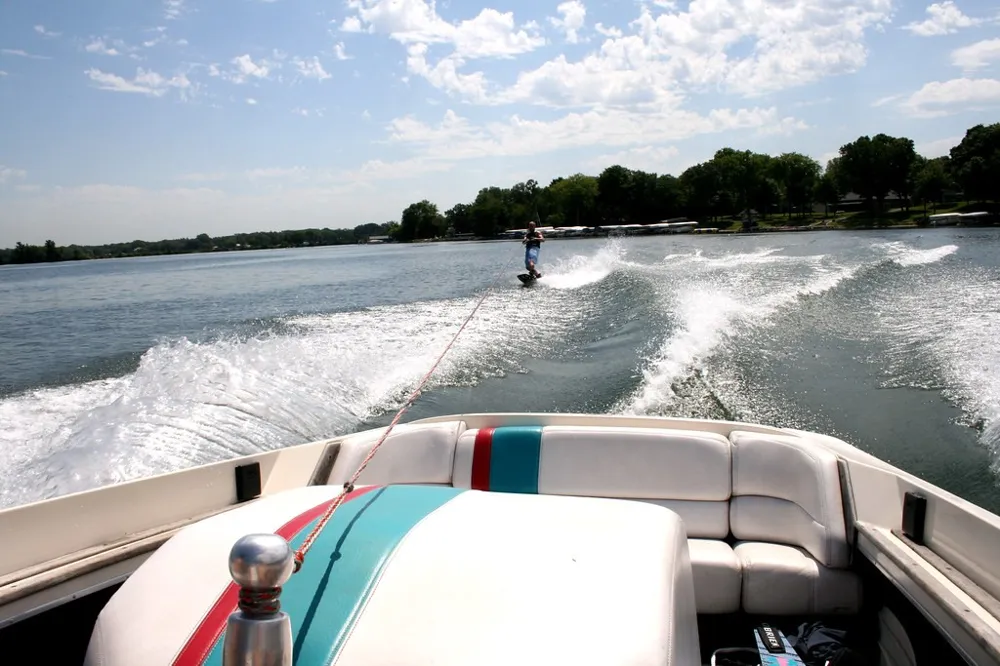
The mainline material decides how much the rope stretches, whether it floats and how long it lasts. Wakeboard retailers agree on the basic rule: stretch is bad for wakeboarding, because a rope that gives absorbs the energy you build when you cut into the wake and can stop a trick short.
| Material | Stretch | Floats? | Best For |
|---|---|---|---|
| Poly-E (polyethylene) | Low; evo puts it at about 2–3% of its length under normal riding load | Varies by rope | Beginners and budget setups |
| Solin | Very low; similar strength to Dyneema per Wakemakers | Less well; can sink toward the prop | Mid-range combos |
| Spectra | Described as zero stretch | Yes | Intermediate to advanced riders |
| Dyneema | Described as no stretch, "as strong as wire" | Yes (neutrally buoyant per Wakemakers) | Intermediate to advanced riders |
Poly-E is the least expensive option. Its slight give softens jerks from bumpy water, which evo notes can suit beginners, but it works against advanced riders trying to load the line. Spectra and Dyneema are high-performance polyethylene fibers; evo describes Spectra as 10 times stronger than steel, ultra-light and floating, and Dyneema as no-stretch and resistant to salt water, UV and abrasion. Solin is a cheaper alternative with similar strength, but Wakemakers and The House both note that it floats less well and tangles more easily.
Many lines also have a coating (PVC or another adhesive coating) that, according to retailers, adds strength, UV protection and tangle resistance. Coated flat lines, like Airhead's, are sold specifically for tangle resistance.
Rope Length and Sections for Progression
Wakeboard ropes run from about 55 to 80 feet. Most have removable 5-foot sections (also called take-offs) near the boat end, so you can change the length quickly and riders of different levels can share one rope.
- Shorter rope: keeps you closer to the boat, where the wake is narrower, which makes it easier to cross. Good for learning and for kids.
- Longer rope: puts you where the wake is wider and lets you carry more speed into it, so you get more air time and distance. Advanced riders go long.
| Stage | Typical Rope Length |
|---|---|
| First attempts and beginner riding | About 60–65 ft |
| Intermediate (wake crossings, small jumps) | About 65–75 ft |
| Advanced (wake to wake) | About 75–85 ft |
These ranges match our how to wakeboard guide, which pairs each stage with a typical boat speed. Lengthen the rope one section at a time as your landings get consistent. When buying, check whether the listed length includes the handle and the handle bridle, and how many sections you get: a rope with more sections lets you fine-tune length for different riders and wakes.
Choosing a Handle: Width, Grip and Diameter
You hold the handle, not the rope, so it shapes how comfortable a session feels.
- Width: most wakeboard handles are about 13 to 15 inches wide; evo lists a wider overall range of 5 to 15 inches, against 11 to 12 inches for water ski handles. A wider bar makes handle passes and behind-the-back tricks easier. All the combos above use 15-inch handles.
- Grip material: options run from EVA foam (soft, cushioned, common on budget and mid-range handles) to rubber, leather, hide and chamois (more grip and a premium feel). Textured or embroidered grips add hold when wet.
- Diameter: pick a diameter everyone who uses the handle can close their hands around. Wakemakers suggests smaller grips for kids, many women and anyone with smaller hands, and larger grips for bigger hands.
- Core and weight: handles are built from EVA, aluminum or carbon fiber; lighter, stronger cores cost more.
- Anti-roll: systems such as Ronix BarLock, Hyperlite ARS and O'Brien's roll-stop end caps keep the handle from rotating in your hands.
- V and T handles: add-ons that attach to the main handle so you can pre-wrap it behind your back for 360s and other spins instead of passing it mid-trick.
Many riders wear thin water-sports gloves to reduce blisters on long days; a soft grip helps too.
Wakeboard Rope vs Ski, Tube and Kneeboard Ropes
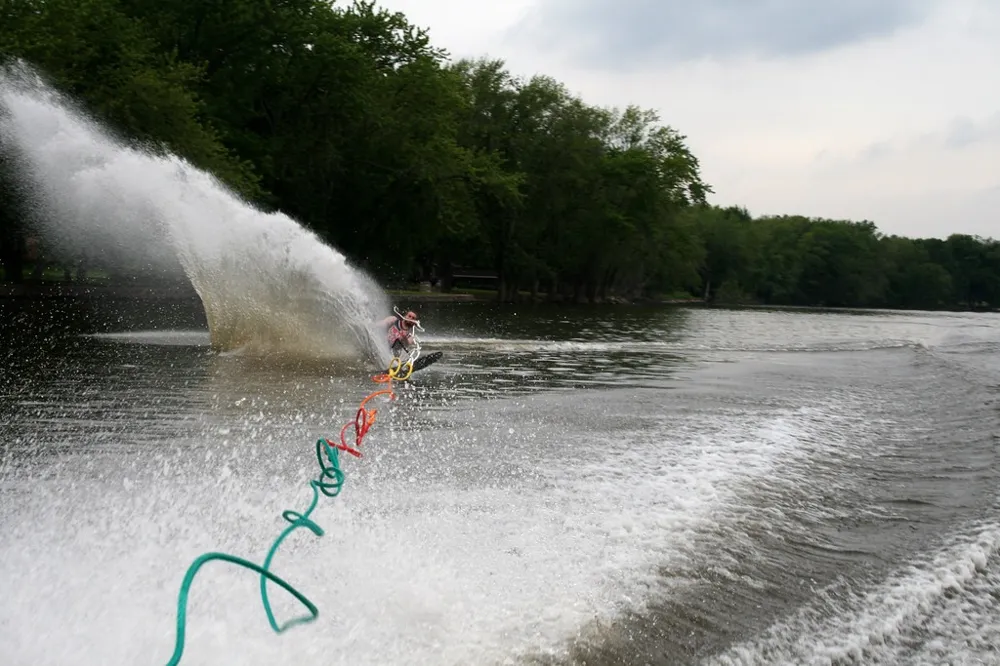
Tow ropes look similar but are built for different jobs. Using the wrong one is either uncomfortable or unsafe.
| Rope Type | Stretch | Typical Length | Handle |
|---|---|---|---|
| Wakeboard | Low to none | About 55–80 ft, 5 ft sections | Wide (about 13–15 in), softer foam or premium grip |
| Water ski | Some stretch (often nylon, per Jobe) | Often 70–75 ft; slalom ropes have short sections | Shorter, firmer handle |
| Towable tube | Designed with stretch; some are bungee | Many are 50–65 ft | No handle; rated by rider count |
| Kneeboard | Similar to ski ropes | Similar to ski ropes | Standard; some boards use a hook handle |
| Wakesurf | Varies; thick line | About 10–25 ft | Short, padded, often with knots or floats |
- Ski ropes: a slight stretch smooths the pull for skiers, and the shorter, firmer handle suits skiers, who tend to fall forward. A wakeboard rope can tow a skier, but a dedicated ski rope with slalom sections is better; see how to water ski.
- Tube ropes: rated by rider count and strength. Jobe advises matching the rope to the towable (a bigger-rated rope can pull a smaller tube, never the reverse). Never use a wakeboard rope for a tube; see towable tubes for tube ropes.
- Kneeboard: any ski rope works for cruising; Jobe suggests a less stretchy rope or a wakeboard rope for tricks.
Combo vs Separate Rope and Handle
Most wakeboard ropes are sold as a combo: handle and mainline together. That's the easy choice, because the handle bridle and mainline are matched and you're ready to ride. Buying a separate handle and mainline makes sense when:
- You want to upgrade one part, such as moving from a poly line to Dyneema while keeping a handle you like.
- Different riders on the boat want different handles (grip size, width) on the same mainline.
- Your old rope is frayed or worn but the handle is fine, or the reverse.
When mixing parts, check that the handle's connection loop and the mainline's end loop are compatible, and use only rope and handles made for towing.
Rope Safety on the Boat
- Inspect before every session. Look for fraying, cuts, worn spots at the loops, a damaged bridle or a cracked handle. Replace a damaged rope rather than knotting it.
- Keep it away from the propeller. Pull the rope in as soon as a rider falls, and choose a floating line or one with floats near the handle; non-floating lines can sink toward the prop.
- Never wrap the rope around any part of your body or put an arm through the handle. Let go when you fall.
- Use the right tow point. Attach wakeboard ropes to the boat's tower or pylon, and ask the boat maker if unsure.
- Wear a life jacket and have a spotter. Many states require an observer when towing a rider and a Coast Guard-approved life jacket for the person being towed; see wakeboard life vests. Rules vary by state, last checked November 2026; check your state's boating agency. This is general safety information, not legal advice.
Wakesurf Ropes Are Different

A wakesurf rope is a separate product. It is short and thick, usually about 10 to 25 feet, with a short padded handle and knots, floats or grips along the line so you can "climb" toward the boat and into the pocket. A long wakeboard rope leaves you stuck behind the wave and leaves extra rope trailing near the boat. Learn the start and how to drop the rope in our how to wakesurf guide, and compare boards in best wakesurf boards.
8. Ronix Bungee Surf Rope
Ronix's surf rope has a 10-inch handle with an embroidered hide grip, 3mm memory foam and a 1.15-inch diameter, plus 7-inch foam floats. The listing gives a 25-foot sectioned rope (the title says 5 sections, the feature list says 4; check the listing).
Good to Know
- Short, sectioned surf line
- Foam floats near the handle
- Same hide grip feel as Ronix wakeboard handles
Watch Out For
- Section count differs within the listing
- For wakesurfing only
9. SWELL Wakesurf Braided Rope
SWELL's braided surf rope has a 10-inch floating suede handle with embroidery and 7-inch foam floats meant to keep the rope floating and away from the propeller. The listing mentions a lifetime warranty from the small US company that makes it.
Good to Know
- Floating handle and line floats
- Suede grip
- Warranty listed by the maker
Watch Out For
- Check the listing for length and section details
- For wakesurfing only
How to Care for and Store a Tow Rope
- Coil it after every set. Discover Boating suggests loops about 1 to 3 feet long, a half-turn of the wrist on each loop to prevent knots, then wrapping the loose end around the coils and handle and pulling it tight. A rope keeper or winder does the same job.
- Rinse after salt water and let the rope and handle dry before storing, especially leather and hide grips.
- Store it out of direct sun. UV breaks down synthetic fibers over time, which is why makers advertise UV-resistant fibers and coatings; a dry locker or bag beats the deck.
- Don't drag it across docks, sand or rough boat edges, which wears the fibers and the coating.
- Replace it when worn. Fraying, flattened or stiff spots, damaged loops or a handle with a cracked core are signs it's time for a new rope or handle.
Related Gear and Guides
Round out your setup with the best wakeboards, bindings, wakeboard life vests and helmets. Size a board with the wakeboard size chart, learn the basics in how to wakeboard and wakeboard tricks for beginners, or try riding without a boat at a cable park. Buying for a young rider? See kids' wakeboards.
Frequently Asked Questions
Can I use a water ski rope for wakeboarding?
It works for a casual first pull, but it isn't ideal. Ski and tube ropes stretch more, and that stretch absorbs the pop when you cut into the wake, so most wake retailers recommend a low- or no-stretch wakeboard rope.
How long should a wakeboard rope be?
Wakeboard ropes run about 55 to 80 feet. Beginners usually start around 60 to 65 feet, then lengthen the rope in 5-foot sections as they learn to clear the wake.
What is the best material for a wakeboard rope?
Dyneema and Spectra lines are the no-stretch, premium choice for riders jumping the wake. Poly-E ropes stretch a little, cost less and are fine for beginners.
How wide should a wakeboard handle be?
Most wakeboard handles are about 13 to 15 inches wide, wider than a typical 11 to 12 inch ski handle. The extra width makes handle passes and behind-the-back tricks easier.
Do wakeboard ropes float?
Many do, including most Dyneema and Spectra lines and ropes with foam floats near the handle. Solin lines float less well and can sink toward the propeller, so check the listing if floating matters.
Should I buy a combo or a separate rope and handle?
A combo is simplest and makes sure the handle and mainline match. Buying separately lets you upgrade one part, such as a better handle, or share one mainline among riders who prefer different handles.
Can I use a wakeboard rope for wakesurfing?
No. Wakesurf ropes are short, thick and usually about 10 to 25 feet long. A long wakeboard rope leaves you stranded behind the wave and creates a tangle hazard near the boat.
How do I keep a wakeboard rope from tangling?
Coil it in even loops after every set, giving your wrist a half-turn on each loop, then wrap the end around the coils and handle. A rope keeper or winder makes this easier.