Who Invented the Skateboard? Surfers, Shops and Patents (2026)
There is no single inventor. The skateboard grew out of homemade scooters and 1950s California sidewalk surfing, then surf shops and toy makers turned it into a product.
Who Invented the Skateboard? The Short Answer
Nobody invented the skateboard alone. Guinness World Records says it is impossible to state for certain when the skateboard was invented or by whom, and Wonderopolis, The House and EBSCO's research guide give the same answer. The board grew out of homemade scooters and roller skates, then took its modern form in California in the late 1940s and 1950s, when surfers nailed roller-skate wheels to planks so they could "surf" the sidewalks when the waves were flat.
What we can name are the people and companies behind the key firsts: the first boards sold in shops, the first mass-produced board, and the inventors of the parts that made modern skating possible. This page sets out each claim with its source. For the full story from the 1950s to the Olympics, see our skateboarding history timeline.
Key Facts at a Glance
| Question | Best-Supported Answer |
|---|---|
| Who invented it? | No single inventor; California surfers and early board makers share the credit |
| When? | Homemade wheeled boards from the early 1900s; the surf-style skateboard in the late 1940s and 1950s |
| Where? | Southern California (Hermosa Beach, Venice, Los Angeles area) |
| First boards sold commercially | Bun Board (1957), Humco and Greg Noll (1958), Roller Derby (1959) |
| First pro team and contest | Makaha, founded by Larry Stevenson, 1963 |
| Kicktail | Larry Stevenson, patented 1969 |
| Urethane wheels | Frank Nasworthy, early 1970s (usually dated 1972) |
| The ollie | Alan "Ollie" Gelfand, Florida, late 1970s |
Sidewalk Surfing: Where and When Skateboarding Started
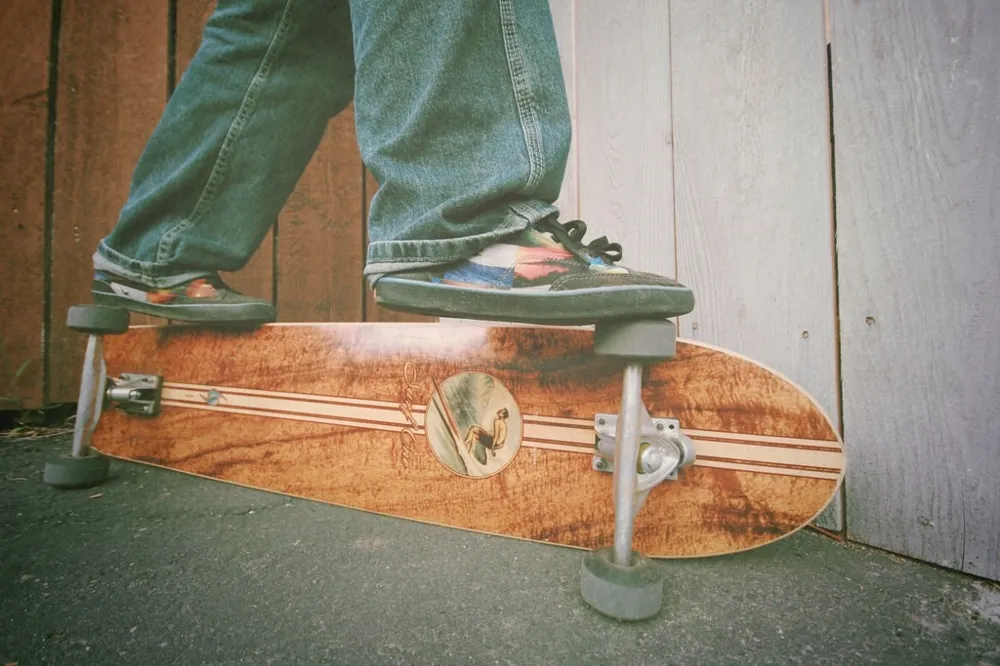
Most sources trace skateboarding to Southern California in the middle of the 20th century. Greenlight and Stoked Ride Shop say the late 1940s, while Wonderopolis and EBSCO say the 1950s, so the safest answer is "the late 1940s to 1950s." Red Bull notes that the exact origin is debated, but it is largely agreed that skateboards began in the United States.
The motive was simple. Surfers wanted something to ride when the ocean was flat, so they called it "sidewalk surfing." Patti McGee, one of the first professional female skaters, told History.com that riders started by taking their rink skate wheels off and nailing them to a board. Early decks were scrap wood or old crates on metal roller-skate wheels and trucks, with no grip and little control. That surf link still shapes skating today, from surfskates to the way riders talk about carving. Read more about the parent sport in our history of surfing.
Before Skateboards: Scooters and Crate Boards
Boards with wheels are older than surf culture. Guinness notes that patents for wheeled boards riders could propel themselves on first appeared in the early 20th century, and Britannica says crude homemade boards, often just roller-skate wheels on a plank, were built after 1900. The Strong National Museum of Play traces scooters with two to four wheels back to the early 1900s.
In the 1940s and 1950s, kids built crate scooters from a milk crate or fruit box, a 2x4 and roller-skate wheels. According to the Strong, they eventually dropped the box and handlebars and rode the bare board, which is essentially a skateboard. Skate historian Jim Goodrich's timeline also lists factory-made scooter hybrids, such as the 1930s "Scooter Skate" and the "Skeeter Skate" from around 1945, which he describes as the first to use steering axles, or trucks.
Why No One Person Gets the Credit
- It was built, not patented. Early riders made their own boards from spare parts, so there is no first design on record.
- Many people had the same idea at once. The House and Wonderopolis both note that several people in California came up with it around the same time.
- "First" means different things. The first homemade board, the first board sold in a shop and the first mass-produced board are three separate claims with different answers.
- Sources disagree on dates. Even well-known milestones, like the year urethane wheels or the ollie arrived, vary by a year or two between sources.
The First Commercial Skateboards
Once surfers were riding homemade boards, shops and toy companies started selling them. Guinness lists several early American commercial boards, and other sources add the Bun Board. The claims below are the ones most often cited as "first."
| Year | Board or Maker | Claim and Source |
|---|---|---|
| 1957 | Bun Board (Alf Jensen, Hermosa Beach) | Steel-wheeled board sold locally; History.com and Wikipedia describe it as the first commercially available skateboard |
| 1958 | Humco | Listed first in Guinness's "first skateboards" entry |
| 1958 | Greg Noll | Listed by Guinness |
| 1959 | Roller Derby Skate Board (La Mirada, California) | Widely called the first mass-produced skateboard; a flat red board with steel wheels, sold at roller derby rinks and later through Sears |
| 1962 | Val Surf (Bill Richards' surf shop) | Made its own boards with Chicago Roller Skate Company wheels; Goodrich calls it the first known retail shop to sell skateboards |
| 1963 | Makaha (Larry Stevenson) | First professional boards and team; sponsored one of the first contests, in Hermosa Beach |
| 1964 | Hobie (Hobie Alter with Vita-Pakt) | Surf brand that helped take wooden skateboards mainstream |
Bill Richards and Val Surf. Some articles name Bill Richards as "the inventor" because his Los Angeles-area surf shop paired wooden boards with roller-skate wheels from the Chicago Roller Skate Company. The Strong and Goodrich's timeline date that to 1962, and Mark Richards has said the brick-and-mortar store opened in October 1962. That makes Val Surf an early seller, not the first skateboard. Some articles also wrongly link Richards to the Roller Derby board.
Larry Stevenson and Makaha. A Venice Beach lifeguard and the publisher of Surf Guide magazine, Stevenson founded Makaha in 1963, formed the first professional skateboard team and sponsored early contests. He is often called the father of the modern skateboard because of the kicktail he patented later, but he did not invent the board itself. The early boom was huge but short. Makers reportedly turned out about 50 million boards between 1963 and 1965, before injury worries and city bans crashed sales.
Who Invented the Parts of the Modern Skateboard
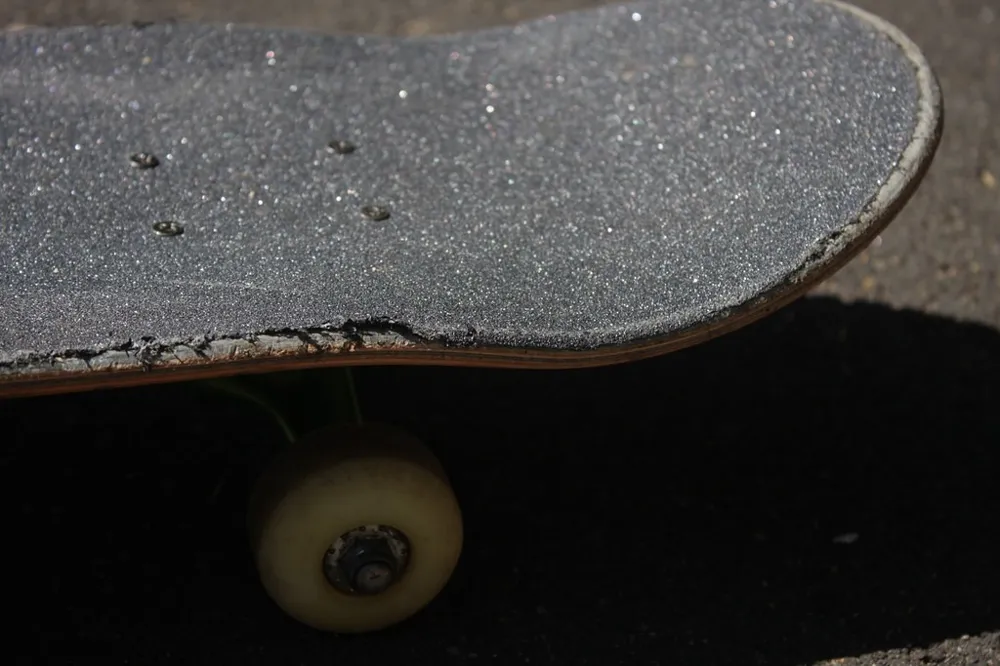
Today's board has little in common with a plank on steel wheels. These inventions turned a toy into the board in our skateboard anatomy guide:
| Part | Who and When | Why It Mattered |
|---|---|---|
| Kicktail | Larry Stevenson, patented 1969 (US Patent 3,565,454) | A raised tail to press on, which made kickturns, wheelies and later the ollie possible |
| Urethane wheels | Frank Nasworthy, early 1970s (History.com and the Strong say 1972; Red Bull says 1973) | Grip, speed and a smooth ride compared with steel and clay wheels; sold as Cadillac Wheels |
| Skate-specific trucks | Brands such as Bennett, Tracker and Independent in the 1970s | Replaced roller-skate-style trucks with designs built for skateboarding |
| Clay wheels | Adopted around 1963 (the Strong and Goodrich) | Quieter than steel but slippery, a factor in early injuries |
Nasworthy's urethane wheel is often credited with saving skateboarding after the 1960s crash, because it made riding safer and faster. Learn how wheel hardness still matters in hard vs soft skateboard wheels, and how modern decks are pressed in skateboard deck construction.
Who Invented the Ollie and Other Tricks
The ollie, the no-hands jump behind nearly every street trick, is credited to Alan "Ollie" Gelfand in Florida. He first did it on the banks and walls of skateparks. Dates vary: Guinness lists 1977, while History.com and Britannica say 1978. Goodrich notes some debate over whether others found the move at about the same time. Rodney Mullen adapted the ollie to flat ground in the early 1980s, usually dated to 1982, which opened the door to modern street skating and flip tricks.
Red Bull credits Curt Lindgren with an early kickflip in 1978, and Mullen with developing several flip tricks after that. Learn the trick yourself in how to ollie, or see who shaped the sport in the best skateboarders of all time.
Timeline: How the Skateboard Was Invented
| Year | Milestone |
|---|---|
| Early 1900s | Scooters and first patents for wheeled boards |
| 1930s–1940s | Factory scooter-skate hybrids; homemade crate scooters |
| Late 1940s–1950s | California surfers start sidewalk surfing on homemade boards |
| 1957 | Bun Board sold in Hermosa Beach |
| 1958 | Humco and Greg Noll boards (Guinness) |
| 1959 | Roller Derby mass-produces skateboards |
| 1962 | Val Surf sells its own boards |
| 1963 | Makaha forms the first pro team; first contest in Hermosa Beach |
| 1964 | Hobie skateboards; first skateboard magazine launches |
| 1965–1966 | Boom turns to bust amid safety worries and bans |
| 1969 | Larry Stevenson patents the kicktail |
| 1972 | Frank Nasworthy's urethane wheels |
| 1977–1978 | Alan Gelfand's ollie |
| 1982 | Rodney Mullen's flat-ground ollie |
The story continues with vert, street skating, the X Games and the Olympics in our full skateboarding history and Olympic skateboarding guide.
Common Myths and Mix-Ups
- "Roller Derby made the first skateboard." It is usually called the first mass-produced board, but Guinness and History.com list earlier commercial boards.
- "Larry Stevenson invented the skateboard." He invented and patented the kicktail and built some of the first pro boards, not the skateboard itself.
- "Frank Nasworthy invented the skateboard." He introduced urethane wheels, which revived skating in the 1970s.
- "Tony Hawk invented skateboarding." Skating was decades old when he turned pro. He is famous for contest wins and the first 900, landed at the 1999 X Games.
- "The ollie came first." The ollie arrived in the late 1970s, about 20 years after commercial boards.
Keep Exploring
See how boards changed shape in types of skateboards and vintage skateboards, the story behind deck graphics in skateboard art history, and more trivia in skateboarding facts. Pioneers like Patti McGee are covered in famous female skateboarders. Ready to ride? Start with learn how to skateboard.
Frequently Asked Questions
Who is credited with inventing the skateboard?
No one person. Guinness World Records says it is impossible to say for certain who invented the skateboard or when. Credit is shared by the California surfers who built their own boards in the 1950s and the early companies that began selling them.
When was the skateboard invented?
Homemade wheeled boards existed in the early 1900s, but the skateboard as we know it took shape in California in the late 1940s and 1950s. Commercial boards followed from about 1957 to 1959.
Where was skateboarding invented?
Skateboarding is generally traced to Southern California. Early milestones happened in Hermosa Beach, Venice Beach and La Mirada.
What was the first skateboard company?
Accounts differ. Alf Jensen's Bun Board was sold in Hermosa Beach from 1957, Guinness lists Humco and Greg Noll boards in 1958, and Roller Derby is often called the first mass-produced skateboard in 1959.
Who invented the kicktail?
Larry Stevenson of Makaha patented the kicktail in 1969 (US Patent 3,565,454). It let riders lift the nose and is the basis of almost every modern trick.
Who invented skateboard wheels made of urethane?
Surfer Frank Nasworthy introduced polyurethane skateboard wheels, sold as Cadillac Wheels, in the early 1970s. Most sources give 1972.
Did Tony Hawk invent skateboarding?
No. Skateboarding existed decades before Tony Hawk. He is known for his contest career and for landing the first 900 at the 1999 X Games.