Types of Skateboards: Which Board Is Right for You? (2026)
From popsicle street decks to surfskates and longboards, here's what each type of skateboard is built for and how to pick one.
Why So Many Types?
Skateboards have evolved over decades into boards for very different kinds of riding. A board built for flip tricks feels wrong for long-distance pushing, and a downhill longboard is useless at the skatepark. Choosing the right type comes down to what you want to do: learn tricks, cruise around town, carve like a surfer, commute or bomb hills. Here's a guide to the main types and what each is for.
Skateboard Types at a Glance
| Type | Typical Length | Wheels | Best For |
|---|---|---|---|
| Street (popsicle) | About 28–33" | Small, hard | Tricks, skateparks |
| Cruiser | About 27–33" | Larger, soft | Cruising, short commutes |
| Mini cruiser (penny style) | About 22–27" | Soft | Portability, short trips |
| Old-school | About 29–33" | Medium to large | Bowls, pools, cruising |
| Surfskate | About 28–34" | Soft | Surf-style carving, pumping |
| Longboard | About 33–48"+ | Large, soft | Cruising, commuting, carving |
| Downhill and freeride | About 36–42" | Large, slide-ready | Speed and slides |
| Electric | Varies | Varies | Powered commuting |
Street Skateboards (Popsicle Decks)
The standard modern skateboard has a symmetrical "popsicle" deck with an upturned nose and tail, small hard wheels and narrow trucks. It's built for ollies, flip tricks, grinds and skatepark riding. If you want to learn tricks, this is the board to get. Deck width is the key size choice. See skateboards for beginners and skateboard decks.
Check Price on a CCS CompleteCruisers
Cruisers have shaped decks, often with a kicktail, and larger, softer wheels that roll smoothly over cracks and rough pavement. They're great for getting around campus or town and doing a few basic tricks. They're less suited to technical flip tricks.
Check Price on a Landyachtz DinghyMini Cruisers (Penny-Style Boards)
Small plastic cruisers around 22 to 27 inches are light, portable and fun for short trips. They're twitchy at speed and not built for tricks. See penny boards.
Old-School Boards
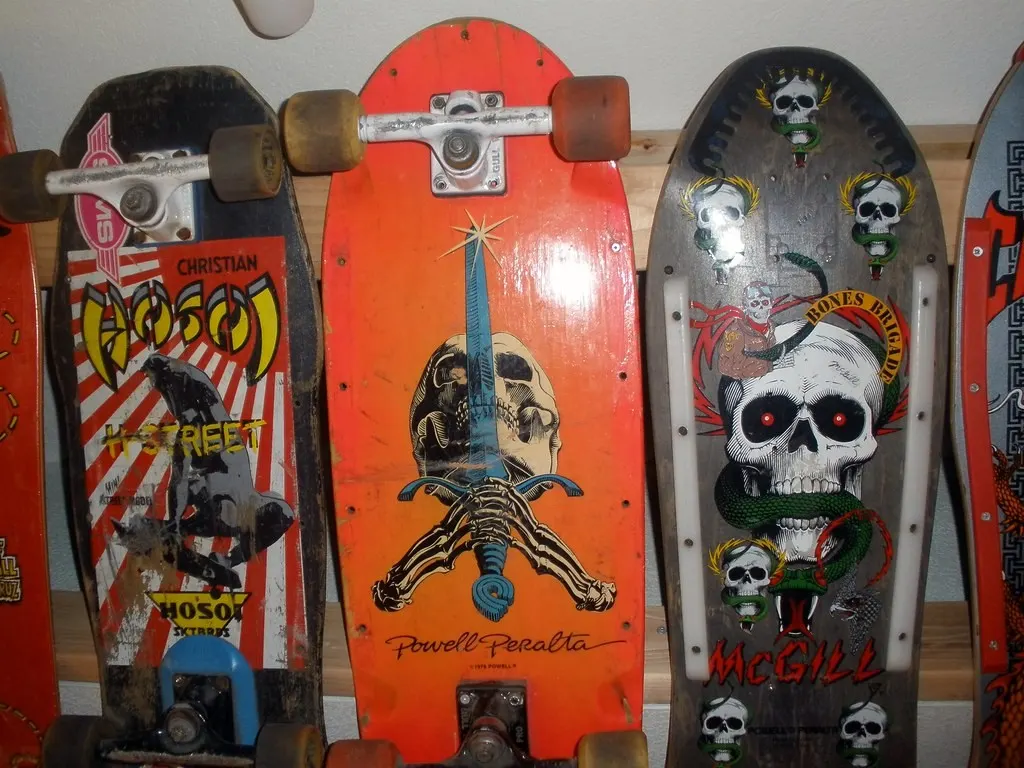
Inspired by 1970s and 1980s shapes, old-school boards are wider with a flat nose and a wide tail. They're popular for pools, bowls and cruising, and for skaters who love the retro look.
Surfskates
A surfskate uses a special front truck that pivots and turns far more than a normal truck. You can generate speed by pumping, as you would on a wave, without pushing. Surfers use them to train on land. See what is a surfskate? and the best surfskates.
Check Price on a Carver SurfskateLongboards
Longboards are longer, more stable boards with soft wheels and wider trucks. They suit cruising, commuting, carving and long-distance pushing. Subtypes include:
- Pintail: classic surf-shaped cruiser.
- Drop-through: trucks mount through the deck for a lower, more stable ride.
- Drop-down (dropped deck): the deck dips between the trucks for easy pushing.
- Dancer: very long, flexible decks for dance steps and freestyle.
- Downhill and freeride: stiff, symmetrical decks for speed and slides.
See types of longboards, the best longboards and longboard vs skateboard.
Freestyle Boards
Freestyle skating is flatland trick riding, with spins, rail stands and footwork. Freestyle boards are short, narrow and symmetrical with small wheels.
Slalom Boards
Slalom boards are built for weaving through cones at speed, with stiff or flexible decks and responsive trucks. It's a niche racing discipline.
Electric Skateboards
Electric skateboards add a motor and battery controlled by a handheld remote. They're mostly longboard or cruiser shaped and used for commuting. See electric skateboards.
How to Choose the Right Type
| If You Want To | Choose |
|---|---|
| Learn tricks and skate parks | Street popsicle skateboard |
| Ride around town on rough roads | Cruiser |
| Carry a board everywhere | Mini cruiser |
| Practice surfing on land | Surfskate |
| Commute or cruise long distances | Longboard |
| Go fast downhill | Downhill longboard |
| Ride without pushing | Electric skateboard |
Parts That Change How a Board Rides
- Wheels: hard and small for tricks, soft and large for cruising. See skateboard wheels.
- Trucks: standard kingpin for tricks, reverse kingpin for longboards.
- Deck width and concave: affect foot room and control.
- Bearings: affect roll speed and smoothness. See skateboard bearings.
Ready to ride? Start with how to skateboard and skateboard tricks for beginners.
Frequently Asked Questions
What type of skateboard is best for beginners?
A standard popsicle skateboard around 7.75 to 8.25 inches wide is best if you want to learn tricks. A cruiser or longboard is easier if you mostly want to ride around and commute.
What is the difference between a skateboard and a cruiser?
A standard skateboard has a symmetrical popsicle deck, small hard wheels and is built for tricks. A cruiser has a shaped deck, larger soft wheels and is built for smooth riding on streets and paths.
What is a surfskate?
A surfskate has a special front truck that pivots and turns sharply, letting you pump and carve like surfing on land. Surfers use them to practice at home.
Is a longboard a type of skateboard?
Yes. Longboards are longer skateboards, usually over 33 inches, with soft wheels and stable trucks for cruising, carving, commuting and downhill riding.
What size skateboard should I get?
For standard boards, width matters most: about 7.5 to 8 inches for smaller feet and technical street skating, 8 to 8.5 inches for most adults and 8.5 inches and up for transition and bowls.