Mountainboarding Explained: Snowboarding on Dirt (2026)
What a mountainboard is, how channel trucks, pneumatic tires, bindings and brakes work, where to ride, the gear you need and how to pick your first board.
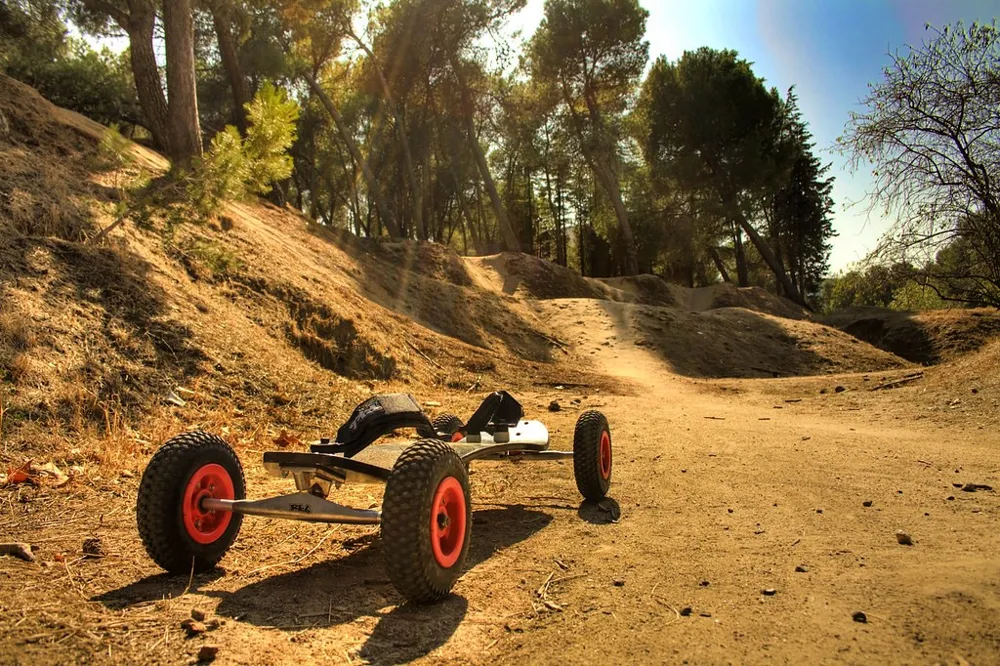
What Is Mountainboarding?
Mountainboarding is riding an off-road board down hills, trails and jumps. A mountainboard looks like a long skateboard with snowboard-style foot bindings, heavy-duty trucks and four air-filled tires. MBS, the best-known maker, describes it as a four-wheeled off-road board that mixes elements of snowboarding, skateboarding and mountain biking. You can ride it all year, with or without bindings.
Because the tires are big and soft, a mountainboard rolls where a skateboard would stop dead: grass, dirt, gravel, packed sand and rough trails. You ride sideways like a snowboarder, steer by leaning onto your toes or heels, and control speed with carved turns and powerslides. Most boards have no brakes, and that's one of the first things to understand before you ride.
This guide covers the parts of a board, a short history, the riding styles, where to ride, how to take your first runs, the safety gear you need, electric mountainboards and how to choose a board. If you're new to boards in general, our guides to skateboard anatomy and types of skateboards explain the street-board side of the family.
A Short History of Mountainboarding
Mountainboarding grew in the early 1990s, when snowboarders and surfers in several countries looked for a way to ride hills without snow. The early record is patchy and some claims are weakly sourced, so treat the dates below as reported rather than settled.
| Year | Milestone (as reported) |
|---|---|
| 1978 | The first recorded hill ride on a skateboard that Wikipedia counts as mountainboarding, at a bumpy hill in Malden, Massachusetts |
| 1989 | An "All Terrain Dirtboard" is reportedly patented and sold in the US (unverified) |
| 1992 | Mountainboarding is said to start in the UK, the US and Australia at about the same time. The UK company noSno is founded |
| 1993 | Mountain Board Sports (MBS) is co-founded in the US, and US competitions begin |
| 1997 | ATBA-UK, the UK's national governing body for all-terrain boarding, is formed and UK competitions begin |
| 1998 | MBS boards start being distributed in the UK and Europe |
| 2004 | The first World Freestyle Championships listed on Wikipedia |
| 2009 | World Downhill Championships listed at Les Saisies, France |
| 2013 | World Boardercross Championships listed in Novi Sad, Serbia |
World freestyle and downhill championships were still being held as of 2026, and the US Open Mountainboard Championships have been held in Snowmass, Colorado. Electric mountainboards, covered below, are the biggest recent change to the sport. For the street-board backstory, see our skateboarding history.
Mountainboard Anatomy: Every Part Explained
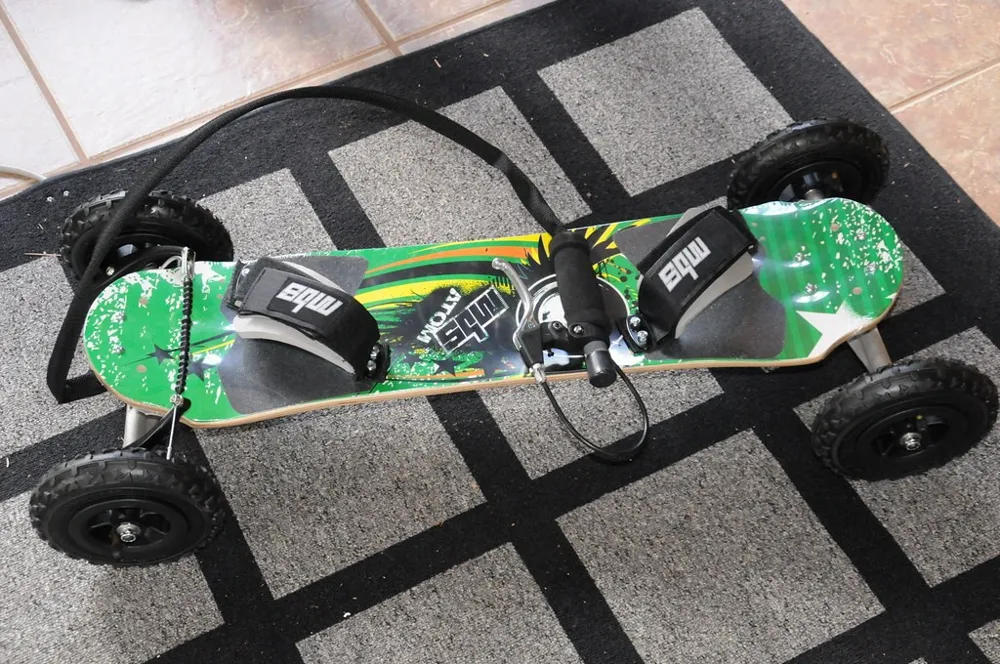
A complete mountainboard has six main parts. Each one changes how the board rides, so it's worth knowing them before you buy.
| Part | What It Is | What to Know |
|---|---|---|
| Deck | The board you stand on, usually about 90 to 110 cm long | Made from laminated wood or composites such as maple with fiberglass or carbon. Longer decks are more stable; shorter decks spin and flip more easily |
| Trucks | The metal assemblies that hold the axles and let the board turn | Channel trucks (shock blocks and springs) or skate-style trucks (kingpin and bushings). Covered in the next section |
| Tires and hubs | Pneumatic (air-filled) tires on metal or plastic hubs, roughly 8 to 13 inches | 8 inch tires suit freestyle, 9 to 10 inch tires suit downhill, and 13 inch or bigger tires suit sand and mud. Tires come in lighter 2-ply or tougher 4-ply |
| Bindings | Foot straps that hold you to the deck | Types include ratchet straps, Velcro straps, snowboard-style bindings, bar bindings and a simple heel strap |
| Bearings | Sealed bearings inside the hubs | Larger than skateboard bearings; for example, the MBS Comp 95 uses 12 x 28 mm bearings |
| Brakes (optional) | Hand-lever brakes acting on the front wheels | Drum, hydraulic disc, hydraulic rim and cable V-brake designs exist. Mainly used for big mountain riding, and many boards ship without them |
The deck shape matters too. Most decks have raised tips at each end (the Comp 95's tip angle is listed as 30 degrees) and some concave, which helps you push against the bindings when you carve. Deck stiffness ranges from soft and flexy, which is more comfortable on bumps, to stiff, which is more stable at speed. Compare this with a street deck in our skateboard deck construction guide.
Channel Trucks vs Skate-Style Trucks
Trucks are the biggest difference between mountainboard designs. There are three main types.
- Channel trucks. The axle sits in a channel below the hanger and is mounted at about 35 degrees. Polyurethane shock blocks (sometimes called egg shocks) and, on some designs, springs sit between the hanger and the axle, so the truck both turns and soaks up bumps. You tune them by swapping blocks of different hardness. MBS's Matrix trucks are a channel design.
- Skate-style trucks. These work like skateboard trucks: a rigid axle on a hanger, a single kingpin bolt and bushings for turning. They're bulkier than skateboard trucks with a longer axle. MBS's ATS trucks are adjusted by tightening or loosening the kingpin.
- Floating pivot trucks. The design associated with noSno uses two kingpin-type bolts to form a floating pivot. Turning is set by bolt tension or bushing hardness.
Channel trucks are the common choice for freeride and downhill because they combine turning with some suspension. Skate-style trucks feel more like a longboard and are simple to adjust. Softer blocks or bushings turn more easily but feel less stable at speed; harder ones do the opposite. Start soft on gentle slopes and stiffen up as you go faster, the same principle explained in our truck tightness guide.
Tires, Pressure and Wheelbase
Tire pressure is the cheapest way to change how a mountainboard rides. Lower pressure gives more grip and a slower, softer ride; higher pressure rolls faster and pops better off jumps. Always stay below the maximum printed on the tire.
| Riding | Suggested Pressure | Source |
|---|---|---|
| First runs on a gentle grass slope | About 10–15 PSI as a starting point | ATB Shop beginner guide |
| Bumpy wet grass or dirt (freeride) | 30–45 PSI | MBS FAQ |
| Steep mountain bike trail | 25 PSI or more | MBS FAQ |
| Skatepark or smooth jumps | 50 PSI or more, up to the tire's maximum | MBS FAQ |
MBS lists 50 PSI as the maximum for its T1 tires and warns that pushing beyond a tire's rating can make it burst. Carry a pump, since pressure drops over time.
Wheelbase is the distance between the front and rear axles. A longer wheelbase is more stable at speed; a shorter one makes tricks and tight turns easier. Most MBS boards have two truck positions, and you can flip the trucks to shorten the wheelbase further.
Mountainboarding Styles and Disciplines
MBS lists seven ways to ride, and most riders mix several:
- Freeride: cruising and carving natural hills, fields, trails and woods. Where most people start.
- Downhill: timed solo runs down long courses, sometimes over a kilometer (often called big mountain). This is where add-on brakes are mainly used.
- Boardercross: two to four riders racing head-to-head on a purpose-built track, similar to snowboard cross.
- Freestyle: tricks off jumps (big air) and slopestyle runs. Shorter boards with 8 inch tires suit this.
- Jib: rails, boxes, quarter pipes and smaller features.
- Street: riding urban terrain such as banks, stairs and pavement.
- Electric: motorized boards that can ride uphill and cover distance.
Mountainboards are also used for land kiting, where a power kite pulls the rider across fields or beaches. MBS says its Core 94 is suited to kiteboarders. If kiting on water appeals, see our guide on how to kitesurf.
Where to Ride a Mountainboard
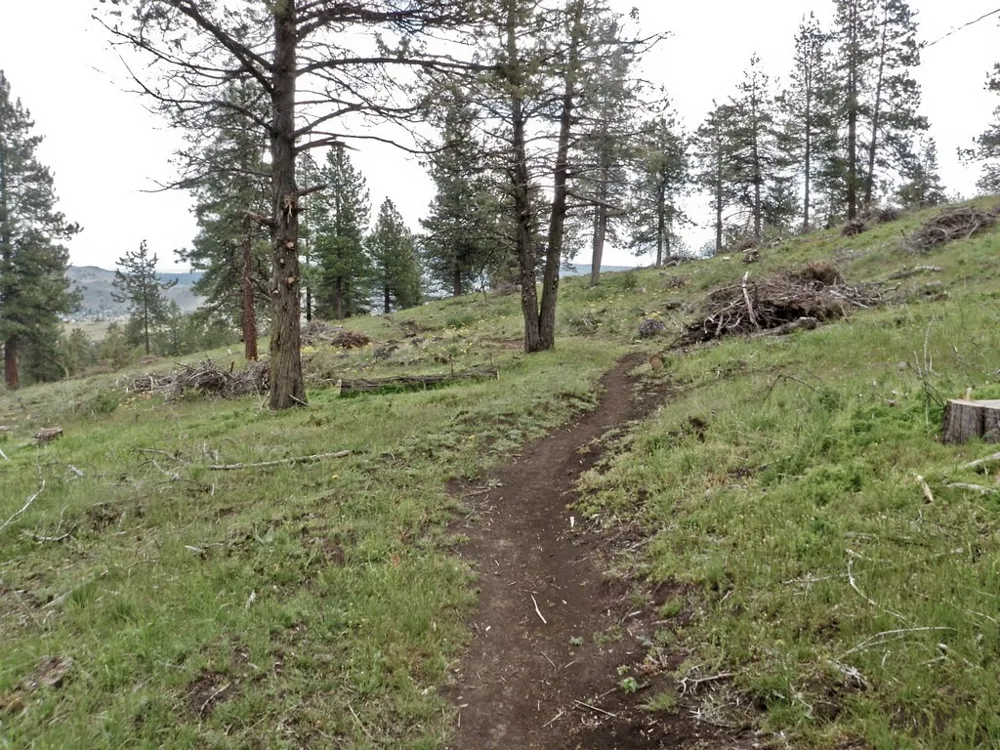
The classic starting spot is a smooth grass hill with a gentle slope and a long, flat run-out at the bottom where you can stop. Avoid hills that end at a road, a fence, water or a drop. Once you can turn and stop, MBS lists these places to progress to:
- Dirt jumps and BMX tracks for air and pumping
- Downhill and mountain bike trails, where allowed
- Skateparks and pavement, at higher tire pressure
- Ski slopes in summer, at resorts that allow mountainboards
- Dedicated mountainboard centres, such as Bugsboarding in the UK
Check permission before you ride. Many parks, golf courses, farms and bike parks don't allow boards, and some trail systems are open to bikes or hikers only. Some ski areas and bike parks may allow mountainboards in summer, so ask the operator. Ride on private land only with the owner's permission, and stay off wet trails that you'd damage. For trail etiquette that carries over, see our mountain biking guides.
How to Start Mountainboarding
Most beginner guides teach the same order: stance, J-turns, linked turns, then powerslides. Take a lesson from a qualified coach if one is near you. ATB Shop recommends an ATBA-UK approved instructor in the UK.
1. Find Your Stance
You ride regular (left foot forward) or goofy (right foot forward). MBS suggests standing still and letting yourself fall forward: the foot you step out with is your front foot. Our goofy vs regular guide has more ways to test it. Set your bindings snug but not tight enough to cut off circulation.
2. Get On Safely
On a slope, point the board downhill, put your back foot in its binding, then lift your front foot in. Or set the board sideways across the hill, strap in, and hop it round to face downhill. ATB Shop's golden rule: never get off while the board is moving, and never take one foot out.
3. Ride and Learn J-Turns
Keep your knees bent, lean slightly forward over your front leg, and look where you want to go. Press your toes or heels to turn. A J-turn is a turn that carries you across the slope and slightly back uphill until you stop. Practise toe-side and heel-side J-turns on a gentle slope before anything else.
4. Link Your Turns
Turn across the fall line and finish a little uphill before starting the next turn the other way. Wide, rounded turns slow you down; straight lines speed you up. This is how you control speed on a board without brakes.
5. Learn the Powerslide
A powerslide is a hard stop. MBS describes grabbing the toe edge of the board with your back hand and making a sharp J-turn so the back wheels slide out. ATB Shop teaches the toe-side version by tightening your J-turns until the tail slides, with about 75% of your weight on the front leg, and uses the heel-side slide as an emergency stop. Wear gloves for this. The idea is similar to sliding on a longboard.
Common Beginner Mistakes
- Starting on a hill that's too steep or has no flat run-out
- Leaning back, which makes the board shoot out in front of you
- Pointing straight downhill instead of carving across the slope
- Running tires too hard on grass, which makes the board fast and skittish
- Skipping the powerslide and having no way to stop quickly
Safety Gear for Mountainboarding
You're strapped to the board, so when you fall the board comes with you, and falls on dirt and gravel can mean scrapes and hard landings. The protective gear listed for the sport includes:
- Helmet: open-face for freeride, full-face for downhill, boardercross and big jumps. Look for a certified helmet; skate helmets certified to ASTM F1492 are explained in our skateboard helmet guide, and our full-face MTB helmet guide covers downhill-style lids.
- Wrist guards: to protect your wrists when you put a hand down in a fall. See our wrist guards guide.
- Knee and elbow pads: skate knee pads or MTB knee pads both work; a pad set covers knees, elbows and wrists together.
- Gloves: for powerslides and falls. Full-finger mountain bike gloves are a practical option.
- Padded shorts and body armor: for downhill, jumps and boardercross.
Before every ride, MBS recommends checking all bolts (truck, kingpin, binding, axle and wheel nuts), the binding straps and the deck for cracks. Ride with a friend on remote trails, and keep riding within your skill.
Electric Mountainboards
Electric mountainboards add a battery and motor drive to the board, controlled with a handheld wireless remote. MBS says electric boards go further and can ride uphill, while non-electric downhill boards are cheaper, lighter and better for tricks but mean walking back up the hill.
As one example, the MBS Agent was designed with Exway, an electric skateboard brand. Per the MBS FAQ (as of November 2026), it has a listed maximum range of 41 miles, uses Molicel P42A 21700 lithium cells, and is water resistant but not waterproof; MBS says the battery should keep at least 80% capacity after 500 charge cycles, and a 4WD upgrade kit is sold. Real-world range is lower with heavier riders, hills, cold and high speed.
MBS recommends electric boards for adults and confident riders. Start in the lowest gear, lean forward on flats and descents, and shift your weight back on climbs for traction. Laws for powered boards vary by state and city (last checked November 2026), so check our guide on whether electric skateboards are legal where you live. For street-focused boards, see our best electric skateboards.
Mountainboards to Consider
MBS sorts its range by rider size and skill. The descriptions below come from the MBS FAQ and product pages as of November 2026; specs change between model years, so confirm sizes and parts on the current listing. Other brands, such as Trampa, also make complete boards and parts.
1. MBS Comp 95
MBS describes the Comp 95 as a value, lightweight board for teens and adults. The Silver Hex version is listed with a 95 cm Power Lam deck (maple with fiberglass composite), Matrix III CNC channel trucks with soft shock blocks, 8 inch T1 tires on Rock Star II hubs, F5 bindings and a 94 cm wheelbase, at about 6.6 kg. It's listed as suitable for beginner to advanced riders and is brake compatible, though no brake is included.
Good to Know
- Channel trucks with swappable shock blocks
- Upgradeable toward MBS electric drives, per MBS
- Listed for beginner through advanced riders
Watch Out For
- No brake included
- Heavier than kids' boards
2. MBS Core 94
MBS positions the Core 94 for beginners, smaller riders and kiteboarders. Check the current listing for deck, truck and tire details.
Good to Know
- Aimed at first boards and land kiting
- Suits smaller adults and teens
Watch Out For
- Fewer upgrade options than higher models
3. MBS Colt 90 and Atom 90
These are MBS's boards for younger riders. The Colt 90 is aimed at kids and smaller teens; the Atom 90 is the smallest, lightest and most affordable board in the range, for the youngest riders.
Good to Know
- Shorter, lighter decks for small riders
- An affordable way to try the sport
Watch Out For
- Older and heavier riders will outgrow them
4. MBS Pro Warren III
MBS describes the Pro Warren III as a versatile freestyle board for riders roughly 14 and up. Choose it if jumps and tricks are your focus.
Good to Know
- Freestyle-focused pro model
Watch Out For
- More board than a first-time rider needs
5. MBS Agent (Non-Electric and Electric)
The non-electric Agent is aimed at freeride and larger riders and can be upgraded to electric. The electric versions include the Agent Air (for jumps) and the Agent Explorer (for distance and off-road), plus custom builds. MBS recommends the electric models for adults and confident riders.
Good to Know
- Upgrade path from non-electric to electric
- Water resistant battery, listed 41-mile maximum range
Watch Out For
- Electric versions are heavy and a major investment
- Not waterproof; avoid salt water
How to Choose a Mountainboard
| Rider | Look For | MBS Examples |
|---|---|---|
| Young kids | Short, light deck, small tires | Atom 90 |
| Kids and small teens | Short, light deck | Colt 90 |
| Beginner adults and kiters | Mid-length deck, soft trucks, bindings | Core 94 |
| Teens and adults who want to progress | Channel trucks, upgradeable parts | Comp 95 |
| Freestyle riders | Shorter wheelbase, 8 inch tires | Pro Warren III |
| Freeride, larger riders, uphill riding | Long, stable deck; electric option | Agent range |
- Rider size and age: pick a deck length that matches your height and weight; small riders struggle to turn long, stiff boards.
- Where you'll ride: grass and dirt freeride suits soft, stable setups; jumps suit shorter wheelbases and 8 inch tires; sand and mud suit larger tires.
- Trucks: channel trucks for suspension and carving; skate-style trucks for a simpler, longboard-like feel.
- Bindings: make sure they adjust to your shoe size and hold firmly; heel straps are easier to get in and out of.
- Brakes: only needed for long, steep descents. If you'll ride big mountains, check that the trucks are brake compatible.
- Parts and support: choose a brand with spare tubes, tires, blocks and bindings available near you.
Care and Maintenance
- Tools: MBS says 3, 4 and 5 mm hex keys and a spanner cover most jobs, and these usually come with its completes.
- Cleaning: brush off dry dirt, hose the board down, scrub it, then dry it fully, especially bearings and bolts.
- Flats: first check for dirt in the valve. If the tube is punctured, remove the hub, check the tire for thorns or debris, fit a new tube with a little air in it, reassemble without pinching the tube, and inflate.
- Bolts and bindings: check every bolt before each ride and replace worn binding straps.
- Deck: replace a cracked deck rather than riding it.
- Electric boards: dry the board as soon as possible if it gets wet, avoid salt water, and don't charge or ride a damaged battery.
The same habits keep any board rolling; our skateboard maintenance guide covers bearings and hardware in more detail.
Keep Exploring
Mountainboarding sits between several sports. If you like the carving, try our longboarding guides; for the snow version of the stance, start with beginner snowboards; and for powered off-road riding, compare off-road electric scooters. Our skateboarding hub links to every board guide on the site.
Frequently Asked Questions
What is the difference between a mountainboard and a skateboard?
A mountainboard has a longer deck, foot bindings, sturdier trucks and large pneumatic tires, so it can roll over grass, dirt and gravel. A skateboard has small hard urethane wheels and no bindings, and needs smooth pavement.
Is mountainboarding hard to learn?
It takes some practice, but beginners usually start on a gentle grass slope with a flat run-out and learn J-turns, linked turns and powerslides in that order. Snowboarders often find the stance and turning familiar. A lesson from a qualified coach speeds things up where one is available.
Do mountainboards have brakes?
Most non-electric boards are sold without brakes, and riders control speed with carves and powerslides. Some trucks accept add-on hand-lever brakes, which are mainly used on big mountain descents. Electric boards brake through the motor using a handheld remote.
What tire pressure should I run on a mountainboard?
It depends on the terrain and the tire's maximum rating. MBS lists 50 PSI as the maximum for its T1 tires and suggests roughly 30 to 45 PSI for bumpy grass or dirt and 50 PSI for skateparks and smooth jumps. Lower pressure gives more grip and a slower, more forgiving ride for beginners. Never go above the maximum printed on the tire.
Can kids ride mountainboards?
Yes. Makers sell shorter, lighter boards for younger riders, such as the MBS Atom 90 and Colt 90. Kids should start on gentle slopes with a certified helmet and pads, under adult supervision.
Can you ride a mountainboard on the road?
You can roll on pavement and in skateparks, but steep paved roads are risky because there are no brakes on most boards and traffic is a hazard. Rules for boards on public roads vary by place, so check local laws (not legal advice).
Are electric mountainboards worth it?
They let you ride uphill and cover long distances without walking back up, but they are heavier and cost far more than non-electric boards. If you mainly want jumps and tricks on one hill, a non-electric board is lighter and simpler.