Electric Scooter or Moped? Which Ride Fits Your Trips (2026)
A stand-up e-scooter is light, cheap to run and often license-free. A moped is faster, seated and built for real roads, but it usually brings a license, plates and sometimes insurance.
The Short Answer
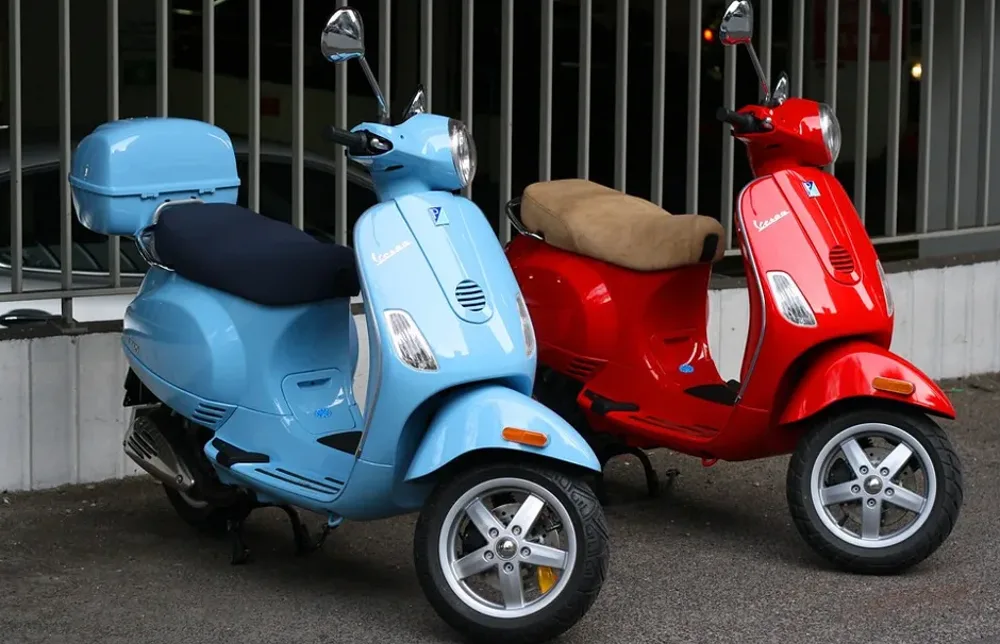
Choose an electric scooter if your trips are short, you want something you can carry, fold and charge indoors, and you'd rather skip plates and insurance where your state allows it. Choose a moped (gas or electric) if you want to sit down, ride at around 30 mph on ordinary streets, carry a passenger or cargo, and you're fine with the paperwork that usually comes with it.
The biggest difference isn't the motor. It's the legal class. Most states regulate stand-up e-scooters as light micromobility devices and mopeds as motor vehicles, so license, registration, insurance, helmet and where-you-can-ride rules all follow from that. This page compares the two in practice; for the full state-by-state license breakdown, see do you need a license for a scooter?
Rules vary by state and city. This is general information, not legal advice. State examples on this page were last checked November 2026; confirm the current rules with your state DMV before you buy or ride.
What Counts as an Electric Scooter vs a Moped?
The words get mixed up in ads, so start with what the law usually means.
- Electric scooter (stand-up): the California DMV describes a motorized scooter as having two wheels, a motor, handlebars and a floorboard you stand on. Seated versions exist, and some states may class those differently, so check the specs.
- Moped: usually a small seated vehicle with an automatic transmission and a low speed cap. North Carolina's DMV defines a moped as having two or three wheels, no external shifter, a motor of no more than 50cc and up to 30 mph on a level surface. Missouri uses a similar 50cc and 30 mph line, and California describes mopeds as having less than 4 gross brake horsepower and an automatic transmission. Some have pedals; many don't.
- Motor scooter: a seated scooter that goes faster or has a bigger engine than a moped. These are generally treated as motorcycles. See how fast a 50cc scooter goes for where the moped line usually falls.
An electric moped is still a moped. Swapping a gas engine for a battery doesn't move it into the e-scooter class. And a moped-style e-bike is a third thing: if it has working pedals and fits the e-bike classes, it follows e-bike laws instead (see e-bike classes).
Side-by-Side Comparison
| Electric Scooter (Stand-Up) | Moped (Gas or Electric) | |
|---|---|---|
| Riding position | Standing (seat kits on some models) | Seated, often room for a passenger |
| Typical top speed | About 15–22 mph on commuter models; legal caps often 15–20 mph | Up to about 30 mph in many state definitions |
| Range | Commuter models often list about 10–45 miles | Electric: often longer listed ranges; gas: refuel in minutes |
| Weight and storage | Light enough to carry; many fold | Hundreds of pounds; needs a parking spot |
| License | Often none; some states require one | Usually a driver's license, moped permit or motorcycle license |
| Plates and registration | Often not required | Often required |
| Insurance | Often not required | Varies; required in some states |
| Where you ride | Bike lanes and lower-speed roads; sidewalks vary | Traffic lanes; usually not bike lanes |
| Running costs | Low (household charging) | Higher (fuel or charging, plus fees and insurance) |
These are common patterns, not rules. Your state's definitions decide which column your vehicle falls in.
Speed and Power
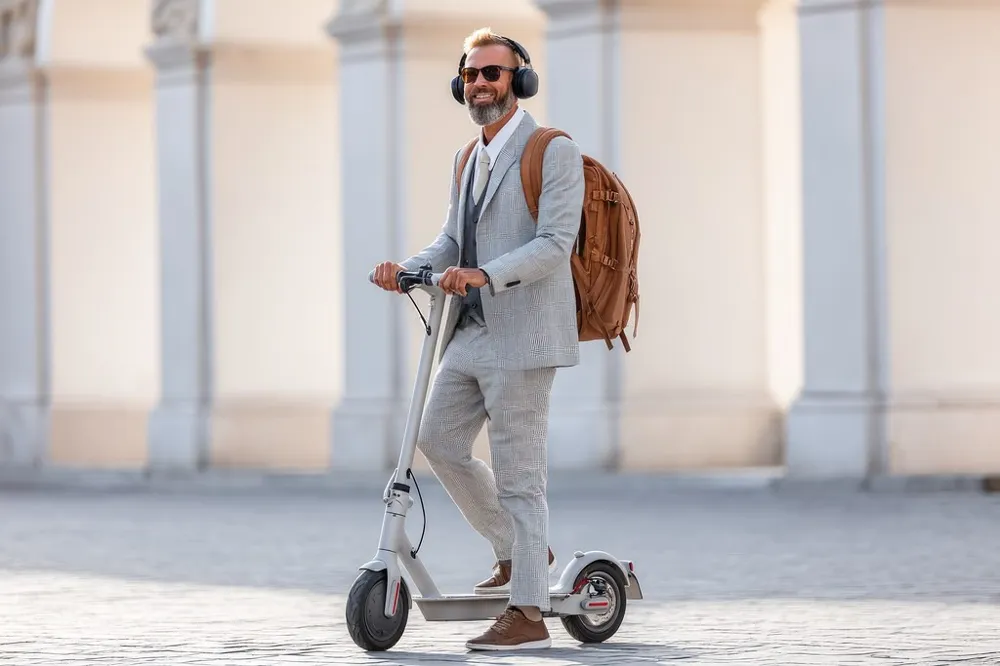
A typical commuter e-scooter tops out around 15 to 22 mph; the Segway Ninebot Max G2, for example, is listed at up to 22 mph. Many states also cap e-scooters on public roads: California at 15 mph and New York and Massachusetts at 20 mph. Faster performance scooters exist, but above your state's e-scooter limit they may not be street legal as e-scooters. See how fast electric scooters go.
Mopeds sit a step higher. Many state definitions put the ceiling around 30 mph, and a typical 50cc moped reaches about 25 to 30 mph. New York splits mopeds into three classes by speed: Class C at 20 mph or less, Class B over 20 up to 30 mph and Class A over 30 up to 40 mph. That extra speed helps on roads where traffic moves at 25 to 35 mph, where a 15 mph scooter can feel exposed.
Power follows the same pattern. Stand-up scooters use small hub motors and can slow down noticeably on steep hills with heavier riders. Mopeds carry more weight, but their motors or engines are built to keep a steadier pace on grades.
Range, Charging and Refueling
E-scooter range depends on battery size, rider weight, speed mode, hills and temperature. Commuter models often list about 10 to 45 miles, and some large scooters list far more, such as the Segway SuperScooter GT3 Pro at up to 86 miles in its eco mode. Real-world range is usually lower than the listed figure. See long-range electric scooters and how long e-scooter batteries last.
Electric mopeds carry much bigger batteries. NIU's MQi GT 45, a 45 km/h (about 28 mph) version sold in some markets, is listed by NIU at 90 to 100 km (about 56 to 62 miles) of range, with about 4 hours of charging on a single charger, as of November 2026. Gas mopeds avoid charging altogether: you refuel at a gas station in a few minutes, which suits riders without an outlet near where they park.
| E-Scooter | Electric Moped | Gas Moped | |
|---|---|---|---|
| Energy | Household outlet | Outlet; battery size varies by model | Gasoline |
| Where you charge | Indoors; the whole scooter comes inside | Garage or outlet near parking | Gas station |
| Range planning | Short hops and last-mile trips | Daily commutes across town | Longest trips between stops |
License, Registration and Insurance
This is where the two differ most. A stand-up e-scooter often needs no license, plates or insurance, but not everywhere. A moped usually needs a license and plates, and some states also require insurance. A few state examples, last checked November 2026:
| State | Stand-Up E-Scooter | Moped |
|---|---|---|
| California | Any class of driver's license (or permit, per the DMV); no registration | Motorcycle license (M1 or M2), age 16+; special moped plates and ID card; insurance not needed to register |
| Florida | No driver license, registration or insurance required (Fla. Stat. 316.2128) | Check the Florida HSMV |
| Texas | Registration and insurance not required for motor-assisted scooters | Check the Texas DMV and DPS |
| New York | Minimum age 16; no license requirement listed | Driver license and registration for all classes; insurance required for Class A and B; Class A needs an M or MJ license |
| Massachusetts | Driver's license or learner's permit required | License or permit, age 16+; 25 mph limit |
| North Carolina | Check NCDMV and local rules | Registration required on state-maintained roads; liability insurance required |
Two things trip people up. First, removing a moped's speed restrictor can push it into the motorcycle class, with a different license and insurance. Second, a fast or seated e-scooter can land in the moped class in some states, which brings moped rules with it. Before you buy, match the vehicle's top speed and motor power to your state's definitions. Full details: scooter license rules by state and are electric scooters street legal?
Even where insurance isn't required, ask your insurer whether a crash on either vehicle would be covered.
Helmets, Ages and Where You Can Ride
- Helmets: moped rules often call for a motorcycle-style helmet. California requires helmets on mopeds, and New York requires a helmet and eye protection on Class A and B mopeds. E-scooter helmet rules vary more, and many states require them only for minors. Wear one either way.
- Age: 16 is a common minimum for both in states that set one (for example, New York for e-scooters and California and Massachusetts for mopeds). Rental apps add their own age and ID checks.
- Where you ride: e-scooters are often allowed in bike lanes and on lower-speed roads, while sidewalk rules vary by state and city. Mopeds generally ride in traffic lanes and are usually not allowed on bike paths. Neither belongs on highways.
Cost of Owning Each
Prices change too fast to quote, so here's how the costs compare in general:
- Purchase: commuter e-scooters usually cost less than mopeds, with budget, mid-range and premium tiers in both. Shopping on a budget? See budget electric scooters.
- Energy: charging a scooter from a household outlet is usually the cheapest way to travel here. Electric mopeds also avoid fuel, though their bigger batteries take longer to charge. Gas mopeds need fuel and, for most engines, oil.
- Paperwork: moped registration, plates and any required insurance add recurring costs that most stand-up scooters avoid.
- Maintenance: e-scooters mostly need tires, brakes and folding-latch checks (see e-scooter maintenance). Gas mopeds add engine service such as spark plugs, filters, belts and oil. Electric mopeds sit in between.
- Battery replacement: on any electric vehicle, the battery is the big long-term cost, so check the warranty and parts support before you buy.
Portability, Storage and Daily Practicality
Here the e-scooter wins easily. Many fold and are light enough to carry up stairs, onto a train or under a desk; our lightweight and folding scooter guides cover the easiest ones to carry. Because the whole scooter comes inside, it also needs less theft protection, though you'll want a scooter lock for stops.
A moped is a parked vehicle. NIU lists its MQi GT 45 electric moped at 115 kg (about 254 lb), for example, so you need a garage, driveway or legal street parking. In return, mopeds usually offer:
- A proper seat for longer rides.
- Under-seat storage or room for a top box and a rear rack.
- On many models, space for a passenger with footrests, if your license and the vehicle allow it.
- Bigger wheels and more weather protection, with a front shield and floorboard.
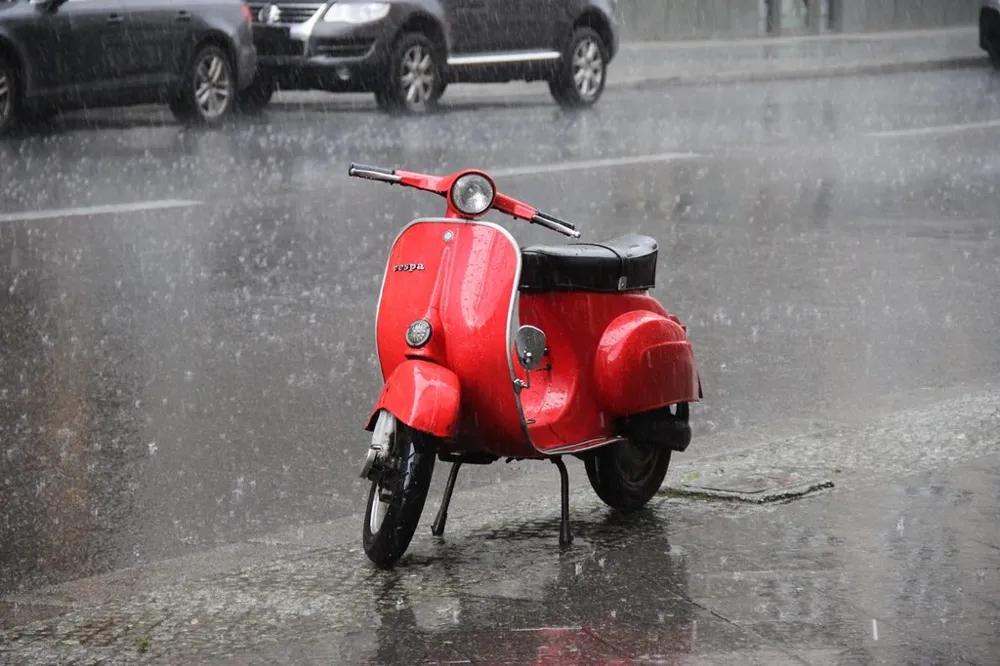
Weather affects both. Neither keeps you dry, but small scooter wheels and decks handle wet roads less well. See riding an e-scooter in the rain.
Safety
Both are small, exposed vehicles. The risks differ in kind:
- E-scooters: small wheels are easily upset by potholes, cracks and curbs, and the standing position gives less stability under hard braking. Keep speeds sensible and scan the road surface. Start with how to ride an electric scooter.
- Mopeds: larger wheels and a seated position are more stable, but you share the lane with cars. A moped that can't keep up with traffic on a faster road is a hazard, so plan routes around lower-speed streets.
- Both: wear a helmet, use lights day and night, and choose a battery-powered model with recognized safety certification where available.
Electric Moped vs Gas Moped
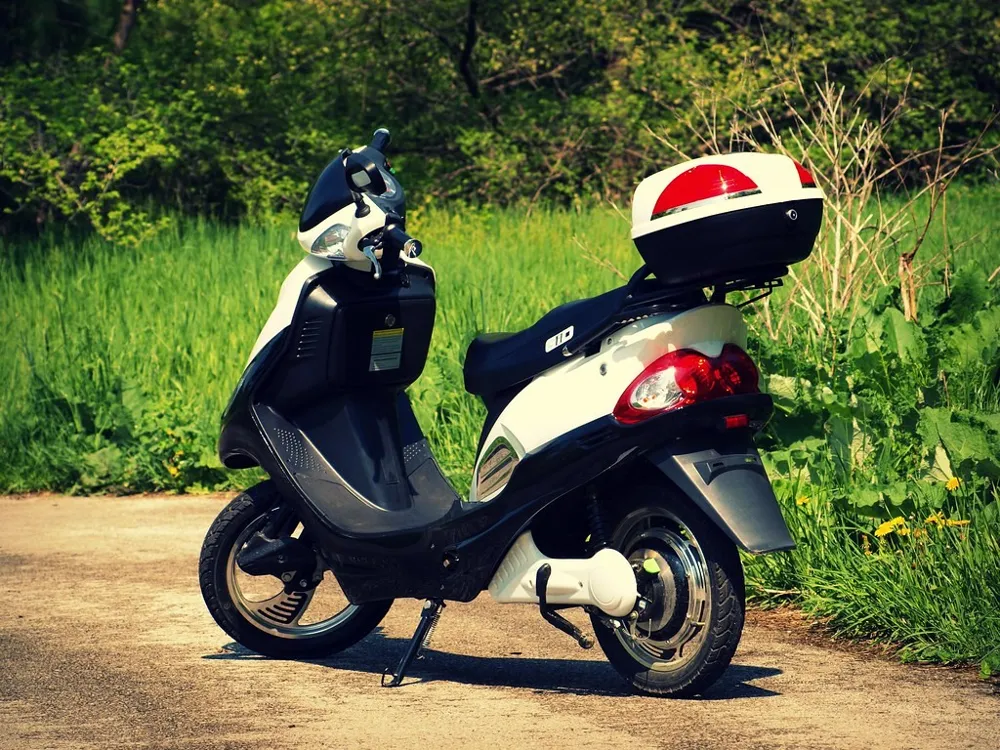
If a moped fits your trips, the next choice is the power source:
| Electric Moped | Gas Moped | |
|---|---|---|
| Noise | Near-silent | Engine noise |
| Refueling | Hours of charging | Minutes at a gas station |
| Maintenance | Fewer engine parts; battery care | Oil, spark plugs, filters, belts |
| Legal class | Usually moped, by speed and power | Usually moped up to about 50cc and 30 mph |
Either way, faster versions of the same model (such as the 70 km/h and 100 km/h versions of NIU's MQi GT) move into motorcycle territory, with a motorcycle license and insurance to match.
Which Should You Choose?
| If You... | Pick |
|---|---|
| Ride a few miles, combine with transit or live in an apartment | Electric scooter |
| Want the least paperwork and lowest running costs | Electric scooter (in states that don't require a license or plates) |
| Ride daily on 25–35 mph streets | Moped |
| Need a seat, cargo space or room for a passenger | Moped |
| Want a moped without gas stations | Electric moped |
| Want to pedal, ride bike lanes and skip plates | A moped-style e-bike that stays within the e-bike classes |
| Want to sit but keep scooter rules | An electric scooter with a seat (check how your state classes it) |
Related Scooter Guides
Ready to shop? Start with the best electric scooters, or browse the electric scooters hub. Torn between two wheels and pedals? Compare electric scooters and e-bikes. For the gas side, see 50cc scooter speeds.
Frequently Asked Questions
Is a moped faster than an electric scooter?
Usually. Many US states define a moped around a top speed of about 30 mph, while commuter e-scooters often reach about 15 to 22 mph and state e-scooter laws often cap them at 15 to 20 mph.
Do you need a license for an electric scooter or a moped?
Many states don't require a license for a stand-up e-scooter, though some do, such as California and Massachusetts. Most states require some kind of license for a moped. Rules vary by state, so check your DMV.
Does an electric moped need plates and insurance?
Often yes, because electric mopeds usually fall in the same legal class as gas mopeds. North Carolina, for example, requires mopeds to be registered and carry liability insurance, while California requires moped plates but not insurance to register.
Is an electric moped the same as an electric scooter?
No. An electric moped is a seated, road-going vehicle that is usually regulated like a moped, while an electric scooter is a stand-up micromobility device with its own, usually lighter, rules.
Which is cheaper to own, an e-scooter or a moped?
An e-scooter is usually cheaper to buy and run, since it charges from a household outlet and usually needs no plates or insurance. Mopeds can add fuel, registration and insurance costs.
Can you ride a moped in a bike lane?
Usually not. Bike lanes and paths are often open to e-scooters and e-bikes, while mopeds generally ride in traffic lanes. Check your state and city rules.