Moped-Style E-Bikes: Two-Seaters, Speed and the Law (2026)
Long seats, fat tires and moto looks, but some are legal e-bikes and some are mopeds in disguise. Here's how to tell them apart before you buy.
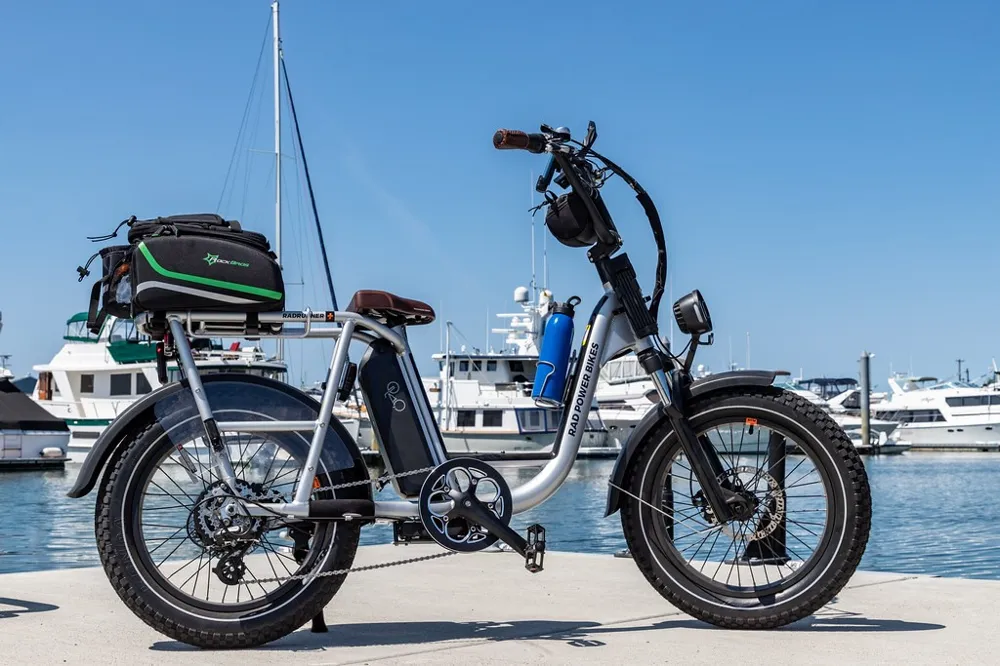
What Makes an E-Bike "Moped-Style"?
A moped-style e-bike borrows the look of a small motorbike: a long, flat bench or moto saddle, 20-inch wheels with wide fat tires, a step-through or tank-shaped frame, a big battery and often footpegs, a motorcycle-style headlight and turn signals. Most have a twist or thumb throttle. Underneath, the good ones are still bicycles, with working pedals and a motor that stays inside e-bike limits.
That last point is the one most roundups skip. In the US, an e-bike under the three-class system has working pedals, a motor of 750 watts or less and motor help that stops at 20 mph (Class 1 and 2) or 28 mph (Class 3). Plenty of moped-style bikes are sold with bigger motors, no pedals or unlockable speeds of 35 mph and up. Those may count as mopeds, motorcycles or off-highway vehicles in your state, with licenses, registration and off-path rules attached. So this guide labels every bike by how it ships and what it can be set to, then covers passengers, teens, state rules and battery safety. Not legal advice; last checked November 2026.
Addmotor M-66 R7
Best banana seat for two
- 750W geared hub motor, 80Nm
- Banana seat plus folding rear footpegs
- 960Wh battery, 300 lb max load
Heybike Saturn
Most powerful (beyond class limits)
- 1,000W rated, 1,800W peak
- 28 mph default, adjustable higher
- Full suspension, UL 2849
Moped-Style E-Bikes Compared
| Bike | Motor (Listed) | Speed Setting | Seat / Passenger | Max Load | Certification (Listed) | Likely Status in Most States |
|---|---|---|---|---|---|---|
| Retrospec Valen Rev 3 | 750W nominal, 1,150W peak | Class 1 and 2 (20 mph) | Long moto saddle; optional peg mounts | 350 lb | UL 2849, UL 2271 | E-bike (Class 1/2) |
| Addmotor M-66 R7 | 750W geared hub | Check listing | Banana seat for two; folding rear pegs | 300 lb | Not stated for whole bike | E-bike if set to class limits |
| Heybike Saturn | 1,000W rated, 1,800W peak | 28 mph default; adjustable up to 40 mph | Not listed for passengers | 330 lb | UL 2849 | Above the 750W limit; may not be an e-bike |
| Heybike Titan | 750W rated, 1,500W peak | Ships Class 2 (20 mph); app to 28 mph | Long saddle; passenger use not listed | 330 lb | UL 2849 | E-bike (Class 2, or 3 if set to 28 mph) |
| GOTRAX Ranger | 500W rated, 750W peak | 20 mph throttle, 25 mph assist | Long bench; passenger use not listed | 264 lb | UL 2849 | E-bike; check class label |
| JackRabbit MG Doble | 749W, 1,080W peak | 20 mph throttle (off-road mode about 24 mph) | Tandem bench; rear pegs standard | 325 lb | UL 2271, UL 2272 | No pedals; check how your state classes it |
Specs are as listed by each maker or in a published review at the time of writing; versions change, so check the current listing and the class label on the bike. "Likely status" is a general guide, not a legal ruling. See e-bike classes explained for what each class allows.
The Best Moped-Style Electric Bikes on Amazon
1. Retrospec Valen Rev 3
The Valen Rev 3 is Retrospec's moto-styled fat tire bike and one of the clearest picks for staying inside e-bike rules. It's set up as a Class 1 and Class 2 bike (pedal assist and throttle to 20 mph) with a 750W nominal (1,150W peak) rear hub motor and 85Nm of torque. Power comes from a removable 48V, 500Wh battery, and it rolls on 20 x 4-inch fat tires with a rigid triple-clamp steel fork, a single-speed drivetrain and Tektro mechanical disc brakes with 180mm rotors. Published specs list about 78 pounds and a 350-pound payload. The long Custom Moto saddle has room for two, and the frame has mounting points for optional passenger pegs. Retrospec lists UL 2849 and UL 2271 certification.
Good to Know
- Ships within Class 1 and 2 limits
- High payload for the style; peg mounts for a passenger setup
- Certified electrical system and battery
Watch Out For
- No headlight or taillight included (reflectors only), so budget for lights
- No suspension and mechanical brakes; heavier riders and two-up riding ask a lot of them
- Several Retrospec "Rev 3" models exist; confirm the listing is the Valen
Not found on Amazon when we checked (November 2026); Retrospec sells it direct and through retailers.
2. Addmotor M-66 R7
Addmotor's Motan M-66 R7 is a step-through moped-style bike sold with a long banana seat marketed for two and foldable steel rear footpegs for a passenger. It uses a 48V 750W geared rear hub motor with 80Nm of torque and a large 48V 20Ah (960Wh) battery with Samsung 21700 cells; Addmotor estimates up to 105+ miles in the lowest assist level. It has 20 x 4-inch Kenda tires, an 80mm front spring fork, Tektro mechanical disc brakes with 180mm rotors and a 300-pound maximum load, with a listed rider height of 5'2" to 6'2".
Good to Know
- Purpose-made passenger seat and pegs
- Big battery for long rides
- 750W motor fits the e-bike power limit
Watch Out For
- 300 lb limit is tight for two adults; do the weight math below
- Addmotor's page lists UL certification for the taillight but doesn't say the whole bike is UL 2849 certified; check before buying
- Stock status on the maker's site was unclear when we checked
3. Heybike Saturn
The Saturn is Heybike's most powerful moped-style bike: a 1,000W rated (1,800W peak) hub motor with 95Nm of torque, a 52V 18.4Ah battery (about 956.8Wh, with a dual-battery option), full suspension with 140mm of front travel, 20 x 4-inch tires, hydraulic disc brakes, a headlight, brake light and turn signals. Heybike lists a top speed of 28 mph by default, adjustable up to 40 mph "where permitted," a 330-pound payload, about 103 pounds of weight with one battery, a rider height range of 5'3" to 6'3" and UL 2849 certification.
Know what you're buying: a 1,000W rated motor is above the 750W cap in the model e-bike law most states use, so in many places the Saturn may not count as a Class 1, 2 or 3 e-bike even when set to 28 mph, and the 40 mph setting is beyond e-bike rules everywhere in the US. Check your state's moped rules before riding it on roads, and keep it off bike paths and trails where only e-bikes are allowed.
Good to Know
- Strongest motor and suspension of our Amazon picks
- Full lighting with turn signals
- UL 2849 listed
Watch Out For
- Motor rating exceeds e-bike limits; may need moped-style registration where you live
- Very heavy; hard to lift onto racks or carry upstairs
- No passenger seat listed; the payload covers rider and gear
Other Moped-Style E-Bikes Worth Knowing
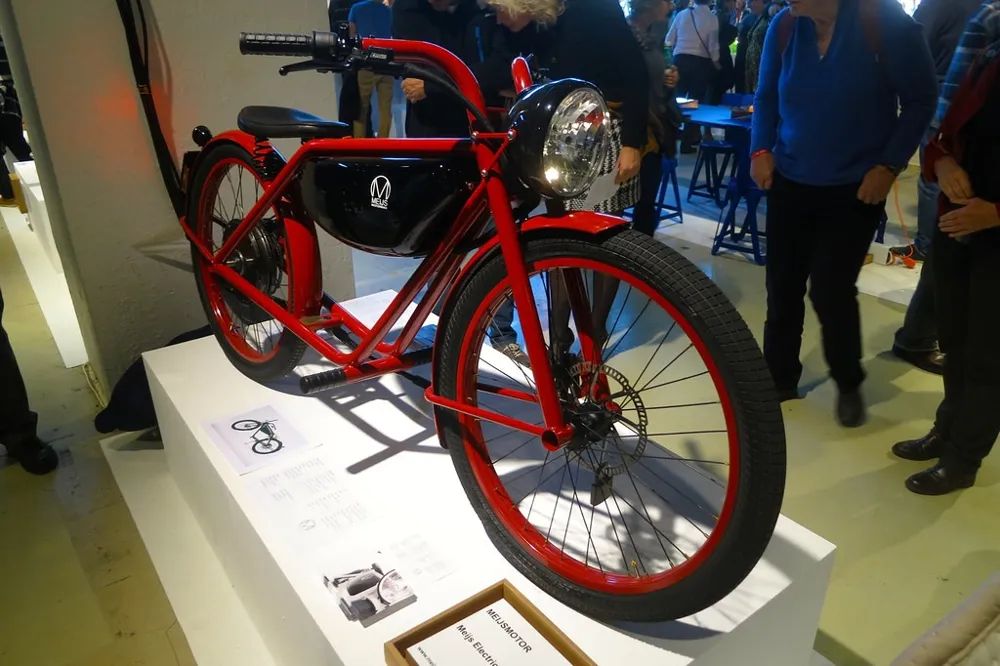
Several of the most-reviewed moped-style bikes are sold direct by their makers rather than on Amazon:
- Heybike Titan: a full-suspension moped-style bike that ships Class 2 at 20 mph, with a 750W rated (1,500W peak), 65Nm motor, a 720Wh battery (dual 1,440Wh option), 4-piston hydraulic brakes, 80mm front and 55mm rear suspension, lights and turn signals. Heybike lists 85 pounds, a 330-pound load and UL 2849. Its app can raise the limit to 28 mph where permitted, which makes it a Class 3 bike with the age, helmet and path rules that come with it.
- GOTRAX Ranger: a budget moto-style bike with a 500W rated (750W peak) motor, a 20 mph throttle and pedal assist to 25 mph, a 499Wh battery, hydraulic disc brakes and a long bench seat. GOTRAX lists 69.7 pounds, a 264-pound load, UL 2849 and a recommended rider age of 16+. Its own page labels it both Class 2 and Class 3, so read the class label on the frame. GOTRAX also sells a smaller Ranger 16.
- JackRabbit MG Doble: a light (about 52 pounds), compact two-seater with a tandem bench, standard rear passenger pegs, a 749W motor, 20 mph throttle and a 325-pound payload. It has footpegs instead of pedals. E-bike definitions generally require working pedals, so check how your state classifies a pedal-free bike before riding it on roads or paths.
- Ride1Up Revv 1: a popular moto-style bike offered in hardtail, full-suspension and DRT versions. Reviews report that it ships at 20 mph, offers 28 mph pedal assist and has an off-road mode of about 35 mph; a rear passenger kit has been sold separately. Reported motor ratings vary between sources, so confirm the current spec.
- High-power "e-bikes" in the 1,000W+ range, such as dual-motor models and bikes advertised at 40–50 mph unlocked, sit outside e-bike rules at full power. Treat them as off-road machines or mopeds; see the fastest electric bikes and electric dirt bikes.
Buying used? Rad Power Bikes, whose RadRunner helped popularize the style, filed for bankruptcy in December 2025, and in November 2025 the CPSC told owners to stop using certain Rad batteries. Check any used bike's battery against CPSC recalls and warnings before you buy.
Which Moped-Style Bikes Stay Within Class 1–3?
Looks don't decide the legal category; specs and settings do. Run any moped-style bike through these four checks:
| Check | Inside E-Bike Rules | Outside E-Bike Rules |
|---|---|---|
| Pedals | Fully working pedals | Footpegs only, or pedals that don't drive the wheel |
| Motor rating | 750W or less (rated/nominal) | Above 750W rated, such as 1,000W or dual motors |
| Throttle speed | Motor stops at 20 mph | Throttle pulls past 20 mph (some states allow a Class 3 throttle to 20 mph only) |
| Assist speed | 20 mph (Class 1/2) or 28 mph (Class 3) | Assist or "unlocked" modes above 28 mph |
A few points that trip buyers up:
- Peak vs rated power. Ads often lead with peak watts (1,150W, 1,500W, 1,800W). The class limit refers to the motor's rating, so a "750W rated, 1,500W peak" bike can still be an e-bike, while a "1,000W rated" bike usually can't. Check the class label, which under the model law shows class, top assisted speed and motor wattage.
- Unlocked modes. Many bikes ship in a legal setting and offer an app or menu change to go faster "where permitted" or for "off-road use." The legal class is how the bike is set when you ride it. Riding an unlocked bike on roads or paths can break the law, and it may void the warranty.
- Federal vs state rules. The federal consumer-product definition (motor under 750W, under 20 mph on motor power alone, working pedals) and the state three-class traffic rules are different things. See e-bike classes and our e-bike laws guide for both.
State Rules: When a Moped-Style Bike Becomes a Moped
Once a bike falls outside the three classes, state vehicle codes decide what it is. Many treat it as a moped or motor-driven cycle, which can mean a driver's or motorcycle license, a plate, registration, insurance, a DOT helmet and road-only riding. Pedal-free, high-powered "e-motos" may be classed as motorcycles or off-highway vehicles that can't be registered for roads at all. Examples, last checked November 2026:
- California: the DMV treats a moped (motorized bicycle) as a separate vehicle that needs an M1 or M2 motorcycle license, a minimum rider age of 16, a helmet, a special plate and an identification card. Electric motorcycles (e-motos) are off-highway vehicles that need OHV registration. From January 1, 2026, e-bikes and e-bike batteries sold in California must be certified by an accredited testing lab.
- New Jersey: a law signed in January 2026 treats Class 2 and 3 e-bikes as motorized bicycles and, according to PeopleForBikes, requires a license and registration for all e-bikes and insurance for Class 2 and 3.
- Class 3 settings: many states set a minimum age (often 16), require helmets and restrict Class 3 bikes on multi-use paths, which matters for bikes like the Titan once unlocked to 28 mph.
- Public lands: the US Forest Service generally treats e-bikes as motor vehicles, so they're limited to roads and trails open to motorized use unless a forest says otherwise. Over-class bikes are off-limits on e-bike-only trails everywhere.
Cities and counties add their own rules for paths, parks and boardwalks, and laws changed quickly in 2025–2026. Confirm with your state DMV or transportation department before you buy, especially for anything above 750W or 28 mph. This is general information, not legal advice.
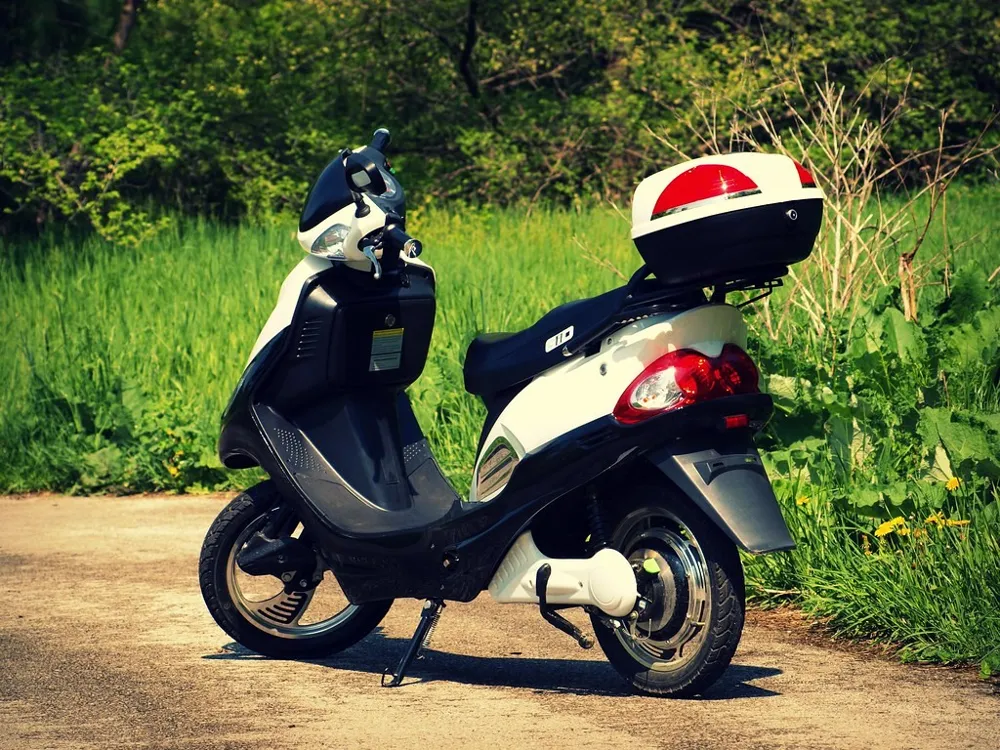
Moped-Style E-Bike vs Electric Moped vs E-Moto
| Moped-Style E-Bike | Electric Moped | E-Moto / Electric Dirt Bike | |
|---|---|---|---|
| Pedals | Yes, working | Usually no | No |
| Motor | 750W rated or less | Larger; varies by state definition | Typically several kilowatts |
| Motor speed | 20 or 28 mph | Varies by state definition | 40–60+ mph on some models |
| License and plate | Usually not (except states like New Jersey) | Usually yes | Off-road only unless street-legal dual-sport |
| Bike lanes and paths | Often allowed (by class) | Generally not | No |
| Helmet | Bike helmet; required for some ages and Class 3 | Often a DOT helmet | Motocross helmet and full gear |
Typical patterns only; state definitions differ. If you want something that legally rides like a scooter on roads, compare electric scooters and mopeds, and see how fast a 50cc scooter goes for the gas equivalent. For seated stand-up-style options, see electric scooters with a seat.
Two-Seater E-Bikes: Riding With a Passenger
"Two-seater electric bike" is one of the most searched versions of this style, and it's where the most mistakes happen. A long seat alone doesn't make a bike safe or legal for two.
What a Passenger-Ready Bike Has
- A seat meant for a passenger: a banana or tandem seat the maker sells as a two-person seat, or a dedicated rear passenger pad on a rack rated for people.
- Footpegs so the passenger's feet stay clear of the wheel and chain, plus wheel guards on some models.
- A payload that covers everyone. The max load includes the rider, passenger and cargo. Example: a 350-pound limit with a 180-pound rider leaves 170 pounds for a passenger and bags; a 300-pound limit leaves only 120.
- Strong brakes. Two riders roughly double the weight you're stopping. Hydraulic discs and wide tires help; leave much more stopping distance either way.
Passenger Laws
Many state traffic codes say a bicycle may carry only as many people as it is designed and equipped for. In California, current law requires passengers to ride on a seat attached to the bike, with extra protections for young children (under 4 years or 40 pounds). A 2026 bill, AB 1614, would require a separate seat for passengers, which reports said could rule out shared bench seats; it had not passed when we last checked in November 2026. Check your state's current wording.
Carrying Kids
For young children, a long moped seat is not a child seat. Use a proper child seat or a cargo bike built for kids; see electric cargo bikes. Every passenger should wear a properly fitted helmet. Start slowly in a quiet area so the passenger learns to sit still, lean with you and keep feet on the pegs.
Teens and Kids on Moped-Style E-Bikes
Moped-style bikes are popular with teens, and that's where the legal and safety stakes are highest. Some sensible rules:
- No minors on over-class bikes. A bike with an unlocked 35–40 mph mode or a motor above 750W is a moped, motorcycle or off-road vehicle in many states, which needs a licensed rider of legal age. Don't buy one for a child or young teen, and don't unlock a teen's bike.
- Follow age minimums. Many states set 16 as the minimum for Class 3, and makers set their own minimums (GOTRAX lists 16+ for the Ranger). The full-size bikes in this guide list minimum rider heights of about 5'2" to 5'3".
- Lock the settings. For a teen, keep the bike in a Class 1 or 2 mode at 20 mph and check that the app or display can't be changed without you.
- Helmets every ride, whether or not your state requires them for their age. Some states require helmets for all young riders, and Utah's 2026 law covers riders under 21.
- Train first. Teach braking, scanning and riding with traffic before road trips, and no passengers until they're experienced.
Advocacy groups including PeopleForBikes have warned that many crashes and complaints blamed on "e-bikes" involve high-powered e-motos that don't meet e-bike rules. For younger kids, look at age-rated products instead: electric scooters for teens, electric scooters for kids or kids' electric dirt bikes for private land.
How to Choose a Moped-Style E-Bike
- Decide where you'll ride. Roads and bike lanes, bike paths, trails or private land. That sets the class you need, and whether an over-class bike is even usable.
- Check the class label and settings. Look for a 750W rated motor and a shipped Class 1, 2 or 3 setting. Treat "unlockable" speeds as an off-road extra, not a feature you'll use on the street.
- Match the battery to your trips. 500Wh suits short local rides; 700–1,000Wh suits longer ones. Maker range claims are best-case; heavy riders, throttle use and passengers cut range sharply. See the battery guide.
- Look at suspension and brakes. Fat tires soften bumps, but a suspension fork (or full suspension) and hydraulic disc brakes make a big, heavy bike calmer, especially two-up.
- Check weight and fit. These bikes often weigh 70–100+ pounds. Check rider height range, seat height and whether you can lift it onto a rack; see e-bike racks and how much e-bikes weigh.
- Plan for passengers before you buy. If you'll carry one, choose a bike sold with a passenger seat and pegs and a payload that covers both of you.
- Want lights and signals? Integrated headlights, brake lights and turn signals help in traffic. Some budget bikes ship without lights.
- Insist on certification. Look for UL 2849 for the whole electrical system (below).
If moped looks aren't essential, a fat tire e-bike or a budget e-bike may be lighter and simpler.
Battery Safety and UL 2849
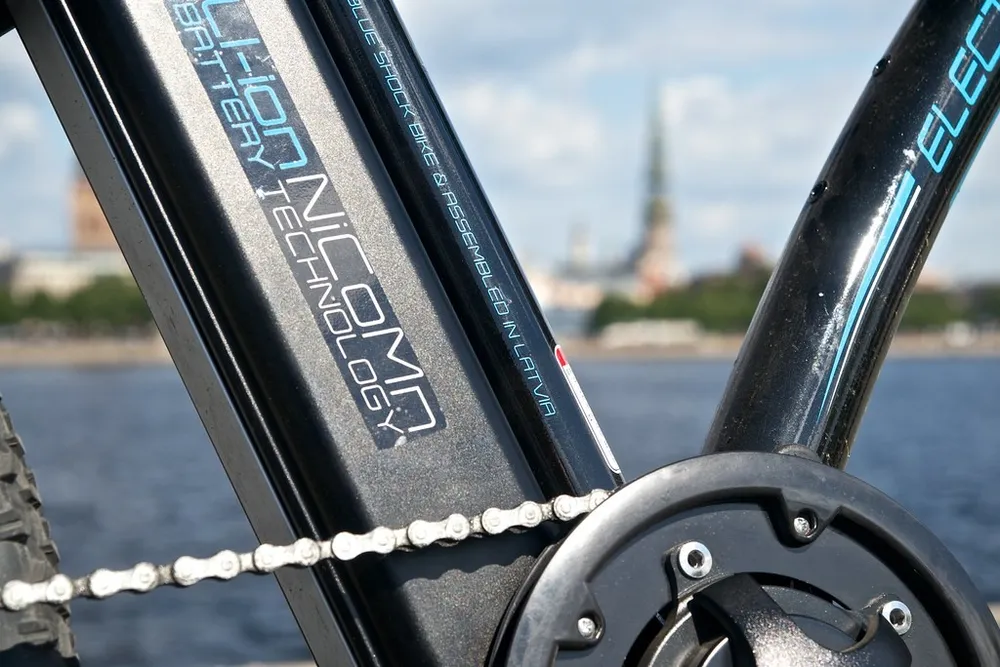
Moped-style bikes carry big batteries, and battery quality matters more than any spec on this page. UL 2849 covers the e-bike's whole electrical system (battery, charger and motor electronics); UL 2271 covers the battery pack. In its June 2026 proposed rule for micromobility batteries, the CPSC reported 39 deaths and 181 injuries from fire and related incidents involving these products from 2019 through 2023, and proposed making UL 2849 and UL 2271 mandatory; it was not final when we checked. California already requires certified e-bikes and batteries for sale from January 1, 2026.
- Look for the certification on the maker's page and the label on the bike, not a vague "UL-tested" claim.
- Charge with the supplied charger while you're home and awake, away from exits.
- Use only maker-approved replacement batteries, never rebuilt packs.
- Stop using a battery that swells, smells, leaks or has been badly dropped.
Not safety-engineering advice; follow the maker's instructions and CPSC guidance.
Pros and Cons of Moped-Style E-Bikes
Good to Know
- Comfortable, upright seating with room to move around
- Fat tires and low frames feel stable at low speeds
- Throttles make starts and short trips easy
- Some models can legally carry a passenger
- Big batteries for long range
Watch Out For
- Heavy and awkward to carry or rack
- Long bench seats and simple gearing make long pedaling less comfortable on some models
- Easy to buy one that isn't legally an e-bike
- Single-speed or limited gearing on some models
- Harder to park and store than a regular bike
Gear, Care and Security
Gear
Wear a certified bike helmet at minimum; at moped-style speeds and weights, many riders choose an e-bike-rated or full-face helmet. See bike helmets and full-face helmets. Gloves and bright clothing help too.
Care
- Check tire pressure weekly; fat tires run low pressures that drift quickly.
- Inspect brake pads and rotors often; heavy bikes wear them faster. See how to adjust bike brakes.
- Keep the chain clean and lubed; see how to clean a bike chain.
- Re-tighten bolts on footpegs, seat rails and racks after the first rides and regularly after that.
- Store and charge the battery indoors at moderate temperatures.
Security
Moped-style bikes are conspicuous and valuable. Use a heavy U-lock or chain through the frame, remove the battery when parked and register the serial number. See bike locks.
Related Guides
Browse the best electric bikes, fat tire e-bikes, the fastest electric bikes, electric cargo bikes and cheap e-bikes, or read e-bike classes explained, e-bike laws and electric scooter vs e-bike.
Frequently Asked Questions
Are moped-style e-bikes street legal?
Many are, as long as they have working pedals, a motor of 750 watts or less and are set to Class 1, 2 or 3 speeds. Models with bigger motors, no pedals or unlocked speeds above 28 mph may be treated as mopeds, motorcycles or off-highway vehicles. Rules vary by state; last checked November 2026, not legal advice.
Do you need a license for a moped-style e-bike?
Not in most states if the bike fits the three e-bike classes. If it exceeds them, your state may treat it as a moped or motorcycle, which can mean a license, registration and insurance. New Jersey now requires a license and registration for all e-bikes.
Can two people ride a moped-style e-bike?
Only if the bike is designed and equipped for a passenger, with a seat for them, footpegs and a weight rating that covers both riders and cargo. Many state laws say a bike can carry only as many people as it is designed for, and California currently requires passengers to sit on a seat attached to the bike.
What age do you have to be to ride a moped-style e-bike?
For Class 1 and 2 bikes, many states have no minimum age, but Class 3 often requires riders to be 16 or older, and makers set their own minimums, such as 16+ for the GOTRAX Ranger. A bike that counts as a moped or motorcycle needs a licensed rider, so it isn't suitable for kids or young teens.
How fast do moped-style e-bikes go?
Class 1 and 2 settings stop motor help at 20 mph and Class 3 at 28 mph. Many moped-style bikes advertise higher top speeds in unlocked or off-road modes, often 35 to 40 mph or more, but those modes take the bike outside e-bike rules.
What is the difference between a moped-style e-bike and an electric moped?
A moped-style e-bike has working pedals and is built to fit e-bike rules, even though it looks like a small motorbike. An electric moped usually has no pedals, a bigger motor or higher speeds, and needs registration and a license in most states.
Can you ride a moped-style e-bike on bike paths?
Often yes for Class 1 and 2 settings, while Class 3 is commonly restricted on multi-use paths. Bikes above class limits generally aren't allowed on bike paths or trails at all. Check local signs and rules.