Bodyboarding Tricks in the Order to Learn Them (2026)
Every key bodyboarding move, from your first trim line to spins, el rollos, inverts and flips, plus drop knee and stand-up, with how-to steps, common mistakes and a difficulty table.
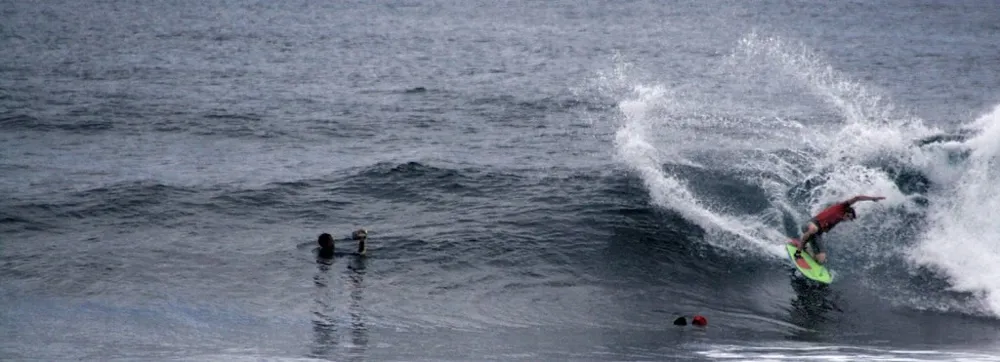
How Bodyboarding Tricks Build on Each Other
Bodyboarding tricks follow a clear ladder. You can't spin well without speed from trim, you can't hit the lip without a strong bottom turn, and you can't do an ARS until both the el rollo and the 360 feel natural. That's why this guide is arranged as a progression, not an alphabetical list.
It picks up where our how to bodyboard guide ends: you can paddle out, catch a wave and angle across it. If you're still learning to catch waves in the whitewater, start there. Because a bodyboard has no fins underneath, every move on this page comes from weight on the rails, the angle of your body and where you look. Your head leads; your body and then the board follow.
A few terms come up throughout. The lip is the top edge of a wave that pitches forward as it breaks. The pocket is the steep part of the face next to the breaking section, where the wave has the most power. The shoulder is the flatter, slower part further away, and the flats are the water in front of the wave. The inside rail is the edge closest to the wave face; the outside rail is the one facing the beach or open water.
Bodyboarding Tricks at a Glance
The levels below follow the beginner, intermediate and advanced tiers that bodyboarding coaches and guides commonly use. Your own order may shift with your board and your local waves.
| Move | Level | Where on the Wave | What It Needs First |
|---|---|---|---|
| Trim | Beginner | Upper to middle face | Catching green waves at an angle |
| Bottom turn | Beginner to intermediate | Bottom third of the face | Trim and an angled takeoff |
| Cutback | Intermediate | Shoulder back toward the pocket | Bottom turn and a high line |
| 360 spin | Intermediate | Open face | Controlled speed in trim |
| Reverse spin | Intermediate | Middle of the face, often the shoulder | Forward 360 and a tight bottom turn |
| El rollo (air roll) | Intermediate to advanced | Pitching lip | Bottom turn, trim and lip timing |
| Invert | Intermediate to advanced | Lip of a wedge or closeout | El rollo and strong speed |
| ARS (air roll spin) | Advanced | Powerful pitching lip | Clean el rollo and 360 |
| Backflip | Advanced to expert | Punchy, near-vertical lip | Aerials, trampoline practice |
| Drop knee | Intermediate (separate style) | Open, mushy face | Confident prone riding |
| Stand-up | Advanced (separate style) | Steep face, near the pocket | Drop knee balance |
Before You Start: Board, Fins and the Right Waves
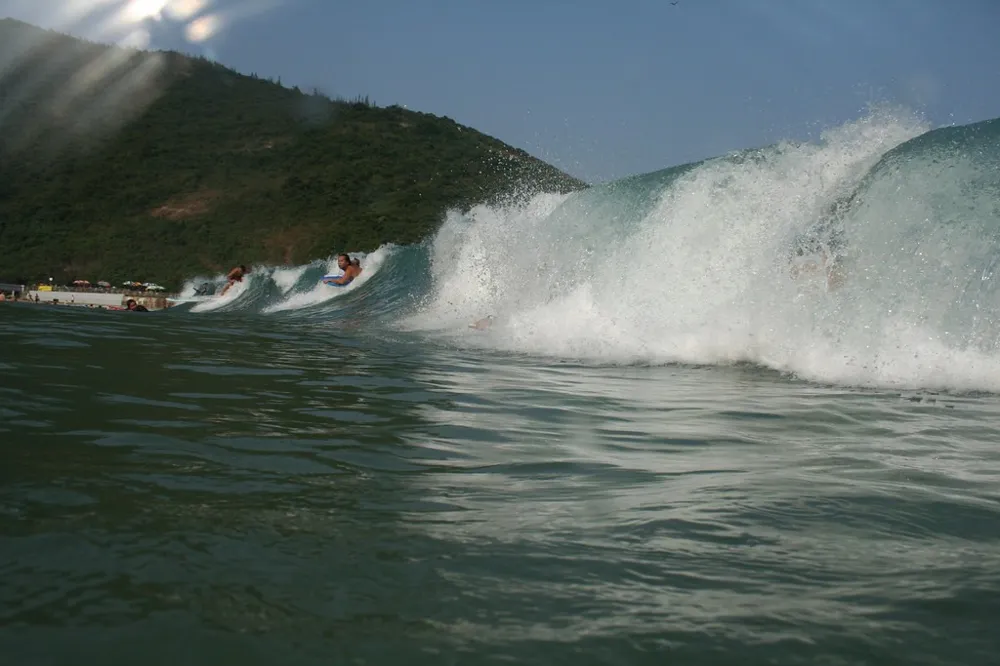
Tricks get much easier with the right setup:
- A board that fits. Too big and it's hard to turn and spin; too small and it sinks and stalls. Use our bodyboard size chart to check length against your height and weight.
- A stiffer board for lip tricks. Stiffer cores and stringers hold speed and survive landings better than soft entry-level foam. PP cores are stiff and lively in warm water, while PE flexes more and suits cold water. Our best bodyboards guide explains cores, slicks and tails.
- Fins that stay on. Swim fins give you the kick to catch waves early and the drive to set up moves. See best bodyboard fins; a snug fit matters more than blade length.
- Leash and grip. A wrist or bicep leash for prone riding, plus wax on the deck so your hands and chest don't slide.
- The right wave for the move. Spins work on open, unbroken faces. El rollos, inverts and flips need a section that pitches or wedges, sending you up rather than along. Small, mushy waves are good for drop knee practice but give little speed for anything else.
Learning to read where a wave will pitch and where it will stay open is half of trick riding. Our guide to reading a surf forecast helps you pick days with the right swell and wind.
Foundation Moves: Trim, Bottom Turn and Cutback
1. Trim
Trimming is setting a line across the face and holding it, so the board planes in the fastest part of the wave. It's the base for every other trick, because every trick spends speed and trim is how you build it.
How: after an angled takeoff, ride along the upper half of the face with your chest on the board and your hands at the nose, moving the inside hand toward the rail when you need more grip. Slide forward to speed up and back to slow down. Keep a slight arch in your back and look down the line, not at the board.
Common mistakes: riding too low on the face, where there's less push; lying flat and heavy so the nose or rail drags; drifting too far onto the shoulder and away from the pocket.
2. Bottom Turn
The bottom turn converts the speed of the drop into speed along the wave, and it sets up nearly every move after it: barrels, cutbacks, lip hits and aerials.
How:
- Catch the wave early so you have speed and time.
- Drop in at roughly a 45-degree angle instead of straight down.
- Start the turn as you reach the bottom third of the face: lower on big waves, a little higher on small ones.
- Put just enough weight on the inside rail to engage it and scoop you off the bottom toward the section you want.
- Look, lean and lunge where you want to go, with head and shoulders leading, and keep your back arched.
Common mistakes: over-weighting the rail so your elbow or arm drags in the face and kills your speed ("bogging"); under-weighting it so you shoot straight out in front of the wave and get caught by the whitewater; a flat back that loses power.
3. Cutback
A cutback turns you back toward the pocket when you've run out onto the shoulder and are outrunning the wave's power. Done hard, it throws a fan of spray off the bottom of the board.
How: come off a smooth bottom turn and carry a medium to high line toward the shoulder. Shift your weight onto the outside rail and back toward the tail, drive the board through the turn with your front hand, and look back over your outside shoulder toward where you came from. Lean into the turn, hold on, then settle back into trim as the wave catches up.
Common mistakes: trying it on a weak wave with no speed; coming in on a low line; holding back instead of committing; watching the spray instead of looking through the turn; forgetting to reset into trim afterward.
Spins: The 360 and the Reverse
4. 360 Spin
The 360 is a full rotation on the wave face and the trick most riders learn first. It's possible precisely because a bodyboard has no fins to stop it sliding sideways. It's also a useful linking move between bigger maneuvers.
How:
- Carry controlled speed across an open face. Too much can throw you off the back of the wave; too little makes the spin stall.
- Lift the inside rail off the water to flatten the board.
- Shift weight onto the inside rail and turn your head over your shoulder in the direction you want to spin. The rotation starts with your head.
- As you turn, lift and cross your legs behind you and arch your back, so your weight sits centered over the board like a spinning top.
- Approaching the full turn, drop your legs back into the water to stop the rotation and return to trim facing your original direction.
- On a steep exit, shift weight back to avoid a nosedive; on a flat one, bottom turn and lunge forward to regain speed.
Common mistakes: spinning without enough speed; leaving the legs loose so they drag; not dropping the legs in time and over-rotating; staying too far back on a steep face and pearling on the exit.
5. Reverse Spin
A reverse spin is a 360 in the opposite direction: you rotate toward the beach side rather than toward the wave. It's commonly learned after the forward 360.
How: learn it on the shoulder, away from steep sections. Make a short, compact bottom turn so the pivot point sits around the middle of the face. Shift your weight forward onto the nose and the outside rail, keep your head over the nose and look over your outside shoulder. Lift your hips and legs out of the water together while throwing your head into the turn, cross and tuck your legs tightly, then release them back onto the face after a full rotation and return to trim.
Common mistakes: a stray leg touching the face and stopping the spin; a pivot point too high (the spin feels rushed) or too low (no room to finish); loose legs that slow the rotation; trying it on steep waves too soon.
Lip Tricks and Aerials: El Rollo, Invert, ARS and Backflip
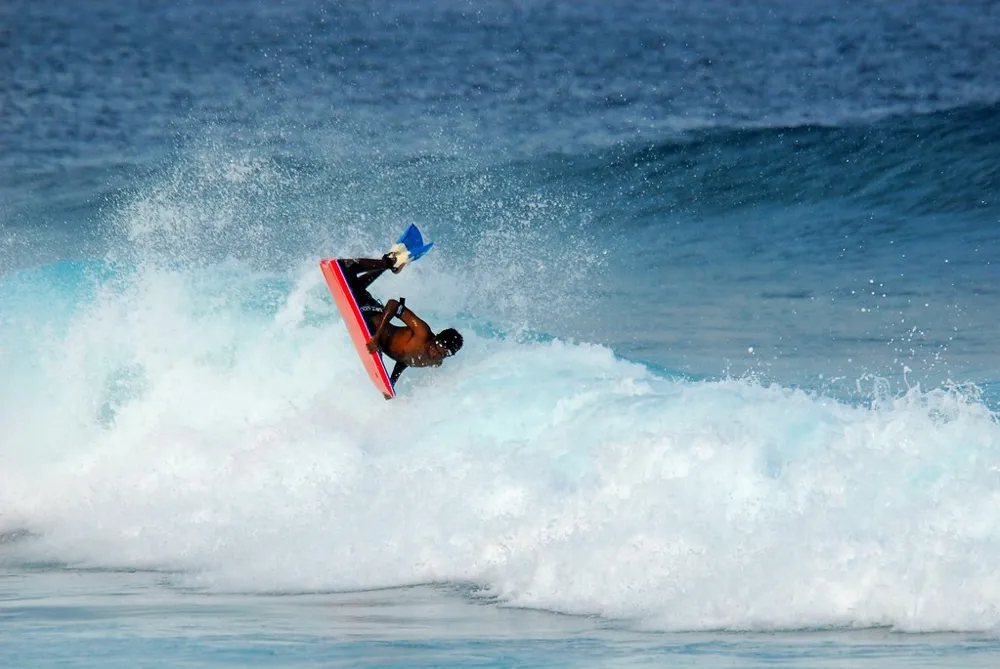
Everything in this section uses the lip as a launch ramp. The common thread is timing: hit the lip just as it starts to pitch, with as much speed as you can carry. Learn these on waves you're comfortable in before taking them to heavier surf.
6. El Rollo (Air Roll)
The el rollo ("the roll" in Spanish) is the entry point into aerial bodyboarding. You hit the lip and use the wave's power to throw yourself into a roll before landing on the face or in the whitewater. If you fully leave the wave, it's called an air roll. Variations include the barrel roll, completed inside the tube, and the rollo takeoff, done while catching the wave. Wikipedia's entry credits Pat Caldwell and Mike Stewart with inventing it independently.
How:
- Pick a section that will launch you: a pitching lip or a steep, near-vertical face. It doesn't need to be huge.
- Drive through a bottom turn and keep your eyes on the section.
- Just before the lip, slide up the board to add speed and hit it as fast as you can, just as it starts to pitch.
- Grip the board and throw yourself up and out off the face.
- Start the roll by throwing your head over your shoulder. Your body follows your head, and the board follows your body. Keep looking through the roll.
- Land with the nose pointed toward the beach, hold on tight and settle back into trim.
Common mistakes: hitting the lip too early or too late; not sliding up the board, which costs speed; looking away from the section; a half-hearted throw that gives no height; landing with the nose pointing the wrong way.
7. Invert
An invert is a classic intermediate-to-advanced move. You launch off the lip with your back toward the flats, turn upside down above the wave, then swing the board back under you to land.
How:
- Choose a wedgy wave with a hollow or ramp-like section coming toward you. Closeout sections also work.
- Make an efficient bottom turn, lean forward and build speed through a U-shaped line.
- Angle up toward the lip at about 45 degrees and launch just as the wave peaks vertically.
- Twist upside down with the rail close to your ear, kick your inside leg to help the rotation and keep your eyes on the sky.
- Hold the inverted position as long as you can, then let gravity take over and swing the board back around your body.
- Absorb the landing with your hips, elbows and hands, and aim for the whitewater to protect your back.
Common mistakes: mistimed lip contact, the most common problem; not enough speed for lift; looking down instead of up, which breaks the rotation; landing flat on the back. Twisting and flexibility drills on land help before you try it in the water.
8. ARS (Air Roll Spin)
The ARS combines an aerial, an el rollo and a 360: you roll off the lip, then spin inward toward the wave face before landing. It's harder than either part alone because it needs more speed, momentum and projection from the right part of the lip.
How: pick a wave with enough power to throw a pitching lip, hit it at speed, and arch your back and head to start the el rollo. As the roll finishes, throw your body toward the wave to drive the 360. Land, re-engage your rail and use the speed for the next move.
Common mistakes: trying it before the el rollo and 360 are consistent; launching from a weak, crumbly section; stopping the spin halfway. Expect early attempts to land facing away from the wave, needing the last half-turn to finish.
9. Backflip
The backflip is a full inverted flip out in front of the wave, often thrown coming out of a barrel. It's one of the most demanding and risky moves in prone bodyboarding, so most guides recommend building the movement on a trampoline first.
How: find a wave with a solid, punchy section. Lean forward for speed and aim at a near-vertical part of the lip, going up rather than sideways as you would for an el rollo. Hit the lip before it breaks, tilt your head back and use your body weight to throw yourself out in front of the wave. Arch your back, tuck or cross your legs and hold the board tightly. Bring the nose into the water first with your weight centered, then look where you want to go and ride away.
Common mistakes: poor timing at the lip; weak projection or too little height to complete the flip; hesitating mid-move, since the body naturally resists going upside down; landing flat. The landing is hard and can cause injury.
Riding Styles Beyond Prone: Drop Knee and Stand-Up
10. Drop Knee Basics
Drop knee (often written dropknee) is a riding style with one knee on the board and the other foot planted forward. It's credited to Jack "The Ripper" Lindholm in the late 1970s. Your preferred foot goes forward with its fin pointing ahead on the deck, the opposite knee rests toward the tail and that fin drags in the water behind you. With no fins under the board, you steer purely with weight from rail to rail.
How:
- Practice the position on the beach first so the move from prone feels familiar.
- Choose a small to medium, mushy wave with a wide, open face.
- Catch it prone, reach full speed, grab the rails and bring your knees up toward the center of the board.
- Plant your front foot and settle the back knee, with your legs close to the rails.
- Once balanced, let go and steer with your upper body and arms. Grab the rails again for quick turns or strong sections.
Tips and mistakes: a larger, buoyant board and small fins make it easier. Many drop-knee riders move the leash from the arm to the back leg. The usual errors are trying it on steep, fast waves too early and getting up before the board has enough speed. Once you're steady, the drop knee bottom turn, cutback and 360 are the next steps; the longboard version of the drop knee turn is covered in our surfing tricks guide.
11. Stand-Up Bodyboarding
Stand-up bodyboarding means riding the board fully upright, carving, doing floaters and even airs and barrels. It is the least common of the three styles and had its heyday in the late 1980s and early 1990s. It's also an option for surfers on beaches where lifeguards allow bodyboards but not hard surfboards in summer.
How: most riders get comfortable in drop knee first, then bring the back knee up into a full stance. Stand-up boards are usually narrower and longer than prone boards, often with extra stringers for stiffness. With no fins on the board or your feet, balance comes from body position: keep your weight in your hips and heels to stay near the steepest part of the wave. Lighter riders often find it easier because they can rise quickly without upsetting the board.
Common mistakes: using a soft, flexy prone board; standing tall and stiff instead of low; trying it on waves too steep to control before drop knee is solid.
Tube Riding and Other Moves to Know
A few more moves round out the list most bodyboarding guides cover:
- Tube riding (the barrel): often called the ultimate maneuver. Find a wave that wedges or throws, stall with the tail by sliding back on the board, then lean into the steepest part of the pocket as the lip covers you, using your inside arm for balance. Aim for the open end before the wave closes.
- Re-entry: a turn straight up into the lip and back down. It teaches the lip timing that every aerial needs.
- Floater: riding up and over a section that's breaking ahead of you, then dropping back onto the face.
- Front flip, air reverse and 720: expert variations built on the lip tricks above, mostly seen in contests and in powerful, ramp-like waves.
Bodyboarding Safety: Shorebreak, Reef and Your Limits
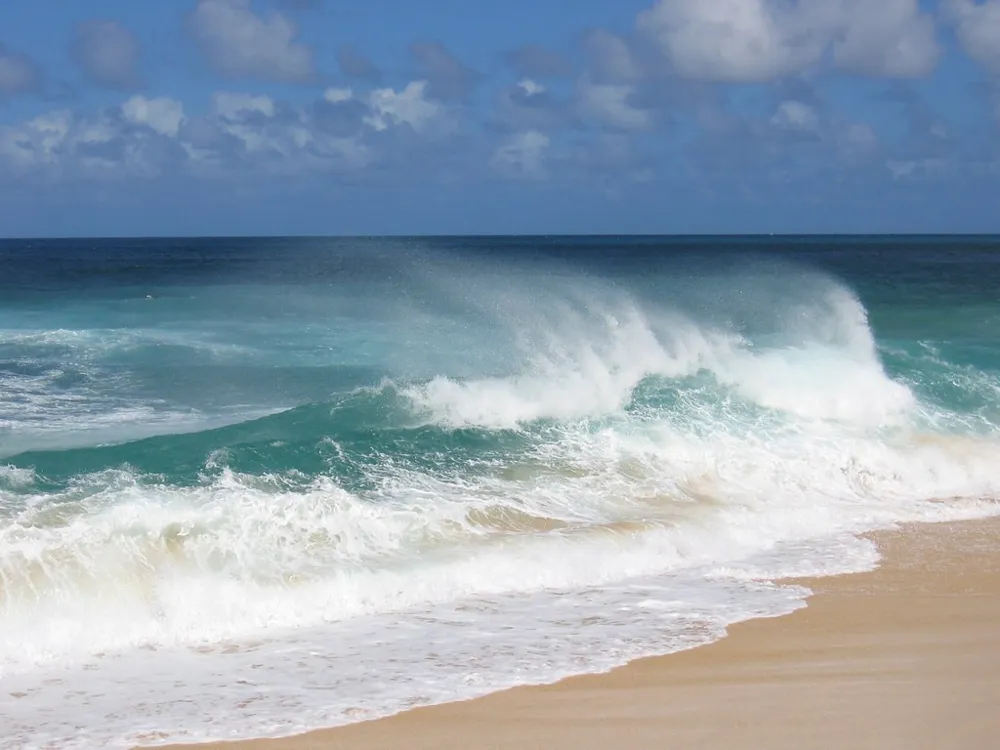
Trick riding means more time near the lip and more hard landings. Lifeguards and ocean safety agencies stress a few hazards in particular. This is general guidance, not medical advice.
- Shorebreak. Waves that break directly onto the beach, where deep water shallows quickly, can drive riders into hard sand, rock or coral and cause serious head, neck and spinal cord injuries. Hawaii's state ocean safety site reports that the average wave height when a spinal cord injury occurs there is about 3 feet, so small shorebreak is not automatically safe. Stay out of strong shorebreak, never dive in headfirst, and if you're caught, protect your head and neck with your arms. For bodyboarders, that means skipping aerials and flips in shallow shorebreak and landing in deeper whitewater instead.
- Reef and rock. Many of the best wedging, hollow waves break over shallow reef or rock. Ask lifeguards or local riders how shallow the break gets at low tide, watch where others enter and exit, and keep lip tricks for waves breaking over deeper water until you know the spot. Fall flat and shallow rather than diving, and keep your board between you and the bottom when you can.
- Your back and neck. Inverts and flips put real load on the spine. Brace for landings, aim for the whitewater and build up height gradually.
- Rip currents. If one pulls you out, don't fight it: swim parallel to the shore until you're free, then come back in. See our guide to rip currents.
- Crowds. Spins and lip tricks take up space. Don't drop in on others, and follow surf etiquette.
- The basics. Ride with a buddy, choose lifeguarded beaches where you can, check conditions before paddling out and know your limits. For a broader look at wave-riding risks, see is surfing dangerous.
How to Practice and Progress Faster
- One move per session. Pick a single trick and repeat it on every suitable wave rather than trying everything at once.
- Get the foundation right. Most failed spins and rollos trace back to a weak bottom turn or not enough speed from trim.
- Practice on land. Rehearse the head-and-shoulder throw for rollos and inverts and the drop knee pop-up on the beach. Many guides suggest trampoline work before flips.
- Train the body. Core work, swimming and breath-hold confidence, and back and shoulder flexibility all help with paddling and rotations. Our surfing workout covers exercises that carry over well.
- Film yourself. Short clips show whether you're hitting the lip too early, looking down or dragging a leg.
- Learn both directions. Practice spins and turns going left and right, so you can use whichever waves are breaking.
- Get coaching. A lesson or coached session gives you faster feedback than trial and error.
Related Guides
Go back to basics with how to bodyboard, check your gear with best bodyboards and the bodyboard size chart, learn to get under waves in how to duck dive, weigh up bodyboarding vs surfing, compare stand-up moves in surfing tricks and maneuvers, or explore everything in our surfing hub.
Frequently Asked Questions
What is the easiest bodyboarding trick to learn?
After you can catch and trim along a green wave, the bottom turn and the 360 spin are usually the first real tricks. The spin is a common first flashy move because it happens on the wave face and doesn't need a launch off the lip.
What is the hardest bodyboarding trick?
Flips, ARS and other rotations launched off a pitching lip are generally treated as the hardest moves, along with deep barrel riding in powerful waves. They need speed, precise timing and a wave with the right ramp-like section.
What is an el rollo in bodyboarding?
An el rollo (Spanish for "the roll") is a move where you hit the lip and use the wave's power to throw yourself into a roll before landing back on the wave or in the whitewater. When you fully leave the wave it is called an air roll.
What does ARS stand for in bodyboarding?
ARS stands for air roll spin. It combines an air roll (el rollo) with a 360 spin in one move off the lip, which makes it an advanced trick.
What is the difference between an invert and an el rollo?
Both are launched off the lip. In an el rollo you complete a roll and land, while in an invert you turn upside down above the lip with your back toward the flats, hold that position briefly, then swing the board back under you to land.
Can you do tricks on a cheap bodyboard?
You can learn trim, bottom turns, cutbacks and basic spins on most boards. Lip tricks and aerials are easier on a stiffer, well-sized board with a slick bottom, because a soft, flexy board tends to lose speed.
Do bodyboards have fins?
No. Bodyboards have no fins underneath, which is why you steer by shifting weight from rail to rail and why spins in both directions are possible. Riders wear swim fins on their feet for paddling and speed.