Best Sleds for Every Hill: Toboggans to Snow Tubes (2026)
Steerable sleds, toboggans, foam sleds, saucers, snow tubes and toddler pull sleds from Flexible Flyer, STIGA, Zipfy and more, with what to know about weight limits, steering and safe sledding.
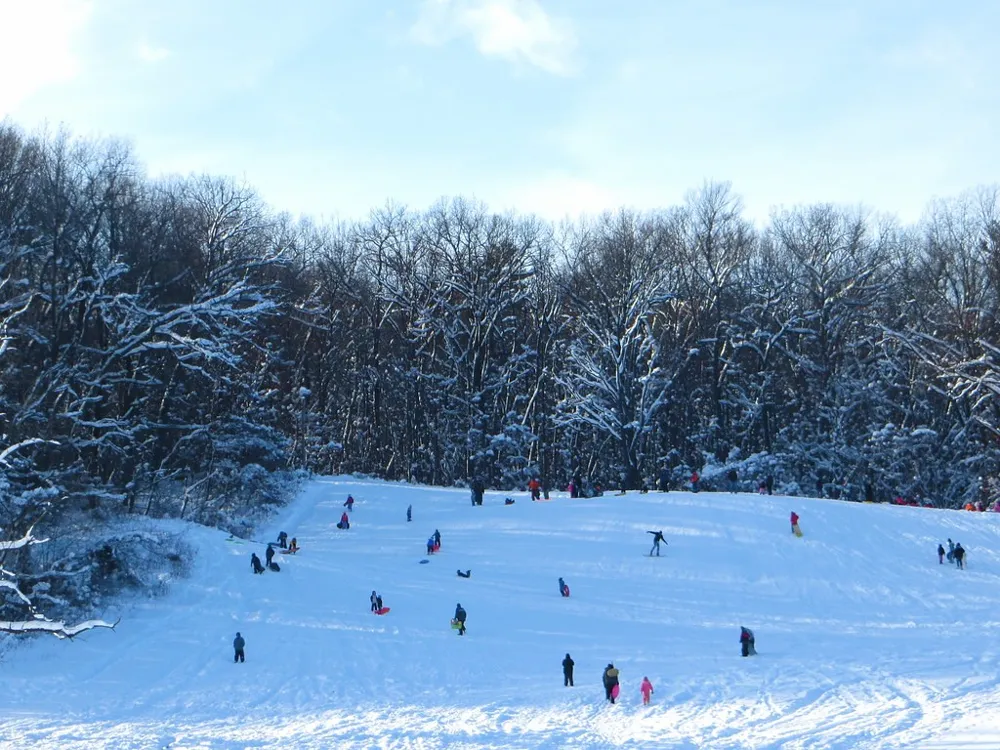
Which Sled Should You Buy?
The best sled depends on who's riding and where. A steerable sled gives the most control on a packed hill. A toboggan carries the whole family. Foam sleds are soft and light for kids, saucers and tubes are fast and fun but hard to control, and a pull sled is for towing toddlers on flat ground, not for hills.
Our picks below cover every main type. Each one is described from the maker's or retailer's listing, including the rider limits and ages they list. Check the current listing before you buy, because sizes and limits change between versions. After the picks, we explain sled types, steering and brakes, weight limits, and the sledding safety advice from pediatric groups.
Flexible Flyer Metal Runner Sled
Best classic steerable sled
- Birch deck, steel runners
- Hand or foot steering bar
- Listed for ages 5 and up
STIGA Snowracer Curve
Best sled with steering and brakes
- Steering wheel and brake
- Riders up to 90 kg (198 lb)
- Listed for ages 7 and up
Flexible Flyer 6 Ft Classic Wood Toboggan
Best for families
- 1 to 3 riders
- About 500 lb combined capacity
- Maple, steam-bent hood
Sleds Compared
| Sled | Type | Riders and Limit (as Listed) | Listed Age | Steering and Brakes |
|---|---|---|---|---|
| Flexible Flyer Metal Runner | Wood and steel runner sled | 1 (48-inch version) | 5+ | Steering bar (hands or feet); feet to slow |
| STIGA Snowracer Curve | Steerable ski sled | 1; up to 90 kg (198 lb) | 7+ | Steering wheel and brake |
| Flexible Flyer 6 Ft Wood Toboggan | Wooden toboggan | 1–3; about 500 lb combined | 5+ | None; rope handles |
| Zipfy Freestyle Mini Luge | Sit-down mini luge | 1; check listing | Check listing | Handle plus feet to steer and brake |
| Flexible Flyer Foam 2-Pack | Foam sleds | 36" Aurora: 1 rider to 150 lb; 47" Snow Screamer: one adult to 200 lb or several small riders | 5+ | None; side handles |
| Yukon Charlie's 46" Snow Tube | Inflatable tube | 1; up to 170 lb | 7+ | None |
| Flexible Flyer 26" Steel Saucer | Metal saucer (2-pack) | 1; check listing | Check listing | None; rope handles |
| Slippery Racer Downhill Sprinter | Plastic toboggan, 35" | 1 child | 4+ | None; handles and pull rope |
| Flexible Flyer Baby Snow Sled | Toddler pull sled | 1; up to 50 lb | 18 months to 4 years | Pulled by an adult |
| Flexible Flyer Flying Carpet | Roll-up slider, 36" | 1 child | 4+ | None; cutout handles |
Limits and ages are taken from each Amazon listing as of November 2026. Where a listing doesn't give a weight limit, we say so; confirm it with the seller or maker before buying.
The Best Sleds
1. Flexible Flyer Metal Runner Sled
The classic American runner sled. The listing describes a smooth birch wood deck on powder-coated steel runners, with a steering bar you can work with your hands or feet and double-knee construction for strength. The 48-inch version measures 48 x 20.5 x 6.5 inches, weighs about 13 lb, arrives fully assembled and is listed for ages 5 and up, for kids and adults. Pre-drilled holes let you add a pull rope. Runners shine on packed snow and icy hills; like any runner sled, it sinks in deep, fresh powder.
Good to Know
- Real steering
- Fully assembled
- Kids and adults
Watch Out For
- Struggles in deep powder
- Heavier than plastic sleds
- No dedicated brake
2. STIGA Snowracer Curve
The Snowracer is a long-running steerable "snow racer" from STIGA. Per the listing, it has a steel frame, twin-tip rear skis and a curved front ski controlled by a steering wheel with grip zones, plus a brake for controlled stops. It supports riders up to 90 kg (198 lb), is listed for ages 7 and up, and includes a pull cassette for towing it back uphill. Steering plus a brake is exactly the kind of control pediatric safety groups recommend.
Good to Know
- Steering wheel and brake
- Older kids and adults
- Pull cord for the walk up
Watch Out For
- Ages 7+ only
- Bulkier to carry and store
- Can be fast on hard-packed snow
3. Flexible Flyer 6 Ft Classic Wood Toboggan
A traditional curled-front toboggan for the whole family. The listing gives room for 1 to 3 riders with a combined weight of about 500 lb, 0.25-inch Northern hard rock maple slats, a steam-bent hood reinforced with countersunk zinc-plated screws, full-length rope handles on each side and a pull rope. It measures 72 x 17.25 x 12 inches, is listed at about 11 lb and is suitable for ages 5 and up. A toboggan pad is sold separately. Toboggans can't be steered or braked, so save it for wide, gentle hills.
Good to Know
- Seats up to three
- Classic wooden build
- Arrives assembled
Watch Out For
- No steering or brake
- Needs storage space for a 6-ft sled
- Pad sold separately
4. Zipfy Freestyle Mini Luge
A small, lightweight sit-down racer made in the USA. You sit on it, grip the ergonomic riding handle, and ride feet first, using your feet to steer and brake. The listing describes cold-resistant materials and a design built for quick carving. Check the current listing for the weight limit and age range. It's compact enough to carry under one arm, but it's fast, so start on a gentle slope.
Good to Know
- Feet-first riding position
- Light and compact
- Kids and adults
Watch Out For
- Quick on packed snow
- Steering takes practice
5. Flexible Flyer Premium Foam Sled 2-Pack
This bundle pairs a 47-inch Snow Screamer with a 36-inch Aurora, both made from polyethylene foam with a slick bottom. Per the listing, the Aurora carries one rider up to 150 lb, and the Snow Screamer carries one adult up to 200 lb or several small riders. Both are listed for ages 5 and up and have side handles. Foam absorbs bumps better than rigid plastic and is soft if it bumps into someone. The listing mentions riding lying down; sitting up and feet first is the safer position.
Good to Know
- Two sizes in one box
- Very light to carry
- Cushioned ride
Watch Out For
- No steering
- Foam can dent or tear over time
6. Yukon Charlie's Inflatable Snow Tube 46"
A heavy-duty snow tube with a butyl rubber bladder inside a 400D polyester cover, a reinforced PVC base, foam-filled handles and a pull handle. The listing gives 46 inches deflated (about 40 inches inflated), a limit of 170 lb and ages 7 and up. Tubes are cushioned and fun, but they spin and can't be steered, which is why the AAP suggests steerable sleds instead. Use it on supervised tubing-style runs or wide, open hills with a long, flat runout.
Good to Know
- Soft, cushioned ride
- Deflates for storage
- Puncture-resistant base
Watch Out For
- Can't steer or stop
- Needs a pump
- 170 lb limit
7. Flexible Flyer 26" Steel Snow Saucer (2-Pack)
Two all-steel 26-inch saucers (Paricon model 826T, sold under Flexible Flyer) with nylon rope handles and a slick bottom. Metal saucers are tough, stack flat and slide in a range of snow conditions, but like every disc they spin and can't be steered. The listing doesn't give a weight limit, so check with the seller. Best for older kids and adults on short, clear hills.
Good to Know
- Durable steel
- Stacks flat
- Two in a pack
Watch Out For
- Spins and can't be steered
- No padding
- Weight limit not listed
8. Slippery Racer Downhill Sprinter
A simple plastic toboggan for kids. The listing gives 35 x 18 x 5 inches, ages 4 and up, heavy-duty flexible plastic with an IceVex cold-resistant coating, reinforced handles and a pull rope. It's light enough for a young child to drag back up the hill. No weight limit is listed, and there's no steering, so it suits small hills.
Good to Know
- Light for kids to carry
- Pull rope included
- Cold-resistant plastic
Watch Out For
- One small rider
- No steering
9. Flexible Flyer Baby Snow Sled
A wooden pull sleigh for babies and toddlers, listed for 18 months to 4 years and up to 50 lb. It's built from Northern hard rock maple with steam-bent runners and backrest, has steel runners under the wooden skis, a high double-slat backrest, a raised seat that keeps a child out of the snow, a wide base and a pull rope. It measures about 29 x 14 x 11.5 inches. This is for an adult to tow on flat ground or along paths, not for sliding down hills.
Good to Know
- Backrest for support
- Raised, dry seat
- Arrives assembled
Watch Out For
- Towing only, not for hills
- Outgrown by about age 4
10. Flexible Flyer Flying Carpet
A roll-up plastic slider that weighs about 0.8 lb and measures 36 x 18 inches. It has two punched-out handles and rounded edges, rolls up for storage and is listed for ages 4 and up. The listing notes it can also slide on sand or light grass. Flat sheets give the least control of any sled, so keep it to small, gentle slopes.
Good to Know
- Featherweight
- Rolls up into a backpack or car
Watch Out For
- No steering, no padding
- Feels every bump
Also Worth a Look: Mad River Rocket and Handmade Toboggans
The Mad River Rocket is a kneeling sled made from HDPE (Popular Science lists 50% recycled content), about 47 inches long and 7 lb, with foam knee pads and a nylon knee strap. You lean to steer and lean back to slow down; it's built for riders who like jumps and backcountry-style runs. Handmade wooden toboggans, such as those from the Northern Toboggan Company, are another heirloom option for families. Both are mainly sold direct rather than on Amazon.
Types of Sleds Explained
| Type | Best For | Control | Trade-Offs |
|---|---|---|---|
| Wood toboggan | Families, 2–3 riders | Low; lean and drag feet | Long to store; no brakes |
| Plastic toboggan | Kids, budget | Low | Hard plastic transmits bumps |
| Runner sled | Packed snow, ice | Good; steering bar | Sinks in powder; heavier |
| Steerable ski sled or bobsled | Older kids and adults | Best; steering and often brakes | Bulkier, more parts |
| Mini luge or kneeling sled | Confident riders | Good with practice | Fast; skill needed |
| Foam sled | Kids, mixed snow | Low | Foam wears with use |
| Saucer or disc | Short, open hills | Very low; spins | Hard to stop or aim |
| Inflatable tube | Tubing runs, open hills | Very low; spins | Needs a pump; can puncture |
| Roll-up slider | Small kids, small slopes | Very low | No padding |
| Pull sled or sleigh | Babies and toddlers on flat ground | Adult tows it | Not for hills |
Toboggans are long, flat-bottomed sleds with a curled front; riders sit one behind the other, hold the side ropes and steer by leaning or dragging a foot. Runner sleds steer with a flexing front bar, while steerable sleds (snow racers or snow bobs) turn a front ski with a wheel or handlebar, and many add a brake.
Steering and Brakes
Control is the biggest safety difference between sleds. Nationwide Children's Hospital says sleds that can be steered and have braking features may give more control than flat sheets, snow discs, tubes and toboggans, and the American Academy of Pediatrics (AAP) recommends steerable sleds over snow disks or inner tubes.
- Steering wheel or handlebar: turns a front ski, as on the STIGA Snowracer. The easiest steering for older kids.
- Steering bar: flexes the runners on a classic runner sled. Push with hands or feet.
- Handle plus feet: mini luges steer with body weight and the feet.
- Brakes: some snow racers have a lever or pedal brake. On sleds without one, riders slow down by dragging their feet. If a crash is coming, Nationwide Children's says to teach kids to roll off the sled.
The AAP also says a sled's steering mechanism should be well lubricated, so check moving parts before the season.
Weight Limits, Riders and Ages
Every sled listing should give a rider count, an age range and, ideally, a weight limit. Follow them: Nationwide Children's advises following manufacturer guidelines for the number of passengers a sled can safely hold.
- Weight limit: add up every rider's weight. Our picks range from 50 lb (toddler pull sled) to about 500 lb combined (6-ft toboggan). If a listing gives no limit, ask the seller rather than guessing.
- Rider count: toboggans and long foam sleds take two or three riders. Saucers, tubes, luges and snow racers are one-rider sleds.
- Age: listed ages here run from 18 months (pull sled, towing only) through 4+, 5+ and 7+ for downhill sleds. Older kids and adults generally need longer, sturdier sleds.
- Adults: look for sleds that list adult weights, such as the STIGA (198 lb), the 47" Snow Screamer (200 lb) or a family toboggan.
The AAP recommends keeping preschool-age children separate from older kids and teens on the hill, so don't pile mixed ages onto one sled.
Materials, Speed and Snow Conditions
Hard, slick bases slide fastest. Steel runners grip and glide on packed snow and ice but sink in deep powder. Plastic toboggans and saucers float better on fresh snow. Foam sleds and tubes trade some precision for a cushioned ride. Speed also depends on the hill: packed, icy snow is much faster than fresh powder.
| Material | Strengths | Weaknesses |
|---|---|---|
| Wood (birch, maple, oak) | Durable, classic, repairable | Heavier; needs drying and occasional refinishing |
| Steel | Tough runners and saucers; fast on packed snow | Cold to touch; can rust if stored wet |
| Hard plastic (HDPE, roto-molded) | Light, slick, inexpensive | Cheaper plastic may crack in hard cold; transmits bumps |
| Polyethylene foam | Soft, light, cushioned | Dents and tears with heavy use |
| PVC and polyester (tubes) | Cushioned; deflates to store | Can puncture; needs a pump |
Some makers suggest waxing a plastic sled bottom for extra speed. Faster isn't always better for kids; more speed means less time to steer or stop.
Sledding Safety: What Pediatric Experts Recommend
Sledding injuries are common. A Nationwide Children's Hospital study found that 220,488 patients were treated in U.S. emergency departments for sledding injuries from 2008 through 2017. Nearly 70% were 19 or younger, most injuries came from collisions (63%), and the head was the most frequently injured body part. The U.S. Consumer Product Safety Commission (CPSC) estimated 124,700 winter sports injuries treated in emergency rooms in 2022, with about 10% involving toboggans, sleds and snow discs.
The AAP and Nationwide Children's recommend:
- Wear a helmet. The AAP suggests considering a helmet for sledding; Nationwide Children's recommends a properly fitted snow sport or bicycle helmet for everyone who sleds. See our ski and snowboard helmet guide.
- Sit up, feet first. Sledding feet first or sitting up, rather than lying down head first, may prevent head injuries.
- Supervise. The AAP says children under 12 should always be supervised, and young children should be kept apart from teens.
- Choose a steerable sled where possible, and check that it's sound, with no sharp edges or splinters.
- Daylight only. Nationwide Children's advises sledding only in daylight.
- Never tow a sled behind a vehicle. In the Nationwide study, sleds pulled by motorized vehicles made up only 3% of cases but led to hospitalization more often (14%). The AAP says not to use a snowmobile to pull a sled.
- Roll off if the sled is going too fast or about to crash.
This is general safety information, not medical advice. For head injuries or any serious fall, get medical help.
How to Choose a Safe Sledding Hill
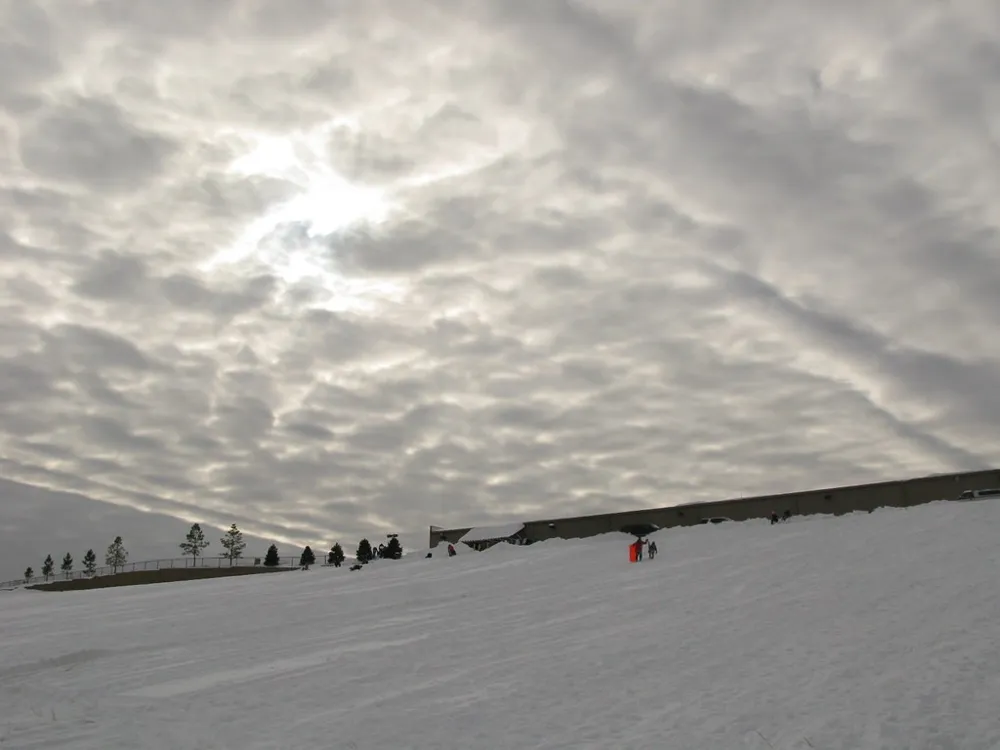
The hill matters as much as the sled. According to the AAP and Nationwide Children's, a good sledding hill:
- Is free of obstacles such as trees, fences, rocks, light posts and walls.
- Is covered in snow, not ice.
- Is not too steep; the AAP gives a slope of less than 30 degrees.
- Ends in a long, flat runout, not a street, driveway, parking lot, drop-off or pond.
- Is free of motor vehicles, such as cars, ATVs and snowmobiles.
- Isn't crowded. Walk back up along the edge, away from the sledding lane.
Many towns designate sledding hills, and some ski areas run separate tubing parks with lifts and staff; check local rules before you go. Walk the run first to look for hidden hazards under fresh snow.
What to Wear Sledding
Dress like you're going skiing, because you'll sit and kneel in snow all day. Use a moisture-wicking base layer, a warm mid layer, and waterproof outer layers; skip cotton and jeans, which hold moisture. Add waterproof mittens or gloves, warm socks, insulated boots and a helmet, with goggles if snow is blowing. Waterproof ski pants or bibs keep riders dry, and our what to wear skiing guide covers layering in detail. For kids, see kids' ski jackets. Take breaks indoors, and head home when anyone is wet or shivering.
How to Store and Care for a Sled
- Dry it first. Wipe off snow and let the sled dry before storing, especially wood and steel, to prevent rot and rust.
- Store out of the sun. UV light can make plastic brittle. A garage, shed or basement works well.
- Hang or stack. Wall hooks keep long toboggans and runner sleds off the floor; saucers and foam sleds stack.
- Tubes: clean, dry and deflate them, then fold loosely and check for punctures before next season.
- Wood: check for splinters and loose screws, and refinish per the maker's instructions when the wood looks dry.
- Moving parts: lubricate steering parts and check brakes, ropes and handles at the start of each winter.
More Ways to Enjoy the Snow
If your family is hooked on winter, try snowshoeing for easy hikes, or a fat bike for riding on snow. Planning a trip? Our family ski resorts guide and ski season dates help you plan, and the snow sports hub has every gear guide. Looking for a present? See gifts for skiers and snowboarders.
Frequently Asked Questions
What type of sled is safest?
Pediatric safety groups favor sleds you can steer, and ideally brake, over snow discs, inner tubes, toboggans and flat sheets, because they give the rider more control. Whatever you ride, sit up facing feet first, wear a helmet and pick a clear hill with a flat runout.
Should kids wear a helmet when sledding?
Yes, it is a good idea. The American Academy of Pediatrics suggests considering a helmet for sledding, and Nationwide Children's Hospital recommends a properly fitted snow sport or bicycle helmet for everyone who sleds.
What age can a child start sledding?
Check each sled's listed age range. Toddler pull sleds are listed from about 18 months for towing on flat ground, while most downhill sleds here are listed for ages 4, 5 or 7 and up. The AAP says children under 12 should always be supervised.
How many people can ride a sled?
Only as many as the maker lists. Toboggans and long foam sleds are designed for two or three riders, while saucers, tubes and steerable sleds are usually one-rider sleds. Never exceed the listed weight limit.
What makes a sled go faster?
Hard, slick bases such as plastic and metal runners are faster than soft bases, and packed snow is faster than deep powder. Some makers suggest waxing a plastic sled bottom for more speed, but more speed also means less time to react.
Is it safe to pull a sled behind a car or snowmobile?
No. Nationwide Children's Hospital found sleds pulled by motorized vehicles caused more serious injuries, and the AAP says not to use a snowmobile to pull a sled. Keep sledding to hills where riders control their own speed.