Kayak Roof Racks That Fit Your Car and Your Boat (2026)
J-cradles, saddles, stackers, lift-assist carriers and foam blocks from Thule, Yakima, Malone and Seattle Sports, with a plain guide to crossbar fit, load limits, bow and stern lines and carrying two kayaks.
Which Kayak Roof Rack Do You Need?
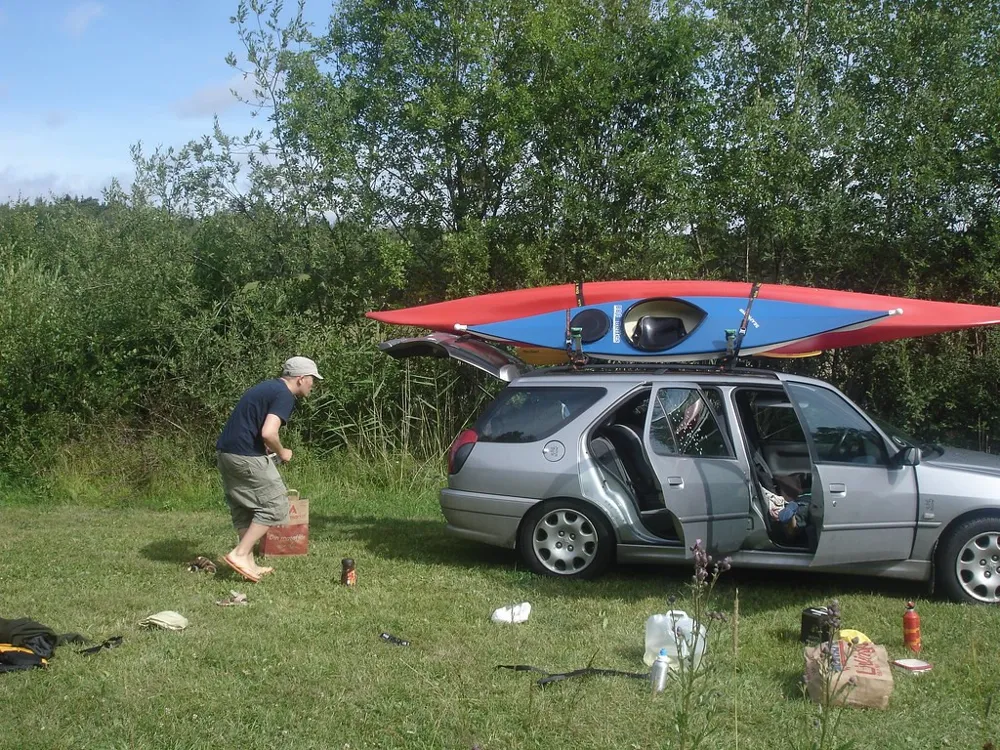
A kayak roof rack is really two parts: crossbars that span the roof, and a kayak carrier that clamps to them and holds the boat. REI's cartop guide sorts the carriers into J-cradles and stackers, which hold kayaks on their sides; saddles, which cradle the hull upright; and integrated lift systems, which use gas-assist shocks to help raise the boat. Foam blocks are the no-crossbar fallback. The right choice comes down to how many boats you carry, how heavy they are and whether you load alone.
| Carrier Type | How the Kayak Rides | Best For | Trade-Off |
|---|---|---|---|
| J-cradle | On its side, at an angle | One kayak with room to spare, or two side by side | Adds height; you lift the boat up and in |
| Saddles | Hull down, upright | One heavy, wide or composite kayak | Uses more bar width per boat |
| Stacker | On edge, leaning on an upright post | Two to four kayaks | Needs straps through the post; often two people |
| Lift-assist | In padded cradles that lower down the side | Solo paddlers, tall vehicles, heavier boats | Heavier carrier, limited bar fit |
| Foam blocks | On blocks on a bare roof or bars | Occasional, shorter trips | Straps through the doors; less stable at speed |
If you only need the step-by-step on tying a boat down, our kayak transport guide covers loading, strapping, truck beds and overhang flags. This page is about choosing the hardware.
Thule Compass
Best all-round carrier
- J-style, saddle or 2-kayak stacker mode
- 130 lb max kayak weight, per Thule
- Fits kayaks up to 36 in wide
Malone SeaWing
Best saddles for one kayak
- V-style saddles that flex to the hull
- Listed at 70 lb capacity
- Jawz mount for round, square, most oval bars
Thule Hullavator Pro
Best lift-assist for solo loading
- Gas struts take up to 40 lb, per Thule
- Lowers the kayak up to 3 ft
- 75 lb max, kayaks up to 32 in wide
Kayak Roof Racks Compared
Capacities and widths below are from the maker's page or the Amazon listing as of November 2026. Always check the current spec sheet for your exact model, since carriers get revised.
| Carrier | Type | Kayaks | Listed Capacity | Crossbars Needed? | Bow/Stern Lines |
|---|---|---|---|---|---|
| Thule Compass | J, saddle or stacker | 1 (J/saddle) or 2 (stacker) | 130 lb, kayaks up to 36 in wide | Yes | Included |
| Malone SeaWing | Saddles | 1 | 70 lb | Yes | Included |
| Thule Hullavator Pro | Lift-assist | 1 | 75 lb, up to 32 in wide | Yes (listed Thule bars) | Included |
| Yakima ShowDown | Side-load slider | 1 kayak or 2 SUPs | 80 lb | Yes | Included |
| Thule Hull-a-Port XTR | J-cradle or stacker | Up to 2 | Check Thule spec | Yes | Check listing |
| Yakima JayLow | J-cradle | 1 or 2 | 80 lb (1), 110 lb combined (2) | Yes | Check listing |
| Malone Stax Pro2 | Stacker | 2 | Check Malone spec | Yes | Check listing |
| Thule Stacker | Stacker | Up to 4 | Check Thule spec | Yes | Check listing |
| Seattle Sports Sherpak | Foam blocks | 1 | Limited by your roof | No | Check kit |
The Best Kayak Roof Racks
1. Thule Compass
The Compass is the most flexible carrier here. Thule lists three ways to use it: one kayak in J-style or saddle mode, two kayaks in stacker mode, or up to two stand-up paddle boards in saddle mode. It takes kayaks up to 130 lb and 36 inches wide, has thick rubber saddles and a padded upright, and folds flat when empty. Thule includes two 15-foot load straps with BuckleBumpers plus bow and stern tie-downs, and the carrier locks with Thule's One Key System. Outdoor Life's reviewer noted that the rubber saddles hold a kayak very firmly but make a dry hull harder to slide into place.
Good to Know
- J, saddle and stacker modes in one carrier
- 130 lb max kayak weight, per Thule
- Straps and bow/stern tie-downs included
- Folds flat; One Key System compatible
Watch Out For
- Some Thule bars need the Xadapt13 adapter kit
- Only one kayak in J or saddle mode
- Grippy saddles resist sliding a boat on
2. Malone SeaWing
The SeaWing is a pair of low-profile V-style saddles that, per the listing, flex to support the hull and reduce wind resistance. It mounts at the middle of each bar, which leaves room for other gear, and uses Malone's tool-free Jawz hardware, listed to fit round, square and most factory oval crossbars without adapters. The listing gives a 70 lb capacity and includes heavy-duty bow and stern tie-downs. Malone also sells the Stinger, a load-assist module designed to work with SeaWing saddles, if you want a rear roller-style loading aid.
Good to Know
- Hull-down saddles for one kayak
- Jawz mount fits round, square and most oval bars
- Bow and stern tie-downs included
- Corrosion-resistant nylon build
Watch Out For
- 70 lb listed capacity rules out heavy fishing kayaks
- No folding or locking feature listed
3. Thule Hullavator Pro
The Hullavator Pro is the classic lift-assist carrier. Its double arms extend down the side of the vehicle, lowering the cradles by up to 3 feet so you can load and strap the kayak at about waist height, and gas-assist struts take up to 40 lb of the boat's weight on the way up, according to Thule's features list. Thule rates it for one kayak up to 75 lb and 32 inches wide, with eight padded touch points and cradles that expand for wider boats. It comes with Thule QuickDraw bow and stern tie-downs and two 9.5-foot straps, and it's lockable. The trade-offs: the carrier itself weighs 39.7 lb per Thule, and Thule lists only certain bars as compatible, including WingBar Evo, SquareBar Evo, ProBar Evo, Xsporter Pro and TracRac.
Good to Know
- Loads at waist height on the side of the car
- Struts take up to 40 lb, per Thule
- Bow/stern tie-downs and straps included
- Lockable, One Key System compatible
Watch Out For
- Heavy carrier (39.7 lb) counts against your roof limit
- Fits a listed set of Thule bars only
- One kayak per carrier, 75 lb max
4. Yakima ShowDown
The ShowDown is a side-loading carrier: per the listing, a slide mechanism tilts the cradles 26 inches out from the roof so you can load a kayak at the side of the vehicle instead of lifting it all the way up. It carries one kayak or two SUPs up to an 80 lb boat-and-board capacity, has felt-covered cradles that flex to the hull, and folds flat when empty. It attaches with Yakima's tool-free SpeedClamp and includes heavy-duty straps and bow and stern tie-downs. The listing gives its size as 42 x 9 x 9 inches and its weight as 23 lb.
Good to Know
- Slides 26 in off the roof for side loading
- 80 lb listed capacity
- Also carries two paddle boards
- Straps and bow/stern tie-downs included
Watch Out For
- No gas struts; you still lift the boat partway
- Takes a wide section of the bars
5. Thule Hull-a-Port XTR
A J-cradle with a second job: its dual-position design converts from a J-cradle to a two-boat stacker, so one carrier can take up to two kayaks. The upright folds flat when not in use, it arrives fully assembled, it has an integrated StrapCatch for easier strapping, and it locks to the load bars with Thule One Key System lock cylinders (sold separately), per the listing. It's a good fit if you paddle alone most of the time but sometimes bring a second boat.
Good to Know
- J-cradle or two-kayak stacker
- Folds flat; arrives assembled
- Lockable with One Key cylinders
Watch Out For
- Lock cylinders sold separately
- Check Thule's weight rating for your boats
6. Yakima JayLow
A folding J-cradle that supports one boat up to 80 lb or two boats with a combined weight of 110 lb or less, with padded rollers on pivoting bases. As a J-cradle it carries boats on edge, which leaves more bar space than saddles.
Good to Know
- One or two kayaks
- 80 lb single / 110 lb combined, per Yakima
- Folds down when empty
Watch Out For
- Lifting into a J-cradle is harder on tall vehicles
- Two-boat limit is combined weight
7. Malone Stax Pro2
A dedicated two-boat stacker with octagonal aluminum posts and injection-molded nylon platforms. Malone's stacker blocks steady the boats while you tie down and cushion them in transport, the posts fold down when empty, and the tool-free Jawz hardware is listed to fit round, square and most factory oval bars. The listing mentions a lifetime warranty. Outdoor Life and KayakGuru both report a 50 lb per-kayak limit for the Stax Pro line; confirm it on Malone's current spec sheet for this model.
Good to Know
- Two kayaks on edge in little bar space
- Stacker blocks included
- Folds down; tool-free Jawz mount
Watch Out For
- Lower per-boat limit reported than saddles or J-cradles
- Two people make stacked loading easier
8. Thule Stacker
Thule's fold-down steel stacker carries up to four kayaks on edge and, per the listing, takes one to two people to load and unload. It's sized to leave room on the roof for other Thule accessories, has a non-scratch outer coating and works with Thule crossbars, round bars or factory racks according to Thule's fit guide. Outdoor Life's reviewer recommended adding stacker blocks, because a kayak resting on its side puts its weight on a small area of the hull.
Good to Know
- Up to four kayaks
- Folds down when empty
- Leaves room for other accessories
Watch Out For
- Four boats need long bars and a high roof rating
- Easier with a second person
9. Seattle Sports Sherpak Foam Blocks
A non-skid foam block carrier kit for carrying a kayak on a car without a dedicated carrier. Blocks sit between the hull and the roof, and the straps run through the open doors. It's the simplest setup on this list and the easiest to store, but it relies on your roof skin and door seals rather than crossbars.
Good to Know
- No crossbars needed
- Small to store, quick to fit
Watch Out For
- Less stable at highway speed than a rack
- Bow and stern lines are a must
J-Cradles vs Saddles vs Stackers vs Lift-Assist
J-Cradles
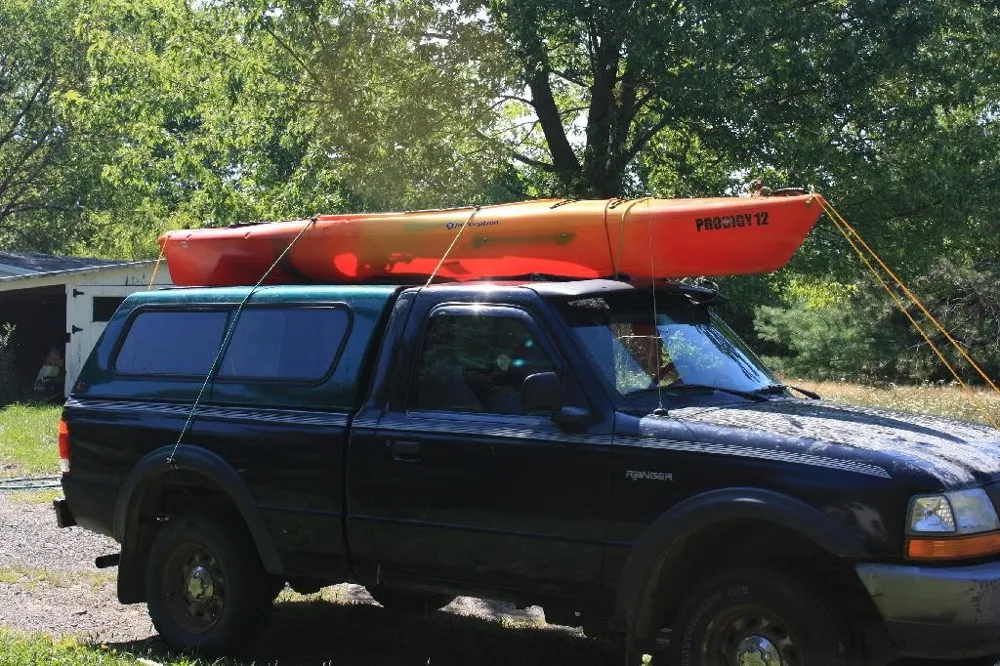
A J-cradle is shaped like the letter J and holds the kayak on its side at an angle, loaded from the side of the car. Because the boat stands on edge, one J-cradle leaves the other side of the bars free for a second cradle, a bike or a cargo box. Most fold down when empty. The downside is height: you have to lift the boat up and over the lip of the J, which gets harder on SUVs and vans, and the cradle adds to your clearance in garages.
Saddles
Saddles are pairs of padded supports that hold the hull right side up. REI notes that saddle mounts spread pressure along the hull and reduce wear on its edges, which is why they suit wide sit-on-tops, heavier fishing boats and composite kayaks. Outdoor Life's reviewer added that saddles place the load closer to the crossbar towers, where bars are strongest. Rear-loading saddle sets, such as Yakima's Big Catch, let you slide the boat on from behind; a roller or load-assist accessory on the rear bar makes that easier. Saddles take more bar width than a J-cradle, so two boats on saddles need long bars.
Stackers
Stackers are upright posts. Kayaks lean on edge against the post and against each other, so a narrow strip of bar can carry two to four boats depending on roof width. The straps pass around the post and boats, and stacked loads go on and come off more easily with two people. Stacker blocks spread the boat's weight along its edge.
Lift-Assist and Side-Loading Carriers
Lift-assist carriers bring the cradle down to you. The Thule Hullavator Pro uses gas struts and extending arms to lower the cradles down the side of the car, and the Yakima ShowDown slides its cradles out and down the side. Both mean less overhead lifting, which matters with a tall vehicle, a heavier boat or a shoulder you need to protect. They cost more roof capacity, since the carrier itself is heavy, and they usually fit a narrower range of bars.
| Question | Choose |
|---|---|
| Carrying one heavy or wide sit-on-top? | Saddles, or a carrier with a saddle mode |
| Want space left for a bike or box? | J-cradle |
| Carrying three or four boats? | Stacker |
| Loading alone onto a tall vehicle? | Lift-assist or side-loading carrier |
| No crossbars, occasional trips? | Foam blocks |
Foam Blocks and Racks Without Crossbars
REI describes foam blocks as the low-cost, easy-on, easy-off option: they're held by two or three nylon straps, and some sit directly between the boat and the roof while others slot onto rack bars. Through-door inflatable or foam pads work the same way. Review sites generally recommend them for shorter, slower trips, because nothing is fixed to the car except the straps, and the straps pass through the door openings, not the windows.
If you drive with blocks, bow and stern lines matter even more, since they are what stops the boat from shifting forward under braking. Our kayak transport guide walks through the foam-block method step by step. Paddle board owners face the same choice between soft racks and bars; see how to transport a paddle board and our surfboard car racks guide.
Crossbar Compatibility
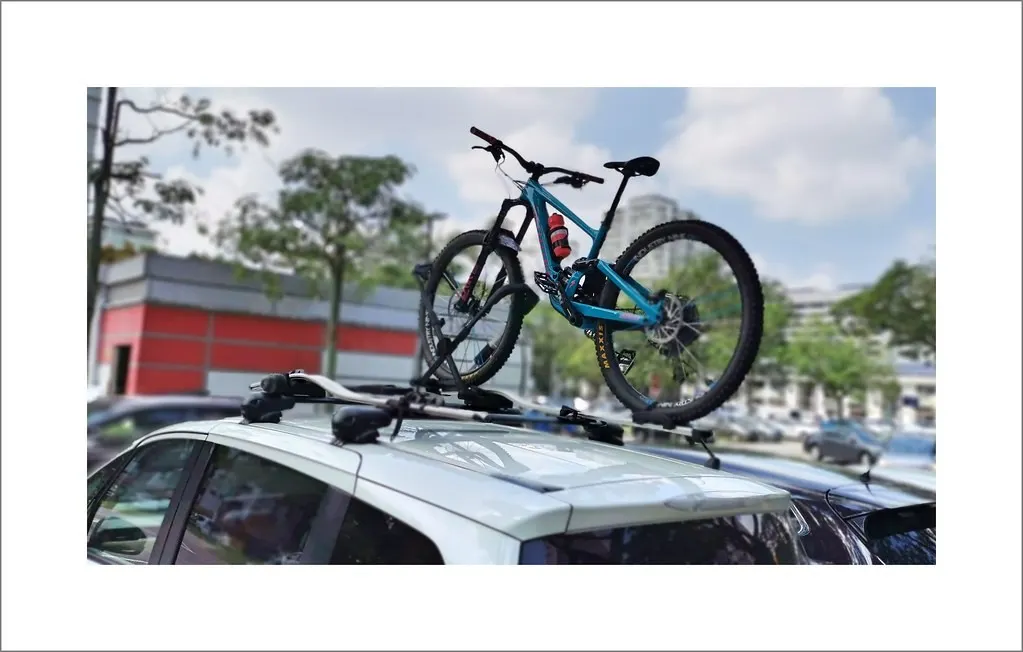
A kayak carrier is only as good as its fit on your bars. REI notes that a basic aftermarket rack uses four towers and two crossbars, and that factory bars sometimes need a universal adapter, though some carriers come with universal mounts already. Before you buy, check three things:
- Bar shape. Bars come in round, square, aero (wing-shaped) and factory oval profiles. Malone's Jawz hardware is listed for round, square and most factory oval bars. Thule lists the Compass for its WingBar, ProBar, SquareBar, Xsporter, AeroBlade, Xscape and TracRac bars, with an Xadapt13 adapter kit needed on some of them.
- Specific model lists. Some carriers fit only named bars. Thule lists the Hullavator Pro for WingBar Evo, WingBar, WingBar Edge, SquareBar Evo, ProBar Evo, Xsporter Pro, Xscape, Caprock and TracRac bars, partly because the arms need clearance down the side of the vehicle.
- Bar length and spread. Two boats side by side, or a wide saddle set beside a bike mount, need longer bars. The front-to-back distance between bars also affects how well a long kayak is supported; check your carrier's instructions for any minimum spread.
If your car has bare raised rails, you'll need crossbars first. The same bars carry bikes and skis too, which is covered in our roof bike racks and ski and snowboard racks guides.
Load Limits: Roof, Bars and Carrier
Three numbers decide how much kayak you can carry, and the lowest one wins. Yakima's load-rating guide puts it plainly: your carrying system is only as strong as its weakest link, whether that's the vehicle roof, the crossbars or the accessory.
- Vehicle roof limit. Found in your owner's manual. This is usually the limiting number on cars.
- Crossbar rating. On the rack maker's spec sheet or fit guide for your vehicle.
- Carrier rating. The kayak weight the cradle, saddle or stacker is built for, such as 130 lb for the Thule Compass or 75 lb for the Hullavator Pro.
Yakima also points out that the weight of the crossbars and accessories counts against the limit, so subtract them before adding boats. That matters with heavy carriers: the Hullavator Pro weighs 39.7 lb on its own, per Thule. Published ratings are dynamic, meaning while driving; Yakima says static ratings for a parked vehicle are higher but should be confirmed with the vehicle maker. Its guide also reduces ratings for off-road driving, by a third for most fits and by half for clamp-on systems.
Weigh your kayak with its seat and any fishing gear you leave on it. Our kayak weight guide lists typical weights by type, and lightweight kayaks are worth a look if your roof rating is low. Outdoor Life's reviewer also warned that a carrier which rests a heavy boat's weight on a small section of bar can deform the bars if the kayak is left on overnight, so unload heavy boats when you park for the night.
Carrying Two Kayaks
Two boats on one car is common, and there are four ways to do it:
| Setup | How It Works | Watch For |
|---|---|---|
| Two J-cradles | One cradle on each side of the bars, boats on edge facing outward | Bar length; enough room to lift each boat in |
| One carrier in stacker mode | Thule Compass, Hull-a-Port XTR or JayLow with two boats stacked | Combined weight limit (JayLow: 110 lb) |
| Dedicated stacker | Malone Stax Pro2 or Thule Stacker, boats on edge | Per-boat limits; stacker blocks |
| Saddles plus J-cradle | Heavy boat upright, lighter boat on edge | Total width and total weight |
Whatever the setup, add both boats, both carriers and the bars together and keep the total under your lowest rating. Give each kayak its own straps and its own bow and stern lines. Tandem kayaks are long and heavy enough to need a carrier on their own; see tandem kayaks for typical lengths.
Straps, Bow and Stern Lines
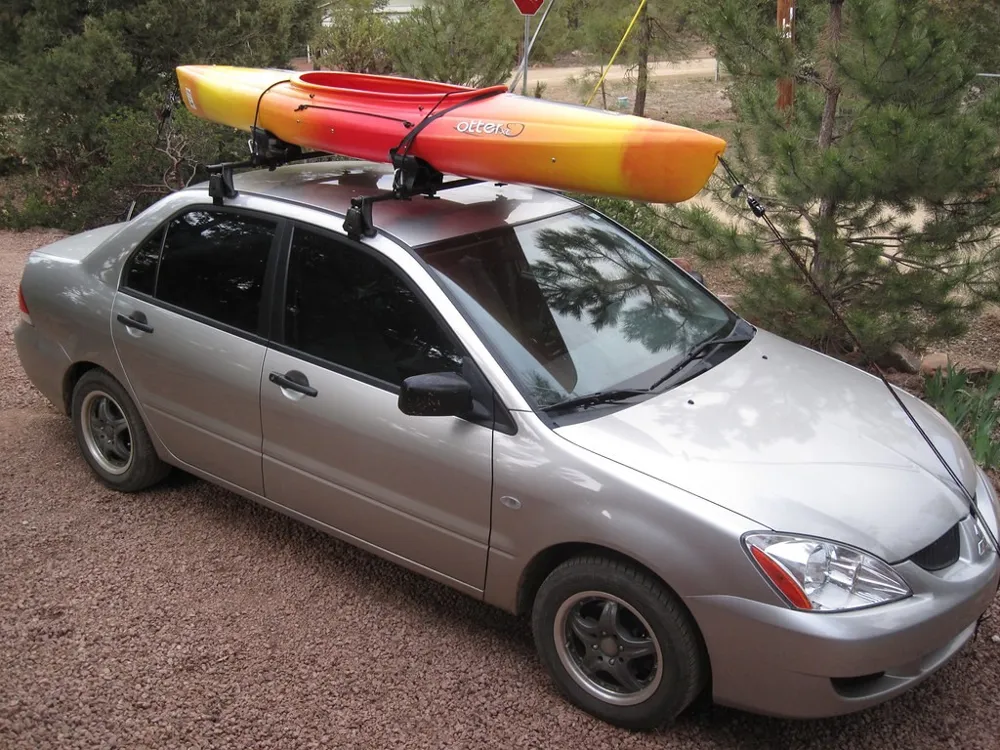
Use cam straps, not bungee cords or ratchet straps. Pull them snug enough that the kayak can't shift, but not so tight that you dent a plastic hull; our transport guide and lightweight kayaks page cover strap tension in more detail. A couple of twists in each strap stops it humming at speed.
Bow and stern lines tie the ends of the kayak to the front and rear of the car. They keep a long boat from swinging in crosswinds and add a backup if a strap or cradle fails, which is why most rack guides recommend them for highway driving. Several carriers here include them in the box: the Thule Compass, Thule Hullavator Pro, Yakima ShowDown and Malone SeaWing. For long boats, check your state's overhang and flag rules, which vary.
Locks, Care and Storage
- Locks. The Thule Compass and Hullavator Pro are compatible with Thule's One Key System, and the Hull-a-Port XTR locks to the bars with One Key cylinders sold separately. Locks protect the carrier, not the boat; a locking cable or locking strap through the kayak adds a deterrent.
- Fold or remove. Most carriers here fold flat when empty, which cuts drag and height. Take them off when you won't paddle for weeks.
- Clearance. A kayak on edge in a J-cradle or stacker adds a lot of height. Watch garages, drive-throughs and parking structures.
- Rinse after salt water. Rinse carriers and straps with fresh water after coastal trips and check bolts and clamps at the start of each season.
- Off the car. At home, store the kayak off the ground on padded supports; see kayak storage racks. From car to water, a kayak cart saves carrying.
How to Choose a Kayak Roof Rack
- Weigh your loaded kayak and measure its width. Compare both with the carrier's rating (for example, 36 inches for the Compass and 32 inches for the Hullavator Pro).
- Check your vehicle's roof limit and your crossbar rating. Subtract the weight of the bars and carrier.
- Count your boats. One boat: saddles or a J-cradle. Two: two J-cradles or a carrier with stacker mode. Three or four: a stacker.
- Be honest about lifting. If you load alone onto an SUV, a lift-assist or side-loading carrier is worth its weight.
- Confirm bar fit. Use the maker's fit guide for your bar model, not just the bar shape.
- Look for included extras. Straps, bow and stern lines and lock compatibility vary by model.
Still picking a boat? Start with our kayak size chart and the full kayak accessories checklist.
Frequently Asked Questions
Are J-cradles or saddles better for a kayak?
Neither is better for every boat. J-cradles carry the kayak on its side and leave roof space for a second boat, while saddles hold the hull upright and spread pressure over more of it, which suits a single heavy or wide kayak.
Do I need crossbars for a kayak rack?
Most cradles, saddles, stackers and lift-assist carriers clamp to crossbars. Without bars, foam blocks or through-door pads with bow and stern lines are the usual option, best kept to shorter trips.
How much weight can my roof rack hold for kayaks?
Use the lowest rating among your vehicle roof, your crossbars and your kayak carrier, and count the weight of the rack itself. The vehicle figure is in your owner's manual; rack and carrier figures are on the maker's spec sheet.
Can I carry two kayaks on a car roof?
Yes, if your bars are long enough and the combined weight stays under the lowest load rating. Two J-cradles, a two-boat stacker or a carrier with a stacker mode are the usual setups.
Do I need bow and stern lines with a kayak rack?
They're strongly recommended, especially for long kayaks, highway speeds and wind. Several carriers here include them, including the Thule Compass, Thule Hullavator Pro, Yakima ShowDown and Malone SeaWing.
Can I leave my kayak rack on the car all the time?
Many carriers fold flat when empty to cut drag and height, and some lock to the bars. Taking the carrier off when you won't paddle for a while reduces wind noise and fuel use.
Will a kayak carrier fit my factory roof rails?
Usually, if the rails have crossbars. Universal clamps such as Malone's Jawz fit round, square and most factory oval bars, but some carriers, like the Thule Hullavator Pro, list only specific bar models, so check the fit guide.