Is Skateboarding a Sport, an Art or a Way of Life? (2026)
Skateboarding is an Olympic sport with a world governing body, yet many skaters say it's art, culture or simply freedom. Here's the full debate and the facts behind it.
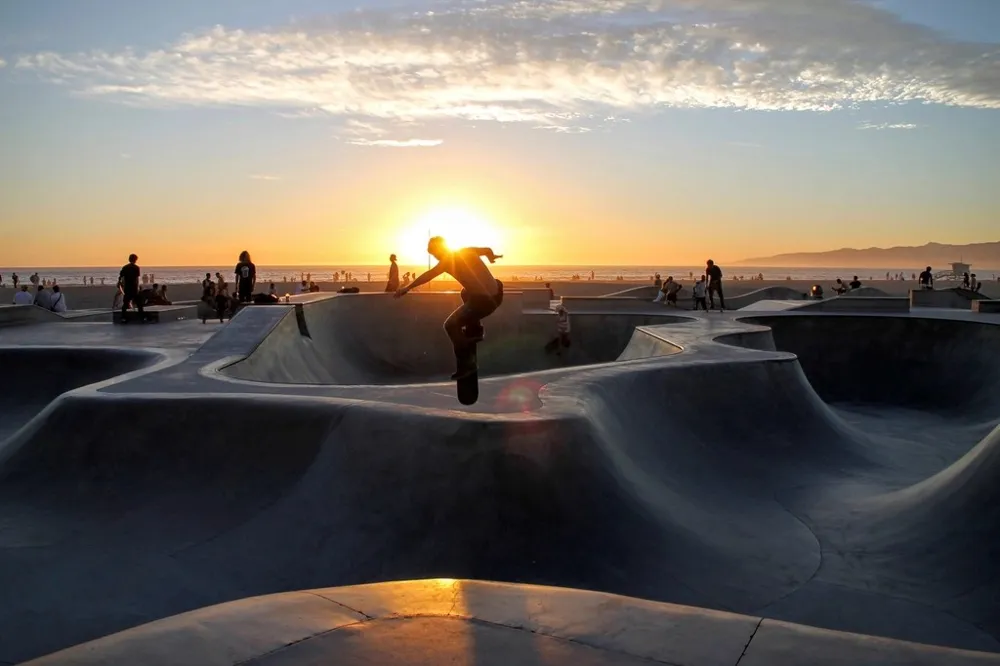
The Short Answer
Yes, skateboarding is a sport by every official yardstick. It's on the Olympic program, it has an international federation recognized by the International Olympic Committee, it has professional athletes, judged contests and world rankings. But many skaters push back on the label, and they have a point: most skateboarding happens with no rules, no referees and no score, as a mix of physical skill, creative expression and street culture.
So the honest answer is "both." Skateboarding can be a sport, and for contest skaters it clearly is. For a lot of other people it's closer to an art form or a way of life. Below we lay out what makes something a sport, the case on each side and the facts that settle the official question.
What Is Skateboarding? A Definition and Common Synonyms
Encyclopaedia Britannica describes skateboarding as a "form of recreation and sport" in which a person rides standing balanced on a small board mounted on wheels. A skateboard is a deck (usually layered maple) with two metal trucks and four urethane wheels; see our skateboard anatomy guide for the parts. Riders push with one foot, turn by leaning and do tricks by popping, flipping, sliding and grinding the board.
Notice that the definition itself already holds both sides of the debate: recreation and sport. Britannica also calls skateboarding a youth subculture that emphasizes creativity and individuality, which is exactly what skaters mean when they resist the "sport" box.
Common synonyms and slang include skating, skateboarding, boarding and the early term sidewalk surfing, from when California surfers first rode wheeled boards on land. Skaters also say they're going "shredding" or "out for a session." Our skateboard terms glossary covers the rest of the slang, and skateboarding history explains where the sidewalk-surfing name came from.
What Counts as a Sport?
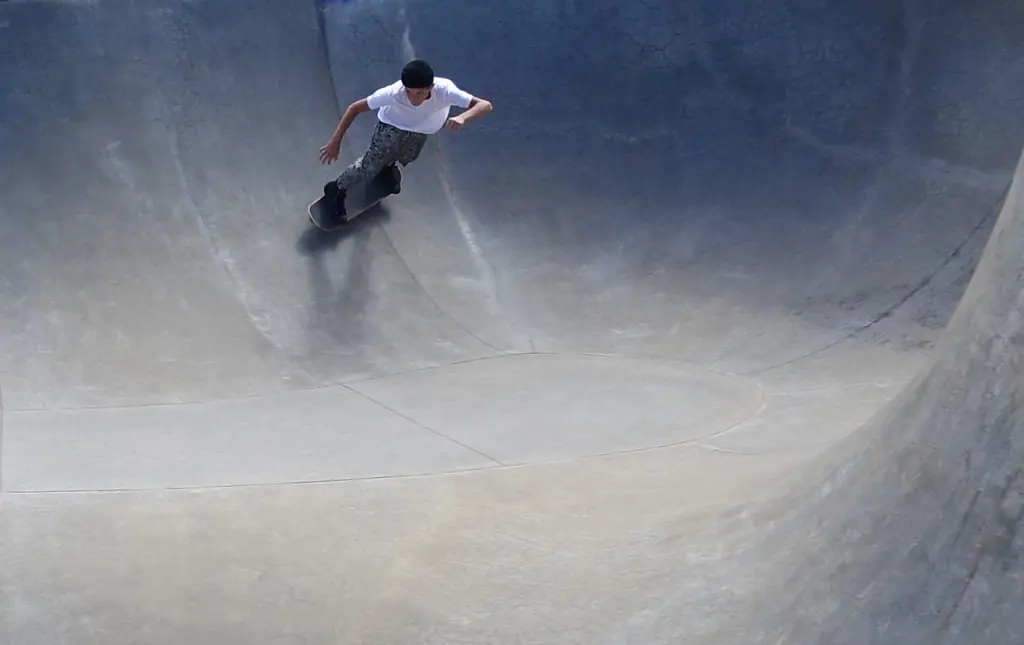
There's no single legal or scientific definition of "sport." Dictionaries generally describe it as a physical activity that takes skill and is done for exercise, enjoyment or competition. In everyday debates, people tend to test an activity against a handful of criteria. Here's how skateboarding measures up against each one.
| Common Test | Does Skateboarding Meet It? | Notes |
|---|---|---|
| Physical exertion | Yes | Pushing, balancing and jumping work the legs and core; see is skateboarding good exercise |
| Skill that takes practice | Yes | Basic tricks like the ollie can take weeks or months to learn |
| Competition | Yes, optional | Olympics, X Games, Street League and local contests exist, but most skating is non-competitive |
| Rules and scoring | In contests only | Judges score runs on criteria like difficulty, execution and flow; street sessions have no rules |
| Governing body | Yes | World Skate internationally, national federations below it |
| Professional athletes | Yes | Pros earn from sponsors, contests and video parts |
| Fixed season and venues | No | Skaters ride year-round, anywhere with smooth ground |
On most tests skateboarding qualifies. Where it doesn't fit (no season, no standard field, no rules outside contests), it's in the same position as other judged or lifestyle-rooted sports such as surfing, snowboarding and BMX freestyle.
The Case for Calling It a Sport
People who say skateboarding is a sport usually point to these facts:
- It's in the Olympics. The IOC added skateboarding at its 129th Session in Rio de Janeiro on 3 August 2016, and it has been on every Summer Games program since. Few clearer markers of sport status exist.
- It has an official governing body. World Skate is recognized by the IOC as the international federation for skateboarding and roller sports, and it runs Olympic qualification.
- Contests have real rules. Competitions use time limits, set run formats and judging panels that score difficulty, execution, variety, flow and use of the course. See skateboarding competitions for how formats work.
- It takes training. Contest skaters practice for hours, and many cross-train or work with coaches, much like gymnasts or snowboarders.
- It's a profession. Britannica notes that skateboarding has established itself as a professional sport. Pros earn from sponsors, contest prize money and board and shoe deals; our pro skateboarder earnings guide covers how that works.
- Judged sports are still sports. Gymnastics, diving and figure skating are scored on style and difficulty too, and nobody argues they aren't sports.
Skateboarding at the Olympics: Key Dates
The Olympic story is the strongest single argument on the "sport" side, so here are the milestones in one place. Results, scoring and medalists live on our Olympic skateboarding page.
| Date | Milestone |
|---|---|
| 3 August 2016 | The IOC Session in Rio approves skateboarding for Tokyo 2020, alongside baseball/softball, karate, sport climbing and surfing |
| 2017 | FIRS, the roller sports federation, becomes World Skate, the IOC-recognized body for skateboarding |
| Summer 2021 | Olympic debut at Tokyo 2020 (postponed one year) with men's and women's street and park |
| December 2021 | Skateboarding, surfing and sport climbing are approved for the LA 2028 initial program |
| February 2022 | World Skate reports that skateboarding will be a fully permanent Olympic sport from LA 2028 |
| Summer 2024 | Second Olympic appearance at Paris 2024, at the Place de la Concorde |
| 2028 | Los Angeles Games; check LA28 and World Skate for the published schedule and venue |
When it announced the new sports in 2016, the IOC said skateboarding and sport climbing would be staged in temporary urban venues, and IOC President Thomas Bach framed the change as taking sport "to the youth." That reasoning is part of why some skaters were wary: the Olympics needed skateboarding's audience as much as skateboarding needed the Olympics.
The Case for Art, Culture and Lifestyle
The other side of the debate mostly comes from skaters themselves. Their arguments go like this:
- No rulebook. Outside a contest there's no right way to skate, no positions and no referee. You decide what to ride, where and how.
- Style over score. How a trick looks often matters more than how hard it is. A simple trick done with great style can earn more respect than a harder one done sloppily.
- Video parts, not standings. Many of the most influential skaters built their reputations through street video parts rather than contest wins. Sponsors, not league tables, usually decide who turns pro. Our skateboarding documentaries list shows how central film is to the culture.
- The city is the playing field. Stairs, ledges, rails and empty pools were never designed for skating. Reading the street creatively is part of the craft; see skateboarding styles.
- Counterculture roots. Skateboarding grew up outside organized sport, often in conflict with property owners and police. Its art, music, fashion and DIY skatepark-building are part of what it is.
- Community over competition. Sessions are usually cooperative. Skaters cheer each other on, even strangers at the park, rather than competing against them.
In an interview published by Polar, one pro skater said he didn't grow up seeing skateboarding as a sport and pointed out that there's no set rulebook for how or where to skate, while another described it as "definitely a lifestyle." Those views are common, though not universal: plenty of skaters welcomed the Olympics and the recognition it brought.
Arguments and Counterpoints
Most of the debate comes down to a few recurring claims. Here's each one with the strongest reply.
| "It's Not a Sport Because..." | Counterpoint |
|---|---|
| There are no rules | Contests have formats, time limits and judging criteria; free skating is like pickup play in any sport |
| It's judged on style, so it's art | Gymnastics, diving and figure skating are judged on style and are Olympic sports |
| There's no team or league | Tennis, golf and climbing are individual sports too |
| Skaters don't care about winning | Many don't, but contest skaters train specifically to win; both groups exist |
| It has no season or set venue | True, and the same holds for running, surfing and cycling |
| Calling it a sport commercializes it | A fair worry about culture, but it doesn't change what the activity involves physically |
The pattern is clear: the "not a sport" side is usually describing how skating feels and what it means to the people doing it, while the "sport" side is describing its structure. Both can be true at once.
Who Governs Skateboarding?
World Skate is the international federation for skateboarding and roller sports, based in Lausanne, Switzerland, and officially recognized by the IOC. It formed in 2017 when FIRS, the long-running roller sports federation, evolved into World Skate in the run-up to Tokyo 2020. It sets the Olympic format and runs the world rankings used for qualification.
Below it, national federations handle national teams; in the US that role belongs to USA Skateboarding. Much of skateboarding still runs independently of these bodies, though. Street League Skateboarding, the X Games, long-running events like Tampa Pro, skate shop contests and local park jams are organized by private companies, shops and communities. That split between the Olympic structure and the independent scene is one reason the sport-or-not debate never quite goes away.
Is Skateboarding an Extreme or Action Sport?
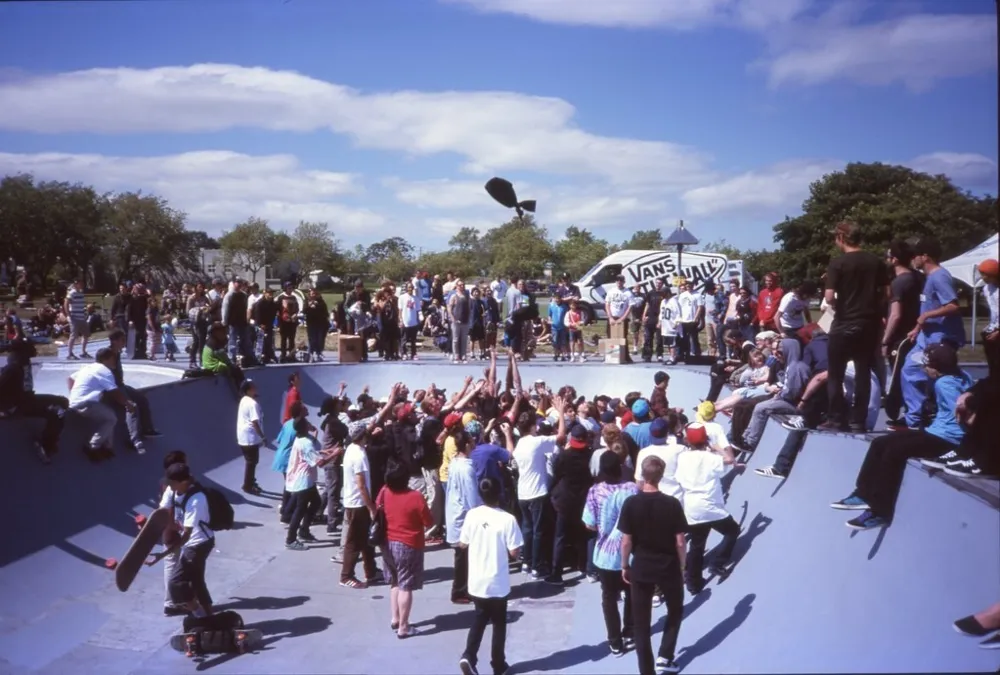
Skateboarding is usually filed under extreme or action sports, along with BMX, snowboarding and surfing. ESPN included it at the first X Games in 1995, and vert skating became one of the event's headline disciplines. The label fits contest skating on big ramps and huge stair sets, where speed, height and risk are high.
Everyday skating is much tamer. Cruising to class, carving a bowl or learning to ollie in a parking lot isn't extreme, and pads and a helmet reduce the risk a lot. For a realistic look at injury risk, see is skateboarding dangerous; for how it compares with its closest cousin, see skateboarding vs BMX.
Is Skateboarding a College Sport?
Not in the varsity sense. As of November 2026, skateboarding isn't an NCAA championship sport, so there are no NCAA teams, divisions or championships. College skating happens mostly through clubs. A 2025 study of collegiate skateboarding in the United States, published in Frontiers in Sports and Active Living, identified 87 college skate clubs through social media and found that clubs are typically student-run, not all formally recognized by their schools, with intercollegiate events that don't require official athletic sanction.
Scholarships do exist outside athletic departments. The same study reports that the College Skateboarding Educational Foundation (CSEF) awarded scholarships to 109 students between 2018 and 2024. Check the foundation's site for current eligibility, since requirements can change.
So Which Is It? How to Think About It
The most useful way to settle the debate is to look at how a particular person skates:
| How You Skate | Closest Label |
|---|---|
| Training for contests, rankings or the Olympics | Sport |
| Filming street lines and video parts | Art and craft, with athletic skill |
| Sessions with friends at the park | Recreation and community |
| Riding a cruiser to work or class | Transportation |
| Learning tricks for fitness and fun | Exercise and hobby |
Officially, skateboarding is a sport, and that's not seriously in doubt anymore. Culturally, it's also an art form and a way of life, and that's a big part of why people love it. You don't have to pick one. If you're thinking about trying it, the benefits of skateboarding apply whichever label you prefer.
Keep Exploring
- Olympic skateboarding: events, scoring and medalists
- Skateboarding competitions: formats, major events and entering a contest
- Skateboarding history: from sidewalk surfing to the Olympics
- Skateboarding facts: quick things worth knowing
- Learn how to skateboard: a step-by-step start for beginners
Frequently Asked Questions
Is skateboarding officially a sport?
Yes, by any official measure. It has been on the Olympic program since Tokyo 2020, it has an IOC-recognized international federation in World Skate, and it is scheduled to be a permanent Olympic sport from LA 2028.
Why do some skaters say skateboarding is not a sport?
Many skaters see it as a creative, self-directed activity with no fixed rulebook, no season and no scoreboard outside contests. For them style, video parts and community matter more than results, so the word "sport" feels too narrow.
Is skateboarding an Olympic sport?
Yes. The IOC added it in August 2016, it debuted at Tokyo 2020 (held in 2021) with men's and women's street and park, returned at Paris 2024 and is on the LA 2028 program.
Is skateboarding an extreme sport?
It is usually grouped with extreme or action sports because of its speed, height and risk, and it has been part of the X Games since the first event in 1995. Most everyday skating is far less extreme than contest footage suggests.
Is skateboarding an NCAA sport?
No. As of November 2026 skateboarding is not an NCAA championship sport. College skating happens mostly through student-run clubs, and some scholarships are offered by outside foundations.
Can skateboarding be both a sport and an art?
Yes. Contest skating has rules, judges and rankings, while most skating happens outside contests as self-expression. Many skaters treat it as both, depending on the day.