Skating Backwards Made Simple: Lemons, C-Cuts and Stops (2026)
Rolling backward feels strange at first, but it builds on skills you already have. Here's the stance, the three core moves, how to turn around and how to stop, on quads and inlines.
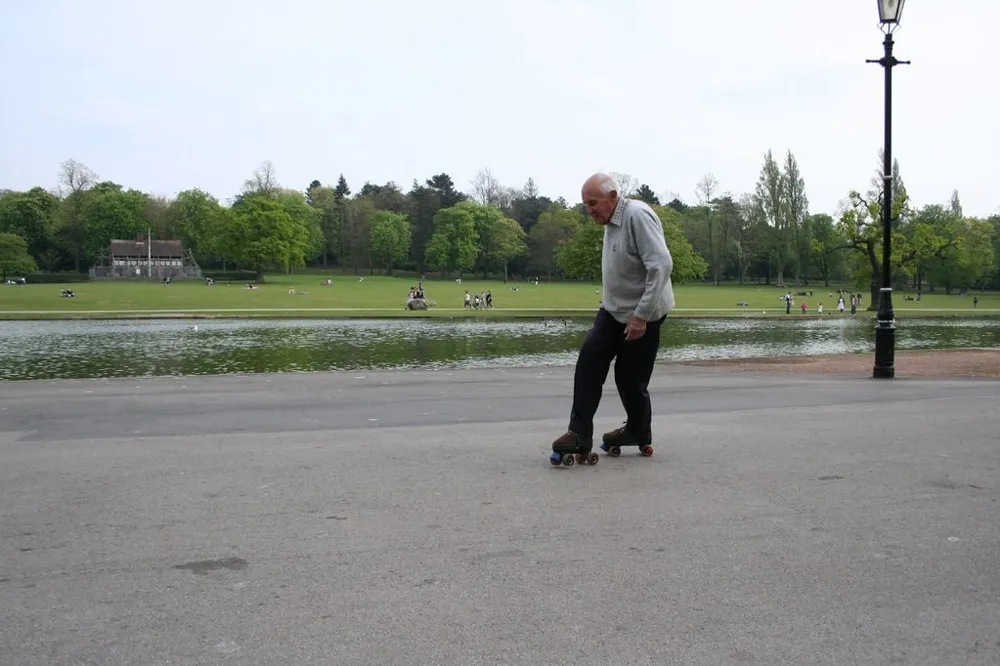
Before You Start: Skills to Have First
Skating backwards uses the same pushes and edges as skating forward, so it comes much faster when your forward basics are solid. Before you try rolling backward, make sure you can do these comfortably on flat ground:
- Glide in a balanced stance with knees bent and eyes up. If that still feels shaky, start with how to roller skate or, on inlines, how to rollerblade.
- Stop on demand going forward, with a toe stop drag, plow stop or T-stop. See how to stop on roller skates.
- Do forward lemons (swizzles), pushing without lifting your skates. Our roller skating tricks guide covers them as "bubbles."
- Fall safely by getting low and landing on your pads.
This guide focuses on quad roller skates. The technique is almost identical on inline skates, and a separate section below covers what changes on inlines.
Backwards Skating at a Glance
Learn the skills in this order. Each one uses something from the step before it.
| Skill | What It Teaches | Level |
|---|---|---|
| Backward stance | Balance with weight over the balls of your feet | Beginner |
| Looking over your shoulder | Seeing where you're going without losing balance | Beginner |
| Backward lemons (swizzles) | Moving backward with both skates on the ground | Beginner |
| Backward C-cuts (sculling) | Pushing one skate at a time for speed and rhythm | Beginner to intermediate |
| Backward glide and steering | Coasting and curving using weight shifts | Intermediate |
| Forward-to-backward turn | Switching direction without stopping | Intermediate |
| Backward stops | Slowing down safely while rolling backward | Beginner to intermediate |
Safety Gear and Where to Practice
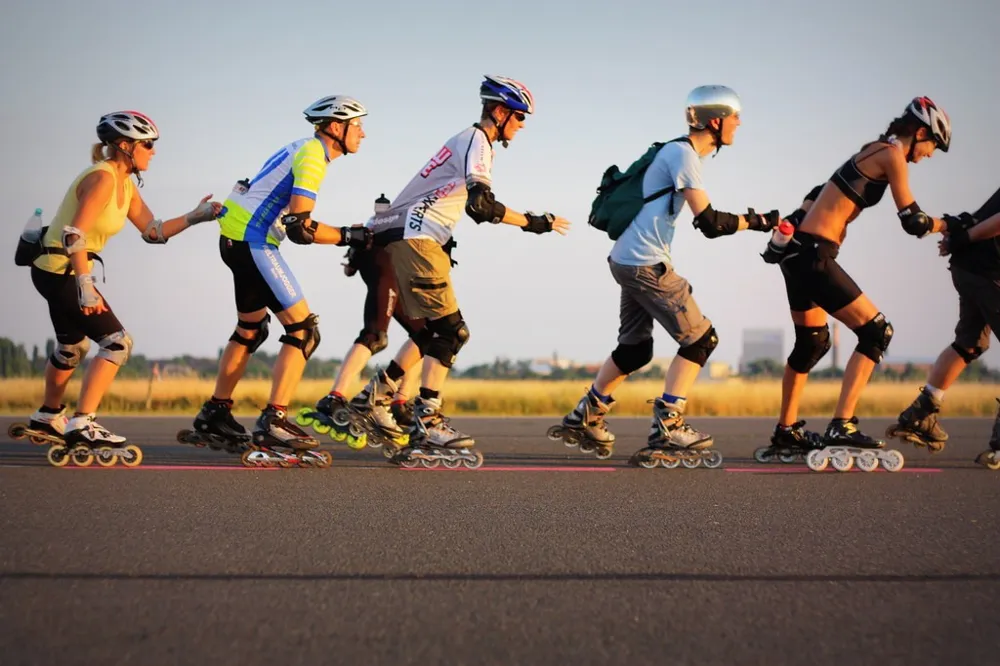
Backward falls are the ones that hurt, because you tend to sit down onto your tailbone or reach back with your hands. Wear full gear every time you practice:
- A certified helmet. Look for ASTM F1492, the US standard for skateboarding and trick roller skating helmets. Many skate helmets are also certified to the CPSC bike standard. Our skate helmet guide explains fit.
- Wrist guards, because reaching for the ground with a hand is a natural reaction in a fall. See wrist guards.
- Knee pads and elbow pads that stay in place when you land on them.
- Padded shorts are optional, but many beginners like them while learning backward skating.
Pick a smooth, flat, empty space: a roller rink during a quiet session, an empty tennis or basketball court where skating is allowed, or a smooth parking lot with no traffic. Avoid slopes, wet patches, cracks and gravel. A wall or railing nearby helps for the first few minutes. Rinks often run lessons too. For more on pads, helmets and other kit, see roller skate accessories.
Triple Eight Certified Sweatsaver
A dual-certified (CPSC and ASTM F1492) skate helmet with a sweat-absorbing liner and fit pads.
Check Price on AmazonTriple Eight Saver Series Pads
Knee pads, elbow pads and wrist guards in one set.
Check Price on AmazonThe Backward Stance
A good stance matters more going backward than forward, because your body's natural reaction to rolling the "wrong" way is to stand up and lean back. That is exactly what makes skates shoot out from under you.
- Feet about hip-width apart, skates parallel.
- Knees well bent, as if you're about to sit on a high stool.
- Weight over the balls of your feet, not your heels. Your chest should be slightly forward, over your knees.
- Arms out in front or to the sides at about waist height, relaxed rather than stiff.
- Core engaged so your upper body stays steady while your legs work.
Test it standing still: rock gently from heels to toes and find the point where your weight sits just ahead of the middle of your skates. That is where you want to stay. If you feel your weight drift toward your heels while rolling, bend your knees more and push your chest forward.
How to Look Behind You
You need to see where you're going, but how you look matters. Turning your whole body or looking straight down throws off your balance.
- Turn your head, not your hips. Look over one shoulder while your hips and skates keep pointing straight.
- Keep your chest up. Twisting your upper body a little is fine; hunching or leaning back is not.
- Glance, don't stare. Check behind you, then look back to center. Over time you'll check over your shoulder every few seconds without thinking.
- Practice both sides. Most skaters favor one shoulder. Learn the other early so you can see around you on any curve.
At a rink, remember that everyone else is moving too. Check the rink's floor rules before you practice backward skating during a busy session.
Step 1: Backward Swizzles (Lemons)
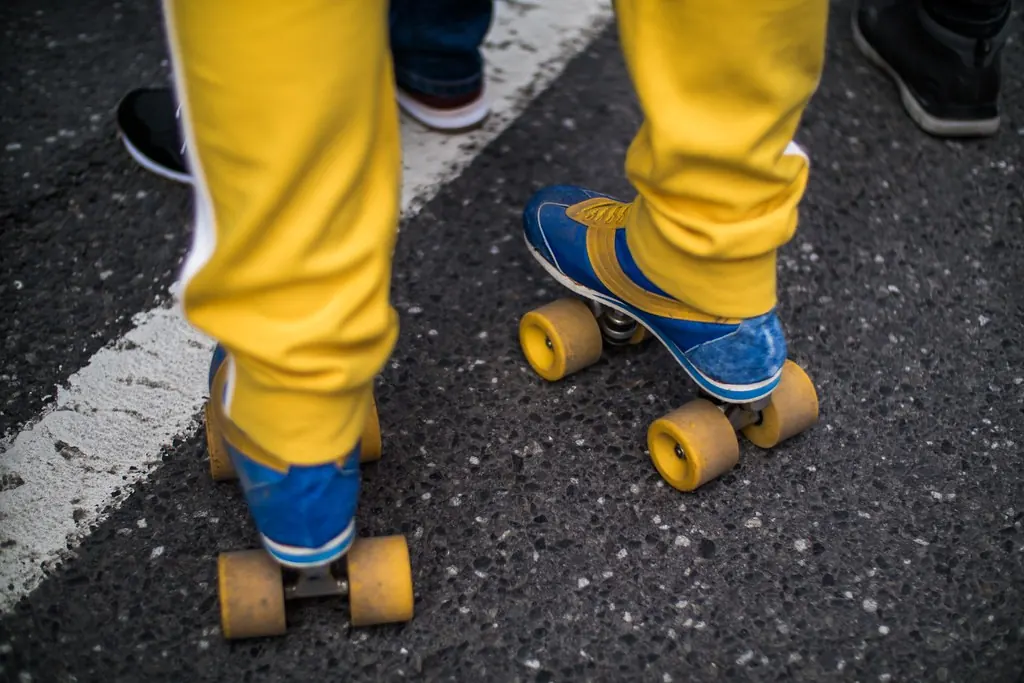
Backward lemons are the first way to move backward, because both skates stay on the ground the whole time. Your feet trace a lemon shape, the reverse of forward swizzles.
- Start pigeon-toed: toes pointing in toward each other, heels apart, knees bent.
- Press your heels outward. Push gently through the balls of your feet and let the skates roll apart, heels leading. You'll start to move backward.
- Stop at about shoulder width, or a little wider.
- Turn your heels in and squeeze your legs to draw the skates back together.
- Straighten slightly as the skates meet, then turn your toes in and repeat.
Start with tiny lemons, only a few inches wide, and count them: five in a row, rest, five more. Keep your weight over the balls of your feet; if it drifts to your heels, the skates will speed up and roll away. Once small lemons feel steady, make them wider and link them into a smooth rhythm.
Step 2: Backward C-Cuts (Sculling)
Backward C-cuts, also called sculling, are the next step. Instead of both skates working together, one skate pushes while the other glides, which gives you more speed and a smoother path. Hockey players and derby skaters rely on this stride.
- Start in the backward stance with your knees bent and weight centered.
- Shift your weight onto one skate, the glide skate.
- With the other skate, push out in a C shape. Turn the toe of the pushing skate in slightly and press the wheels outward and forward, using the inside edge. The skate traces a half-circle and you roll backward.
- Bring the pushing skate back under your hips to finish the C.
- Switch sides and push with the other skate, then keep alternating.
Practice with one leg at a time first: ten C-cuts on the right while the left glides, then ten on the left. Keep the pushes short and even, with no sudden jerks. As the motion becomes smooth, make the C a little longer and add more knee bend for power.
Step 3: Glide and Steer Backward
Once you can build speed with lemons or C-cuts, learn to coast and steer.
- Two-foot glide: after a few pushes, bring your skates parallel and hold the backward stance for as long as you can roll.
- Steering: to curve, look over the shoulder on the side you want to go and press gently onto the edges of your skates on that side. Small weight shifts make wide curves; more pressure makes tighter ones.
- Circles: skate backward around a large circle in both directions, using C-cuts with your outside skate. This is the setup for backward crossovers later.
- One-foot backward glide: once two-foot glides are steady, lift one skate a few inches for a count of two, then switch. It builds the balance you need for transitions.
How to Turn From Forward to Backward
A transition switches your direction without stopping. Learn it slowly, on a flat surface, with room around you.
Two-Foot Turn
- Glide forward slowly with your skates parallel and knees bent.
- Turn your head and shoulders in the direction of the turn.
- Let your hips and feet follow in one smooth motion, pivoting on both skates until you face the other way.
- Keep rolling backward in the backward stance and look over your shoulder.
Practice turning in both directions. To go from backward to forward, reverse the motion: look over your shoulder, rotate your shoulders and let your feet follow.
Step Turn
Once the two-foot turn is easy, try a step turn, sometimes called a mohawk. Glide forward on one skate, open the free foot so its heel points toward the heel of the gliding skate, set it down facing backward, then shift your weight onto it and bring the other skate alongside. It takes more balance but keeps your speed.
Toe Stop Pivot (Quads)
On quads you can also turn around a toe stop: tap one toe stop down behind you while gliding slowly and let your momentum swing you around it. The roller skating tricks guide explains the toe stop spin this comes from.
How to Stop When Skating Backwards
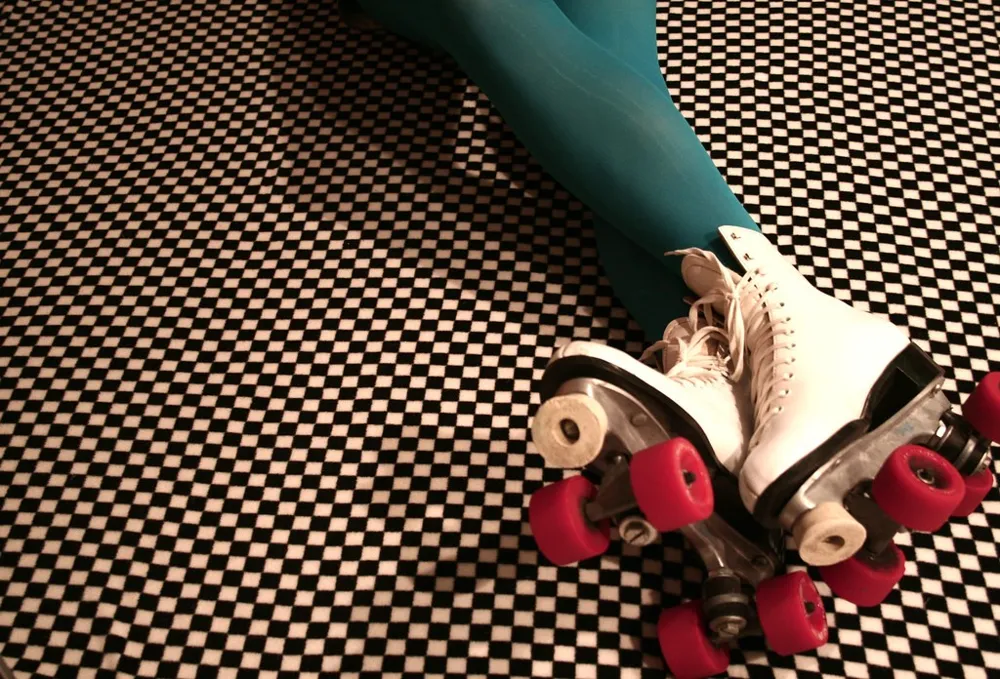
Learn at least one backward stop before you build speed. Start every method at walking pace.
| Stop | Skates | How It Works | Level |
|---|---|---|---|
| Turn around and stop | Quad and inline | Turn to face forward, then use your usual forward stop | Beginner |
| Backward toe stop drag | Quad | Drag one toe stop on the floor in front of you | Beginner |
| Backward plow stop | Quad and inline | Toes out, heels in, press both skates outward | Beginner to intermediate |
| Turning (spin) stop | Quad and inline | Curve in a tightening arc until you stop | Intermediate |
Turn Around and Stop
The simplest backward stop is not a backward stop at all: do a two-foot turn to face forward, then use the toe stop drag, plow stop or T-stop from how to stop on roller skates. It relies only on skills you already have.
Backward Toe Stop Drag (Quads)
- Roll backward slowly with your knees bent and weight centered.
- Move one skate slightly in front of you.
- Lift the heel of that skate so its toe stop touches the floor.
- Press down lightly, adding pressure as you slow, while most of your weight stays on the rolling skate.
Set your toe stops low enough to reach easily while you learn; the stopping guide shows how to adjust them. Roller derby skaters build backward toe stop work into faster stops such as the tomahawk, which are best learned with a coach.
Backward Plow Stop
This is the forward plow in reverse. While rolling backward, widen your stance, turn your toes out and your heels in, bend your knees and press both skates outward on their inside edges until you stop. Press evenly so you don't spin.
Turning (Spin) Stop
Look over one shoulder and curve backward in a tightening arc, keeping your knees bent, until your momentum runs out. It's the backward version of the turning stop and works well when you have room.
If you lose control, get low, bend your knees and sit or fall to the side onto your hip and thigh rather than straight back. Never put your hands behind you to catch yourself.
Skating Backwards on Inline Skates
Inline skaters use the same stance, shoulder checks, lemons and C-cuts. A few things feel different:
- Longer wheelbase. An inline frame tracks straighter than a quad and doesn't pivot as easily, so backward curves need more edge pressure and a deeper knee bend.
- Front-to-back balance. Keep your weight over the middle of the frame. Sitting back onto the rear wheels makes the skates roll away from under you.
- The heel brake leads. Rolling backward, the brake is on the leading end of the skate. You can't use it to stop backward, and rocking onto your heels can bring it toward the ground. Keep your weight centered.
- Stopping. Use the backward plow stop or turn around and use the heel brake. Power slides and other advanced stops are covered in how to stop on rollerblades.
- Scissor stance. Sliding one skate slightly ahead of the other while gliding backward gives you a longer, more stable base on inlines.
Once backward skating feels natural, backward crossovers and slalom moves come next. See rollerblading tricks for inline moves, and rollerblades vs roller skates if you're still choosing between the two.
Drills and a Two-Week Practice Plan
Short, regular sessions work better than one long one. Warm up with a few minutes of forward skating first.
Drills
- Wall push-off: stand facing a wall, push gently away and roll backward in the stance. Focus on staying low and centered.
- Lemon count: do five small backward lemons, pause, then five more. Increase the count each session.
- Shoulder-check lemons: look over your right shoulder for five lemons, then your left for five.
- One-leg C-cuts: ten pushes with each leg while the other skate glides.
- Cone lane: set two cones or water bottles a few skate lengths apart and skate backward between them without touching either.
- Stop on a signal: roll backward and stop when a friend calls out, using the stop you're learning.
Practice Plan
| Days | Focus |
|---|---|
| 1–2 | Backward stance, wall push-offs, tiny lemons near a wall |
| 3–4 | Linked lemons with shoulder checks on both sides; turn-around stop |
| 5–6 | One-leg C-cuts on each side; backward toe stop drag or plow stop |
| 7–9 | Alternating C-cuts, two-foot backward glides, wide curves |
| 10–12 | Two-foot turns forward to backward and back again, in both directions |
| 13–14 | Backward circles, one-foot glides and linking turns, glides and stops |
Move on only when each skill works on both sides at a slow speed. If a day goes badly, repeat it. Strength and balance work off skates helps too; see exercises for skating.
Common Mistakes and Fixes
| Mistake | What Happens | Fix |
|---|---|---|
| Leaning back | Skates roll out in front and you sit down | Bend your knees and keep your chest over them |
| Straight legs | Every wobble throws you off balance | Stay low, as if sitting on a high stool |
| Looking down | You lose balance and can't see what's behind you | Look over your shoulder, then back to center |
| Twisting your hips to look | You curve off line without meaning to | Turn your head and shoulders only |
| Lemons too wide | Legs split and you can't pull them back | Keep lemons small until they feel easy |
| Jerky C-cuts | Speed comes in bursts and you wobble | Make short, even pushes and keep the rhythm steady |
| No backward stop | You can't slow down when you need to | Learn the turn-around stop before building speed |
| Only one side | Turns and shoulder checks work in one direction only | Practice every drill on both sides |
Safety Tips for Skating Backwards
- Check behind you often, especially outdoors and in public spaces.
- Keep your speed low until you can stop backward on demand.
- Skate backward only where you have room. Avoid crowded paths, slopes and anywhere near traffic.
- Follow rink rules. Ask whether backward skating is allowed during busy sessions.
- Fall low and to the side. Get low, then land on your hip, thigh and pads rather than your tailbone, and keep your hands from reaching back.
- Check your skates first. Make sure toe stops are tight, wheels spin freely and laces or buckles are secure. Our roller skate maintenance guide covers the checks.
After a hard fall onto your head or wrist, stop skating and get checked by a medical professional.
What to Learn Next
- Backward crossovers: the backward version of forward crossovers, for smooth curves and speed. Learn forward crossovers first in roller skating tricks.
- Spins and jumps: the two-foot spin and the forward-to-backward 180 jump build on your transitions.
- The moonwalk and other dance moves: rhythm skating uses backward rolling all the time.
- Advanced stops: hockey stops, power slides and derby stops in how to stop on roller skates.
- Speed and stride: see how to roller skate faster.
- Roller derby: backward skating is a core derby skill; start with roller derby rules.
Need better skates for the next stage? See the best roller skates, outdoor wheels and the roller skating hub for more guides.
Frequently Asked Questions
Is skating backwards hard to learn?
It feels awkward at first because you can't see where you're going, but the movements are the same pushes you use going forward, done in reverse. Once you can glide, turn and stop going forward, most skaters find backward lemons come together with a little regular practice.
How long does it take to learn to skate backwards?
It depends on how often you skate and how solid your forward skating is. Backward lemons can come together in a few sessions, while smooth backward C-cuts, turns and stops usually take steady practice over several weeks.
Should I look over my left or right shoulder when skating backwards?
Either works. Most skaters have a preferred side, but practice checking over both shoulders so you can see around you on any curve and in any crowd.
How do you stop when skating backwards on roller skates?
On quads, beginners usually drag one toe stop in front of them while rolling backward, or turn to face forward and use a normal stop. A backward plow stop, with toes out and heels in, works on both quads and inlines.
Is it easier to skate backwards on quads or inline skates?
The technique is the same on both. Quads have a short wheelbase that pivots easily, while inline frames track straighter and need more edge control to turn. Learn on whichever skates you already ride.
Can I learn to skate backwards on rental skates?
Yes. Backward lemons and C-cuts work on rental skates as long as they fit snugly and the wheels roll freely. Turns and spins are harder on stiff rental trucks.