12 Easy Roller Skating Tricks to Learn First on Quads (2026)
Once you can glide, turn and stop, these are the first tricks to learn on quad skates, in a sensible order, with the setup and safety that make them easier.
Before You Try Any Tricks
Tricks build on the basics, so make sure you can already do these on quad skates before you start:
- Glide in a balanced stance: knees bent, weight over the middle of the skates, eyes up. See how to roller skate.
- Stop on demand: a toe stop drag or T-stop at walking pace. See how to stop on roller skates.
- Turn both ways without stepping or grabbing a wall.
- Fall on purpose: go low and land on your pads, not your hands or tailbone.
Some beginners spend a week or more on stopping and rolling before they try tricks. That time pays off because nearly every trick below ends with a controlled glide or a stop.
Beginner Tricks at a Glance
The table lists the tricks in a sensible learning order. Each one adds a skill the next ones need.
| # | Trick | Level | What It Builds |
|---|---|---|---|
| 1 | One-foot glide | Easiest | Single-leg balance |
| 2 | Scissors | Easy | Stability, a longer base |
| 3 | Bubbles (forward swizzles) | Easy | Edge control, pushing without lifting |
| 4 | Grapevine | Easy | Footwork, crossing feet |
| 5 | Heel-toe | Easy to medium | Front and back wheel balance |
| 6 | Heel and toe manuals | Medium | Balance on two wheels |
| 7 | Shoot the duck | Medium | Leg strength, low balance |
| 8 | Crossovers | Medium | Smooth turns, speed in curves |
| 9 | Two-foot spin | Medium | Rotation, upper-body control |
| 10 | Toe stop spin | Medium | Pivoting on the toe stop |
| 11 | Toe jam and moonwalk | Medium | Dance footwork, rhythm |
| 12 | Small jumps and the 180 | Medium | Takeoff, landing, rotation |
Gear and Skate Setup for Tricks
Wear a certified helmet, wrist guards, knee pads and elbow pads every session. Gear should fit snugly so it stays in place when you land on it.
Your skate setup also matters:
- Trucks: tighter trucks feel more stable, while looser trucks make turning, spins and dance footwork easier. Loosen them in small steps and adjust both skates the same way. See roller skate parts for how trucks and cushions work.
- Toe stops: set them low enough to reach for toe stop tricks and tight enough that they don't spin loose. Check them before each session.
- Wheels: harder wheels slide and spin more easily on rink floors. Softer outdoor wheels grip rough ground and feel slower to rotate.
Triple Eight Saver Series Pads
Knee pads, elbow pads and wrist guards in one set.
Check Price on AmazonAntik Gumball Toe Stop
A natural rubber, 75A long-stem (30mm) toe stop with a large surface area. Check the stem fits your plate before you buy.
Check Price on Amazon1. One-Foot Glide
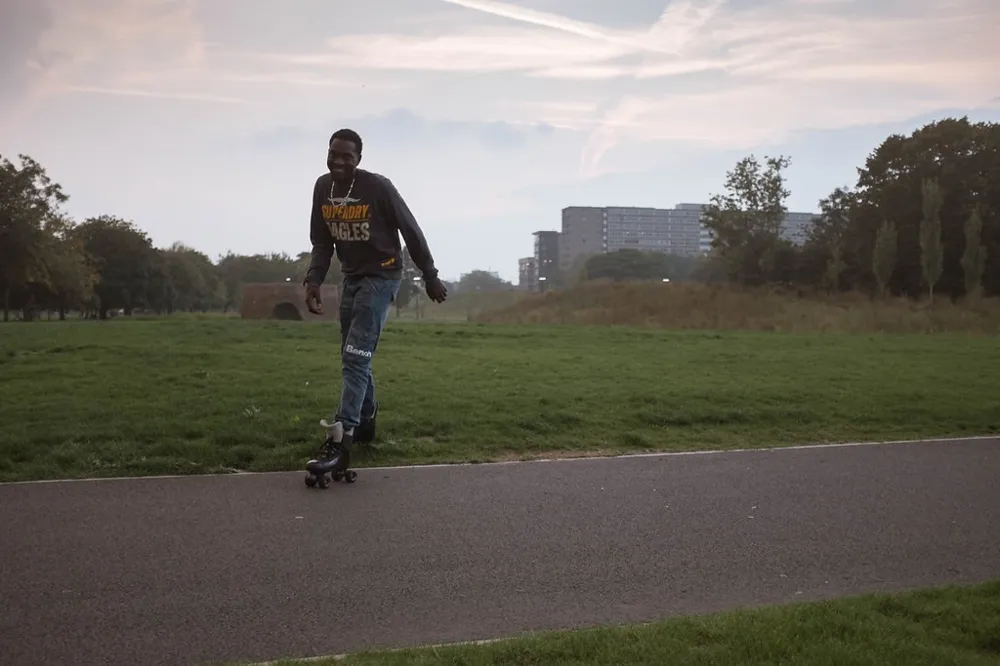
The one-foot glide is the base for nearly every other trick, so learn it first.
- Build gentle speed with a few strides.
- Bring your skates together and bend your knees.
- Shift your weight fully over one skate, with your hip, knee and toe in line.
- Lift the other skate a few inches off the floor and hold for a count of three.
- Set it down, then switch legs. Build up to a glide of several seconds on each side.
Once it feels steady, move the free skate to the front, side and back while you glide. That turns a balance drill into the start of footwork.
2. Scissors
In the scissors, one skate rolls ahead of the other on the same line, a little like a split stance. It gives you a longer, more stable base for rough patches and is the starting position for the heel-toe.
- Coast with your skates parallel and knees close together.
- Shift most of your weight onto your back skate.
- Slide the front skate forward with all its wheels on the ground until the gap is roughly a foot length.
- Keep your feet within hip width and your hips low. Swap the front foot and repeat.
If you wobble, bring the front skate back under your hips and coast on both feet.
3. Bubbles (Forward Swizzles)
Bubbles, also called swizzles or lemons, move you forward without lifting your skates. The path your feet trace looks like a row of lemon shapes.
- Stand with heels together and toes pointing out.
- Bend your knees and let your skates roll apart.
- When they reach shoulder width or a little wider, turn your toes in and squeeze your legs to draw the skates back together.
- Straighten up as the skates meet, then repeat.
Done in reverse with toes together and heels out, the same motion moves you backward. That is the usual first step toward skating backwards.
4. Grapevine
The grapevine is a simple dance step that teaches you to cross your feet while rolling.
- Glide slowly on both skates.
- Cross one skate over in front of the other and set it down.
- Step the back skate out to the side so you are uncrossed again.
- Repeat the cross-and-step pattern, then try it to music.
Practice it standing still first if crossing your feet while moving feels unsafe.
5. Heel-Toe
The heel-toe starts from the scissors. Your front skate rolls on its back (heel) wheels and your back skate rolls on its front (toe) wheels.
- Glide into the scissors with a little speed.
- Lift the toe of your front skate so only the heel wheels stay down.
- Lift the heel of your back skate so only the toe wheels and maybe the toe stop are near the floor.
- Keep your weight centered between your feet and press down through your front leg.
Some skaters call the reverse, front skate on its toe wheels and back skate on its heels, a toe-heel. Try both once the first version feels solid.
6. Heel and Toe Manuals
A manual is a glide with only the front or back wheels of your skates on the ground. Start with both skates side by side.
- Heel manual: while gliding, lift the toes of both skates so you roll on the back wheels. Keep your knees bent and arms forward so you don't sit back.
- Toe manual: lift both heels so you roll on the front wheels. Keep your toe stops just clear of the ground.
- One-foot manuals: once two-foot versions are steady, try a manual on one skate with the other foot lifted.
Expect some backward falls on the heel manual. Wear your helmet and practice at a slow speed.
7. Shoot the Duck
Shoot the duck is a low, one-legged glide with the other leg stretched out in front. It is a classic rink trick and a serious leg workout.
- Practice a deep squat while rolling on two skates, going as low as you can with your knees together.
- Once the squat is steady, shift your weight onto your stronger leg.
- Lift the front wheels of the other skate, then slide that leg forward. Holding its toe stop can help at first.
- Extend the leg as straight as you can and hold the glide.
- To finish, bring the leg back and stand up, or roll off to the side if you lose balance.
If you can't get low enough yet, the exercises for skating guide has squats and balance work that help.
8. Crossovers
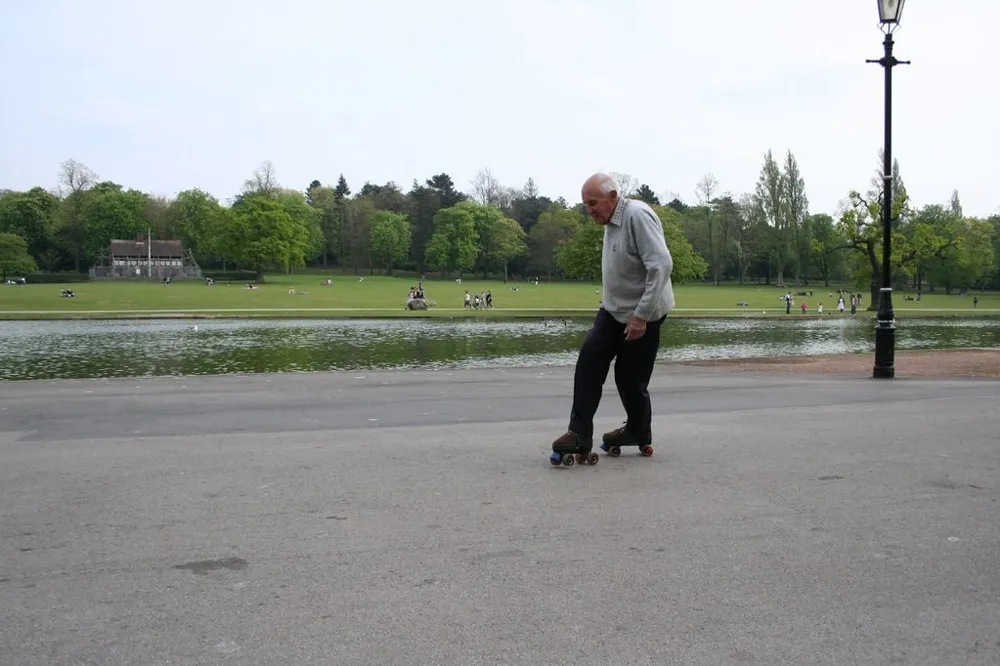
Crossovers let you turn smoothly and keep speed through a curve. They are a core skill for rink skating and roller derby.
- Practice the motion while standing still: step one skate over the other, then uncross.
- Skate a slow, wide circle. Lean slightly into the circle and look where you are going.
- Push with your outside skate, lift it, and set it down in front of and past your inside skate.
- Push your inside skate out from underneath (the crossunder), then bring it back beside the other skate.
- Repeat around the circle. Learn both directions, even though many rinks skate in one direction during sessions.
Keep your shoulders level and your knees bent. Standing tall is the most common reason crossovers feel shaky.
9. Two-Foot Spin
A two-foot spin on quads relies on your upper body to start the rotation.
- Stand with your feet about shoulder width apart in open space.
- For a spin to the left, slide your right skate slightly forward and your left skate slightly back.
- Wind your arms and shoulders, then swing them toward the direction of the spin. Let your skates follow.
- Bring your skates closer together and pull your arms in to keep turning.
- Stop by opening your arms and dragging a toe stop lightly.
Spot a fixed point with your eyes to limit dizziness, and stop after a few spins until you're used to it. Looser trucks make spins much easier.
10. Toe Stop Spin
In a toe stop spin you pivot around one toe stop while the other skate rolls in a circle around it.
- Stand still and place one toe stop on the floor behind you, heel lifted.
- Keep most of your weight on the rolling skate and push it around in a circle with small steps.
- Once the rotation feels smooth, start from a slow glide: tap the toe stop down and let your momentum swing you around it.
This trick is quad-only because inline skates have a heel brake instead of a toe stop.
11. Toe Jam and Moonwalk
These two footwork moves come from jam and rhythm skating and use your toe stops.
Toe Jam
- From a standstill, move your right skate back and rest it on its toe stop.
- Pivot on your toes so your heels come together, keeping your knees bent.
- Pivot again so your left skate ends up back on its toe stop.
- Repeat the two pivots slowly, then faster and in time with music.
Moonwalk
The roller moonwalk is done while rolling slowly backward. One skate rests on its toe stop and drags while the other glides back, then they swap. Learn it after you are comfortable rolling backward.
12. Small Jumps and the 180
Jumps teach you to leave the ground and land safely, which you need for curbs, ramps and dance moves.
- Practice small two-foot jumps in place, on grass or carpet first so your skates don't roll.
- Move to a slow glide. Bring your skates together, bend your knees and spring straight up.
- Land on the whole skate with your knees bent like springs and keep rolling.
- Once forward jumps are steady, try a jump that turns 180 degrees from forward to backward, and later from backward to forward.
Keep jumps low and add speed slowly. For park skating, learn to bail with a knee slide on ramps before you jump on them.
Skating Backwards and Transitions
Many tricks finish backward, so learn backward skating alongside the moves above. Start with backward bubbles, check over your shoulder, and practice stopping while rolling backward. Our full how to skate backwards guide covers backward swizzles, C-cuts and backward stops.
A transition turns you from forward to backward without stopping. The easiest version is a two-foot turn: glide slowly, keep your knees bent and turn your shoulders, hips and feet together in one smooth motion.
Jam and Dance Skating Basics
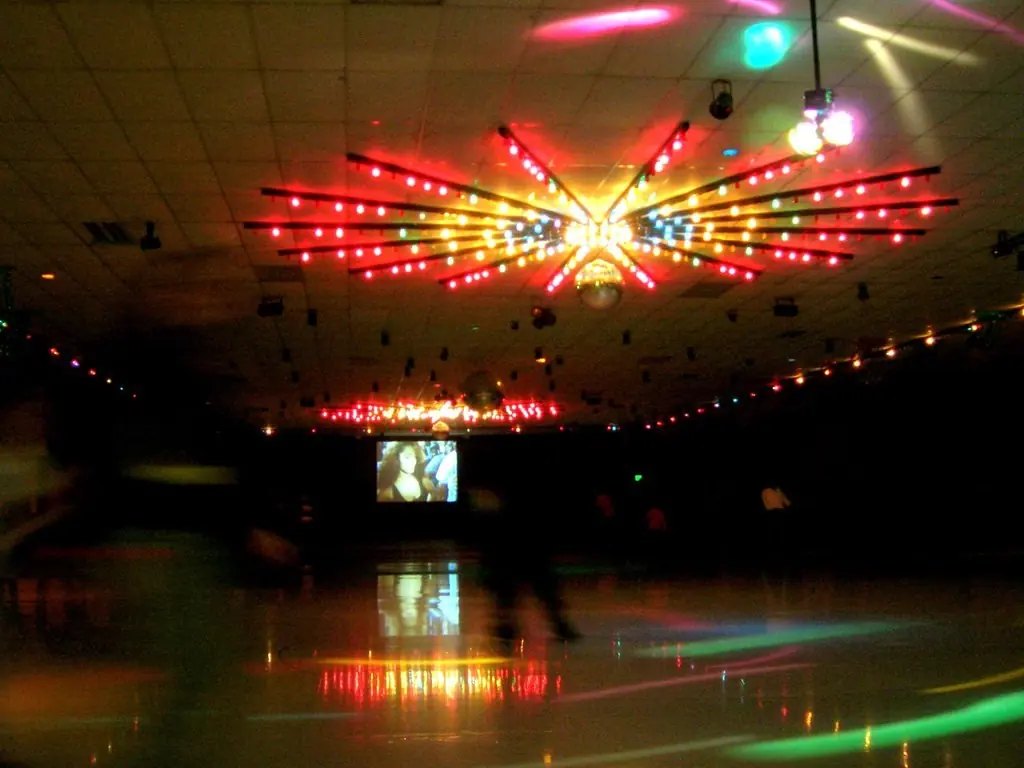
Jam skating mixes dance, footwork and spins, and rhythm skating focuses on moving with the beat. You don't need special moves to start:
- Pick a slow song and glide in time with the beat.
- Link two tricks you already know, such as a grapevine into a one-foot glide.
- Add arm movement once your feet feel automatic.
- Try the toe jam and moonwalk at a rink adult night or with a local skate group.
Dance styles vary from region to region. Watching local skaters is a good way to learn the moves that are common where you skate.
Common Mistakes
- Skipping basics: if you can't stop on demand, tricks quickly become falls.
- Looking down: your weight follows your eyes, so look ahead.
- Locked knees: stiff legs can't absorb wobbles or landings.
- Too much speed: learn every trick slowly first.
- Practicing tired: try new tricks early in a session while your legs are fresh.
- One side only: practice both legs and both directions.
- Loose gear: pads that slide around don't protect you when you land on them.
A Simple Practice Plan
| Stage | Focus | Tricks |
|---|---|---|
| Stage 1 | Balance | One-foot glide, scissors, bubbles |
| Stage 2 | Footwork | Grapevine, heel-toe, manuals |
| Stage 3 | Strength and turns | Shoot the duck, crossovers, backward bubbles |
| Stage 4 | Rotation and rhythm | Two-foot spin, toe stop spin, toe jam, small jumps |
Move on when each trick works on both sides at a slow speed. Warm up for a few minutes, keep sessions short and regular, and film your attempts. Seeing your posture on video often shows what's going wrong faster than feel alone.
Where to Practice
- Roller rinks: smooth floors make spins and dance moves easier, and many rinks run lessons.
- Tennis or basketball courts: flat and smooth, with plenty of room. Check whether skating is allowed.
- Smooth empty parking lots: good for crossovers and jumps, but watch for cracks and traffic.
- Skateparks: for ramps and transitions later, during quiet hours.
Avoid wet or dusty surfaces. Wheels lose grip quickly and spins become unpredictable.
What to Learn Next
- Backward skating and backward stops: how to skate backwards.
- Advanced stops: the tomahawk and hockey-style stops in how to stop on roller skates.
- Speed: stride and crossover technique in how to roller skate faster.
- Inline moves: if you also skate inlines, see rollerblading tricks.
- Roller derby: crossovers and jumps are the base for derby footwork. See roller derby rules.
- Artistic and dance skating: spread eagles and multi-turn spins come later. See artistic roller skates.
Keep your skates in good shape as you progress. Our roller skate maintenance guide covers wheels, bearings and toe stops. For more guides, browse the roller skating hub.
Frequently Asked Questions
What is the easiest roller skating trick for beginners?
The one-foot glide is usually the easiest place to start. Shift your weight onto one skate and lift the other a few inches for a few seconds, then build up the time and switch legs.
How long does it take to learn roller skating tricks?
It depends on how often you skate and how solid your basics are. Simple balance tricks can come together in a few sessions, while shoot the duck, crossovers and spins usually take steady practice over weeks.
Can I do tricks on rental skates?
You can practice balance tricks such as the one-foot glide and scissors on rental skates. Spins, toe stop tricks and dance moves are easier on skates that fit well, with trucks adjusted to your liking.
Do I need to skate backwards before learning tricks?
Not for the first balance tricks. You will need it for transitions, the moonwalk and spin exits, so learn backward skating alongside these tricks.
Are tricks different on quad skates and rollerblades?
Yes. Toe stop tricks and heel-toe moves are built around the quad layout, while inline skaters learn slalom, slides and grinds. See our rollerblading tricks guide for inline moves.
What protective gear do I need for roller skating tricks?
Wear a certified helmet, wrist guards, knee pads and elbow pads. Wrist guards matter a lot because most falls end with a hand reaching for the ground.