Roller Skate Parts Guide: What Each Piece Does and Fits (2026)
A top-to-floor tour of the quad roller skate: boot, plate, trucks, kingpins, cushions, pivot cups, wheels, bearings and toe stops, with the sizes that decide what fits and an upgrade order for stock skates.
What Are the Parts of a Roller Skate?
A quad roller skate is a boot bolted to a small chassis with two steering axles and four wheels. It looks simple, but each part has its own job, sizes and adjustments, and knowing them makes it much easier to buy the right replacement, tune how your skates turn or plan an upgrade. This guide walks from the boot down to the floor, then covers what fits what, how to adjust your trucks and which parts to upgrade first.
If you're still choosing a pair, start with our best roller skates guide and the roller skate size chart. Inline skates use a different layout; we cover them briefly near the end. Every other skating guide lives on the roller skating hub.
| Part | What It Does | Common Sizes or Types |
|---|---|---|
| Boot | Holds your foot and passes your weight to the plate | High-top or low-top; leather, suede, vinyl or canvas |
| Laces, eyelets and hooks | Close the boot and lock your heel in | Eyelets, speed hooks, Velcro power strap |
| Plate | The chassis under the boot; everything bolts to it | Nylon, aluminum or magnesium; single or double action |
| Trucks | Carry the axles and tilt when you lean to steer | One front, one rear per skate |
| Kingpin | The bolt that holds each truck to the plate | Often about 10° or 45° (nominal) angle |
| Cushions | Rubber or urethane rings that resist and return the truck's lean | Barrel or cone; about 71A–98A |
| Pivot pin and cup | The pivot pin's tip sits in a cup in the plate | Rubber, Delrin or brass cups |
| Wheels | Grip and roll | Diameter in mm (such as 62mm); hardness on the A scale |
| Bearings | Let each wheel spin on its axle | 608 (8mm axle) or 627 (7mm axle); 16 per pair |
| Axle nuts | Hold the wheels on | Nylon-insert lock nuts; often 1/2" on 8mm axles |
| Toe stop or jam plug | Stopping, toe work, or a plug when you don't want a stop | 5/8" adjustable stem or 5/16" fixed bolt-on |
Bones Reds Bearings
Best first bearing upgrade
- 608 size for 8mm axles
- Single non-contact rubber shield
- Speed Cream lubricant
Antik Gumball Toe Stop
Best toe stop upgrade
- Natural rubber, 75A
- Long stem (about 30mm)
- Large stopping surface
Sure-Grip Super Cushions
Best for tuning how your skates turn
- High-rebound urethane
- Barrel and cone shapes
- Color-coded hardness options
The Boot: Uppers, Laces and Eyelets
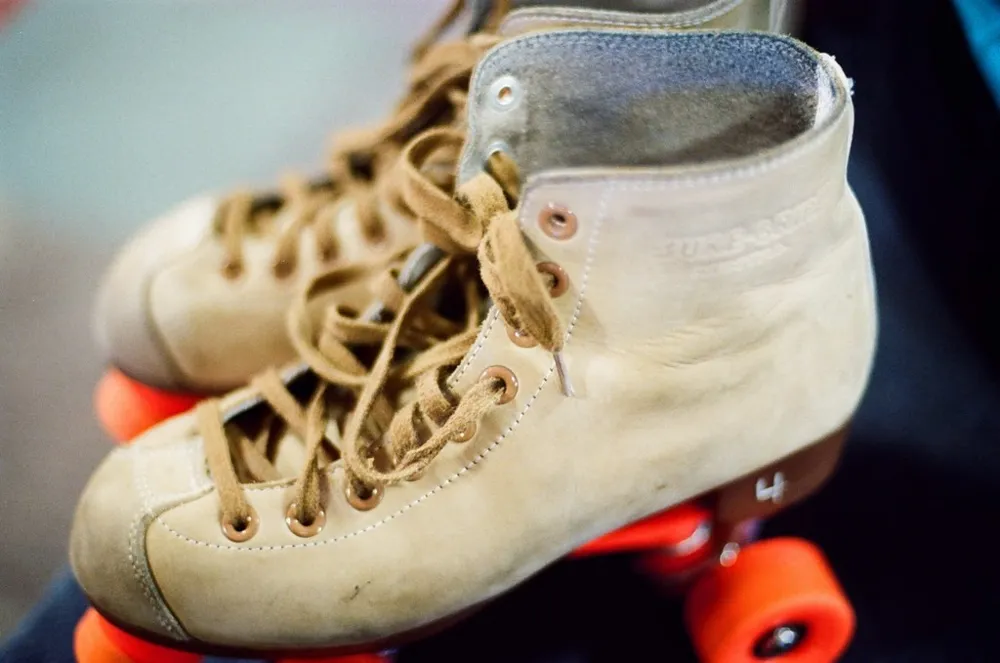
The boot holds your foot and transfers every push to the plate. A heel that lifts while you skate is a fit problem, not a parts problem, so get the size right first with our size chart.
Materials
Uppers come in leather, suede, vinyl and canvas or other synthetics. Leather and suede mold to your foot over time; vinyl and canvas are lighter and break in faster. Some performance boots can be heat-molded for a closer fit. Inside, the boot has a padded lining and tongue, and underneath it has a firm sole that the plate bolts through.
High-Top vs Low-Top
High-top boots support the ankle and are common on recreational, rink and artistic skates. Low-top boots free up the ankle for the deep knee bends and quick footwork of roller derby, speed and park skating. Our roller derby skates guide explains why most derby boots are cut low.
Laces, Eyelets, Hooks and Straps
Most boots close with laces through metal eyelets; some add speed hooks near the top so you can lace up faster, and many have a Velcro power strap across the instep to keep your heel down. Laces wear out and snap, so they are the cheapest replacement part on the skate. Match the length to the number of eyelets, and pull each crossing snug from the toe upward. Our lacing guide covers lacing patterns in general.
The Plate: The Chassis Under the Boot
The plate is bolted to the sole and carries everything else: the trucks, kingpins, cushions, pivot cups and the toe stop. It decides how stiff, light and responsive the skate feels.
Plate Materials
| Material | Where You'll See It | Trade-Offs |
|---|---|---|
| Nylon (plastic) | Most beginner and recreational skates | Light and affordable, but flexes, so some push is lost; less suited to heavy impacts |
| Aluminum | Mid-range, derby and rink skates | Stiffer and more durable; transfers more power. The most common metal plate |
| Magnesium and lightweight alloys | High-end plates | Strong and light; usually at the top of a brand's range |
Some plates also have a jump bar (support bar) linking the front and back sections, which adds rigidity and reduces the risk of the plate breaking.
Single Action vs Double Action
A single action plate has one cushion per kingpin. A double action plate has two, one on each side of the truck, so you can tune how the truck leans and returns from both sides. Roller Skate Nation says most current skates use double action.
Kingpin Angle
The angle of the kingpin changes how the skate steers:
- About 10 degrees: the kingpin and cushions sit more upright under you. It feels stable and gives strong forward push and edge control. Roller Skate Nation calls it the most common style.
- About 15 to 20 degrees: a middle ground. UK shop Double Threat describes 15–16° plates as a common first upgrade and 20° plates as traditional "dance" plates with a swoopier feel.
- "45 degrees": the cushions sit nearly flat and the trucks react quickly to direction changes, which is why these plates are popular for derby agility. Double Threat notes that DA45-style plates are marketed as 45° but actually sit at about 30°.
Plates, trucks and cushions are made for a specific angle, so 10° and 45° parts are generally not interchangeable.
Mounting Position and Plate Size
Package skates come with the plate already mounted. When a plate is mounted separately, the rear axle should sit under the middle of the heel, and the front axle position sets the mount style:
| Mount | Front Axle Sits | Feel and Who It Suits |
|---|---|---|
| Standard | Under the ball of the foot or slightly ahead | Stable base; beginners and casual skaters |
| Short | Behind the ball of the foot | Shorter wheelbase and quicker footwork; derby, artistic and speed skaters |
| Long | Under the big toe | Stable at speed; skaters who use jam plugs and distance skaters |
Plates come in lengths matched to boot sizes, and each brand publishes its own chart. If you buy a boot and plate separately (a "custom" setup), a skate shop usually mounts them. Double Threat says its standard mounts sit a few millimeters forward of the heel and slightly toward the inside of the boot.
Trucks, Kingpins and Pivot Cups
Each skate has two trucks, front and rear. A truck is the T-shaped part that holds the axle, with one wheel on each end. When you lean, the plate tilts the truck so the wheels steer in an arc; that is how a quad skate turns without twisting your foot.
- Kingpin: the large bolt that runs through the plate and the truck. It holds the cushions and truck in place, and the nut on its end (often called the action nut or kingpin nut) sets how much the cushions are squeezed. Some plates also use a flush nut to lock the kingpin to the plate.
- Pivot pin and pivot cup: the arm of the truck ends in a pivot pin that sits in a small cup in the plate. The cup lets the truck rock smoothly and absorbs vibration. Cups are made of rubber, Delrin plastic or brass, and they wear out faster if the trucks are set up badly.
- Axle: usually part of the truck. Its diameter (7mm or 8mm) decides which bearings fit.
Trucks also vary in width and height. Wider trucks feel more stable, narrower trucks turn more sharply, and taller trucks give more room for big outdoor wheels. On most beginner skates the trucks are a fixed part of the plate design, so you tune them with cushions and the kingpin nut rather than swapping them.
Cushions: What Makes Your Skates Turn
Cushions (also called bushings) are the rubber or urethane rings that sit on the kingpin above and below each truck. They resist the truck's lean and push it back to center. A double action skate has four per skate, eight per pair. Cushion retainers (cupped washers) sit against them to spread the load evenly.
Hardness
Cushion hardness is rated on the A durometer scale, roughly 71A (softest) to 98A (hardest), though some brands just label them soft, medium or firm. Softer cushions let the truck lean with less pressure, which makes turning easier and the skate livelier. Harder cushions feel more stable and return faster. Stock cushions on package skates are often on the firm side.
Shape: Barrel vs Cone
Barrel cushions are straight-sided and give more support. Cone cushions taper and let the truck lean more freely. SkatePro describes a common way to tune: keep barrels on top, then choose the bottom cushions, with a cone in front and barrel in back for easier turning with a stable rear, or cones front and back for the liveliest feel.
Cushions must fit your truck, kingpin diameter and angle. Most aftermarket cushions are sold for a specific plate family, such as Sure-Grip double action plates or DA45 trucks, so check the listing before you order.
Wheels and Hubs
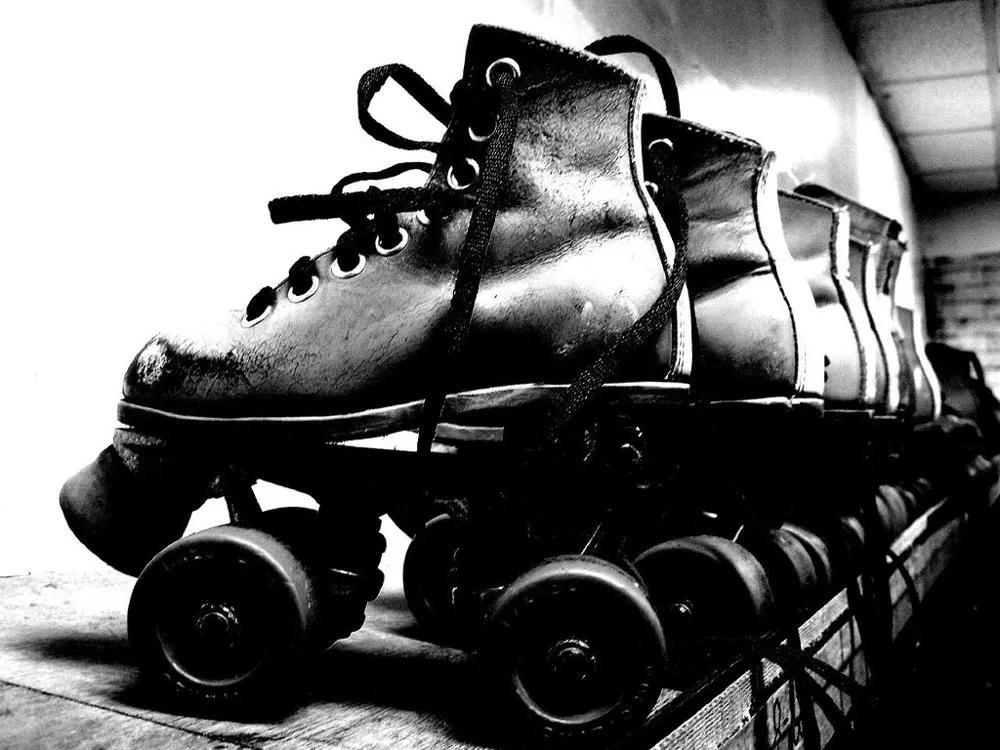
Quad skates have eight wheels per pair. Four specs describe them:
- Diameter: taller wheels roll faster and over cracks more easily; shorter wheels are lighter and more agile. Inline Warehouse warns that very tall (63mm and up) or very short (57mm and below) wheels can cause clearance problems with some plates and toe stops.
- Width: wide wheels give more grip and stability; narrow wheels are lighter and more nimble.
- Hardness: rated on the A scale and printed on the wheel, such as 78A. Softer wheels absorb bumps and grip on rough outdoor surfaces; harder wheels roll faster and slide more on smooth rink floors.
- Profile: square edges give grip and push for derby and speed; rounded edges feel more maneuverable for outdoor and park skating.
The hub is the core of the wheel. Nylon (polymer) hubs are light and make bearings easier to remove. Aluminum (alloy) hubs are stiffer, keep their shape longer and are often recommended for heavier skaters. Choosing outdoor wheels by surface is covered in detail in our best outdoor roller skate wheels guide, including how to swap them.
Bearings, Spacers and Axle Nuts
Each wheel holds two bearings, one pressed into each side of the hub, so a pair of quads needs 16. The bearing's inner hole (bore) must match the axle:
| Bearing | Bore (Axle Size) | Outer Diameter x Width | Where You'll See It |
|---|---|---|---|
| 608 | 8mm | 22mm x 7mm | Most current quad skates, plus skateboards and inline skates |
| 627 | 7mm | 22mm x 7mm | Plates with 7mm axles, including some high-end models |
| 607 | 7mm | Check listing | Some 7mm-axle setups |
Because 608 and 627 bearings share the same outside size, a 7mm bearing fits the wheel but not an 8mm axle, and vice versa. Roller Skate Nation says most current skates use 8mm axles because 8mm bearings and nuts are easier to find.
Spacers are small tubes that sit between the two bearings inside the hub. Not every wheel uses them, but French skate site Roller en Ligne recommends them for smoother rolling and better energy transfer.
Axle nuts on most skates are lock nuts with a nylon insert. Tighten them until the wheel spins freely with only a tiny bit of side-to-side play; overtightening squeezes the bearings and slows the wheel. A skate tech guide published by BB SkateTech says that if you can thread an axle nut on by hand most of the way, its nylon ring is worn and the nut should be replaced.
ABEC numbers on bearing boxes describe manufacturing tolerance, not speed or durability, so brand quality matters more than the number. For bearing types and shields, see our skate bearings guide; cleaning steps live in our roller skate maintenance guide.
Toe Stops and Jam Plugs
The toe stop is the rubber or urethane stopper at the front of the plate. Quad skaters use it to stop, to stand on their toes and for jumps and footwork. Learning to use it is covered in how to stop on roller skates.
Fixed vs Adjustable
| Type | How It Attaches | Plate Housing |
|---|---|---|
| Fixed (bolt-on) | No stem; a bolt through the center holds it to the plate. Rotate it a quarter to half turn to spread wear | 5/16" |
| Adjustable | A threaded stem screws into the plate and is locked with a nut or pinch bolt; you can set the height | 5/8" |
Moxi says most of its skates use a standard 5/8-inch stem, but its Rainbow Rider uses its own proprietary fitting, so check the plate before ordering.
Stem Length
Adjustable toe stops come in stem lengths. Roller Skate Nation lists long stems at about 30mm, short stems at about 18mm and a middle option around 25mm. Long stems sit the stopper closer to the floor and pair with bigger wheels; short stems give more clearance and suit smaller wheels and dance or artistic skaters. A shop rule of thumb from SkatePro: tilt the skate onto its toe stop and you should fit about three fingers between the rear wheel and the floor.
Jam Plugs
A jam plug is a small rubber or plastic plug that fills the toe stop housing for skaters who don't want a stop, such as jam and some dance skaters. It is not a brake. Plugs come in both 5/8-inch and 5/16-inch sizes, and an empty metal housing can scrape rink floors, so plug it if you remove the stop. Inline skates use a heel brake instead.
Roller Skate Parts Compatibility Cheat Sheet
Most ordering mistakes happen here. Check these against your plate's spec sheet or the skate maker's page before you buy:
| Part You're Buying | Check This |
|---|---|
| Bearings | Axle size: 8mm takes 608, 7mm takes 627 (or 607). Buy 16 for a pair |
| Wheels | Bearing seat for your bearing size; diameter clears the plate, boot and toe stop |
| Toe stops | 5/8" stem or 5/16" bolt-on; stem length; any proprietary fitting |
| Jam plugs | Same housing size as your toe stop (5/8" or 5/16") |
| Cushions | Made for your truck and kingpin angle (10° vs 45°-style); barrel or cone; hardness |
| Pivot cups | Made for your plate model |
| Axle nuts | Thread for 7mm or 8mm axle |
| Plate | Length for your boot size; kingpin angle; mounting holes; toe stop type |
| Tool | Socket sizes for your axle nuts, kingpin nuts and toe stop nut or bolt |
How to Adjust Your Trucks
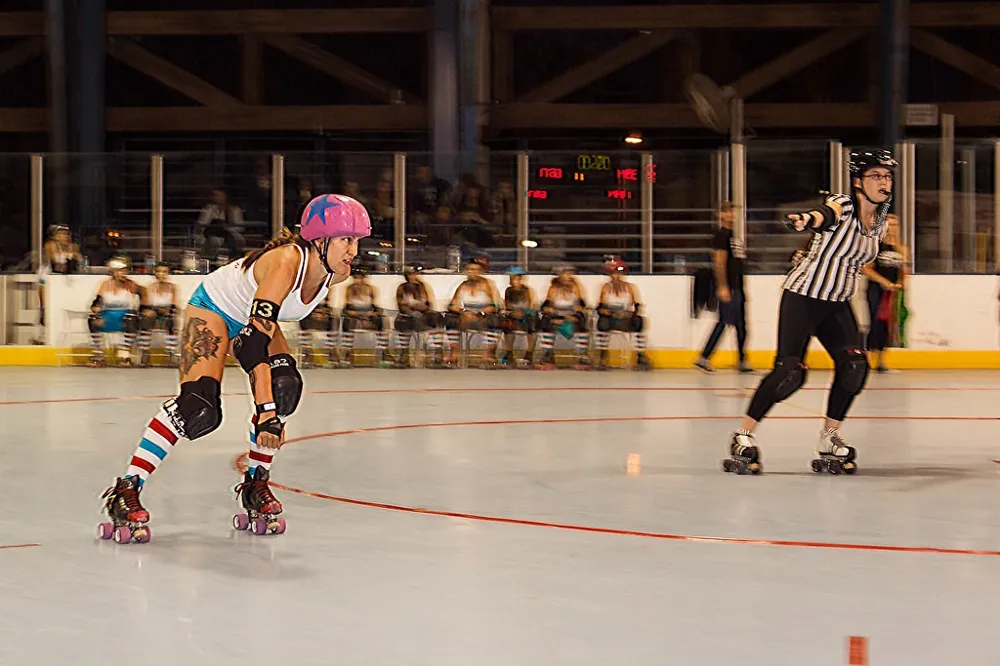
Truck tightness is the main setup adjustment on a quad skate. Tighter trucks feel stable and help beginners; looser trucks turn with less effort. Our roller skate buying guide suggests starting tight while you learn and loosening as you improve.
- Check the feel. Turn the skate wheels-up and push each truck side to side. Stiff movement means tight action; floppy movement means loose action.
- Find the kingpin nut. It sits on the end of the kingpin, against the cushions. Many plates take a 9/16-inch socket here; check yours.
- Turn in small steps. A quarter turn at a time is plenty. Clockwise tightens and squeezes the cushions; counterclockwise loosens.
- Match front and back. Start with both trucks set the same, then fine-tune one at a time.
- Test skate on a flat, safe surface before changing anything else.
Keep at least one thread showing above the kingpin nut so it cannot work off. If you still want more turn when the nut is near that limit, fit softer or cone-shaped cushions instead; running trucks very loose can strain the kingpin and truck. The idea is the same as on a skateboard, which we explain in how tight should skateboard trucks be.
Upgrade Order and Custom Setups
Stock package skates usually have a solid boot for the money but basic wheels, bearings, cushions and toe stops. These are cheap to change and make the biggest difference, so a common order is:
- Wheels: match hardness and size to where you skate, indoor or outdoor.
- Toe stops: a grippier or better-sized stop (see the toe stops in our stopping guide), or a jam plug if you don't use one.
- Cushions: softer or harder, barrel or cone, to tune turning.
- Bearings: a quality set of 16, especially if the stock bearings are rough or rusted.
- Laces: longer, sturdier laces that hold your heel down.
- Plate: an aluminum plate for stiffness and power, mounted to your existing boot if it is in good shape.
- Boot: last, once you know what support and cut you want.
A custom setup means buying the boot, plate, wheels, bearings and toe stops separately and having them mounted together. It lets you choose each part for your discipline, such as a low-cut boot and an agile plate for derby or a high boot with a jump bar plate for artistic skating. A complete package skate is usually cheaper, so a custom build makes most sense when you know exactly what you want. Compare package options in derby skates and artistic roller skates.
Upgrade Parts on Amazon
These common upgrade parts are sold on Amazon. Specs come from the makers' pages and retailer listings; confirm the size, pack count and fit for your plate before ordering.
1. Bones Reds Bearings
A 608 (8mm) bearing with stainless steel balls, a single non-contact rubber shield and Bones' Speed Cream lubricant. The shield is removable for cleaning. Reds are sold in 8-packs for skateboards and 16-packs for quads; a pair of quads needs 16, so check the pack count on the listing.
Good to Know
- Fits standard 8mm axles
- Serviceable design
- Widely available replacement
Watch Out For
- Won't fit 7mm axles
- Buy enough for 8 wheels
2. Antik Gumball Toe Stop
A natural rubber toe stop rated 75A, with a long stem (about 30mm) and a large surface area for slowing down. Moxi lists the Gumball in short and long stems with a standard 5/8-inch stem and recommends it for wood, tile, concrete and outdoor use.
Good to Know
- Standard 5/8" stem
- Grippy on many surfaces
Watch Out For
- Won't fit 5/16" bolt-on plates
- Pick the stem length to match your wheels
3. Sure-Grip Super Cushions
High-rebound urethane cushions for most Sure-Grip double action plates and trucks. Retailers list them in barrel (about 14mm tall) and cone (about 13mm) shapes and in color-coded hardnesses: 72A blue, 79A yellow, 85A purple and 93A red. The Amazon listing is described as a pack of 8 in one color, which covers one pair of double action skates.
Good to Know
- Several hardness options
- Enough for a full pair
Watch Out For
- Made for Sure-Grip-style trucks; check your plate
- Confirm color, hardness and shape on the listing
Tools You Need
You can do almost every roller skate adjustment with a few sizes. Riedell's 3-way skate tool lists them as 1/2 inch for axle nuts, 9/16 inch for kingpin nuts and 15/16 inch for toe stop nuts. Bont's tool pairs 1/2-inch and 9/16-inch sockets with 4mm and 5mm Allen keys for toe stops that use a pinch bolt instead of a nut. Plates differ, so check yours.
- Skate tool: a skateboard tool such as the Ace AF1, which has 1/2-inch and 9/16-inch sockets (plus 3/8-inch) and an Allen key, covers axle and kingpin nuts. It won't reach a large toe stop nut.
- Adjustable wrench for toe stop jam nuts if your tool lacks the size.
- Bearing puller or press to remove and seat bearings without damaging them.
- Spare axle nuts, since nylon lock rings wear out.
Ace AF1 Skate Tool
Skate Warehouse lists the AF1 with a 9/16-inch socket for trucks, 1/2-inch for wheels and 3/8-inch for hardware, plus built-in axle and kingpin re-threaders and a slide-out Allen key and Phillips head. More options are in our skate tools guide.
Good to Know
- Covers common axle and kingpin nut sizes
- Re-threaders fix damaged threads
Watch Out For
- No toe stop nut size
Inline Skate Parts: How They Differ
Inline skates swap the plate and trucks for a single frame with wheels in a line. The main parts are a shell or soft boot with a liner, a cuff held by cuff bolts, laces and buckles (often a 45-degree buckle to hold the heel), mounting screws that attach the frame, axles through each wheel, and a heel brake on one skate. Inline Warehouse notes that most skate bearings have an 8mm inner ring and that urban and aggressive skates often come without a brake. There are no cushions or kingpins to tune. For more, see rollerblades vs roller skates and rollerblade wheels.
When to Replace Roller Skate Parts
Parts wear at different rates. Use this as a quick checklist and see our roller skate maintenance guide for routines and bearing cleaning.
| Part | Replace When |
|---|---|
| Wheels | Worn uneven, cone-shaped or flat-spotted, or chunked; rotate them to even out wear first |
| Toe stops | Worn down toward the stem, or the stem is bent or rusted |
| Cushions | Cracked, bulging, hardened with age or loose on the kingpin |
| Pivot cups | Split, broken or letting the truck rattle |
| Bearings | Gritty, noisy or rough after cleaning, or rusted |
| Axle nuts | They thread on by hand with little resistance |
| Kingpins and trucks | Bent or cracked; stop skating on cracked parts |
| Plate mounting | Loose mounting nuts, cracks around the bolts, or a twisted plate |
| Laces | Fraying or snapping |
Before each session, spin the wheels, check that the toe stops and axle nuts are tight, and wiggle each truck. Once your setup feels right, put it to work with how to roller skate and how to roller skate faster, and add pads and a helmet from our roller skate accessories guide.
Frequently Asked Questions
What are the main parts of a roller skate?
A quad roller skate has a boot, a plate bolted under the boot, two trucks held on by kingpins and cushions, four wheels with two bearings each, axle nuts, and a toe stop or jam plug at the front. Laces, eyelets or hooks and sometimes a strap close the boot.
What is the plate on a roller skate?
The plate is the chassis bolted to the sole of the boot. Everything else attaches to it: the trucks, kingpins, cushions, pivot cups and the toe stop. Plates are made of nylon or metal such as aluminum or magnesium.
What is the difference between single action and double action plates?
A single action plate has one cushion per kingpin, while a double action plate has two, one on each side of the truck. Most current skates use double action, which gives more control over how the truck turns.
Are roller skate parts universal?
Many parts follow common sizes, but not all. Most skates use 8mm axles and 608 bearings, though some plates use 7mm axles; toe stop housings come in 5/8-inch (adjustable) and 5/16-inch (fixed), and cushions must match your truck and kingpin angle. Check your plate's specs before ordering.
How many bearings does a pair of roller skates need?
Sixteen. Each of the eight wheels holds two bearings, one on each side of the hub, and some setups add a spacer between them.
How tight should roller skate trucks be?
Tight enough to feel stable but loose enough to turn when you lean. Adjust the kingpin nut in small steps, keep at least one thread showing above the nut, and use softer cushions rather than backing the nut off too far if you want more turn.
What size wrench do roller skates use?
Many quad plates take a 1/2-inch socket for 8mm axle nuts and a 9/16-inch socket for kingpin nuts. Adjustable toe stops use a larger nut (Riedell's tool has a 15/16-inch end) or an Allen bolt, depending on the plate.
Can you replace the plate on roller skates?
Yes. Plates are bolted to the boot, so they can be swapped or remounted, but the new plate must be the right length for the boot and drilled to match. Many skaters have a skate shop do it.