How to Manual a Mountain Bike (2026)
A manual lifts your front wheel without pedaling, using body position and balance. It helps on trails, rollers and drops. Here's how to learn it.
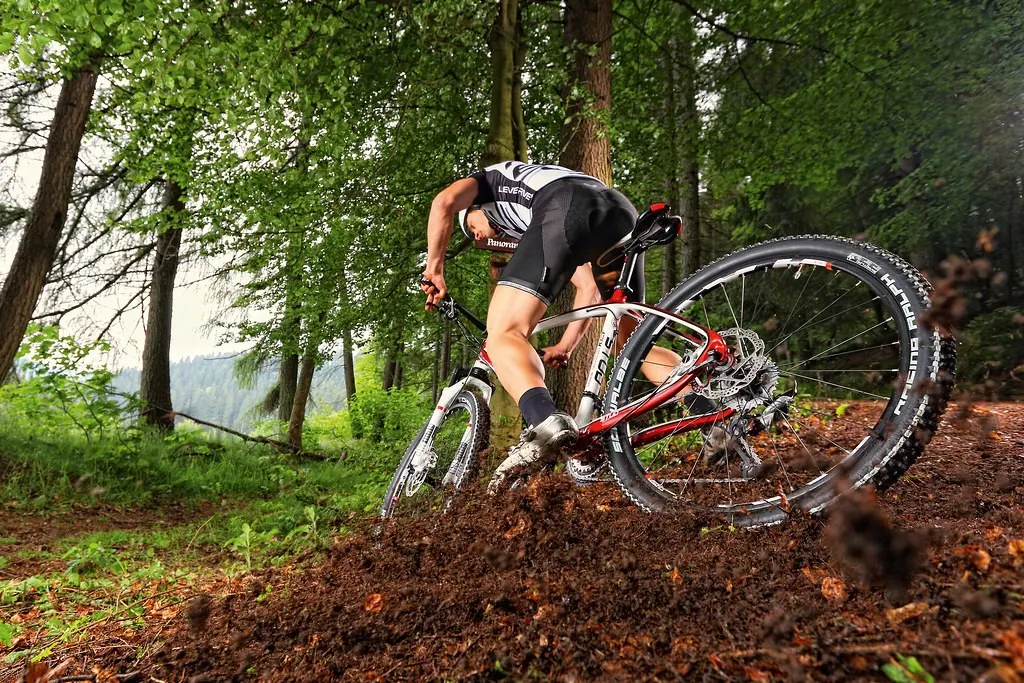
Manual vs Wheelie
A wheelie uses pedaling to keep the front wheel up. A manual uses your body weight and balance with no pedaling. Manuals help you roll over holes, rollers and small drops smoothly.
Why Learn to Manual?
A manual lets you carry speed over holes, roots and small drops instead of slamming into them, and it helps you pump through rollers without pedaling. It's also the foundation for jumping and for lifting the front wheel onto ledges. It's two skills in one: getting the front wheel up, then balancing it there.
Step by Step
- Roll at a moderate speed on smooth, slightly downhill or flat ground.
- Level pedals, one finger covering the rear brake.
- Compress by pushing down through the bars and pedals.
- Drive your hips back and down with straight arms; the front wheel lifts.
- Balance with your hips and knees: bend knees to lift more, extend to lower.
- Tap the rear brake if you start to loop out.
- Land by bringing your hips forward.
Preload and Punch
The lift comes from your body, not your arms. Preload by pushing your weight down into the bars and pedals, which compresses the suspension (or your tires and legs on a hardtail). Then punch: push your feet and hands forward while driving your hips back, keeping your arms straight. Done right, the front wheel rises as your weight moves behind the rear axle. Pulling up with bent arms drops your chest forward and actually pushes the wheel down.
Finding the Balance Point
Once the wheel is up, your hips steer the balance. Hips back and low to raise the front, hips slightly forward to lower it. Small knee bends fine-tune it. Keep a finger on the rear brake the whole time: a quick tap brings the front wheel down if you go too far back.
Common Mistakes
| Mistake | Fix |
|---|---|
| Pulling with bent arms | Keep arms straight, move hips back |
| Not compressing first | Push down before shifting back |
| Looping out | Cover and use the rear brake |
| Front wheel drops fast | Hips further back, bend knees |
| Stiff body | Stay loose |
Drills
- Practice "front wheel lifts" repeatedly before holding longer.
- Manual between two markers, then extend the distance.
- Practice on grass for softer falls.
- Try manualing over a small roller once steady.
Bike Setup Tips
- Lower your saddle so your hips can move back freely; a dropper post makes this easy.
- Shorter bikes are easier to manual; long, slack bikes need more hip movement.
- Grippy flat pedals help you feel the bike while learning; clipless pedals work too once you're comfortable.
- Set the rear brake so you can tap it easily without changing your grip.
Taking It to the Trail
Practice on a smooth, slightly downhill path first. When you can lift the front wheel on command, time a manual over a painted line, then a small stick, then real trail features like rollers and small holes. Look ahead, not down at your front wheel.
Safety and Setup
Wear a helmet, gloves and knee pads. Grippy flat pedals and good grips help you stay connected. See mountain bike grips, helmets and knee pads.
Related: hardtail vs full suspension and BMX tricks for beginners.
Frequently Asked Questions
What's the difference between a manual and a wheelie?
A wheelie uses pedaling to keep the front wheel up. A manual uses body position and balance without pedaling.
Why can't I get my front wheel up?
Usually from pulling with bent arms. Keep arms straight and drive your hips back and down.
How do I stop from looping out?
Cover the rear brake; a light tap brings the front wheel down.
What gear should I use?
A manual doesn't rely on pedaling, so gear matters less; roll at a moderate speed.
Is a manual useful on trails?
Yes, for clearing small obstacles, rollers and holes and for smoother drops.