Ski Boot Footbeds: Picks, Fit and Molding Guide (2026)
Aftermarket ski boot insoles from Superfeet, Sidas, Currex and more, plus how to pick the right arch and volume and when a custom footbed is worth it.
What a Ski Boot Insole Does
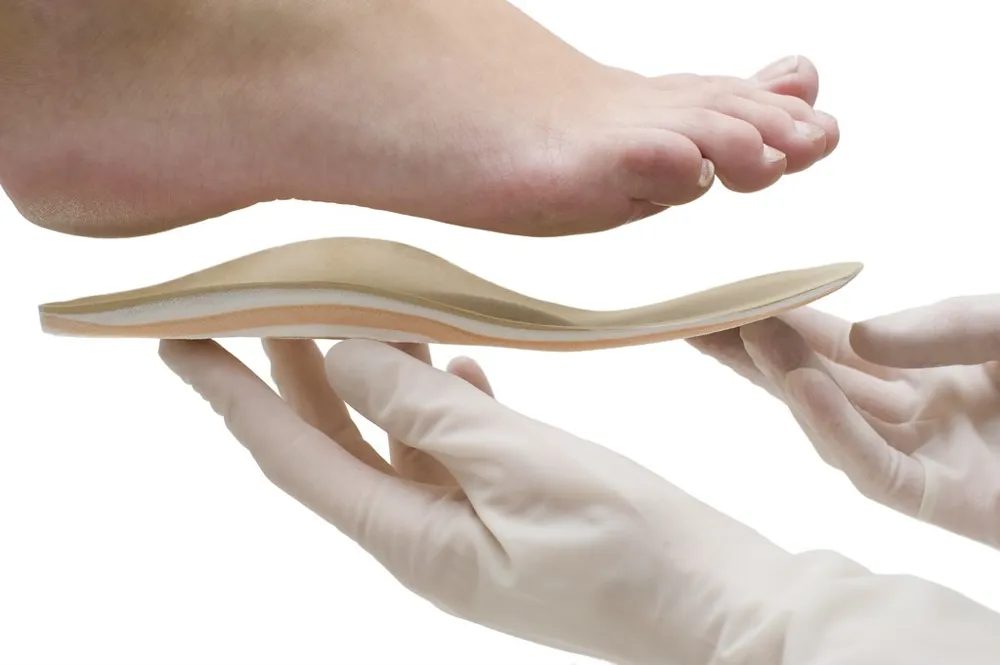
The footbed is the cheapest part of a ski boot to upgrade, and one of the most useful. Most boots ship with a flat foam insert; evo's footbed guide notes that very few stock footbeds give more than token support. An aftermarket or custom ski boot insole supports the arch and cradles the heel, so your foot is less likely to collapse or slide inside the shell. That can mean a steadier stance, more direct control of the ski and fewer pressure points by the end of the day.
Insoles are not a cure-all. They won't fix a boot that is a size too big, and a thick footbed can make a snug boot painful. Start with the right boot (see our ski boot buying guide and ski boot size chart), then choose a footbed that suits your arch and the room inside the boot. If you have foot pain or a medical condition, see a podiatrist or a qualified bootfitter before relying on any off-the-shelf insole.
Superfeet Winter Thin Support
Best for snug boots
- Thin profile for more room
- Deep heel cup, carbon-fiber stabilizer cap
- Thermal top cover; trim to fit
Sidas 3Feet Winter Mid
Best arch-matched winter insole
- Low, Mid and High arch versions
- EVA shell for structure
- Insulated foam layer
Currex EdgePro Thermo
Best insulated alternative
- 3D Dynamic Arch support
- Decoupled heel cup, anti-slip grip
- Fleece insulation layer
Ski Boot Insoles Compared
| Insole | Type | Arch Options | Warmth Features | Best For |
|---|---|---|---|---|
| Superfeet Winter Thin Support | Trim-to-fit, thin | All arch heights (one shape) | Thermal top cover | Snug performance boots |
| Sidas 3Feet Winter Mid | Trim-to-fit, arch-specific | Low, Mid, High versions | Insulated foam layer | Matching a known arch height |
| Currex EdgePro Thermo | Trim-to-fit, ski-specific | Profile options on listing | Fleece insulation layer | Grip and support in tight boots |
| Superfeet Winter Support | Trim-to-fit, standard thickness | All arch heights (one shape) | Thermal top cover | Roomier boots |
| Remind Remedy | Heat-moldable cushion | Molds to your foot | None listed | Impact cushioning, park skiing |
| SOLE Active Thin + Met Pad | Heat-moldable, very thin | Molds to low, medium or high arch | None listed | Low-volume boots, forefoot support |
| Therm-ic Heat Flat set | Heated insole | Flat | Battery heating | Chronically cold toes |
Arch options and features are taken from maker pages and Amazon listings as of November 2026; check the listing for the current sizes and versions before you buy.
The Best Ski Boot Insoles
1. Superfeet Winter Thin Support
Formerly called Winter Comfort Thin, this is Superfeet's thinner ski and snowboard boot insole. Superfeet lists it for all arch heights and for "roomy to moderate" winter footwear with removable insoles. It pairs a thin high-density foam layer with an EVOLYTE carbon fiber stabilizer cap, a deep heel cup and a thermal top cover with Moisturewick for odor control. Superfeet gives the unweighted thickness as about 5mm at the heel and 4mm at the forefoot. It's trim to fit, and Superfeet suggests going half a size up if you're between sizes.
Good to Know
- Thin build leaves more room in the boot than standard insoles
- Carbon-fiber cap is designed to hold its shape under load
- Women's, men's and kids' sizes listed
Watch Out For
- One arch shape for all; very high or low arches may want a specific profile
- Some buyers still find it takes up space in very tight race boots
2. Sidas 3Feet Winter Mid
Sidas builds the 3Feet line around arch height, with Low, Mid and High versions, so you pick the one that matches your foot instead of one shape for everyone. The Amazon listing describes the Mid version as built for a neutral arch, with an EVA shell for structure and Evamic insulated foam that works as a thermal barrier under the foot. REI lists the 3Feet Winter range as medium volume and for downhill skiing. Reviewers describe it as soft and flexible, which suits relaxed skiing and touring boots more than hard-charging race setups.
Good to Know
- Three arch heights to match your foot
- Insulated layer for cold boots
- Shaped for ski boots specifically
Watch Out For
- Soft feel may suit aggressive skiers less
- Reviewers note the High version has more material around the heel, which can reduce rear volume
3. Currex EdgePro Thermo
Currex makes activity-specific insoles, and the EdgePro is its winter-sports model for ski, snowboard and inline boots. The Thermo version is listed with Currex's 3D Dynamic Arch support, a decoupled heel cup for tight ski boots and a SuperGrip anti-slip surface. A multi-layer build with a fleece insulation layer is listed for temperature regulation, along with odor-absorbing foam cushioning. Currex sells EdgePro in different arch profiles (a High Arch version is also listed on Amazon), so check the profile option before ordering.
Good to Know
- Built for the fixed stance of a rigid boot
- Grippy top layer to reduce foot slide
- Insulated multi-layer construction
Watch Out For
- Pick the arch profile carefully; options vary by listing
- Thicker than ultra-thin inserts
4. Superfeet Winter Support
The standard-thickness sibling of the Winter Thin (formerly Winter Comfort) has the same arch-support concept with a deep heel cup, thermal top cover and Moisturewick odor control, per the listing. It's trim to fit and sold in men's and women's size ranges. Because it isn't the thin version, it suits boots with a bit more room over the foot, or skiers who want more cushion under the heel.
Good to Know
- Deep heel cup for a stable fit
- Thermal top cover for cold boots
- Easy to trim at home
Watch Out For
- Takes more room than the Thin; check your boot's volume first
5. Remind Remedy
Remind's Remedy is a cushioning insole aimed at board and park riders as well as skiers. The listing gives 6mm forefoot and 8mm heel cushioning and says it is heat-moldable, with foam that also self-forms to your foot over time. Moisture-wicking layers are listed to manage sweat. It is cushion-first rather than a firm arch-support footbed, so it fits skiers who land jumps or want impact protection more than a rigid platform.
Good to Know
- Heat-moldable for a closer fit
- Thick heel cushioning for impact
- Also works in skate shoes and work boots
Watch Out For
- Thicker than thin winter insoles; tight boots may lack room
- Less structured than a firm support footbed
6. SOLE Active Thin + Met Pad
SOLE's thin insole is listed at just 1.6mm thick and is heat-moldable to low, medium or high arches, with trim-to-fit edges and a built-in metatarsal pad under the forefoot. It isn't made only for ski boots (the listing names dress, cycling and minimalist shoes too), but its thin profile makes it an option for snug ski boots where a thicker footbed won't fit.
Good to Know
- Very thin, so it takes little room
- Heat-moldable at home
- Met pad version for forefoot support
Watch Out For
- Not ski-specific and not insulated
- A met pad isn't for everyone; a version without it is also sold
7. Therm-ic Heat Flat Insole Set
For skiers whose toes always go numb, Therm-ic's set pairs a flat heated insole (Heat Flat) with a pair of C-Pack 1700 B battery packs that clip to the boot; retailers list the "B" packs as Bluetooth versions. Being flat, it gives warmth rather than arch support. See the heated insoles section below and our heated ski boots guide for how they compare with boot heaters and heated socks.
Good to Know
- Moves between boots more easily than installed heaters
- Battery packs included in this set
Watch Out For
- Flat insole; no arch support
- Cables and batteries to route and charge
Stock vs Aftermarket vs Custom Footbeds
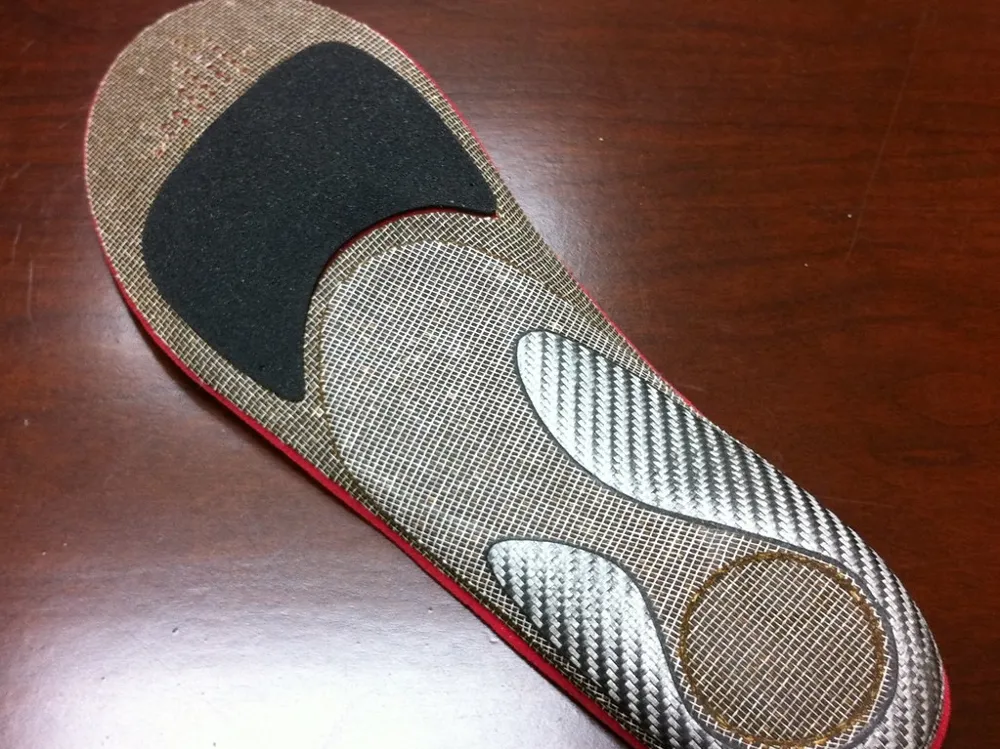
There are three levels of ski boot footbed, and the right one depends on your feet and how much you ski.
| Type | What It Is | Fit | Who It Suits |
|---|---|---|---|
| Stock footbed | Thin foam insert that comes with the boot | Generic, little arch shape | Occasional skiers with no foot issues |
| Trim-to-fit (aftermarket) | Preshaped insole you cut to your boot | Set arch shape; some foams mold with use or heat | Average arches, stable feet, most recreational skiers |
| Heat-moldable / semi-custom | Trim-to-fit insole you heat and stand on | Closer to your foot shape | Skiers wanting a better fit without a shop visit |
| Custom footbed | Molded to your foot by a bootfitter, sometimes posted and ground to the boot | Made for your foot and boot | Very high or low arches, feet that roll in or out, frequent skiers |
Trim-to-fit insoles are the affordable middle ground, and the right choice for many skiers. evo notes that some heat-sensitive foam trim-to-fit models mold to your foot as you use them, giving a semi-custom fit. Custom footbeds are made in a shop with molding equipment. Basic customs are a heat-moldable base with supportive layers through the heel and arch; "posted" customs add foam or cork under the footbed and are ground to fit the boot's bootboard and shell, usually with a firmness choice (firmer for racers, medium for most skiers, softer for rigid feet or extra cushion).
Arch Height and Foot Type
Insoles come either as one shape meant to suit many arches (Superfeet's winter models are listed for all arch heights) or in specific profiles (Sidas 3Feet has Low, Mid and High). To choose:
- Know your arch. If you're unsure whether your arch is low, medium or high, a bootfitter or ski shop can assess it, often while you're trying on boots.
- Match, don't overcorrect. An insole arch that is much higher than yours can press into the foot; one that is much lower gives little support.
- Know your foot movement. evo lists pronation (rolling inward) and supination (rolling outward) as key signs of how stable a foot is. Bootfitters say a supportive footbed often helps a foot that rolls inward; a foot that rolls outward may need wedges or posting from a fitter. Our wide-feet ski boot guide covers how this can feel like a width problem.
- Instep vs arch. The instep is the bony top of the midfoot; the arch is underneath. evo warns that if your instep already feels tight, a more supportive footbed can make it worse, because it lifts the foot toward the top of the boot.
evo suggests very high or very low arches, very long or short arches, and strong pronation are the feet most likely to benefit from a custom footbed, while average arches with stable feet often do well with trim-to-fit.
Heat-Moldable and Custom-Molded Footbeds
A heat-moldable insole softens when warmed and takes the shape of your foot as you stand on it. Some are heated in a home oven following the maker's directions; others, like the Remind Remedy, are also listed as self-forming with body heat and wear. Always follow the instructions in the box, because heating times and temperatures vary by brand and too much heat can ruin the foam.
Shop-made custom footbeds use different molding methods, and evo is clear that none is the single "right" one:
- Unweighted: the foot is held in a neutral position without bearing weight while the footbed is vacuum-molded. evo lists Superfeet's custom process as this type.
- Semi-weighted: you sit or partly stand while the material is shaped (evo cites Conform'able and Instaprint).
- Fully weighted: you stand on the footbed with full body weight during molding.
Custom footbeds are often fitted as part of a full boot fitting, along with liner heat molding and shell work. Our ski boot fitting guide explains the rest of that process.
Volume and Fit in a Tight Boot
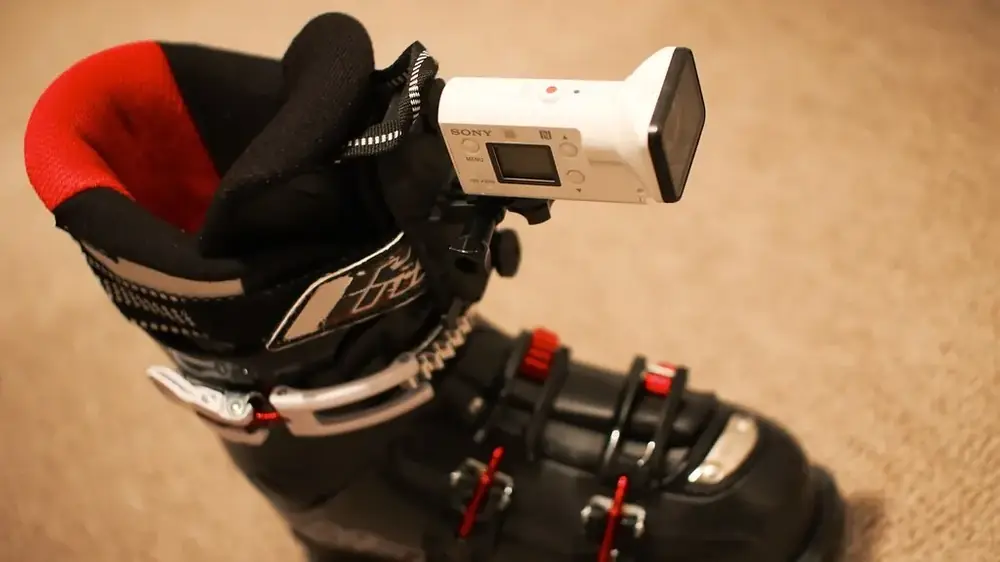
Every insole takes up some room. A thicker footbed raises your foot in the boot, which can press the instep against the top of the shell, crowd the toes against the toe box or push your heel up out of the heel pocket. Ski boots are built to fit closely, so volume matters more here than in hiking boots or running shoes.
- Thin or low-volume insoles suit snug, performance-fit boots. Superfeet gives the Winter Thin Support as about 5mm at the heel and 4mm at the forefoot unweighted; SOLE's thin model is listed at 1.6mm.
- Medium-volume insoles suit average-fit boots. REI lists the Sidas 3Feet Winter range as medium volume.
- Standard or thicker insoles can fill a little excess room in a roomy boot, but they can't rescue a boot that is too long or too wide. A fitter may add shims or pads under the liner instead.
Always compare the new insole with the stock one before you ski. If the boot feels tight on top or your toes are jammed after the swap, try a thinner model or see a fitter. Thick ski socks make the same problem worse; our ski socks guide explains why thin socks usually fit better in ski boots.
How to Trim and Install Trim-to-Fit Insoles
Most aftermarket ski insoles are sold in size ranges and cut to your boot. evo's method is simple:
- Pull the liner's stock footbed out of the boot.
- Lay the stock footbed on top of the new insole, lining up the heels so the heel of the stock footbed sits snugly in the new heel cup.
- Trace around the toe of the stock footbed with a pen.
- Cut along the line with sharp scissors. Cut a little long first; you can always trim more.
- Slide the new insole into the liner, heel first, and check that it lies flat with no curl at the toe or sides.
Superfeet suggests sizing up half a size if you're between sizes and trimming down. If your boots have a heated element or toe heater installed, check the heater maker's instructions before swapping footbeds.
Breaking In New Footbeds
A supportive footbed changes how your foot sits in the boot, so it can feel odd at first. evo recommends an adjustment period: alternate between the new and stock footbeds at first and build up wear time gradually. A few short ski days, or wearing the boots around the house, are a gentler start than a full day on the hill.
Mild awareness of the arch is normal early on. Sharp pain, numbness or new pressure points are not; take the insole out and have a fitter check the fit or the arch height.
Care and When to Replace
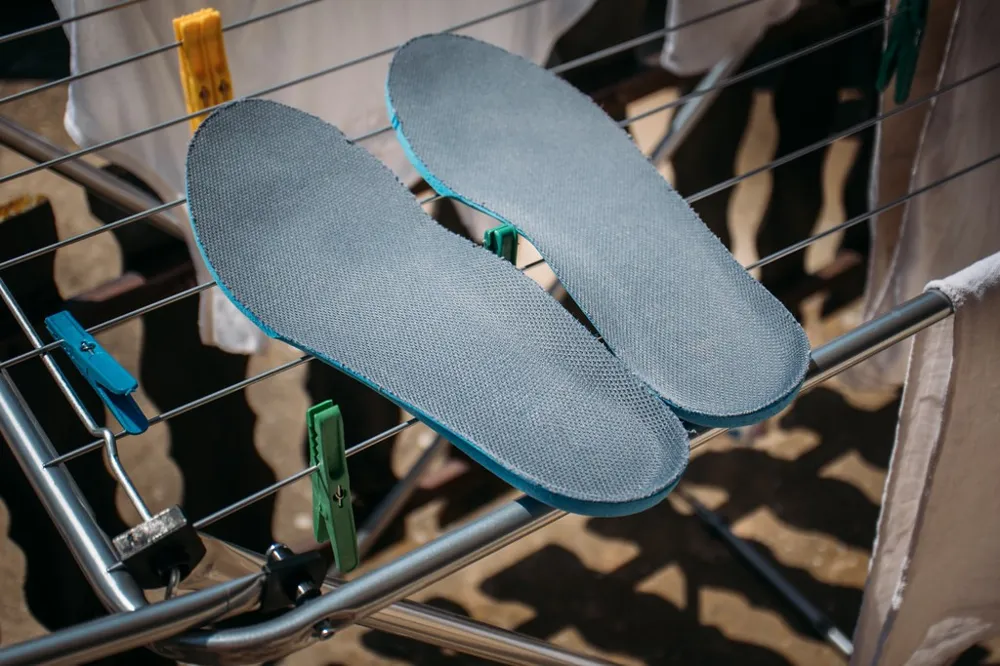
Footbeds live in a wet, warm boot, so a little care keeps them fresh and supportive for longer:
- Air them out after every ski day. Pull the insoles (and ideally the liners) out of the shell so they can dry. A boot bag with drying features or a boot dryer helps on multi-day trips.
- Clean gently. REI advises spot cleaning or hand washing with mild detergent, then letting insoles air dry. Avoid high heat unless the maker says it's safe, especially for heat-moldable insoles.
- Check for wear. Look for a flattened arch, a cracked heel cup or shell, or a worn-through top cover.
- Replace on schedule. Superfeet says to expect about 12 months of reliable support from the Winter Thin Support, and REI suggests replacing insoles about every 12 months. Skiers who only get a handful of days a season may go longer if the insole still holds its shape.
Good footbeds can move to new boots. evo says they can be reused if they are intact and the new boot is the same length; retrim or have them checked if the new shell is shaped differently.
Heated Insoles
Heated insoles put a heating element in the footbed, powered by batteries clipped to the boot cuff or strap. They're simple to move from one pair of boots to another, which makes them handy for skiers who switch between ski and snowboard boots. The trade-off is that a heated insole usually replaces your supportive footbed, and many heated models are flat. Add-on boot heaters work differently: a thin element sits under the toes, so you can keep a supportive footbed.
Before adding heat, rule out the simple causes of cold feet: boots buckled too tight, thick or damp socks, and liners that never dry overnight. Our heated ski boots and boot heaters guide compares heated insoles with factory-heated boots, add-on toe heaters and heated socks.
Insoles vs Medical Orthotics
A ski footbed and a medical orthotic are not the same thing. evo describes orthotics as corrective devices made by certified pedorthists and podiatrists, while ski footbeds mainly support and balance the foot in the boot. Orthotics designed for everyday shoes can be uncomfortable or too wide in a ski boot. If you already wear prescribed orthotics, bring them to a bootfitter and ask your podiatrist whether a ski-specific version makes sense. This guide is general information, not medical advice.
More Ski Boot Fit Guides
- How to Choose Ski Boots covers sizing, last width and what a bootfitter does.
- Ski Boot Flex Explained helps you match stiffness to your skiing.
- Best Ski Boots and Best Women's Ski Boots list current models by fit.
- Best Snowboard Boots for riders; most winter insoles here also fit snowboard boots.
Frequently Asked Questions
Do ski boot insoles really make a difference?
Most stock ski boot footbeds are thin pieces of foam with little shape. A supportive aftermarket or custom footbed holds the arch and heel so the foot moves less inside the shell, which many skiers find more comfortable and more responsive. It won't fix a boot that is the wrong size.
Are custom footbeds worth it over trim-to-fit insoles?
Skiers with very high or very low arches, or feet that roll in or out a lot, tend to benefit most from a custom footbed made by a bootfitter. Feet with average arches often do well with a good trim-to-fit insole.
What insoles are best for tight ski boots?
Choose a thin, low-volume insole such as a thin winter model, since a thick footbed raises the foot and takes up room over the instep. If the boot is still tight, see a bootfitter rather than forcing a thicker insole in.
Can I use my running or hiking insoles in ski boots?
You can, but many general insoles are thicker or more cushioned than a ski boot has room for and lack insulation. Ski-specific insoles are shaped for a fixed, flexed stance in a rigid shell.
Can I move my footbeds to new ski boots?
Usually yes, if they are still in good shape and the new boots are the same length. Retrim or have a fitter check them if the new boot has a different shape or bootboard.
How long do ski boot insoles last?
Superfeet says to expect about 12 months of reliable support from its Winter Thin Support, and REI suggests replacing insoles about every 12 months. Replace them sooner if the arch flattens, the heel cup cracks or the top cover wears through.
Will insoles make my feet warmer?
Insulated insoles add a layer between your foot and the cold boot board, and some have thermal top covers. For real heat, look at heated insoles or boot heaters, and make sure your boots aren't so tight that they cut circulation.