Best Dive and Snorkel Bags for Beach, Boat and Plane (2026)
Eight mesh, roller and waterproof bags from Stahlsac, Scubapro, Cressi and Mares, with a guide to size, fin fit, air travel and care.
Why a Dedicated Dive or Snorkel Bag Helps
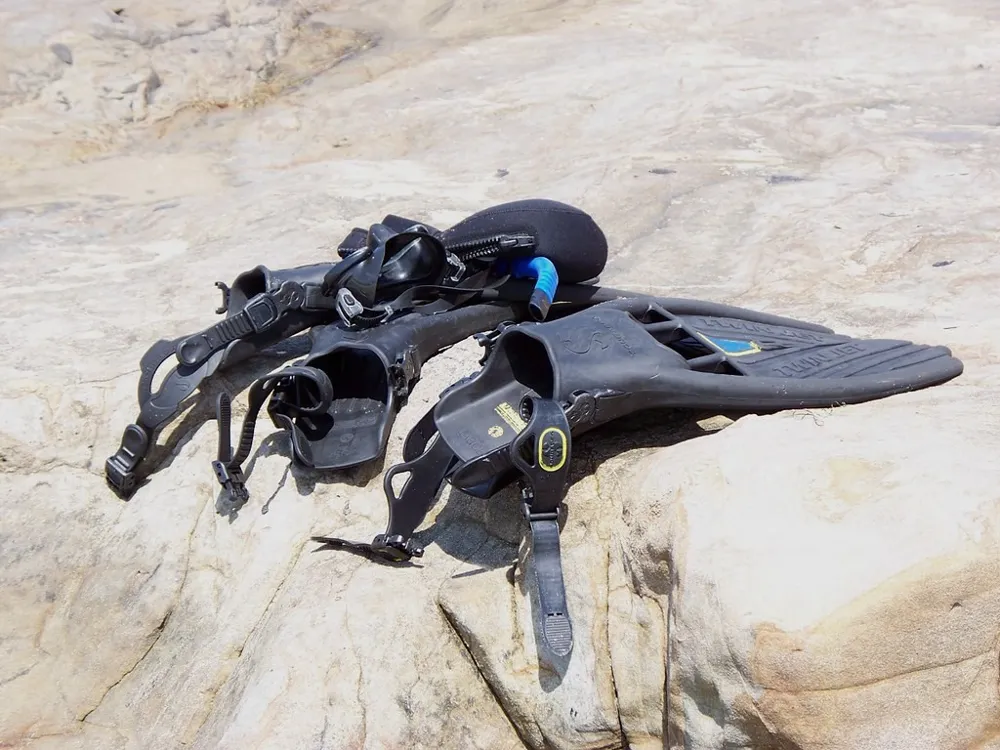
A snorkel gear bag keeps your mask, snorkel and fins together, drains seawater on the walk back from the beach and stops wet, sandy gear from soaking everything else you own. Dive bags do the same job at a larger scale: they carry a BCD, regulator, wetsuit and fins to the boat or through an airport. The right bag depends on how far you carry it, whether you fly with it, and how long your fins are.
This guide covers three main types: mesh bags for snorkeling and local shore or boat days, roller bags for flying with a full scuba kit, and waterproof duffels for wet boat rides and gear that must stay dry. Our picks come from established dive brands, and each spec comes from the maker's listing. If you still need the gear itself, start with snorkel sets or our scuba equipment list.
Stahlsac BVI Mesh Backpack
Best for snorkelers
- About 33 L of mesh
- Drawstring with barrel lock
- Limited lifetime warranty
Scubapro Sport Mesh 'N Roll 100
Best lightweight roller
- 100 L, listed at 5.5 lb
- Mesh sides drain wet gear
- Folds for storage
Cressi Moby 5
Best roller for a full scuba kit
- 115 L main compartment
- Large replaceable wheels
- Stowable backpack straps
Dive and Snorkel Bags Compared
| Bag | Type | Capacity | Listed Size | Listed Weight | Best Use |
|---|---|---|---|---|---|
| Stahlsac BVI Mesh Backpack | Mesh drawstring backpack | About 33 L | 24 x 12 in | About 0.7–0.8 lb | Snorkel gear, beach days |
| Scubapro Sport 65 Mesh | Mesh roll-top backpack | 65 L | 27.6 x 11.8 x 11 in | 1.5 lb | Snorkel or light dive kit |
| Mares Cruise Backpack Mesh Deluxe | Mesh backpack | 114 L | Check listing | Check listing | Boat days, folds into luggage |
| Scubapro Sport Mesh 'N Roll 100 | Wheeled mesh duffel | 100 L | 31 x 13 x 15 in | 5.5 lb | Light travel roller |
| Cressi Moby 5 | Roller with backpack straps | 115 L | 30 x 15.8 x 11 in | About 10.7 lb | Full scuba kit, flying |
| Mares Cruise Backpack Roller | Roller with backpack straps | 140 L | Check listing | Check listing | Bulky or cold-water kits |
| Stahlsac Curacao Clipper | Two-compartment roller | About 96 L | 32 x 16 x 11 in | About 8.8 lb | Separating wet and dry gear |
| Stahlsac Abyss Duffel | Waterproof duffel/backpack | 50, 75 or 100 L | 50 L: 22.25 x 14 x 10 in | About 2.4–3.4 lb by size | Wet boat rides, carry-on size |
Sizes and weights are from maker or retailer listings and can change between versions, so check the current listing before you buy, especially if you're working to an airline weight limit.
The Best Dive and Snorkel Bags
1. Stahlsac BVI Mesh Backpack
The BVI is a compact mesh sack built for snorkel gear and beach days. Stahlsac lists it at about 33 liters and 24 x 12 inches, and it weighs well under a pound empty. It closes with a drawstring and barrel lock, which is quick to open with wet hands, and it has a reinforced bottom and a padded carry strap. Stahlsac backs it with a limited lifetime warranty. Because it's soft and light, it also packs flat inside a suitcase with fins laid in first.
Good to Know
- Light enough to stash in a suitcase
- Several colors
- Fits a mask, snorkel, booties and short fins
Watch Out For
- Too small for scuba gear
- Longer fins may not fit; measure first
- Single strap rather than two backpack straps
2. Scubapro Sport 65 Mesh Bag
A step up in size, the Sport 65 combines mesh with a heavy-duty fabric base. Scubapro lists 65 liters, about 27.6 x 11.8 x 11 inches and 1.5 lb. You can get in through a roll-top closure or a side zipper, and there's a zippered front pocket for small items. Backpack straps, a chest strap and a carry handle make longer walks to the beach easier, and an eyelet in the base lets water drain out.
Good to Know
- Two ways into the main compartment
- Chest strap for longer carries
- Room for a family's snorkel gear or a light dive kit
Watch Out For
- No wheels
- Mesh is not for protecting fragile items
3. Mares Cruise Backpack Mesh Deluxe
The Cruise Backpack Mesh Deluxe is a large 114-liter mesh backpack that Mares says folds into a compact carry bag, so it can ride inside your suitcase and come out at the dive resort. It's made from recycled rPET polyester, with an internal pocket, a wide external pocket, bottom protection, a side zipper plus drawstring closure, and adjustable shoulder straps.
Good to Know
- Capacity suits a full warm-water dive kit
- Folds small for travel
- Backpack carry for boat docks and stairs
Watch Out For
- Heavy when full of wet gear
- Check the listed dimensions against your fins
4. Scubapro Sport Mesh 'N Roll 100
This bag mixes a mesh duffel with wheels. Scubapro lists 100 liters, about 31 x 13 x 15 inches and 5.5 lb, which is light for a wheeled bag. The mesh sides let wet gear drain on the way back from the dive, the wheels are changeable and treated for salt water, and the U-shaped opening uses a YKK Vislon zipper with double sliders. Double duffel straps can be used as a backpack, and the bag folds for storage.
Good to Know
- Light empty weight leaves more of your airline allowance for gear
- Drains and dries better than a closed roller
- Internal and external zippered pockets
Watch Out For
- No telescopic handle; you pull it by a top handle
- Little structure to protect a regulator
5. Cressi Moby 5
The Moby 5 is a classic roller dive bag. Its main compartment is about 115 liters and 30 x 15.8 x 11 inches, and it weighs about 10.7 lb empty, per specs reported by DiveIn. It's made of 300/400-denier nylon and rolls on large, replaceable wheels. There are two front exterior pockets and fin pockets, and stowable backpack straps let you carry it up boat ramps or over sand where wheels don't work.
Good to Know
- Room for a full warm-water scuba kit
- Backpack straps tuck away for check-in
- Fin pockets keep blades separate
Watch Out For
- Empty weight eats into airline limits
- Not waterproof
6. Mares Cruise Backpack Roller
For bulkier kits, the Cruise Backpack Roller is listed at 140 liters, which Mares says is optimized for air travel. It's made from 100% rPET, with large heavy-duty wheels, stainless steel fittings, padded shoulder straps, compression straps and an internal zippered pocket. Mares says it folds down for storage.
Good to Know
- Largest capacity in this guide
- Roll it or wear it as a backpack
- Folds for storage at home
Watch Out For
- Easy to overpack past airline weight limits
- Check the listed length if you use long fins
7. Stahlsac Curacao Clipper
The Curacao Clipper splits your gear into two compartments: Stahlsac says the bottom compartment holds a complete dive setup, and the top one holds clothes, extra gear and accessories. DiveIn lists it at about 96 liters, 32 x 16 x 11 inches and 8.8 lb, with two large wheels. Compression straps hold the load in place, and the frame parts can be serviced if they are damaged.
Good to Know
- Keeps wet gear away from clothes on the way home
- Internal pockets for small items
- Serviceable frame
Watch Out For
- Not fully waterproof
- Smaller than most 115–140 L rollers
8. Stahlsac Abyss Duffel
The Abyss is a waterproof duffel rather than a drainage bag. It's made of double-TPU laminated nylon with RF-welded seams and comes in 50, 75 and 100 liters. Stahlsac says the 50 L size is sized for a plane carry-on or quick day trip. Top straps let you carry it as a duffel or wear it as a backpack, and DiveIn notes removable backpack straps and multiple grab handles.
Good to Know
- Keeps spray and sand out on boat rides
- Three sizes, including carry-on size
- Easy to wipe and rinse clean
Watch Out For
- Wet gear won't drain or dry inside it
- No wheels
Types of Dive and Snorkel Bags
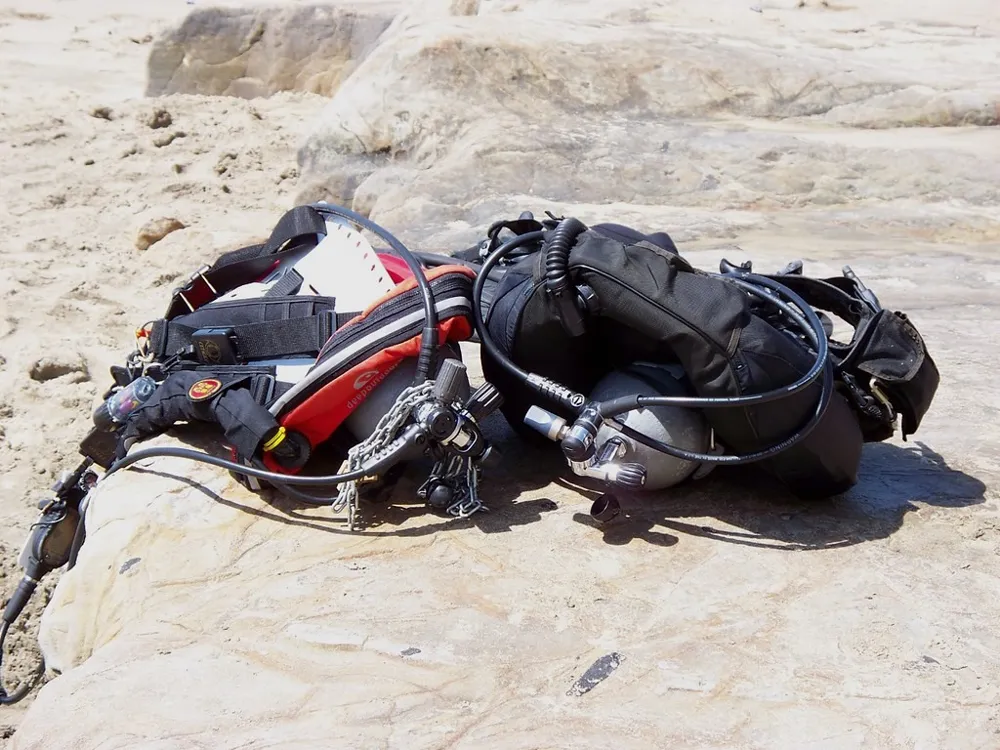
Most bags fall into one of five styles. Many divers end up with two: a mesh bag for the boat or beach, and a roller or duffel for flights.
| Type | Strengths | Weaknesses | Best For |
|---|---|---|---|
| Mesh bag or backpack | Drains, dries, light, packs flat | No protection, sand gets through, no structure | Snorkeling, shore and boat days |
| Roller bag | Wheels, structure, large capacity | Heavy empty, bulky to store | Flying with a full scuba kit |
| Wheeled mesh duffel | Wheels plus drainage, lighter than rollers | Less protection, may lack a telescopic handle | Travel to warm-water dive trips |
| Waterproof or dry duffel | Keeps water, spray and sand out | Traps moisture, so gear must be dry first | Boat rides, dry clothes, electronics |
| Small dry bag or pouch | Protects phone, keys and towel | Holds only small items | Add-on for snorkel days |
A snorkel bag is usually just a smaller mesh bag sized for a mask, snorkel, booties and short fins. For phones and towels on the beach, pair it with one of our dry bag picks. Some snorkel bags add a water-resistant pocket or a flotation chamber, but check the listing before trusting one with electronics.
What Size Dive Bag Do You Need?
Capacity is listed in liters. As a rough guide, based on the ranges dive gear reviewers give and the bags above:
- Snorkel gear for one person: a compact mesh bag such as the 33 L BVI holds a mask, snorkel, booties and short fins.
- Snorkel gear for two, or a light dive kit: a mid-size mesh backpack such as the 65 L Sport 65.
- Compact warm-water scuba kit (thin wetsuit, travel BCD, regulator, short fins): DiveIn suggests about 70–90 L can work.
- Full scuba kit: generally about 90–120 L. Thick cold-water wetsuits and bulky BCDs may need one of the largest bags, such as the 140 L Mares roller.
Check Your Fin Length First
Fins are usually the longest item and the one that decides whether a bag works. Lay your fins flat and measure from the blade tip to the back of the foot pocket or heel strap. Compare that with the bag's listed length, not just its volume. Travel and snorkel fins are short and fit most bags. Full-size scuba fins need a large mesh bag or a roller with fin pockets. Long-blade freediving fins usually won't fit standard dive bags, so freedivers often use a dedicated long fin bag. If you're choosing new fins, our snorkel fins guide covers short, travel-friendly options.
Don't Oversize
A huge bag is tempting, but it's heavier empty, harder to carry and easy to overpack. Pick the smallest bag that fits your longest fins and bulkiest item with a little spare room.
Features to Look For in a Dive Bag
- Drainage: mesh panels, drain eyelets or grommets let seawater out. Bags without them hold water and start to smell.
- Wet and dry separation: a second compartment or water-resistant pocket keeps clothes, towels and paperwork away from wet gear.
- Tough base: a reinforced or coated bottom resists rough boat decks, rocks and concrete.
- Fabric weight: a higher denier number generally means a thicker, more abrasion-resistant fabric.
- Zippers and hardware: large-tooth plastic zippers and corrosion-resistant buckles and wheel axles cope better with salt and sand. Drawstrings are simple and hard to break.
- Carry system: padded backpack straps for long walks, a chest strap for stability, and grab handles on the ends for lifting onto boats.
- Wheels and handle: large wheels roll better over curbs and gravel. Replaceable wheels extend a roller's life.
- Folding: bags that fold flat are easier to store and can travel inside other luggage.
- Warranty: some makers, such as Stahlsac, list limited lifetime warranties. Check the terms on the maker's site.
Flying With Dive and Snorkel Gear
A full dive kit is heavy, so a roller bag can reach an airline's checked-bag weight limit fast. Weigh your packed bag at home with a luggage scale, and check your airline's size and weight limits before your trip, since they differ by airline, route and fare. A few general tips:
- Carry on delicate or valuable items: many divers put the regulator, dive computer, mask and camera in their carry-on and check the fins, BCD and wetsuit.
- Batteries: under FAA rules, spare lithium-ion batteries for dive lights and cameras must go in carry-on bags with their terminals protected. Check the FAA's current rules and your airline's.
- Sharp items and tanks: check TSA's "What Can I Bring?" tool before packing a dive knife or anything with a blade, and ask your airline about empty tanks.
- Know the empty weight: a light mesh roller leaves more of your weight allowance for gear than a heavy framed roller.
- Snorkel gear: a soft mesh snorkel bag can usually be folded into your suitcase and pulled out at the hotel.
Rules change, so treat these as starting points and check the official sources before you fly. Planning dives near the end of a trip? See how long to wait before flying after diving.
How to Pack a Dive Bag
- Fins first: lay them flat along the bottom or in the side fin pockets. They form a stiff base and protect the rest of the load.
- BCD and wetsuit next: fold them on top, and use them as padding.
- Wrap or carry on the regulator: if it goes in a checked bag, wrap it in the wetsuit or a padded regulator bag, never under heavy items.
- Small items in pockets: booties, gloves, spare straps, defog and a save-a-dive kit belong in the outer pockets, where you can find them on the boat.
- Keep the mask in a hard case so the lens and skirt aren't crushed.
- Snorkel bags: put fins in first, lay the bag on its side, then pack the mask, snorkel and booties around them.
For a full checklist of what to bring, see our scuba diving equipment list.
Drying, Cleaning and Storing Your Bag
Salt, sand and dampness are what wear out dive bags, so a few habits go a long way:
- Rinse after every salt or pool day: rinse the gear and the bag in fresh water, paying attention to zippers, wheels and buckles where salt crystals collect.
- Dry everything fully: empty the bag, open every pocket and hang it to dry, out of strong direct sun, which can break down fabric and coatings over time. Never zip a damp bag shut for storage.
- Shake out sand: turn mesh bags inside out to empty grit from the corners.
- Care for zippers: rinse and work them open and closed so salt doesn't jam them. Check the maker's care advice before using any lubricant.
- Inspect before trips: look for worn seams, tears in the mesh, cracked wheels and loose handles, and fix them before they fail at the airport.
- Store dry and loose: fold or hang bags in a cool, dry place. Dry, rinsed gear stored outside the bag lasts longer too.
The same rinse-and-dry routine also protects the gear inside. See our snorkel sets care tips and the wetsuit guide for gear-specific advice.
Frequently Asked Questions
What is the best bag for snorkel gear?
For a mask, snorkel and short fins, a mesh backpack or mesh duffel works best because it drains on the walk back from the water and lets gear air out. Choose a size that fits your fins lying flat and a pocket for small dry items.
What size bag do I need for scuba gear?
A full kit of BCD, regulator, wetsuit, fins, mask and accessories generally needs around 90 to 120 liters. Warm-water divers with a thin wetsuit and travel fins can often manage with less, while cold-water kits and long fins need more.
Is a mesh bag or a dry bag better for snorkeling?
They do different jobs. A mesh bag lets wet gear drain and dry, while a dry bag keeps a phone, towel and clothes out of the water. Many snorkelers carry both, or choose a mesh bag with a water-resistant pocket.
Can I take my dive bag as a carry-on?
Small mesh bags and 50-liter duffels can often fit carry-on limits, but a full roller dive bag almost always has to be checked. Check your airline's size and weight limits before you pack.
Will long freediving fins fit in a dive bag?
Often not in a standard mesh or roller bag. Measure your fins from tip to heel and compare that with the bag's listed length, or use a dedicated long-blade fin bag.
How do I stop my dive bag from smelling?
Rinse your gear and the bag in fresh water after each salt or chlorine session, then empty the bag and let everything dry fully, out of direct sun, before you zip it up or store it.