Aggressive Inline Skates Compared: Boots, Frames and Fit (2026)
Aggressive skates are built to grind rails and land drops. Here's how boots, UFS frames, soul plates, wheels and liners differ, plus five models from Rollerblade, USD, Razors, Them and Remz.
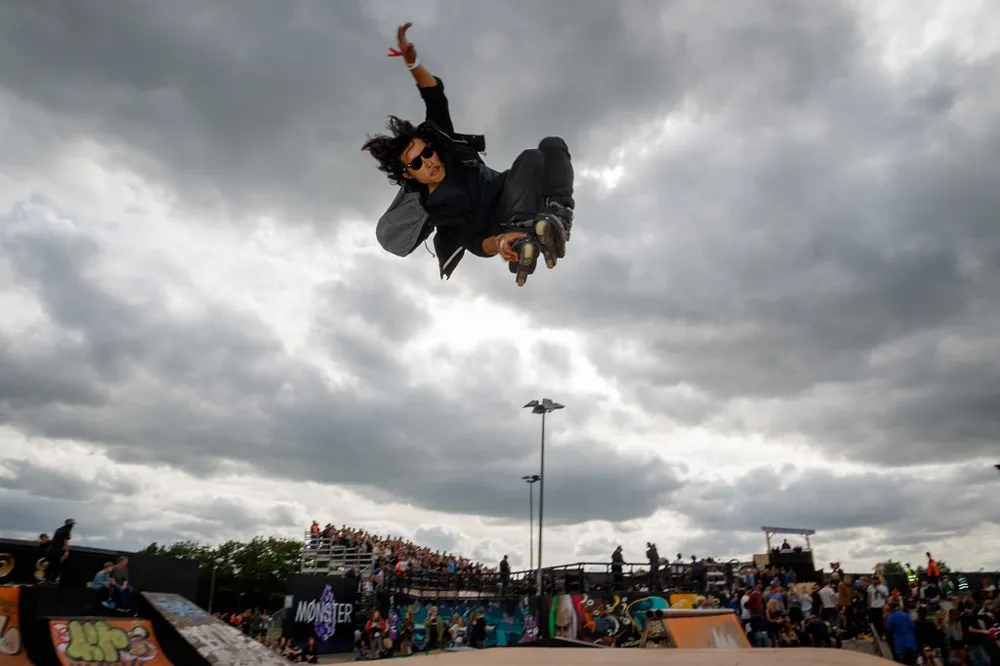
What Makes a Skate "Aggressive"?
Aggressive inline skates are built for skateparks and street spots: grinding ledges and rails, riding ramps and bowls, and landing jumps and drops. Compared with recreational skates they have a stiff, reinforced boot, a short frame with a gap in the middle for grinding, small, hard wheels, large plastic soul plates on the outside of the boot and no heel brake.
That build makes them tough and easy to slide, but slower and harsher on long rides. If you want skates for fitness or cruising, start with our rollerblades for men, women and kids guide instead. If you want to grind, here is how the parts work and how five current models differ.
Aggressive Skates Compared
| Model | Boot | Frame | Stock Setup | Wheels | Best For |
|---|---|---|---|---|---|
| Rollerblade Blank SK | Molded Blank shell, laces, buckle and 45° strap | Blank UFS, glass-reinforced nylon | Flat, with anti-rocker parts included | 60mm, 92A | Trying flat and anti-rocker |
| USD Aeon 60 | Hardboot, unibody GFRP shell | Molded into the boot (max 61mm wheels) | Flat (4 x 60mm) | 60mm, 88A | A light one-piece boot |
| Razors Cult | Hard plastic, laces and buckle | UFS, reinforced plastic | Anti-rocker | 57mm, 92A | Beginner and intermediate skaters |
| Them 909 | Hard plastic, laces and buckle | UFS, fiberglass | Flat | 58mm, 90A | Flat-setup street skating |
| Remz HR 2.5 | Hybrid hard/soft boot, laces | Ground Control FLT 3 with one-piece Soulframe | Anti-rocker | 64mm outer, 42mm anti-rockers | A softer, more flexible feel |
Specs are from each maker's page or a retailer listing as of November 2026. Models are updated often and pro colorways can differ, so check the current listing and size chart before buying.
Five Aggressive Skates Worth a Look
These skates come from five of the best-known aggressive brands and cover the main design choices: a UFS boot with both setups in the box, a one-piece unibody, a beginner-friendly anti-rocker skate, a flat-setup street skate and a hybrid boot.
1. Rollerblade Blank SK
Rollerblade's Blank SK pro model is the one skate here that ships ready for both setups. Rollerblade lists eight 60mm, 92A Hydrogen Blank wheels for a flat setup, plus four 42mm plastic anti-rocker grind wheels packed inside the boots so you can switch. The Blank UFS frame is glass-reinforced nylon with a lower H-block, and the single-piece, open-cavity soul plate mounts directly to the frame. The molded Blank shell closes with laces, a cuff buckle and a 45° strap over a lace-up liner with a stretch toe and silicone heel strips. Bearings are listed as Twincam ILQ-9 Classic Plus, and Rollerblade sizes it in Mondopoint (24.0 to 30.5, with some sizes skipped).
Good to Know
- Flat and anti-rocker setups in one box
- UFS, so frames can be swapped later
- Includes a Footboard Sizer for checking fit
Watch Out For
- Size availability varies by region and colorway
- No brake, like every aggressive skate
2. USD Aeon 60
USD's Aeon is a unibody skate: the boot, soul plate and frame are molded as one glass-fiber-reinforced (GFRP) piece, which removes the separate UFS frame. Powerslide, which makes USD skates, lists the Aeon 60 Black with a max wheel size of 61mm, four 60mm, 88A USD Team wheels per skate, Wicked ABEC 9 bearings, a micro-adjustable Kizer Supreme buckle, front laces and a USD Basic dual-fit liner. The shell is listed as not heat moldable, the fit as medium to wide, and the weight as 1,560g at size 41/42. It is sold in dual shell sizes (EU 36–38, 39–40, 41–42, 43–44 and 45–46). Powerslide also lists it as tested to EN 13843 with a max tested user weight of 100kg.
Good to Know
- One-piece boot, soul plate and frame
- Flat 60mm setup out of the box
- Many pro versions on the same shell
Watch Out For
- The frame can't be swapped for a UFS frame
- Dual sizes: check the chart if you're between them
3. Razors Cult
The Razors Cult is a hard plastic boot with laces and a buckle, a removable mesh and memory foam liner and a cuff with an integrated carrying loop. SkatePro's listing gives a UFS-mounted reinforced plastic frame (described as a GC FLT3) in an anti-rocker setup, 57mm, 92A wheels and ABEC-5 bearings. The soul plate and backslide plate are replaceable, so you can swap them when they wear through. The listing tags its skill level as beginner to intermediate.
Good to Know
- Anti-rocker setup ready for grinding
- Replaceable soul and backslide plates
- UFS for later frame upgrades
Watch Out For
- Plastic frame rather than aluminum
- Sizes and colors sell out; check current stock
4. Them 909
The Them 909 is a hard plastic shell with laces and a buckle, a removable liner that can be washed or replaced, and a flexible cuff. SkatePro lists a flat setup on a UFS fiberglass frame with four 58mm, 90A wide-profile wheels per skate and ABEC-5 bearings. Shells come in paired sizes (US 4–5, 6–7, 8–9 and 10–11), with a 250mm wheelbase on the smaller two and 270mm on the larger two. The listing tags it for advanced skaters, and Them also sells the 909 as a boot only for skaters who want to choose their own frame.
Good to Know
- Flat setup for speed and stable landings
- UFS boot, also sold boot-only
- Washable, replaceable liner
Watch Out For
- Paired shell sizes, so fit is set by the liner
- Flat setups can catch on ledges (wheel bite)
5. Remz HR 2.5
The skates.com listing describes the Remz HR 2.5 with "Hybrid Hard/Soft Boot Technology", a lace closure and an ergonomic Remz liner with a neoprene toe box. Instead of a separate soul plate and frame, it uses a one-piece Soulframe with a Ground Control FLT 3 frame and a shock absorber. The same listing gives 64mm outer wheels with 42mm anti-rocker wheels and ABEC 7 bearings. The hybrid boot is the closest thing here to a softboot feel.
Good to Know
- Hybrid boot with more flex than a full hardboot
- Anti-rocker setup for grinding
- Integrated soul plate and frame
Watch Out For
- Limited sizes in stock when we checked (November 2026)
- Listing doesn't state wheel hardness
Other brands to know include Roces, which makes the M12 line of UFS aggressive skates, and frame makers such as Ground Control (the FLT 3 frame appears on two skates above) and Kizer, whose frames come on some USD models.
Roces M12 UFS on AmazonHardboot vs Softboot
The boot is the biggest choice. Aggressive skates come in three broad styles:
| Boot Type | How It's Built | Strengths | Trade-Offs |
|---|---|---|---|
| Hardboot | Molded plastic or composite shell around a removable liner | Takes hard impacts, protects the foot, durable soul plates | Less flex for technical tricks |
| Softboot | Flexible upper on a rigid base and cuff | More flex and control for technical tricks | Less protection on big drops and vert |
| Hybrid or skeletal | Hard and soft materials combined around the liner | Mixes flex with support; some skeletal designs work with regular shoes | Fewer models to choose from |
Skates.com's guide sums it up: hard shells "can take a hard impact" and suit park and vert, while soft shells allow more foot flex for tricks but aren't meant for big, hard-landing jumps. Four of the five skates above are hardboots. The Remz HR 2.5 is a hybrid.
Frames: UFS, Flat, Anti-Rocker and Freestyle
An aggressive frame is short and strong, with a central grinding area (the H-block) where rails and ledges lock in. How it attaches to the boot and how its wheels are arranged decides how the skate rolls.
UFS Mounting
The Universal Frame System is a shared standard that lets you bolt any UFS frame onto any UFS boot, so a broken frame can be replaced without buying new skates. SkatePro lists the specs below.
| UFS Spec | Measurement |
|---|---|
| Distance between mounting holes | 167mm |
| Mounting hole diameter | 20mm |
| Mounting hole depth | 3mm |
| Frame width | 41mm |
| Bolts per frame | 2 |
Riveted and unibody designs, like the USD Aeon, skip UFS. Inline Warehouse notes they can be lighter and more durable, but you can't swap in a different brand's frame.
Flat Setup
Four wheels of the same size. It rolls faster, lands more stably and feels closer to a regular skate, which is why SkatePro and Big Wheel Blading both point beginners to it. The catch is wheel bite: the middle wheels can catch on a ledge or rail during a grind.
Anti-Rocker Setup
Normal outer wheels with two much smaller middle wheels, usually solid hard plastic, that stay off the ground and out of the way when you grind. Inline Warehouse gives anti-rocker sizes from the mid-40s in millimeters, and Rollerblade's Blank SK kit uses 42mm. Grinds lock in more easily, but the skate rolls on two wheels in some situations and feels less fast and stable.
Freestyle Frames
A freestyle frame goes further and removes the two middle wheels entirely, replacing them with a larger grinding area. It frees up the most room for grinds, at the cost of rolling on fewer wheels.
Not sure which to start with? Flat is easier to learn on. Anti-rocker makes grinding easier. Some skaters split the difference by running harder wheels in the middle of a flat setup (more on that below).
Soul Plates, Grind Blocks and Grind Surfaces
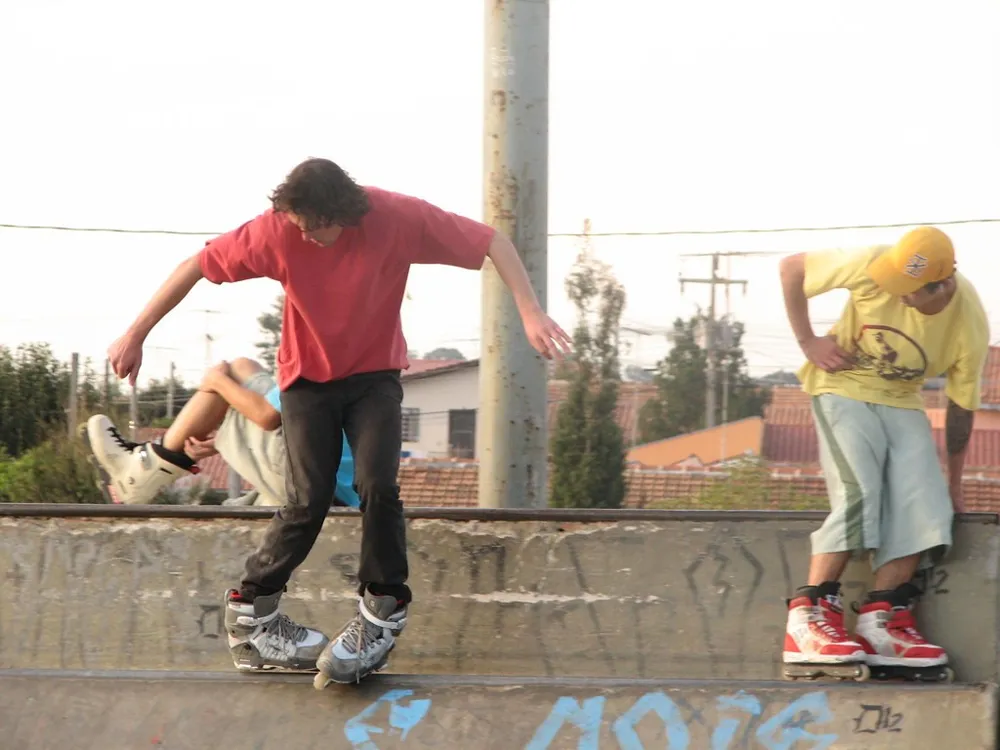
Aggressive skates grind on two places:
- The H-block (grind block): the central part of the frame between the wheels, used for grinds where the rail or ledge sits across the frame.
- The soul plate: the wide, flat plastic plate on the outer side of the sole, used for soul grinds, where you slide along the side of the boot. SkatePro describes soul plates as durable plastic mounted between frame and boot.
Some skates also have a separate backslide plate on the inner side of the sole, and on the Razors Cult both plates are replaceable. Unibody and "Soulframe" designs, like the USD Aeon and Remz HR 2.5, mold the soul plate and frame together. Soul plates and grind blocks wear down with use. When a plate is thin, cracked or loose, replace it, since a worn plate can catch instead of sliding. A thin coat of skate wax on ledges helps the plastic slide, but check the rules at your local park before waxing their obstacles.
If you're learning the names of grinds, our guide to skateboard grind types covers the skateboard versions, and our upcoming rollerblading tricks guide covers the first inline grinds.
Wheels: Size and Hardness
Aggressive wheels are small and hard. SkatePro gives a typical range of 56–60mm (with outliers from 54mm to 80mm) and hardness of 86A to 95A. Inline Warehouse recommends about 54–60mm for outer or flat-setup wheels and calls a rounded-flat profile ideal for most skaters.
| Choice | Typical Range | What It Changes |
|---|---|---|
| Smaller wheels | About 56–58mm | More stable and agile, slower |
| Standard wheels | 58–60mm | The common all-round size |
| Larger wheels | 60mm and up | Faster, less stable; check frame clearance |
| Softer hardness | About 86A–88A | More grip and a smoother ride on rough concrete |
| Harder hardness | About 90A–95A | Faster slides, less grip, less wheel bite, longer wear |
| Anti-rocker wheels | About 42–45mm, hard plastic | Stay off the ground; make grinding easier |
Two rules apply to every change. First, check your frame's maximum wheel size (the USD Aeon 60, for example, is listed at 61mm). Second, to reduce wheel bite on a flat setup, Big Wheel Blading suggests harder 92–95A wheels in the middle with softer 88–90A wheels on the outside. Most inline wheels, aggressive ones included, take standard 608 bearings (Powerslide lists 608 bearings for the Aeon 60's wheels). For non-aggressive inline wheels, see our rollerblade wheels guide.
Liners and Comfort
Almost every aggressive skate has a removable liner, so you can wash it, replace it when the padding packs down or upgrade to an aftermarket liner. Liners differ in a few ways:
- Heat-moldable or not: some liners, such as the MyFit liners on certain USD pro models, are listed as heat moldable. Others, like the stock liner on the USD Aeon 60 Black, aren't. Check the listing.
- Lace-up liners, like the one in the Rollerblade Blank SK, give a tighter heel hold under the shell.
- Toe and heel details: neoprene or stretch toes add comfort, and silicone heel strips help stop heel lift.
- Shock absorption: many skates add a heel shock absorber or a padded footbed for landing drops.
Over time a liner molds to your foot. If your skates feel tight in the first few sessions, SkatePro suggests thick socks, short sessions and properly tightened laces and buckles while they break in.
Sizing and Fit
Aggressive skates should feel snug: your heel locked down, your toes near the front without curling, and no side-to-side slop. A loose boot is harder to control and makes blisters more likely. A crushing one gets painful fast.
- Measure your feet. Stand with your heel against a wall on a sheet of paper, wearing your skating socks, mark your longest toe and measure in millimeters. Do both feet and use the longer one.
- Use the maker's chart. Sizes don't line up across brands. Rollerblade sizes in Mondopoint, USD and Them use paired shell sizes, and many brands list US, EU and UK sizes side by side.
- Between sizes? SkatePro suggests going up. With paired shells, the liner sets the fit inside the shell, so a thicker liner or insole can fill a little space.
- Read the fit notes. Some boots are listed as narrow and others as medium to wide (the Aeon 60 Black is listed as medium to wide).
For more on measuring and converting sizes, see our roller skate size chart. Heavier skaters can check our rollerblade weight limit guide. Some European-tested aggressive skates, like the Aeon 60, list a max tested user weight under EN 13843.
Are Aggressive Skates Good for Beginners?
Yes, if you want to skate parks and street, but set them up for learning:
- Start flat. A flat setup rolls and lands more predictably. Switch to anti-rocker, or harder middle wheels, once you're grinding regularly.
- Learn to stop. There's no heel brake, so practice plow stops, T-stops and spin stops on flat ground. Our guide to stopping on rollerblades covers the basics.
- Get the fundamentals first. The stance, stride and falling technique in how to rollerblade all carry over.
- Know the trade-off. Small, hard wheels feel slow and rough on long rides. If you mostly cruise, see rollerblades vs roller skates and recreational skate options instead.
Protective Gear for Aggressive Skating
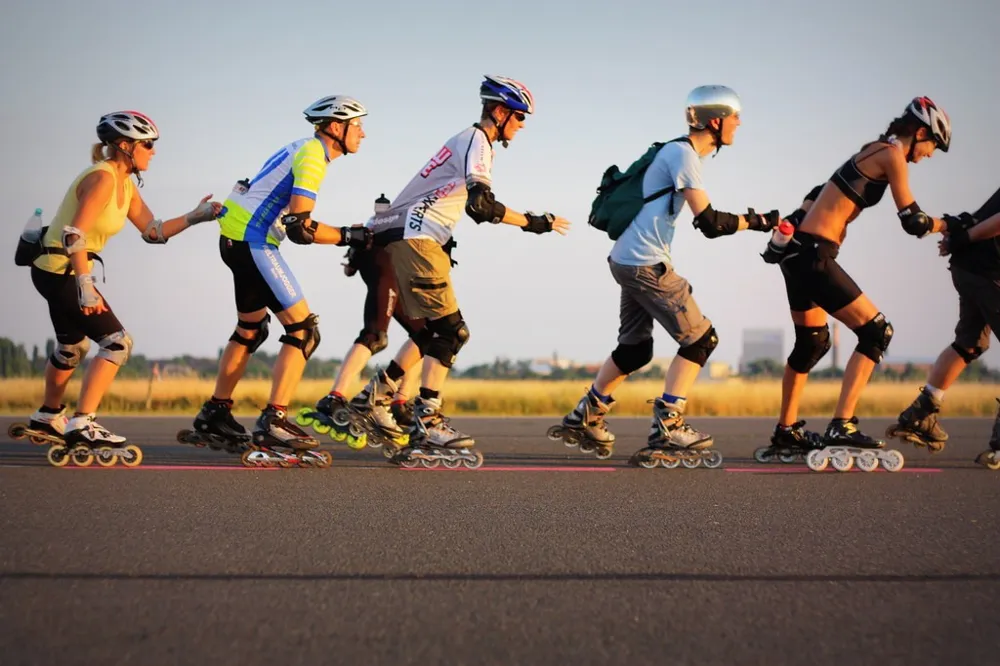
Aggressive skating means falls onto concrete, coping and rails, so a full kit matters more than on a fitness skate: a helmet, wrist guards, knee pads and elbow pads, plus optional padded shorts and shin guards for rail work. Look for a helmet certified to ASTM F1492, the US standard for skateboarding and trick roller skating, and hard-cap knee pads you can slide out on. Many skateparks require helmets, so check the posted rules.
Our guides go deeper: skate helmets, knee pads, wrist guards and pad sets. The same gear works for skateboarding and inline skating. Our roller skate accessories guide covers tools and bags.
187 Killer Pads Six Pack
Knee pads, elbow pads and wrist guards in one bundle, with hard plastic caps for sliding out of falls on ramps. Sizes run from JR to XLT.
Check Price on AmazonPro-Tec Street 3-Pack
A lower-profile knee, elbow and wrist set for street and park skating.
Check Price on AmazonTriple Eight Gotham MIPS Helmet
A skate-style helmet with MIPS, designed to reduce rotational forces in angled impacts.
Check Price on AmazonCare and Maintenance
- Check the bolts. Frame-mounting bolts and axles loosen with impacts. Check them before each session with the skate tool or Allen key that came with your skates.
- Rotate wheels. Swap positions and flip wheels when they wear unevenly. Hard aggressive wheels last a long time, but they still develop flat spots.
- Keep bearings dry. Wipe skates after wet or dusty sessions, and clean bearings when they get gritty or noisy.
- Replace worn plastic. Soul plates, backslide plates, anti-rocker wheels and grind blocks are wear parts. Many UFS frames and plates are sold separately.
- Dry the liners. Pull the liners out to air-dry after sweaty sessions, and wash them if the maker says they're washable.
Where to Skate Next
Most skateparks welcome inline skaters, but some are skateboard-only, so check the posted rules. Find spots in our guides to where to skate and the best skateparks in the US. For more inline guides, see benefits of rollerblading and roller hockey skates.
Frequently Asked Questions
Are aggressive inline skates good for beginners?
They can be. A flat setup with four same-size wheels rolls and lands more like a regular skate, so many guides suggest it for skaters new to inlines. Aggressive skates have no heel brake and small wheels, so learn to stop and fall first and expect them to feel slow on long rides.
What is the difference between flat and anti-rocker?
A flat setup uses four wheels of the same size. An anti-rocker setup uses normal outer wheels and two much smaller, usually hard plastic, wheels in the middle that stay off the ground and out of the way when you grind.
What does UFS mean on aggressive skates?
UFS stands for Universal Frame System, a shared mounting standard that lets you bolt different brands' frames onto a UFS boot. SkatePro lists the spec as two bolts 167mm apart with a 41mm frame width.
What size wheels do aggressive skates use?
Most aggressive wheels are about 56mm to 60mm, with 58mm and 60mm the common sizes. Anti-rocker middle wheels are smaller, often around 42mm to 45mm. Check your frame's maximum wheel size before changing.
How should aggressive skates fit?
Snug, with your heel locked down and your toes close to the front without curling. Measure your longest foot in millimeters and use the maker's own size chart rather than your shoe size.
Can you skate aggressive skates on the street for distance?
You can roll around town on them, but small, hard wheels are slow and transmit every crack in the pavement. For commuting or long rides, a recreational or urban skate with bigger wheels is more comfortable.