Best Roller Hockey Skates for Rinks and Streets (2026)
Inline hockey skates for beginners, league players and growing kids, with a plain guide to chassis, wheels, bearings and fit.
What Makes a Roller Hockey Skate Different
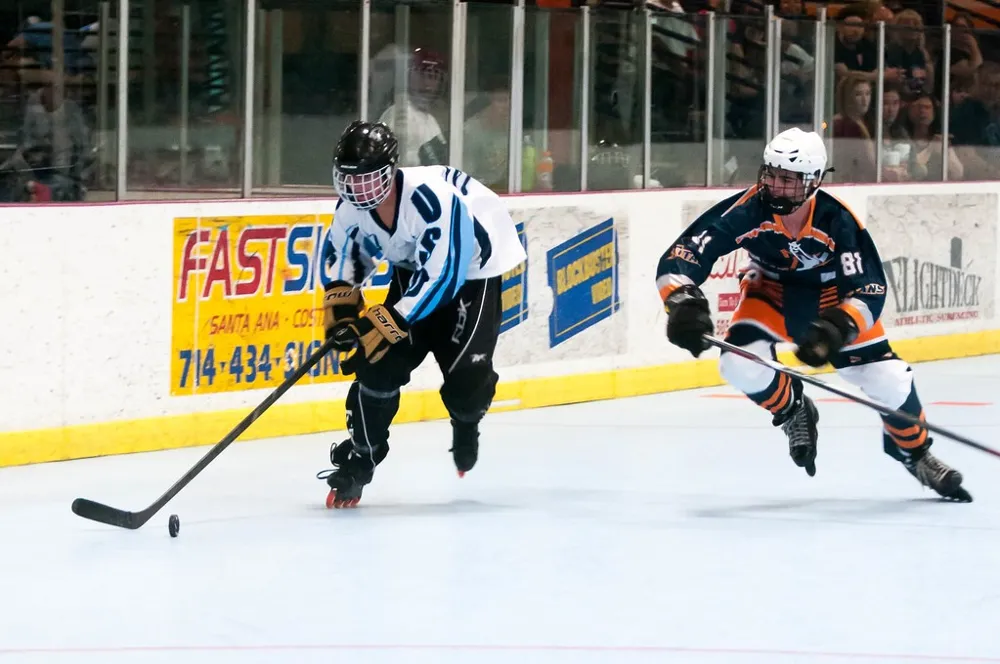
Roller hockey skates look like ice hockey skates with wheels: a low, stiff hockey boot with a felt tongue, mounted on a chassis with four wheels and no heel brake. That build lets you cross over, turn hard and stop quickly, which a recreational inline skate with a soft cuff and a brake can't do as well.
In North America, "roller hockey" usually means inline hockey, played with a puck on sport court, wood, sealed concrete or asphalt. Each team has four skaters and a goalie on the floor, and body checking is not allowed. There is also quad roller hockey (often called rink hockey), played on quad skates with a hard cork ball and bandy-style sticks. It's most popular in Spain, Portugal, Argentina and Italy. This guide covers inline hockey skates, which is what nearly every US rink and league uses.
Our picks below go from entry-level skates for street games to stiffer boots for league play, plus two adjustable skates for kids.
Bauer Vapor Fly30
Best for most recreational players
- Heat-moldable Digi Comp boot
- One-piece FLEXLITE chassis
- 82A Hi-Lo street wheels
Bauer Vapor Fly40
Best for frequent league players
- 3D-lasted CURV composite boot
- One-piece CNC aluminum chassis
- Labeda Gripper wheels, ABEC 7
Alkali Cele Adjustable
Best for growing kids
- Boot adjusts across four sizes
- Aluminum Hi-Lo chassis
- 82A outdoor wheels
Roller Hockey Skates Compared
| Model | Level | Boot | Chassis | Wheels | Bearings | Sizes Listed |
|---|---|---|---|---|---|---|
| Bauer Vapor Fly40 | Competitive | 3D-lasted CURV composite, heat moldable | One-piece CNC aluminum | Labeda Gripper | ABEC 7 | Senior 5.0–12.0 |
| Bauer Vapor Fly30 | Recreational to mid-level | Digi Comp quarter, heat moldable | One-piece FLEXLITE | Bauer street, 82A, Hi-Lo | ABEC 5 | Senior 5.0–12.0 |
| Bauer XR | Entry level | Injected comp weave, thermoformable | One-piece FLEXLITE | Bauer street, Hi-Lo | ABEC 5 | Senior 6.0–12.0 |
| CCM Super Tacks 9350R | Recreational | 3D injected plastic, heat moldable | Two-piece aluminum FastFrame | CCM Outdoor, 82A, 80mm (sizes 6–12) | ABEC 5, not serviceable | 1.0–12.0, regular (D) width |
| Alkali Cele Adjustable | Recreational, growing feet | Injected composite, adjusts four sizes | Aluminum Hi-Lo | Alkali Loki, 82A | ABEC 9, not serviceable | Junior 2–5, Senior 6–8 |
| Tour Code GX Adjustable | Recreational, kids | Nylon mesh, adjustable toe cap (four sizes) | Two-piece Tri-Coil | Kemistry Nitron, 72mm, 76A | ABEC 7, not serviceable | Youth and junior versions |
Specs are from the makers' and specialist retailers' listings. Models are updated often, so check the current version, width options and size chart before you buy.
The Best Roller Hockey Skates
1. Bauer Vapor Fly40
The Fly40 is Bauer's step toward a competitive skate. It has a 3D-lasted CURV composite quarter with an asymmetrical toe cap, a 40 oz pro-stock felt tongue and a sublimated liner, and the boot is heat moldable. Underneath is a one-piece CNC aluminum chassis with Labeda Gripper wheels and ABEC 7 bearings. Retailers list senior skate sizes 5.0 to 12.0 and describe it as a skate for players who skate hard and often.
Good to Know
- Stiff composite boot for support in tight turns
- One-piece aluminum chassis
- Heat moldable for a closer fit
Watch Out For
- A stiff boot is harder to break in for beginners
- Gripper indoor wheels wear faster on asphalt
2. Bauer Vapor Fly30
The Fly30 suits players who skate once or twice a week in a rec league or pickup games. It uses a Digi Comp quarter, a 40 oz pro-stock felt tongue and a sublimated liner, and the boot is heat moldable. The one-piece FLEXLITE chassis carries Bauer street wheels rated 82A in a Hi-Lo layout, with ABEC 5 bearings. Retailers list senior skate sizes 5.0 to 12.0 and note that skates usually run about one size below your shoe size.
Good to Know
- 82A wheels cope with outdoor surfaces
- Hi-Lo setup for quick starts
- Heat-moldable boot
Watch Out For
- Softer boot than the Fly40
- Indoor players may want softer wheels
3. Bauer XR
The XR is Bauer's entry point into roller hockey skates. It has an injected comp weave quarter that is thermoformable, a microfiber liner and a two-piece felt tongue. The one-piece FLEXLITE chassis is listed as about 50% lighter than a steel chassis and runs Bauer street wheels in a Hi-Lo setup with ABEC 5 bearings. Senior skate sizes are listed from 6.0 to 12.0.
Good to Know
- Simple starter skate for new players
- Hi-Lo layout like Bauer's higher models
- Thermoformable upper
Watch Out For
- Wheel size and hardness are not always listed
- Less support than performance boots for heavier players
4. CCM Super Tacks 9350R
The 9350R is a recreational skate built for outdoor play. It has a 3D injected, heat-moldable boot with a 7mm reinforced tongue and a brushed microfiber liner. The two-piece aluminum FastFrame chassis uses CCM Outdoor wheels rated 82A, with 80mm wheels on sizes 6.0 to 12.0, 76mm on sizes 4.0 to 5.0 and 72mm on sizes 1.0 to 3.0. Bearings are ABEC 5 and not serviceable, and the skate is listed in regular (D) width only.
Good to Know
- Hard 82A wheels for concrete and asphalt
- Same-size wheels, simple to replace
- Wide size range from junior to senior
Watch Out For
- Regular width only
- Two-piece chassis is less durable than one-piece
5. Alkali Cele Adjustable
The Cele Adjustable lets the boot grow with a player. A lever at the back sets the length to one of four sizes, across junior sizes 2.0 to 5.0 or senior sizes 6.0 to 8.0. The boot is injected composite weave and heat moldable, with a one-piece felt tongue. It sits on an aluminum Hi-Lo chassis with Alkali Loki outdoor wheels rated 82A (68/72mm on junior sizes and 72/76mm on senior sizes) and non-serviceable ABEC 9 bearings.
Good to Know
- One pair covers four sizes
- Aluminum Hi-Lo chassis, unusual at this level
- Outdoor wheels for driveway and street hockey
Watch Out For
- Recreational boot, not for heavy league use
- Bearings can't be cleaned, only replaced
6. Tour Code GX Adjustable
The Code GX is a youth skate with a tool-less adjustable toe cap that covers four sizes. It has a nylon mesh boot with a two-piece felt tongue and a microfiber liner. The two-piece Tri-Coil chassis runs four 72mm Kemistry Nitron wheels rated 76A, listed for sport court and smooth concrete, and the bearings are non-serviceable ABEC 7. It's sold in youth and junior ranges, and the retailer's chart says it fits about one size below shoe size.
Good to Know
- Adjusts without tools
- Softer 76A wheels grip on indoor floors
- Light boot for young skaters
Watch Out For
- Not heat moldable
- Softer wheels wear faster on rough asphalt
Recreational, Performance and Elite Skates
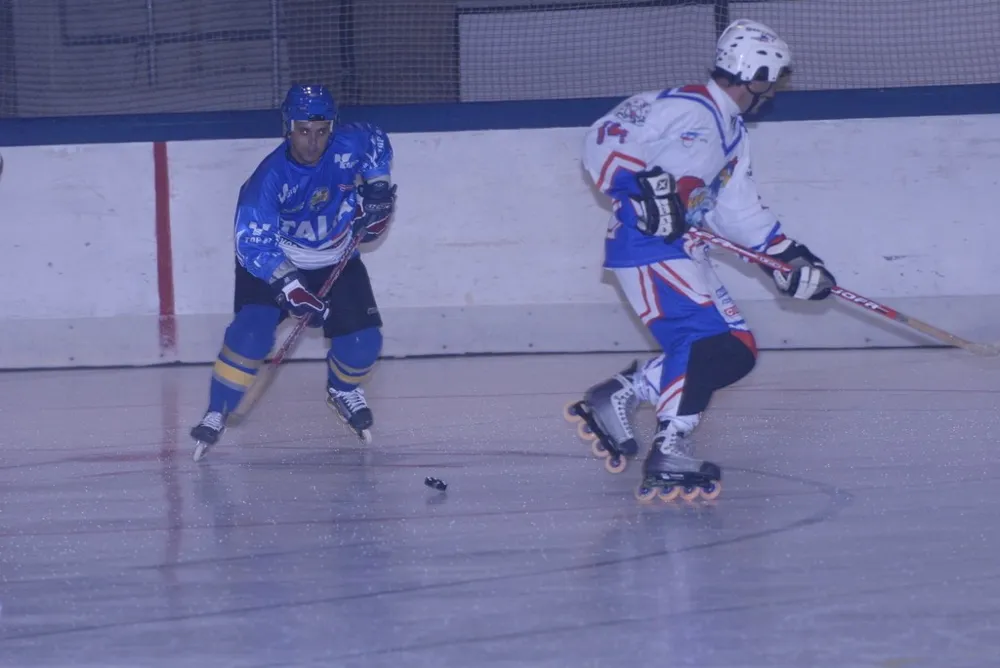
Hockey retailers sort roller skates into three broad levels. The level matters more than the brand, because it decides how stiff the boot is and how long the chassis lasts.
| Level | Who It Suits | Boot | Chassis | Wheels |
|---|---|---|---|---|
| Recreational | New and casual players, most kids | Softer, easier to learn the stride | Often two-piece | Usually outdoor wheels |
| Performance | Players on the rink one or two times a week | Stiffer, thicker foam, reinforced tongue | Usually one-piece | Often multi-surface |
| Elite | Players skating three or more times a week | Composite, light, heat moldable | Light one-piece frames | Grippy indoor wheels |
Heavier adults can break down recreational boots quickly, so Ice Warehouse suggests they look at performance skates even as beginners. If you weigh more than average, check our note on inline skate weight limits too.
Parts of a Roller Hockey Skate
- Boot (quarter package): the shell around your foot. Injected plastic and nylon boots are softer. Composite boots such as Bauer's CURV are stiffer, lighter and usually heat moldable, so a shop can warm them and mold them to your feet.
- Liner and footbed: the inner lining that wicks sweat and cushions the foot. Microfiber is common.
- Tongue: felt tongues, often listed by weight (30 oz, 40 oz), protect the front of the ankle from laces and pucks.
- Tendon guard: the extension at the back of the boot that protects the Achilles tendon.
- Chassis (frame): holds the wheels. One-piece frames are generally more durable than two-piece frames. Aluminum is the common material, and steel shows up on budget skates.
- Wheels and bearings: covered in detail below.
Unlike recreational rollerblades, hockey skates have no heel brake. Before your first game, learn the T-stop and power slide from our guide on how to stop on rollerblades.
Wheels: Size, Hi-Lo and Hardness
Hockey wheels usually run from 72mm to 80mm on adult skates, and smaller on youth skates. Larger wheels roll faster and smoother over rough ground. Smaller wheels speed up quicker and turn more sharply. The size your frame takes is usually printed on the chassis.
Hi-Lo chassis use two smaller wheels at the front and two larger wheels at the back. The Alkali Cele Adjustable, for example, runs 72mm front and 76mm rear wheels in its senior sizes. That tips you slightly forward, like an ice skate, and combines quick acceleration with top speed. A Hi-Lo frame needs the right sizes in the right slots, so note your setup before you buy replacement wheels.
Hardness is measured on the A scale. Hockey wheels range from about 72A (very soft) to 85A (very hard).
| Surface | Typical Hardness | Why |
|---|---|---|
| Indoor sport court (plastic tiles) | About 74A–78A | Soft wheels grip the slick surface |
| Wood floors | About 78A–80A | A little harder to roll well on wood |
| Mixed indoor and outdoor | About 78A | Multi-surface compromise |
| Asphalt and rough concrete | About 82A–85A | Hard wheels resist chunking and wear |
Weight matters too. Ice Warehouse's indoor guide suggests about 72A–74A for players under 150 lb, 75A–76A for 150 to 175 lb, and 76A–80A above 175 lb, with 82A–84A outdoors for everyone. Some indoor wheels, such as Alkali's Eris, use a dual pour of two urethane layers. For more on urethane and hubs, see our rollerblade wheels guide.
Bearings
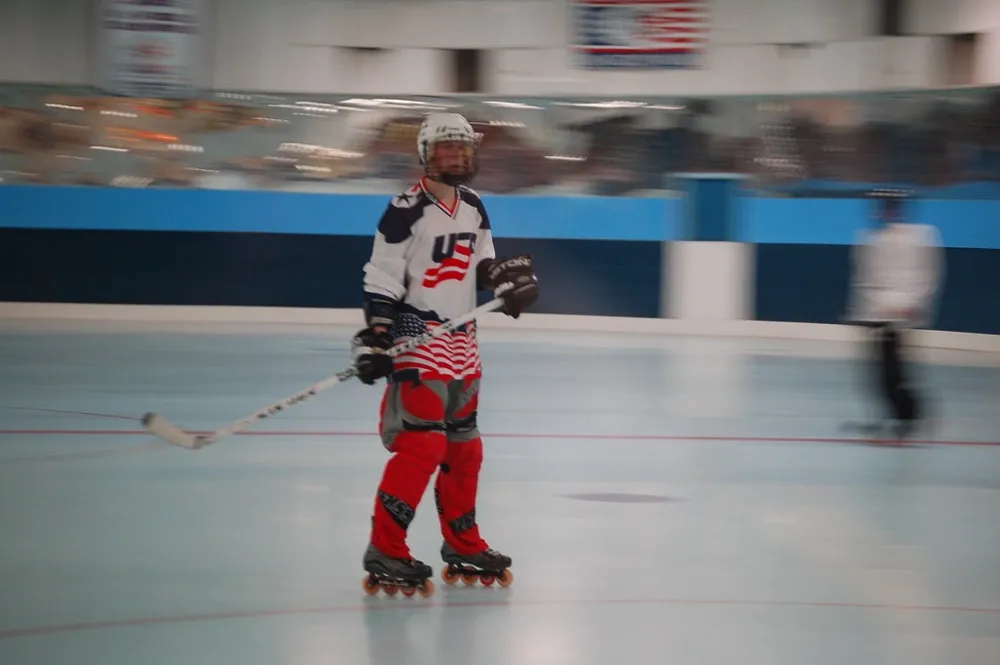
Inline hockey wheels use standard 608 bearings, two per wheel. Ratings such as ABEC 5, 7 and 9 describe manufacturing tolerances, and "Swiss" bearings are a premium style found on top skates. For most recreational players, clean and dry bearings matter more than the number on the box.
Several youth and budget skates use non-serviceable bearings, which can't be opened and cleaned. When they get gritty or slow, replace them. Serviceable bearings can be cleaned and re-lubricated, and our roller skate maintenance guide covers how.
Sizing and Fit
Hockey skates fit closer than street shoes. Hockey retailers commonly advise:
- Senior skates: start about 1 to 1.5 sizes below your shoe size.
- Youth and junior skates: start about one size below shoe size.
- The fit check: with the skate laced, your toes should lightly brush the toe cap when you stand, and your heel shouldn't lift when you bend your knees. If your heel slides, try a half size down.
Width is labeled with letters on many hockey skates: D or R for regular and EE or W for wide. Bauer also uses Fit 1, 2 and 3 (narrow to wide) on many of its Vapor and Supreme ice skates. Not every model comes in every width, so wide-footed players should check before buying.
Sizes run in bands: youth (marked Y, such as Y10–Y13), junior (1.0 to 5.5 on Bauer's chart), intermediate on some brands, and senior. If you already own ice hockey skates that fit well, the same brand's roller size is a good starting point, but always check the chart. Our roller skate size chart explains how to measure your foot.
Heat molding, where a shop warms the boot and you wear it while it cools, can ease pressure points on composite and thermoformable boots. Follow the maker's instructions, or have a hockey shop do it.
Youth and Junior Roller Hockey Skates
Kids grow out of skates fast, which is why adjustable hockey skates such as the Alkali Cele Adjustable and Tour Code GX are popular. They cover four sizes each. Check three things:
- Snug at the current setting. A skate set "to grow into" lets the ankle roll.
- Light enough to skate. Heavy boots tire young legs quickly.
- Wheels for where they'll play. Driveway and street hockey needs hard outdoor wheels around 82A. Indoor rink programs can use softer wheels.
Once a child plays in an organized league several times a week, a fixed-size performance skate gives more support. For general skating rather than hockey, see our kids' roller skates.
Care and Wheel Rotation
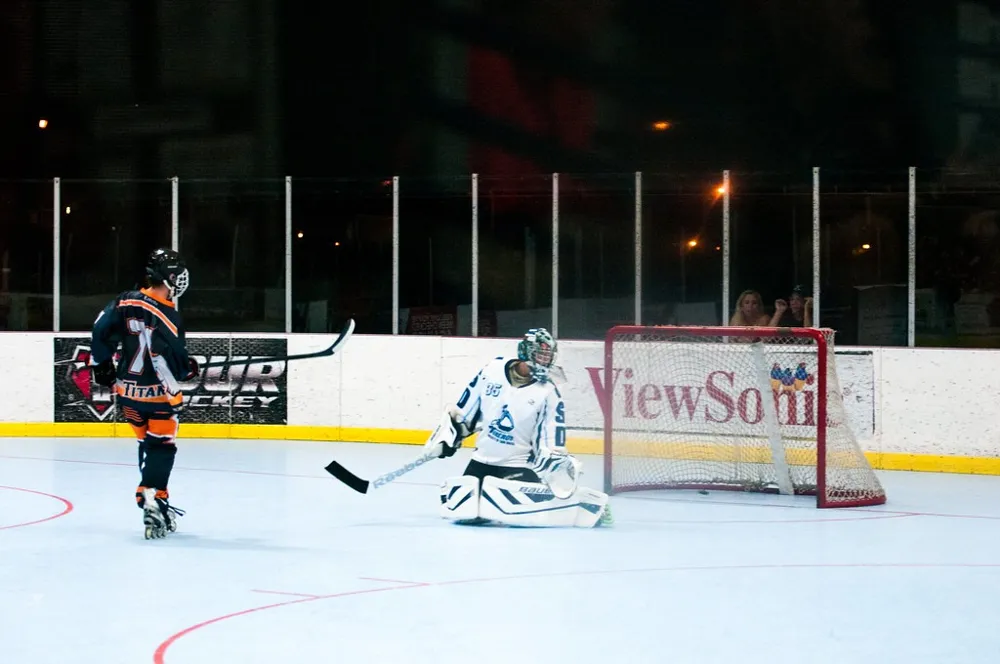
Hockey stops and crossovers wear the inside edges of the wheels unevenly. Rotating them every few sessions keeps the wear even:
- Remove the axles with a skate tool and take out the wheels.
- Flip each wheel so its worn inner edge faces out, and swap wheels between positions.
- On a Hi-Lo frame, only swap wheels of the same size: front wheels stay in front slots and rear wheels in rear slots.
- Tighten the axles until snug. Don't overtighten, or the wheel won't spin freely.
After skating, wipe off grit and let the skates dry with the liners pulled open. Avoid puddles, because water and sand ruin bearings. Replace wheels when they're worn down to a cone shape or chunked. More detail is in our roller skate maintenance guide.
Gear You Need for Roller Hockey
Skates are only part of the kit. Leagues set their own equipment rules, so check yours. A typical player wears:
| Gear | What It Protects | Notes |
|---|---|---|
| Hockey helmet with cage or shield | Head and face | Check your league's rules on cages and shields |
| Hockey gloves | Hands and wrists | Ice hockey gloves work |
| Shin and knee guards | Shins and knees | Wear them under roller girdle pants or socks |
| Elbow pads | Elbows on falls | Hockey or skate elbow pads |
| Roller girdle or padded pants | Hips and thighs | Some players wear ice hockey breezers instead |
| Athletic cup or jill | Groin | Standard for all players |
| Stick and roller puck or ball | n/a | Roller pucks are lighter, with nubs to reduce friction |
Roller hockey has no body checking, but falls on concrete and sport court are common. Good pads and a helmet matter more on wheels than you might expect.
Roller Hockey Skates vs Other Skates
If you're deciding between hockey skates and other inline skates, the right choice depends on what you'll do most:
- Fitness and trail skating: a recreational or fitness inline skate with a heel brake is more comfortable for long distances. See the best rollerblades.
- Skatepark and grinding: aggressive inline skates have grind plates and small wheels. See our aggressive inline skates guide.
- Rink skating and derby: quad skates are the norm. See roller derby skates and rollerblades vs roller skates.
- Ice hockey players training in the off-season: roller hockey skates from the same brand line give the closest feel to your ice skates.
New to skating altogether? Start with how to rollerblade, then browse more guides in our roller skating hub.
Frequently Asked Questions
Can you play roller hockey in regular inline skates?
You can for casual pickup, but recreational inline skates have a higher cuff, a heel brake and softer support that make quick stops and crossovers harder. Hockey skates are built for tight turns and short bursts, and most leagues expect them.
What is the difference between roller hockey and inline hockey?
In the US the terms are usually used for the same game: inline skates, a puck and no body checking. Elsewhere, roller hockey or rink hockey often means the quad-skate game played with a ball.
Should roller hockey skates be the same size as ice skates?
Often they are close, because both are sized below your shoe size. Retailers commonly suggest going 1 to 1.5 sizes below your shoe size for senior skates, but check each brand's chart and try them on, since fits vary between models.
What wheel hardness is best for outdoor roller hockey?
Harder wheels, around 82A to 85A, last longer on asphalt and rough concrete. Softer wheels in the mid-70s grip better on indoor sport court but wear quickly outside.
Do roller hockey skates have brakes?
No. Hockey skates have no heel brake, so players stop with T-stops, power slides and hockey-style stops. Learn to stop before playing in a game.
How long do roller hockey wheels last?
It depends on the surface, the hardness and how often you play. Soft indoor wheels used outdoors can wear down in a few sessions, while hard outdoor wheels last much longer. Rotating them helps them wear evenly.
Are adjustable hockey skates good for kids?
They can be a good choice for growing feet because one pair covers several sizes. Make sure the skate fits snugly at the current setting, since a loose boot gives poor ankle support.