Snowboarding vs Skateboarding: Similarities and Differences (2026)
Both ride sideways and share trick names, but snow and concrete feel very different. Here's what transfers and what doesn't.
Quick Comparison
| Snowboarding | Skateboarding | |
|---|---|---|
| Feet | Strapped into bindings | Free on the board |
| Control | Edges dig into snow | Trucks and lean |
| Speed source | Gravity | Pushing |
| Falls | Softer snow, cold | Hard ground, scrapes |
| Cost | Higher: lift tickets, gear, travel | Lower |
| Season | Winter | Year-round in dry weather |
| Stance | Regular or goofy | Regular or goofy |
What Transfers
- Stance: your skate stance usually carries over. See goofy vs regular.
- Balance and riding sideways.
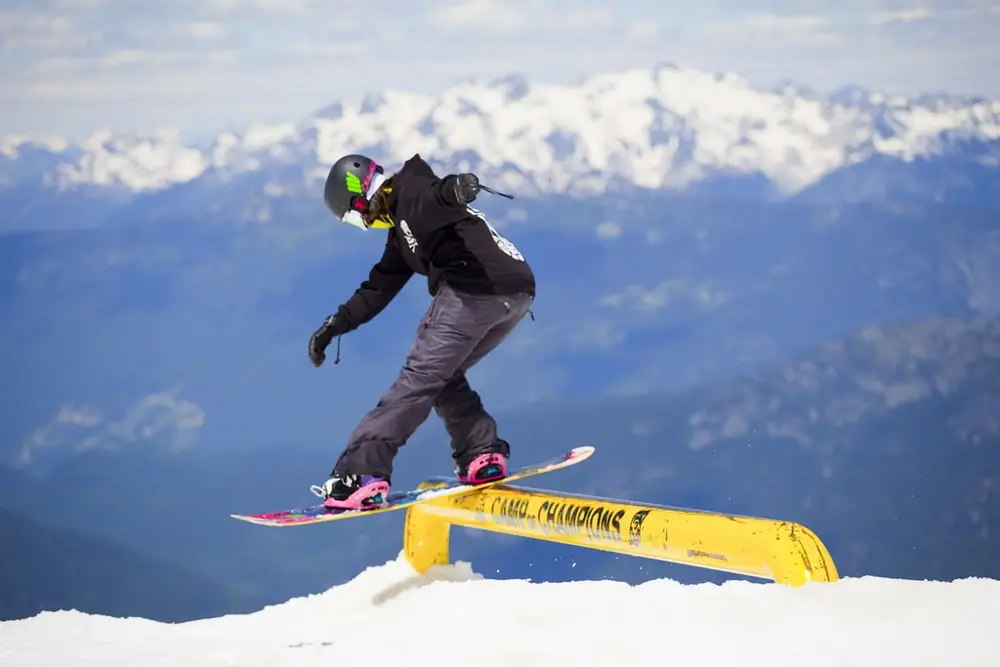
- Trick concepts: ollies, 180s, boardslides and grabs.
- Reading terrain like transitions and jumps.
What's Different
- Edges: catching an edge is a classic beginner fall.
- Bindings: you can't step off to bail.
- Turning: you shift weight heel to toe rather than lean on trucks.
- Cold and gear: layers, goggles and gloves.
Which Is Harder?
Most people find basic snowboarding quicker to pick up than skateboarding tricks, because your feet are strapped in and snow is softer to fall on. The first day or two on a snowboard can be tough, though, with lots of falls from catching an edge. Skateboarding is easier to start (rolling and pushing come quickly) but much harder to progress in, since ollies and flip tricks take a long time. Each is hard in its own way.
Can You Use a Skateboard on Snow?
No. Skateboard wheels sink and slip in snow, and there are no edges to grip or bindings to hold you. Wet and icy ground also damages bearings and decks. If you want to snowboard, rent a real setup; if you want to skate in winter, see skateboarding in winter.
Injuries and Safety
Both sports carry a risk of falls onto outstretched hands, so wrist guards are popular with beginners in both. Head protection matters in both too. Snowboarders also deal with cold, speed, other riders on the slopes and changing snow. Skaters deal with hard ground, traffic and obstacles. See skateboard safety gear and snowboard helmets.
Cost and Access
Skateboarding is cheap and local: one board and a smooth surface. Snowboarding needs a resort or snowy hill, lift tickets, a board, bindings, boots and warm, waterproof clothing, plus travel. Renting gear for your first trips keeps costs down while you find out if you like it.
Cross-Training Between Them
- Surfskates mimic carving and pumping. See what is a surfskate.
- Balance boards build ankle and core control.
- Skatepark transition helps with reading halfpipes and jumps.
- Strength and mobility work helps both; see exercises for skating.
For Skaters Trying Snowboarding
- Take a lesson to learn edge control.
- Wear a helmet, wrist guards and padded shorts if you like.
- Start on beginner slopes.
- Rent before buying.
See how to snowboard, stance and binding angles and beginner snowboards.
Burton Instigator
A Burton snowboard often aimed at newer riders. Check the listing for sizes.
Check Price on AmazonFor Snowboarders Trying Skating
Learn to push, turn and stop, and wear a helmet and pads. See learn how to skateboard.
Carver Super Snapper Surfskate
Surfskates let you practice carving on pavement.
Check Price on AmazonMore comparisons: skiing vs snowboarding and skateboarding in winter.
Frequently Asked Questions
Does skateboarding help with snowboarding?
Yes, in many ways. Stance, balance and riding sideways often feel familiar, though edges and bindings are new.
Is snowboarding easier than skateboarding?
Many find basic snowboarding quicker to pick up because feet are strapped in and snow is softer, but early falls are common.
Do skaters and snowboarders use the same stance?
Usually yes. If you're goofy on a skateboard, you'll likely ride goofy on a snowboard.
Which is more expensive?
Snowboarding, because of lift tickets, gear, clothing and travel.
Are the tricks the same?
Many trick names overlap, like ollies, 180s and grabs, but technique differs.