Skate Mags Through the Decades, From Thrasher to Jenkem (2026)
Skate magazines told skaters what was happening long before the internet did. Here's which titles mattered, which ones survive, and where to read them today.
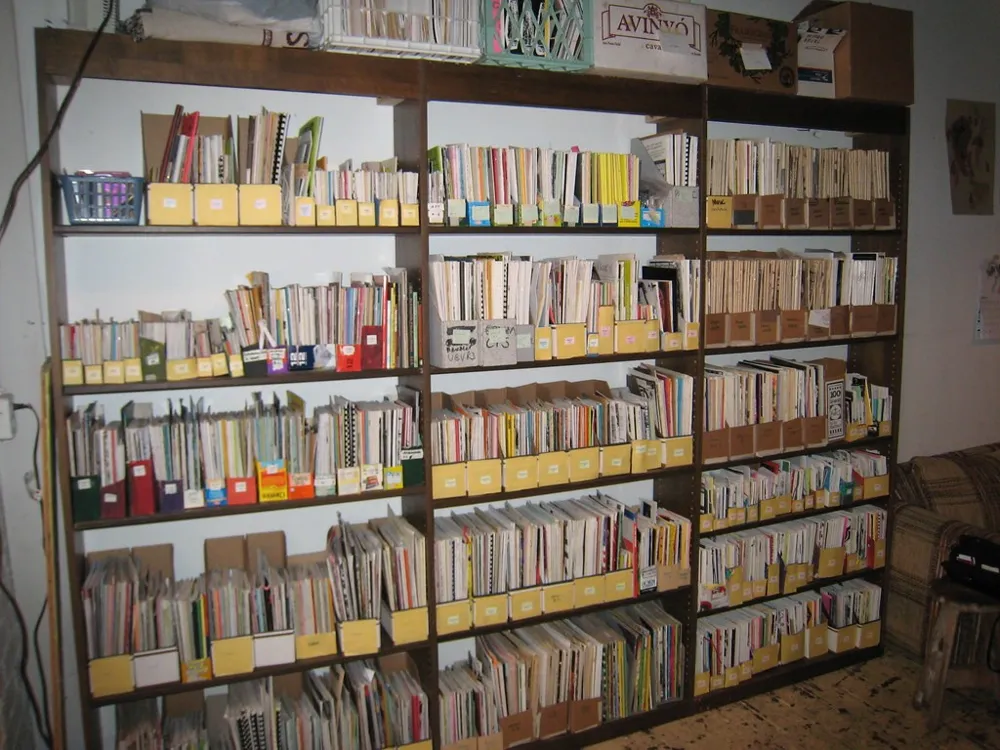
Skateboarding Magazines at a Glance
For about 50 years, skateboarding magazines were how most skaters saw new tricks, new spots and new pros. Most of the big print titles have since closed or moved online, but a few have survived, and a wave of small independent mags has appeared alongside them.
The table covers the best-known titles. Founding and closing years come from publisher records, Wikipedia's list of skateboarding magazines and the sources linked below. Statuses were last checked November 2026 and can change quickly, so check a title's own site before you subscribe.
| Magazine | Country | Launched | Status (as of Nov 2026) |
|---|---|---|---|
| The Quarterly Skateboarder / Skateboarder | US | 1964 | Closed; print ended in 2013 after several stops and restarts |
| Thrasher | US | January 1981 | Active: print and online |
| Transworld Skateboarding | US | May 1983 | Print ended in 2019; continues online |
| R.A.D. | UK | 1987 | Closed in 1995 |
| Slam Skateboarding | Australia | 1988 | Listed as active; check current issues |
| Big Brother | US | 1992 | Closed in 2004 |
| Slap | US | 1992 | Closed in 2008 |
| Juice | US | 1993 | Listed as active |
| Sidewalk (first Sidewalk Surfer) | UK | 1995 | Print reported ended in 2016; website continues |
| Concrete Wave | Canada | 2002 | Listed as active |
| The Skateboard Mag | US | March 2004 | Closed in 2017 |
| Jenkem | US | 2011 | Active, mainly online |
| Free | UK | 2015 | Listed as active |
For how magazines fit into the wider story, from sidewalk surfing to the Olympics, see our skateboarding history timeline.
The First Skateboarding Magazine: The Quarterly Skateboarder
The first skateboarding magazine was The Quarterly Skateboarder. Surfer Publications launched it in Dana Point, California, in winter 1964, during skateboarding's first boom. John Severson, the publisher of Surfer, edited it and wrote the first editorial, and Dave Hilton of the Hobie skateboard team was on the first cover.
In August 1965 the title changed to Skateboarder and the magazine went bimonthly. Then the first boom collapsed, and the magazine stopped after only a handful of issues. Sources disagree on the exact count, but four is the most common figure.
The 1970s Revival and Action Now
Urethane wheels brought skateboarding back in the 1970s, and the magazine came back with it. Steve Pezman, then publisher of Surfer, relaunched SkateBoarder in 1975, and it went monthly in late 1977. Warren Bolster edited this run, and the magazine reached its thickest issues in 1978. In August 1980 it was renamed Action Now, which folded in 1982.
The 1990s Comeback and the Final Closure
An oversized special issue in 1997, guest-edited by Tony Hawk, brought the name back, and regular bimonthly and then monthly issues followed from 1999. In April 2013, the new owner, GrindMedia, replaced paid print subscriptions with a free digital edition. In August 2013 it announced that the magazine would close, citing market conditions, and the print run was scheduled to end on October 15, 2013, about 49 years after the first issue.
Other US titles came and went during the 1970s boom. Wild World of Skateboarding ran from 1976 to 1978, National Skateboard Review from 1976 to 1979, and Skateboard World from 1977 to 1979.
Thrasher: San Francisco Since 1981
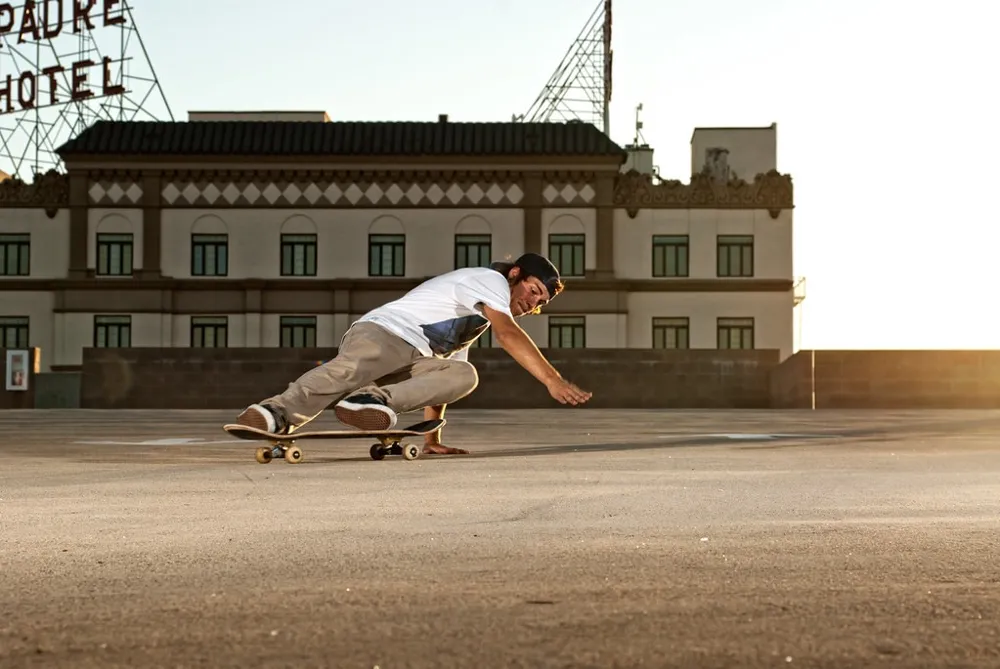
Thrasher was founded in San Francisco in January 1981 by Eric Swenson and Fausto Vitello, the pair behind Independent trucks. It started partly as a way to promote that truck company. Kevin Thatcher was its first editor, and the magazine is published by High Speed Productions. It built a raw, underground image from the start, and between 1983 and 1990 it released eight volumes of Skate Rock music compilations.
- Key editors: Jake Phelps became editor in 1993 and led the magazine until his death in March 2019. Photographer Michael Burnett is listed as the current editor-in-chief.
- Skater of the Year: Thrasher started its Skater of the Year award in 1990, with Tony Hawk as the first winner. It's widely treated as one of skateboarding's most respected honors.
- King of the Road: This team road-trip contest ran each year from 2003 to 2007, returned in 2010 with episodes released online, and was last held in 2017, according to published records.
- Firsts: In 1989, Cara-Beth Burnside became the first woman on a Thrasher cover. For more, see our page on the best female skateboarders.
- Recognition: Thrasher was inducted into the Skateboarding Hall of Fame in 2017.
Thrasher is still in print. As of November 2026, its online shop lists monthly issues from 2026, and the magazine also publishes at thrashermagazine.com. Its logo became one of skateboarding's best-known clothing graphics, which we cover in skateboard clothing brands.
Transworld Skateboarding: Skate and Create
Transworld Skateboarding launched in May 1983 in Carlsbad, California. Its first owners were Larry Balma, who also owned Tracker Trucks, and Peggy Cozens. It was set up as a more accessible rival to Thrasher, and its first issue ran an article by Cozens called "Skate and Create." The article pushed back on the "Skate and Destroy" attitude she saw in Thrasher.
Transworld became known for its design and photography. David Carson was its art director from 1984 to 1988 and gave it a distinctive look. J. Grant Brittain and Spike Jonze shot for it in the same period. It also produced a long line of skate videos, starting with Uno in 1996 and running through Duets in 2018.
Ownership Changes and the End of Print
Transworld was sold several times. Bonnier bought it in 2007, GrindMedia in 2013, American Media in February 2019 and The Arena Group in 2022. The print edition was discontinued in 2019, after a run reported at 397 issues. The brand continues as a digital title at skateboarding.com. The name also lived on in snowboarding through the separate Transworld Snowboarding, which is covered on our snowboarding pages.
Thrasher vs Transworld: How They Differed
Thrasher and Transworld are the two skate magazines most often compared. The table sums up the main differences.
| Thrasher | Transworld Skateboarding | |
|---|---|---|
| Founded | January 1981, San Francisco | May 1983, Carlsbad, California |
| Founders | Eric Swenson and Fausto Vitello (Independent trucks) | Larry Balma (Tracker Trucks) and Peggy Cozens |
| Attitude | Raw, punk, "Skate and Destroy" | Polished, more mainstream, "Skate and Create" |
| Known for | Skater of the Year, King of the Road, its logo | Design, photography, a long line of videos |
| Status as of Nov 2026 | Print and online | Online only since 2019 |
Both magazines were started by owners of skateboard truck companies, which shows how closely the magazines and the skate industry were tied.
The 1990s and 2000s: Big Brother, Slap, Juice and More

When street skating took over in the late 1980s and 1990s, a new set of magazines appeared, each with its own angle.
- Big Brother (1992–2004). Steve Rocco of World Industries founded it in 1992. It was known for vulgar humor, and Larry Flynt bought it in 1997. Editors Dave Carnie and Chris Nieratko were known for their wordplay. Footage tied to a 1998 issue fed into the TV show Jackass. Flynt's company dropped the magazine in February 2004. Its story is told in the 2017 documentary Dumb: The Story of Big Brother Magazine; for more skate films, see the best skateboarding documentaries.
- Slap (1992–2008). A US skate magazine that ran from 1992 to 2008.
- Juice (1993–). Founded in Wilmington, North Carolina, and later based in Venice, California. It covers skateboarding, surfing and music, and Terri Craft edits, owns and publishes it.
- 411 Video Magazine (1993–2005). A skate "video magazine" released in numbered issues rather than on paper.
- The Skateboard Mag (2004–2017). Launched in Carlsbad, California, in March 2004 and closed in 2017.
- Poweredge (1988–1991). A US title from the late-1980s boom.
Rocco's companies also changed deck graphics in the same era. Our skateboard art history page covers World Industries and the artists behind it.
Skateboarding Magazines Around the World
Skate magazines were never just an American thing. Many countries have had their own titles.
United Kingdom
- Skateboard! ran from 1977 to 1979 and again from 1988 to 1992.
- R.A.D. ran from 1987 to 1995.
- Sidewalk started in 1995 as Sidewalk Surfer, published by Jim Peskett with Ben Powell as editor. Its print edition is reported to have ended in 2016, and sidewalkmag.com continues online.
- Free launched in 2015, and North (Scotland) in 2011. Both are listed as active.
- Grey, Vague, Kingpin and The Skateboarder's Companion are other UK names you'll come across. As of a 2023 UK retailer roundup, Grey and Vague were free and the Companion was paid and bimonthly.
Europe, Australia, Canada and Beyond
- Australia: Slam Skateboarding (1988–, listed as active), Pop (2005–2016) and Five 40 (1988–1990).
- Canada: Concrete Wave (2002–), which also covers longboarding; Color (2003–2013); and Love Skate Mag in Montreal (2018–).
- Germany: Lodown (1995–2016) and Dose Skateboarding (2020–).
- Elsewhere in Europe: Skaterock in the Czech Republic (2005–), BE Skateboarding (2016–) and Push Periodical, which has bases in San Francisco and Belgium (2015–).
- Japan: Skateboard World Japan appeared in 1977–1978, and Transworld published a Japanese edition.
Longboard riders may want Concrete Wave in particular. Our longboarding guides cover the boards and skills.
Why Print Skate Magazines Declined
The closures cluster in a short window: Big Brother in 2004, Slap in 2008, Skateboarder in 2013, Lodown and Sidewalk's print edition in 2016, The Skateboard Mag in 2017 and Transworld's print edition in 2019. When Skateboarder closed, its publisher pointed to "market conditions," and several closures followed ownership changes at large media companies.
Some of the reasons are well understood. Skaters moved to online video and social media for new footage. Brands moved ad budgets toward the same channels. Print issues take months to produce, while clips go online the same day. Those are general trends, not reasons published for every closure, but they explain why most surviving titles now lean on websites and video as much as paper.
What replaced the old monthlies is a mix of things. Thrasher kept its print magazine alongside its website. Brands like Transworld became websites. Online-first publications such as Jenkem (2011–) cover skate culture on the web. Small independent print titles, many of them free, rely on skate shops for distribution.
Skate Zines and DIY Publications
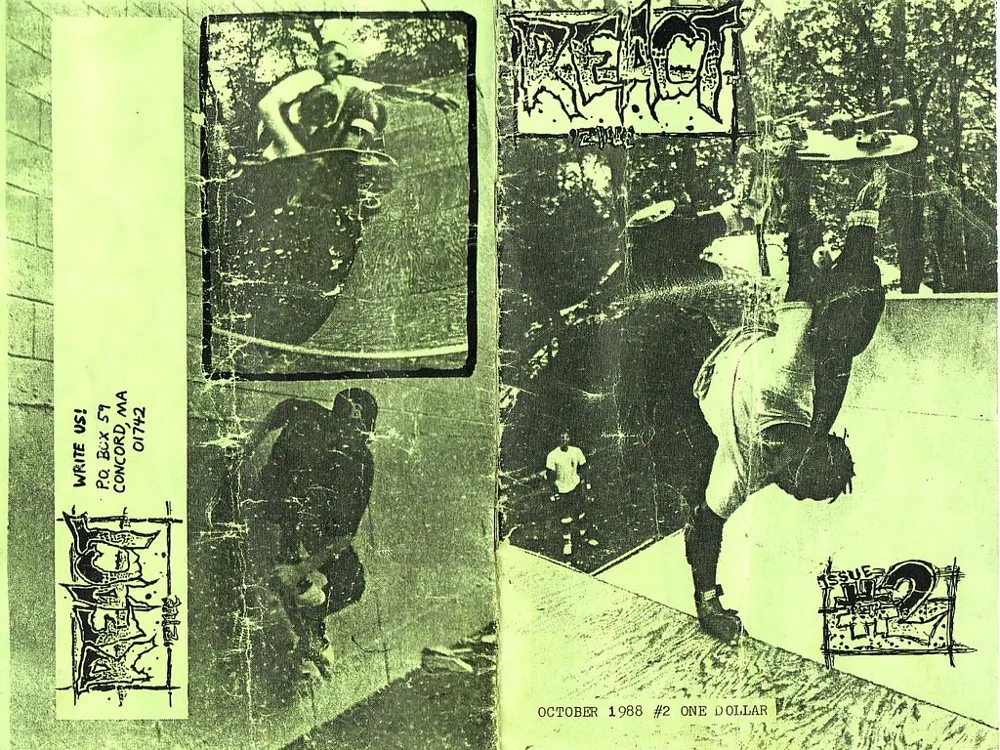
Alongside the glossy magazines, skaters have long made their own zines: photocopied, stapled and mailed or handed out at local spots. A zine might cover a single town's scene, a crew, or just one person's photos and drawings. Some, like the 1988 zine pictured, were sold for a dollar, with a P.O. box address printed for mail.
The same spirit drives many of today's independent mags. Small titles like Skate Jawn (Philadelphia and Brooklyn, 2010–) and Confusion (2010–) are part of the independent scene that has kept going alongside the bigger names. If you want to make your own, all you need is a camera, a copier and a few friends who skate. It's also a good outlet for skate art and photos from your local spots.
Where to Read Skateboarding Magazines Now
Here's where to find skate mags as of November 2026. Formats and access change, so check each title's own site.
| What You Want | Where to Look |
|---|---|
| A current print magazine | Thrasher's online shop and newsstands; your local skate shop, which may also carry independent titles |
| Free print mags | Skate shops, especially in the UK (Grey, Vague and similar titles, depending on the issue) |
| Digital editions | Digital newsstands such as Magzter, which lists Thrasher issues, and Zinio, which lists back issues of Transworld and Slam |
| Online features and news | thrashermagazine.com, skateboarding.com (Transworld), jenkemmag.com, sidewalkmag.com, juicemagazine.com |
| Independent mags online | Issuu, where titles such as Free and Concrete Wave have posted issues |
| Old ads and covers | Skate history sites that post scanned galleries, such as Skate and Annoy's archive of old magazine ads |
Tips: Buying a print issue or subscription directly from the publisher's own site usually supports the magazine most. Skate shops are the best place to find small and free titles, since many independents distribute only through shops. If you're new to skating, magazine trick features pair well with our skateboard tricks list.
Collecting Old Skate Magazines
Old skate magazines are collectible, especially early issues of The Quarterly Skateboarder and 1970s SkateBoarder. We don't give value estimates, because prices vary widely and depend on condition and demand. Here's what to know instead.
- Identify the run. The same title can belong to very different eras, such as 1964–65 Quarterly Skateboarder, 1975–1980 SkateBoarder, 1980–82 Action Now and the 1997–2013 relaunch. Check the volume and issue number and the cover date.
- Check completeness. Posters, inserts and stickers were often removed. Missing pages and clipped coupons matter to collectors.
- Store them flat and dry. Keep magazines out of sunlight, damp and heat. Many collectors use acid-free bags and backing boards.
- Handle covers gently. Old staples rust and spines crack, so avoid rolling or folding issues.
If you collect old boards too, see our vintage skateboards guide. Our skateboarding facts page has more quick history.
Keep Exploring Skate Culture
- Skateboarding history timeline
- Skateboard art history
- Best skateboarding documentaries
- Best skateboarders of all time
- Skateboarding competitions
- Skateboard brands
- All skateboarding guides
Frequently Asked Questions
What was the first skateboarding magazine?
The Quarterly Skateboarder, published by Surfer Publications in Dana Point, California, starting in winter 1964. It was renamed Skateboarder in 1965 and folded after only a few issues, then returned in 1975.
Is Thrasher magazine still in print?
Yes. As of November 2026, Thrasher's online shop sells 2026 print issues, and the magazine also publishes online at thrashermagazine.com. It has been based in San Francisco since January 1981.
Is Transworld Skateboarding still around?
Not in print. The print edition ended in 2019, and Transworld Skateboarding continues as a digital brand on skateboarding.com.
What is the difference between Thrasher and Transworld?
Thrasher launched in 1981 out of San Francisco with a raw, hardcore image. Transworld launched in 1983 as a more accessible rival, and its first issue ran an article called Skate and Create that pushed back on the Skate and Destroy attitude its founders saw in Thrasher.
When did Skateboarder magazine end?
Its final print run was scheduled to end on October 15, 2013. The owner, GrindMedia, announced the closure in August 2013 and cited market conditions.
Are there free skate magazines?
Yes. In the UK, titles such as Grey and Vague have been given away free through skate shops, though availability changes. Check the magazine's site or ask your local shop.
Where can I read old skateboarding magazines?
Back issues turn up on digital newsstands like Zinio, on Issuu for some independent titles, and in scanned archives on skate history sites. Original copies circulate among collectors.