Best MTB Hydration Packs: Hip Packs, Vests and Backpacks (2026)
Nine hydration packs for trail riding, from light hip packs and race vests to all-day backpacks and a back protector pack, with a guide to reservoir size, fit and cleaning.
Choosing a Mountain Bike Hydration Pack
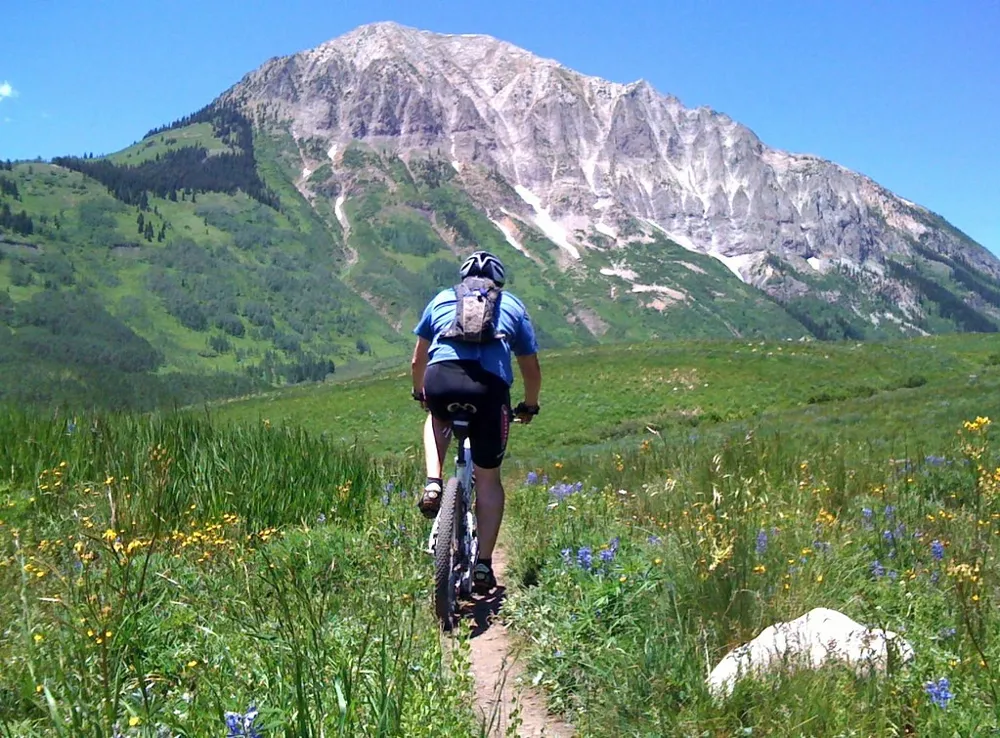
A mountain bike hydration pack does two jobs: it carries water you can sip without taking your hands off the bars for long, and it holds the tools, food and spare layer you need when a trail takes you far from the car. Many mountain bikes have room for only one bottle, and grabbing a bottle on rough singletrack is awkward, which is why packs are so common on the trail.
Packs come in three main styles. Hip packs (also called waist or lumbar packs) sit low on your hips and leave your back free. Hydration vests are light, close-fitting harnesses with a small reservoir and front pockets. Backpacks carry the most water and gear, and some add a back protector. Our picks cover all three, plus a kids' pack.
CamelBak M.U.L.E. 12
Best all-round trail pack
- 100 oz (3 L) Crux reservoir included
- Tool organization and helmet carry
- Removable waist strap
Osprey Raptor 14 / Raven 14
Best for long days
- 2.5 L Hydraulics LT reservoir included
- Winged harness and wrap hipbelt
- Tool roll and hipbelt pockets
EVOC Hip Pack Pro 3
Best hip pack
- 1.5 L bladder plus bottle holder
- Extra-wide hip wings
- Quick-access tool compartment
Mountain Bike Hydration Packs Compared
| Pack | Style | Reservoir | Storage | Notable Features |
|---|---|---|---|---|
| CamelBak M.U.L.E. 12 | Backpack | 100 oz (3 L), included | About 9 L gear space (REI listing) | Tool organization, helmet carry, magnetic tube clip |
| Osprey Raptor 14 / Raven 14 | Backpack (men's / women's) | 2.5 L, included | 14 L class | Winged harness, wrap hipbelt, tool roll |
| EVOC Hip Pack Pro 3 | Hip pack | 1.5 L, included, plus bottle holder | 3 L | Extra-wide hip wings, tool compartment |
| Osprey Seral 7 | Lumbar pack | 1.5 L, included | 7 L class | Angled hipbelt, compression straps, light attachment |
| Dakine Hot Laps 5L | Hip pack | 2 L Hydrapak, included (REI listing) | 5 L | Bite valve shut-off, straps for pads |
| CamelBak Chase Race 4 | Vest | 50 oz (about 1.5 L), included | 4 L class | Front harness storage, dual sternum straps |
| USWE Race 2.0 | Race pack | 2.0 L (70 oz), included | Minimal | 4-point harness, listed at 0.5 lb without bladder |
| EVOC Trail Pro 16 | Protector backpack | Holds up to 3 L, not included | 16 L | Level 2 EN 1621-2 back protector, rain cover |
| CamelBak Mini M.U.L.E. | Kids' backpack | 50 oz (about 1.5 L), included | Small | Sized for children |
Specs are from the maker's Amazon listings and REI product pages. Storage figures marked "class" follow the number in the model name; check the current listing for exact volume, sizes and colors before you buy.
The Best Mountain Bike Hydration Packs
1. CamelBak M.U.L.E. 12
The M.U.L.E. 12 is CamelBak's mountain bike pack, and it is listed with a 100 oz Crux reservoir that uses a quick connection system so you can unclip the tube to refill. An Air Support back panel with ventilation channels is meant to reduce heat on climbs, and a magnetic tube clip keeps the bite valve where you can find it. Storage includes integrated tool organization, a stretch overflow pocket for a jacket, a helmet carry and a removable waist strap. REI lists about 9 liters of gear space, a weight of 1 lb 4 oz and an adjustable fit for torsos of 17 to 21 inches. A women's version is also sold.
Good to Know
- Big 3 L reservoir for long or hot rides
- Room for tools, tube, food and a layer
- Helmet carry for hike-a-bike or the drive home
Watch Out For
- More pack than you need for an hour on local trails
- Full 3 L reservoir adds noticeable weight
2. Osprey Raptor 14 (Men's) and Raven 14 (Women's)
Osprey calls the Raptor its flagship mountain bike pack. It's built around a bike-specific winged shoulder harness and an airmesh wrap hipbelt meant to keep the pack steady on rough descents, with zippered stretch mesh pockets on the hipbelt for snacks or a phone. Inside there's a tool roll and internal organization, and the pack comes with a Hydraulics LT 2.5 L reservoir. The Amazon listing gives a weight of 2.22 lb; some reviews quote a lighter claimed weight, so check the current spec. The Raven 14 is the women's-fit version, and a smaller Raptor 10 is also sold for lighter loads.
Good to Know
- Hipbelt and harness designed for stability
- Tool roll keeps small parts organized
- Men's and women's fits
Watch Out For
- Heavier than hip packs and vests
- Choose the 10 L version if you carry little
3. EVOC Hip Pack Pro 3
The Hip Pack Pro 3 is a 3-liter hip pack sold with a 1.5 L hydration bladder in its own compartment, plus a bottle holder so you can carry a second drink. Extra-wide hip wings and EVOC's AERO FLEX hip belt are designed to spread the load and keep the pack in place, while the AIR FLOW CONTACT SYSTEM uses wide ventilation channels and coarse mesh against your back. A quick-access tool compartment and zipped pockets on the hip wings hold small essentials. EVOC also sells an E-Ride version aimed at e-bike riders.
Good to Know
- Bladder and bottle options in one hip pack
- Weight sits low, back stays cooler
- Organized tool storage
Watch Out For
- 3 L of storage leaves little room for a jacket
- 1.5 L of water won't cover long, hot rides alone
4. Osprey Seral 7
The Seral is Osprey's lumbar pack for riders who want water off their back. It comes with a Hydraulics LT 1.5 L Lumbar Reservoir in a dedicated compartment, and compression straps cinch the load as you drink it down. A bike-specific, angled hipbelt holds it close to your body, and two zippered hipbelt pockets keep small items in reach. There's also a blinker light attachment with a reflective graphic. The listing gives a weight of 1.16 lb.
Good to Know
- Compression straps reduce sloshing as the reservoir empties
- Light attachment for road links home
- Unisex fit
Watch Out For
- Lumbar reservoir is smaller than backpack bladders
5. Dakine Hot Laps 5L
Dakine's Hot Laps line ranges from small waist bags to this 5-liter hip pack. REI lists the 5L with a 2-liter Hydrapak reservoir, a magnetic hose clip and a bite valve with a shut-off switch. It has top access to the main compartment, internal organization for tools, food and a light shell, four exterior pockets, side compression straps and lower straps that can hold knee pads. REI lists the weight at 1 lb, a 25 mm padded hipbelt that fits waists and hips up to 44 inches, and recycled polyester fabric.
Good to Know
- Biggest reservoir among our hip packs
- Can carry knee pads for the climb
- Shut-off bite valve helps prevent drips
Watch Out For
- Hot Laps comes in several sizes; check you're buying the 5L with reservoir
6. CamelBak Chase Race 4
The Chase Race 4 is a hydration vest for riders who want a light, close fit, from cross-country racers to fast trail riders. It's listed with a 50 oz reservoir, a "Command Center" harness with front storage for a phone and food, integrated tool organization for CO2 cartridges and patch kits, and a stretch overflow pocket for a layer. A 3D Grid Mesh harness is designed for airflow, and dual adjustable sternum straps fine-tune the fit. CamelBak also sells a larger Chase Adventure 8 vest for longer rides and bikepacking.
Good to Know
- Phone and snacks reachable on the front
- Close fit that moves with you
- Room for repair basics
Watch Out For
- Limited space for a jacket and big tools
7. USWE Race 2.0
USWE's Race 2.0 is listed with USWE's 4-point "No Dancing Monkey" harness, an ultralight mesh-membrane backplate and a 2.0 L (70 oz) Elite Hydration Bladder. USWE lists the pack at 0.5 lb without the hydration system and sleeve, and a chest fit range of 33 to 43 inches. It's made for racing and fast rides where you want water and very little else.
Good to Know
- Very light for a 2 L pack
- Harness designed to stay put at speed
Watch Out For
- Minimal storage; tools may need to live on the bike
- Check the chest range before ordering
8. EVOC Trail Pro 16
For enduro, bike park days and rough trails, the Trail Pro 16 adds a Level 2 back protector certified to EN 1621-2. EVOC's BRACE LINK elements adjust the harness to your shoulder width, and the AIRO FLEX hip belt and wide hip wings help keep it stable. The 16-liter pack has room for a hydration bladder up to 3 liters, a wide-opening tool pocket and a rain cover, with a listed weight of 1,100 g. The bladder is not included in the listed box contents, so budget for one. It's sold in sizes (such as S/M and L/XL) and in 10 L and 26 L versions.
Good to Know
- Certified back protection built in
- Adjustable harness and sizes
- Rain cover included
Watch Out For
- Reservoir sold separately
- Warmer and heavier than a hip pack
9. CamelBak Mini M.U.L.E. (Kids)
The Mini M.U.L.E. is a compact, kid-sized hydration backpack for trail rides and hikes. It's listed with a 50 oz reservoir, a stretch overflow pocket for a layer or snacks, a zippered pocket and a ventilated harness. It's a good match for young riders on our kids' mountain bikes list.
Good to Know
- Fits smaller frames
- Kids can carry their own water and snacks
Watch Out For
- Show kids how to clip the bite valve so it doesn't swing into the wheel
Hip Packs vs Vests vs Backpacks
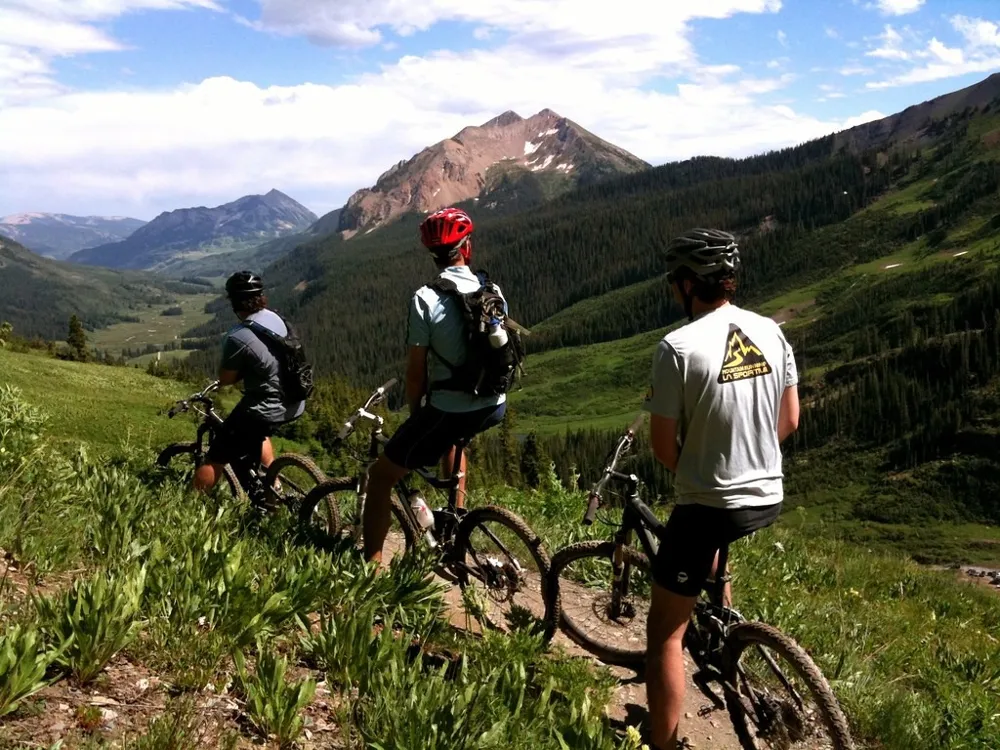
The right style depends on how long you ride, how hot it gets and how much you carry. Here's how the three main types compare.
| Hip / Lumbar Pack | Hydration Vest | Backpack | |
|---|---|---|---|
| Typical reservoir | About 1.5 to 2 L | About 1.5 to 2 L | About 2 to 3 L |
| Gear space | Small: tools, tube, snacks | Small, with front pockets | Most: layers, food, pads, first aid |
| Back heat | Lowest | Low to medium | Highest |
| Stability | Weight sits low; can sag when overfilled | Close fit moves with you | Stable with a good hipbelt |
| Back protector option | No | No | Yes, on protector packs |
| Best for | Short to mid-length trail rides, bike park laps | XC racing, fast trail rides | Long rides, remote trails, enduro |
Many riders choose hip packs because they keep your back cooler and your center of gravity low. Many, like the EVOC Hip Pack Pro 3, take a bottle as well as a bladder. The trade-off is space: a hip pack loaded with water, tools and a jacket gets heavy around your waist. Vests carry water high and close to the body with phone and food on the front straps, a layout racers like. Backpacks are still the choice for all-day and backcountry rides, and the only style that offers built-in back protection. Some riders also use frame bags or bottles plus a small tool pack on the bike to carry nothing at all on their body; see our bike water bottle guide for that route.
Storage: How Many Liters Do You Need?
Pack names usually include a volume in liters, but brands count it differently. Some include the reservoir in the total; REI lists the M.U.L.E. 12, for example, with about 9 liters of gear space alongside its 3-liter reservoir. Check gear capacity, not just the number in the name.
- Up to about 5 L: hip packs and race vests. Room for a multi-tool, a tube or plug kit, a CO2 or mini pump, a phone and a snack.
- About 6 to 14 L: the trail-pack sweet spot. Adds space for a wind shell, more food, a small first aid kit and a light.
- About 15 to 26 L: long days, remote trails, cold or changeable weather, and enduro riders who carry pads and a full-face helmet on climbs.
Look for a dedicated tool pocket or tool roll so heavy parts don't sink to the bottom, helmet or pad straps if you pedal up and ride down in more armor, and compression straps to keep a half-empty pack from shifting.
What to Carry in Your Pack
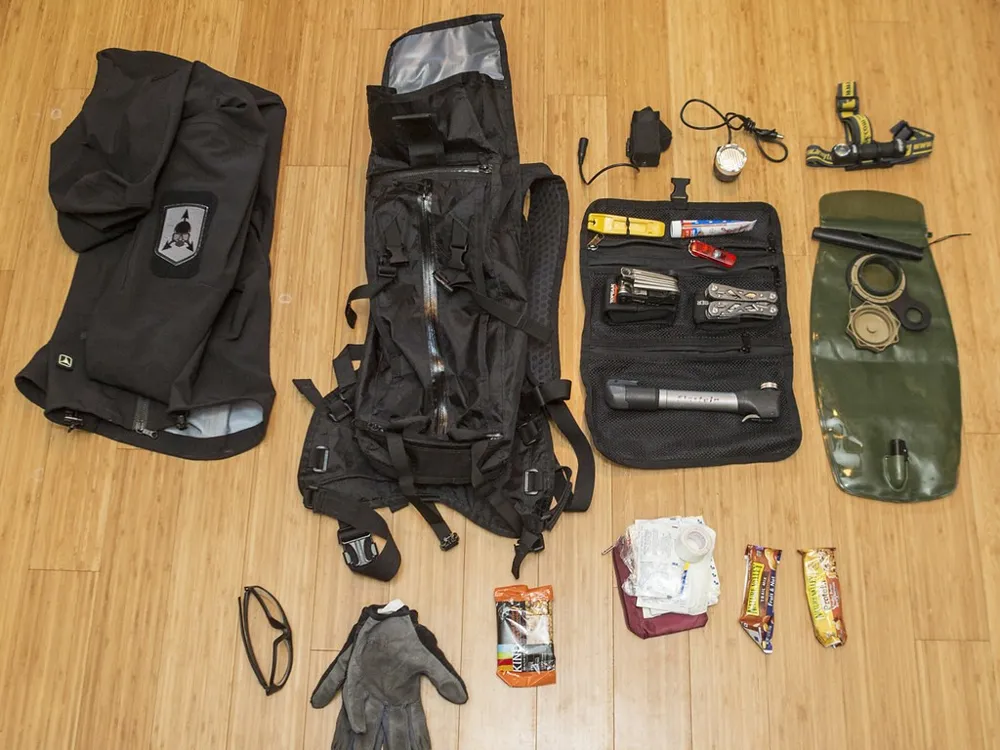
A sensible trail kit fits in most packs and gets you home from the most common problems:
| Item | Why |
|---|---|
| Multi-tool with chain breaker | Bolts, brakes, derailleur and broken chains |
| Spare tube, tire levers and tubeless plugs | Flats and cuts; see how to fix a flat |
| Mini pump or CO2 inflator | Re-inflating after a repair; compare bike pumps |
| Spare quick link and derailleur hanger | Small, light and trip-saving |
| Snacks and drink mix | Energy for longer rides |
| Light wind or rain shell | Weather changes and cold descents |
| Phone, ID and a small first aid kit | Navigation and emergencies |
| Light (seasonal) | For rides that run late; see mountain bike lights |
Wrap metal tools in a cloth or roll so they don't rub through the reservoir, and keep the heaviest items close to your back and low in the pack.
Back Protector Packs
Some mountain bike backpacks have a removable or built-in back protector panel. Back protectors are certified to the European standard EN 1621-2 and rated Level 1 or Level 2; Level 2 lets less force through. The EVOC Trail Pro 16 on our list is listed with a Level 2 protector certified to that standard.
- Who they suit: enduro and downhill riders, bike park days, and anyone riding rocky, technical terrain at speed.
- Trade-offs: more weight and more heat on your back, and usually less ventilation than a plain pack.
- Fit matters more: the protector only helps if it covers your spine where it should, so protector packs often come in sizes. Check the maker's size chart against your torso length.
- Check the label: "padded back panel" or "foam protection" isn't the same as a certified protector. Look for the standard and level on the product page.
A protector pack adds to your other armor, not replaces it. See our guides to MTB knee pads, mountain bike helmets and full-face helmets.
Reservoir Size and How Much Water to Carry
Mountain bike packs usually come with reservoirs of 1.5, 2, 2.5 or 3 liters (about 50, 70, 85 and 100 oz). How much you need depends on ride length, heat, humidity, altitude, effort and your own sweat rate, so there's no single right number.
- 1.5 L: shorter loops, cool weather, or as a top-up alongside a bottle on a hip pack.
- 2 to 2.5 L: a common middle ground for mid-length trail rides.
- 3 L: long rides, hot or dry climates, and rides without refill points.
You don't have to fill a big reservoir to the top every time; a larger bladder just gives you the option. On hot or high rides, start early, plan refills and carry more than you expect to need. Our best mountain bike trails guide flags routes where heat and altitude matter. If you add electrolyte or sports drink, many riders keep it in a bottle and plain water in the bladder, which makes cleaning easier. For general hydration advice tailored to you, talk to a doctor or sports dietitian.
Fit and Stability
A pack that bounces or pulls on your shoulders is tiring on descents and can throw off your balance. To get a good fit:
- Check the size or torso range. Backpacks often list a torso range (REI lists 17 to 21 inches for the M.U.L.E. 12), vests a chest range (33 to 43 inches for the USWE Race 2.0) and hip packs a waist range (up to 44 inches for the Dakine Hot Laps 5L).
- Tighten from the bottom up. Hipbelt or waist strap first, then shoulder straps, then the sternum strap.
- Keep it high and snug. A backpack should sit close to your back without resting on your lower back when you're in the attack position. A hip pack should sit on your hips, not your lower spine.
- Compress the load. As the reservoir empties, cinch compression straps so water doesn't slosh.
- Look for women's and kids' fits. Osprey (Raven), CamelBak (women's M.U.L.E.) and kids' packs like the Mini M.U.L.E. are shaped for shorter torsos and narrower shoulders.
- Route the hose. Clip the bite valve on a magnetic clip or strap so it can't swing into the front wheel.
Ventilation matters too. Mesh back panels and air channels (CamelBak Air Support, EVOC AIR FLOW CONTACT SYSTEM) help, but any backpack is warmer than a hip pack. Pair your pack with breathable mountain bike clothing on hot days.
Reservoir Features Worth Checking
- Quick-disconnect hose: lets you pull the reservoir to refill without threading the tube back through the pack, like the quick connection on CamelBak's Crux reservoir.
- Bite valve shut-off: stops drips when the pack is squashed in a car or under a jacket (Dakine lists one on the Hot Laps 5L).
- Magnetic tube clip: keeps the hose on your shoulder strap or hipbelt where you can grab it.
- Wide opening: easier to fill with ice and to reach inside when cleaning.
- Lumbar-shaped reservoir: hip packs like the Osprey Seral come with a lumbar-specific reservoir made for the hip compartment, so a standard bladder may not fit.
- Replacement parts: bite valves wear out; check that spares are sold for your reservoir. You can also buy reservoirs separately, which you'll need for packs like the EVOC Trail Pro 16.
How to Clean a Hydration Bladder
Regular cleaning is the best defense against mold and off flavors. REI's expert advice outlines a simple two-stage clean:
- Soak. Fill the reservoir with warm (not scalding) water and add a cleaner: a reservoir cleaning tablet (follow the package; REI notes a typical soak of about five minutes), about 1/4 cup of baking soda per liter for odors, or 2 to 5 drops of unscented household bleach per liter. Seal and shake, then hold the reservoir up and pinch the bite valve so the solution runs through the tube. Household mixes soak for about 20 minutes.
- Wash. Drain, refill with warm water and a little dish soap, and scrub the inside with a reservoir brush. Remove the bite valve and clean it separately, and use a tube brush (or a knotted cord) to scrub the hose. Rinse thoroughly.
- Dry completely. Separate the tube, reservoir and bite valve. Prop the reservoir open with a whisk or paper towels, hang the tube, and dry everything in a dry spot, not a humid bathroom.
After each ride, at minimum empty the reservoir and let it air out, especially if you used anything other than water. Check your reservoir maker's care instructions too, since some list whether parts are dishwasher-safe. For bottles and cage tips, see our bike water bottle guide, and browse more trail gear on our mountain biking hub.
Frequently Asked Questions
Do you need a hydration pack for mountain biking?
Not always. Bottles are fine for short rides, but many mountain bikes fit only one bottle, and a pack lets you drink on rough trail and carry tools, food and a layer. Most riders add one for longer or remote rides.
Is a hip pack or a backpack better for mountain biking?
A hip pack keeps weight low and your back cooler, which many riders prefer for shorter rides. A backpack carries more water and gear for long days, and some backpacks add a back protector.
What size hydration bladder do I need for mountain biking?
Mountain bike packs commonly come with 1.5, 2, 2.5 or 3 liter reservoirs. Pick a size for your longest typical ride and the heat you ride in, and plan refills on all-day rides.
How do you clean a hydration bladder?
Soak it in warm water with a reservoir cleaning tablet or a mix such as baking soda and water, run the solution through the tube, then wash with mild dish soap and rinse. Take the tube and bite valve apart and let every part dry completely.
How do I stop my hydration pack from bouncing?
Tighten the hipbelt or waist strap first, then the shoulder and sternum straps, and use the compression straps to pin a half-empty load. Bike-specific harnesses and wide hip wings are designed to reduce movement.
Can I put sports drink in a hydration bladder?
You can, but rinse the reservoir, tube and bite valve soon after the ride, because sugary drinks leave residue that helps mold grow. Many riders keep plain water in the bladder and carry mix in a bottle.
Are back protector backpacks worth it?
For enduro, bike park and rough trail riding, a pack with a certified back protector adds coverage some riders want. Check that the protector is certified to EN 1621-2 and note whether it is Level 1 or Level 2.