What Size Surfskate Should I Get? Charts and Fit Tips (2026)
Surfskate size comes down to wheelbase, your stance and the way you want it to turn. Here's how to read the numbers and pick yours.
The Quick Answer
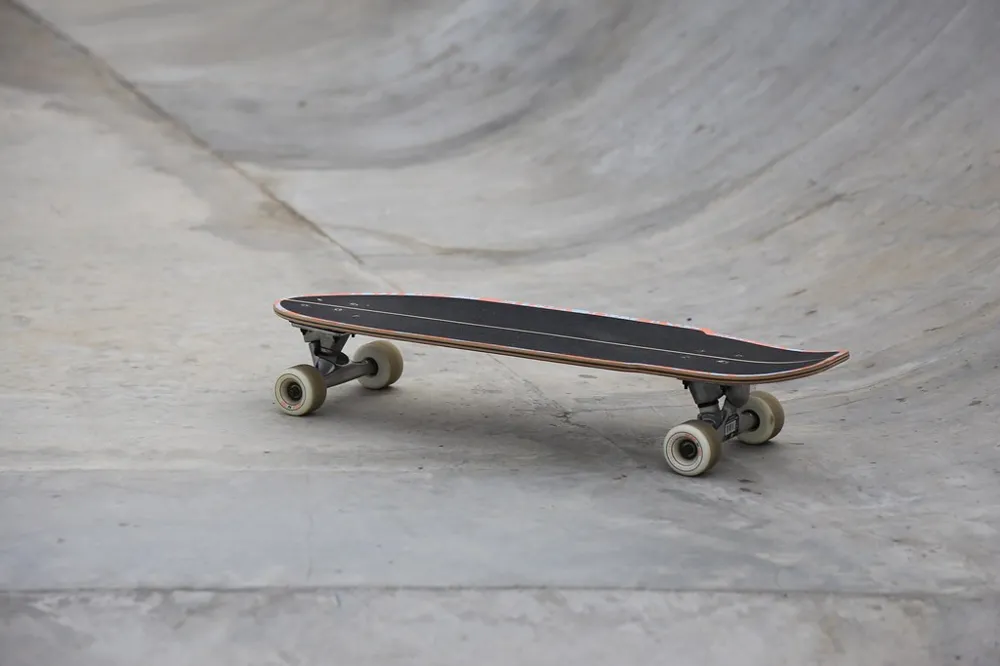
Most adults land on a surfskate about 30 to 33 inches long, and around 31 inches is a common rule of thumb for a first board. Length is only a rough guide, though. The number that changes the ride most is wheelbase, the distance between the trucks. A shorter wheelbase turns tighter and feels snappier; a longer one is more stable and draws out longer carves. After that, pick a deck wide enough for your feet and a truck system that suits how you want to ride. New to these boards? Start with what is a surfskate, then come back here to size one.
| What to Check | Why It Matters | Rough Starting Point |
|---|---|---|
| Wheelbase | Turn radius and stability; should suit your stance | Close to your stance width |
| Length | Overall feel and foot room | About 30–33" for most adults |
| Width | Foot support through hard turns | About 9–9.5" and up for most adults |
| Truck system | How loose, snappy or stable the board feels | See the truck section below |
| Wheels | Grip, speed and where you can ride | Softer for cruising, harder for parks |
Surfskate Size Chart by Rider Height

Surfskate makers don't share one universal chart, and most keep their sizing tied to their own boards. The chart below comes from Odyssey, which makes its own surfskates, and it shows the general pattern: the taller you are, the longer your deck tends to be.
| Rider Height | Rider Weight | Surfskate Length |
|---|---|---|
| 160–181 cm (about 5'3"–5'11") | 50–85 kg (about 110–187 lb) | 30"–32" |
| 165–187 cm (about 5'5"–6'2") | 60–90 kg (about 132–198 lb) | 31"–33" |
| 175–193 cm (about 5'9"–6'4") | 70–100 kg (about 154–220 lb) | 32"–35" |
Source: Odyssey surfskate buying guide (metric values as published; imperial conversions are approximate).
The ranges overlap on purpose. A 178 cm rider could happily ride a 31" or a 34" board depending on whether they want quick, tight turns or smooth, longer lines. Smoothstar takes a similar view: it treats height as the primary factor and weight as secondary, and offers a "Choose your SmoothStar" tool on its site that suggests a model from your height. Its range runs from a 26" board up to 39", so check the maker's own guidance for the brand you're buying.
Not every shop puts much weight on height. One UK surfskate specialist argues that height and weight matter less than the turning feel you want, and simply suggests about 31" for most first-time riders. Treat height charts as a starting range, then fine-tune with wheelbase.
Why Wheelbase Matters More Than Length
Wheelbase is the distance between the trucks, usually measured between the innermost mounting holes. Deck length adds the nose and tail on top of that, so two boards of the same length can ride very differently. A UK retailer's published specs show the gap clearly: two Carver 32" boards are listed with wheelbases of 15.625" (Omni) and 17.5" (Black Tip). The shorter wheelbase will pivot and pump in a tighter arc; the longer one will feel calmer and carve wider.
| Wheelbase | Turning | Stability | Feels Like |
|---|---|---|---|
| Shorter | Tight, quick pivots | Lower, especially at speed | Snappy, small-wave shortboard surfing |
| Medium | Balanced | Moderate | An all-round board for most riders |
| Longer | Wider, drawn-out arcs | Higher | Longer lines and cruisy trim |
Smoothstar puts it simply: typically, the shorter the wheelbase, the tighter the turning and the more critical the maneuvers. It suggests a stance slightly wider than shoulder width and comparing your own stance with the wheelbase of each model. One Australian surf shop goes further and suggests wheelbase ranges by height as a general guide:
| Rider Height | Suggested Wheelbase (Retailer Guide) |
|---|---|
| Under 165 cm (about 5'5") | About 14–16" |
| 165–175 cm (about 5'5"–5'9") | About 16–18" |
| 175–185 cm (about 5'9"–6'1") | About 17–19" |
| Over 185 cm (about 6'1") | About 19–21" |
Source: Twelve Board Store surfskate sizing guide, based on average stance widths by height. Not a maker chart.
How to Measure Your Stance
- Stand barefoot in your natural surf or skate stance, knees slightly bent.
- Measure from the center of your front foot to the center of your back foot.
- Compare that number with the listed wheelbase of the boards you're considering. A wheelbase near your stance puts your feet over or just inside the trucks.
Check How Each Brand Measures
Wheelbase numbers aren't always measured the same way. The same Australian shop notes that Carver lists true wheelbase between the inner bolt holes, while YOW and most spring-loaded systems list the truck distance, which runs about 2 inches longer. That helps explain why some YOW figures look long on paper. Compare boards within one brand, or adjust for the method, before deciding one board is "longer."
Matching Your Surfskate to Your Surfboard
If you're buying a surfskate to train for the water, size it around the surfing you do. Odyssey suggests that shortboard surfers look for a wheelbase about their shoulder width or just a little longer, while longboard riders go slightly longer than that. Makers also group their boards by surf style, which is a handy shortcut.
| Your Surfing | Surfskate Direction | Why |
|---|---|---|
| Shortboard, high-performance turns | Shorter wheelbase, often about 29–32" | Quick pivots, snaps and cutbacks |
| Fish, mid-length, all-round | Medium wheelbase, often about 31–33" | Balanced pumping and flowing carves |
| Longboard, cross-stepping | Longer deck and wheelbase, often 36"+ | Room to walk and trim, smoother lines |
Length ranges in this table are general guidance based on the makers' model ranges, not a maker chart. YOW, for example, sorts its line into series such as Grom (including a 29" Hossegor), High Performance (32.5" Snappers), Power Surfing (32" Lakey Peak and 33" J-Bay) and Classic (40" Waikiki). Carver sells collaboration completes with surfboard makers such as Channel Islands and Lost, and its lineup spans roughly 28" to 38". Smoothstar describes its 32.5", 34" and 35.5" boards as having deeper concave for rail-to-rail turns, while its other sizes use flatter concave for downline speed. Learn more about the boards themselves in surfboard types.
Deck Width and Shoe Size
Surfskates are usually wider than street skateboards. Odyssey says a deck should be wide enough to fit your feet, which usually means about 9 to 9.5 inches and above, and notes that riders with very small feet may be fine on decks narrower than 9 inches. We didn't find a maker chart linking surfskate width to shoe size, so use fit rather than a number:
- Your feet should cover most of the width. Toes and heels sitting near the edges give you leverage for heelside and toeside turns.
- Too narrow for big feet: heavy overhang can cause toe or heel drag in deep carves.
- Too wide for small feet: it takes more effort to tip the board onto its rail.
- Concave helps: deeper concave holds your feet in place through hard turns.
For width charts on regular boards, see our skateboard size chart and longboard size guide.
How Truck Systems Affect Sizing
The front truck shapes the ride as much as the deck does, and it changes which size feels right. Here is how makers describe their main systems:
| System | How the Maker Describes It | Sizing Note |
|---|---|---|
| Carver C7 | Dual-axis truck with a swing arm and kingpin; very fluid, like a single-fin surfboard, with long drawn-out turns; slightly heavier than the CX | Its loose, flowing feel suits riders who want long carves; many pair it with medium to longer boards |
| Carver CX | Single-axis truck with a precision pivot pin; very snappy turns, thruster-like, more stable than the C7; aimed at airs, parks and transition | Its extra stability lets many riders go a little shorter without feeling twitchy |
| Carver C5 | Shorter, narrower, lower front truck for surf carving plus street tricks; mounts on any standard deck shape | Fits ordinary skateboard sizes, so you can size by your street deck |
| YOW Meraki S4 / S5 | Spring-based front truck; S4 uses a 4mm spring for a more reactive feel, S5 a 5mm spring for more stability | YOW suggests the S5 for riders over about 50 kg |
| Smoothstar Thruster | Smoothstar's own front truck, built for surf training | Use Smoothstar's height-based selector |
The sizing notes for Carver trucks are general guidance, not Carver's own size advice. Carver's truck pages describe how each system rides rather than which length to choose. For a deeper look at the two biggest brands, see Carver vs YOW. Building your own? You can mount a surfskate truck on a deck you already like the size of.
Check Price on Carver C7 TrucksSize by Riding Style and Terrain
Where you ride changes which end of your size range makes sense.
| Riding Style | Size Direction | Wheels |
|---|---|---|
| Skatepark and bowls | Shorter, snappier wheelbase; stable truck | Smaller, harder; Odyssey cites about 60mm and 80A |
| Pumptrack | Short to medium wheelbase for quick pumping | Medium, grippy |
| Flat-ground surf training | Wheelbase close to your surf stance | Medium to soft |
| Cruising and boardwalks | Longer deck and wheelbase for stability | Larger, softer; Odyssey cites about 70–80mm and 78A |
Softer, larger wheels roll over rough pavement and grip in turns; harder, smaller ones slide more easily in parks. For more on wheel diameter and hardness, see the skateboard wheel size guide and hard vs soft skateboard wheels.
Sizing for Beginners, Kids and Heavier Riders

- Beginners: one Australian shop recommends starting longer and wider, since a longer wheelbase is more stable while you learn to pump. A board around 31–32" is a common first choice.
- Kids and smaller riders: makers sell shorter boards, such as Carver's 28" mini models, YOW's Grom series and Smoothstar's 26" board. A shorter wheelbase suits a narrower stance.
- Heavier riders: look for stiffer setups. YOW suggests its S5 spring for riders over about 50 kg, and many trucks accept harder bushings. Check each maker's rider weight guidance, and see how much weight a skateboard can hold.
- Tall riders: a longer wheelbase usually feels more natural, but you don't need the longest deck if you want tight turns.
Common Sizing Mistakes
- Buying by length alone. Check wheelbase, and remember brands measure it differently.
- Going very short too early. Small, short boards are fun but twitchy for a first ride.
- Ignoring truck tension. Too loose a truck can make the right size feel wrong. Tighten it while you learn; see how tight trucks should be.
- Picking park wheels for the street. Hard wheels on rough pavement feel rattly and lose grip in carves.
Putting It Together
Start with a length range from your height, then narrow it down by wheelbase against your stance and the surfing you want to copy. Choose a width your feet cover comfortably, and a truck system that matches how loose or stable you want the board to be. If you're between sizes, the shorter board turns quicker and the longer one is calmer. For specific boards in each size, see the best surfskates. Once it arrives, learn to pump and carve with how to surfskate, and wear a helmet and wrist guards while you get used to the loose front truck.
Frequently Asked Questions
What size surfskate should a beginner get?
Shops often suggest about 31 inches for a first board, and some recommend starting a little longer and wider for stability. A board around that size is forgiving to learn on before you pick a shorter, snappier one.
Is wheelbase or length more important on a surfskate?
Wheelbase. It sets how far apart your feet sit over the trucks and how tightly the board turns. Two boards of the same length can have very different wheelbases, so compare wheelbase first.
How do I measure my stance for a surfskate?
Stand in your natural surf stance on the floor and measure between the centers of your feet. Smoothstar suggests a stance slightly wider than shoulder width and comparing it with each model's wheelbase.
What size surfskate should a shortboard surfer ride?
Shorter, snappier boards with a wheelbase close to your shoulder width suit shortboard-style turns. Longboarders usually go a little longer for drawn-out trim and cross-stepping.
Does weight matter for surfskate size?
Less than height and stance. Smoothstar calls height the main factor and weight secondary, while YOW offers a stiffer S5 spring that it suggests for riders over about 50 kg.
Are YOW and Carver wheelbases measured the same way?
Not always. One Australian retailer notes that Carver lists true wheelbase between the inner bolt holes, while YOW and many spring systems list a truck distance about 2 inches longer, so compare like with like.