How to Maintain Roller Skates From Wheels to Boots (2026)
A practical care routine for quad roller skates: what to check before every session, how often to clean bearings and rotate wheels, how to adjust toe stops and trucks, and how to keep leather, suede and synthetic boots dry and fresh.
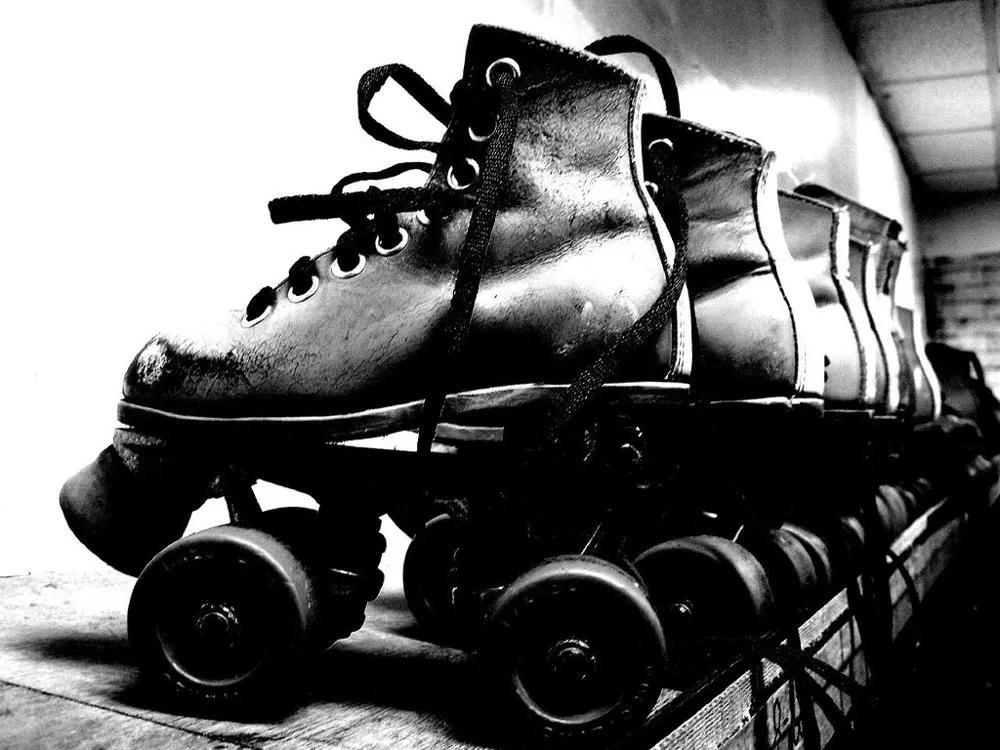
Why Roller Skate Maintenance Matters
Quad roller skates have a lot of small moving parts: 16 bearings, eight wheels, four trucks, toe stops, cushions and a pile of nuts that slowly work loose. A few minutes of care before and after each session keeps them rolling fast, turning predictably and stopping when you need them to. It also catches the loose axle nut or worn toe stop before it causes a fall.
This guide is the routine: what to check, how often, and how to do each job. If you need to know what a part is first, our roller skate parts guide explains every piece and what fits what. Spare parts and kits are covered in roller skate accessories.
Roller Skate Maintenance Schedule
Use this as a starting point and adjust for how you skate. Outdoor skaters, heavier skaters and anyone skating several times a week will need to do most jobs more often than occasional rink skaters.
| When | Task |
|---|---|
| Before every session | Spin each wheel and wiggle it for play; check toe stops and axle nuts are tight; look over laces for fraying |
| After every session | Wipe off dirt and sweat; unlace, pull the tongue forward and air-dry at room temperature |
| Weekly (regular skaters) | Check for loose mounting bolts or a shifted plate; check kingpin nuts and cushions |
| Every 3–4 weeks | Rotate wheels; rotate toe stops if they wear unevenly |
| Every 1–2 months | Condition leather or treat suede boots |
| Every 2–3 months | Clean and lube bearings (sooner for outdoor or wet skating) |
| As needed | Replace worn toe stops, cracked cushions or pivot cups, and frayed laces |
The wheel rotation, bearing and boot conditioning intervals follow the schedule in the quad maintenance guide from UK retailer Skates.co.uk. Treat them as rough guides; the signs in each section below matter more than the calendar.
Tools and Supplies You Need
| Item | Used For |
|---|---|
| Skate tool or socket wrenches | Axle nuts (often 1/2 inch) and kingpin nuts (often 9/16 inch) |
| Large wrench or quad tool | Toe stop lock nuts; sizes vary by plate |
| Allen key and screwdriver | Pinch-bolt toe stops, fixed toe stops and mounting hardware |
| Bearing cleaning kit and solvent | Cleaning bearings |
| Skate bearing lubricant | Re-lubing bearings after cleaning |
| Cloths, soft brush, suede brush | Wiping down plates and wheels and cleaning boots |
| Leather conditioner or protectant | Leather boots |
Roller Skate Nation lists a 1/2-inch socket or skate key for wheel lock nuts and a 9/16-inch socket for kingpins, but check your own plate before buying tools. A multi-socket skate tool covers most of these jobs:
Ace AF1 Skate Tool
Skate Warehouse lists the AF1 with a 9/16-inch socket, a 1/2-inch socket and a 3/8-inch socket, plus axle and kingpin re-threaders and a slide-out Allen key and Phillips head. It handles axle and kingpin nuts on most quads but has no socket for large toe stop nuts.
Good to Know
- Covers common axle and kingpin nut sizes
- Re-threaders clean up damaged threads
Watch Out For
- You may still need a wrench for toe stops
Other options are in our skate tools guide.
How to Clean Your Skates After a Session
Dirt and grit are what wear bearings, wheels and threads, so a quick wipe-down after each session saves work later. Skating through puddles is the fastest way to ruin bearings: Moxi warns that water rusts them quickly.
- Wipe the wheels and plate with a dry or slightly damp cloth, paying attention to the gaps around the trucks and cushions where grit collects.
- Spin each wheel. If one drags, grinds or stops quickly, its bearings need cleaning (see the next section).
- Wipe the boots inside and out. Riedell advises wiping perspiration from the inside and outside of leather boots after every use.
- Air them out. Unlace past the hooks, pull the tongue forward, take out the insoles if they lift out, and let the skates dry at room temperature before bagging them.
For a deeper clean, take the wheels off so you can reach the plate and trucks. Skates.co.uk suggests reassembling only once every part is completely dry. Wheel cleaning works the same way as on a skateboard; see how to clean skate wheels.
How to Clean Roller Skate Bearings
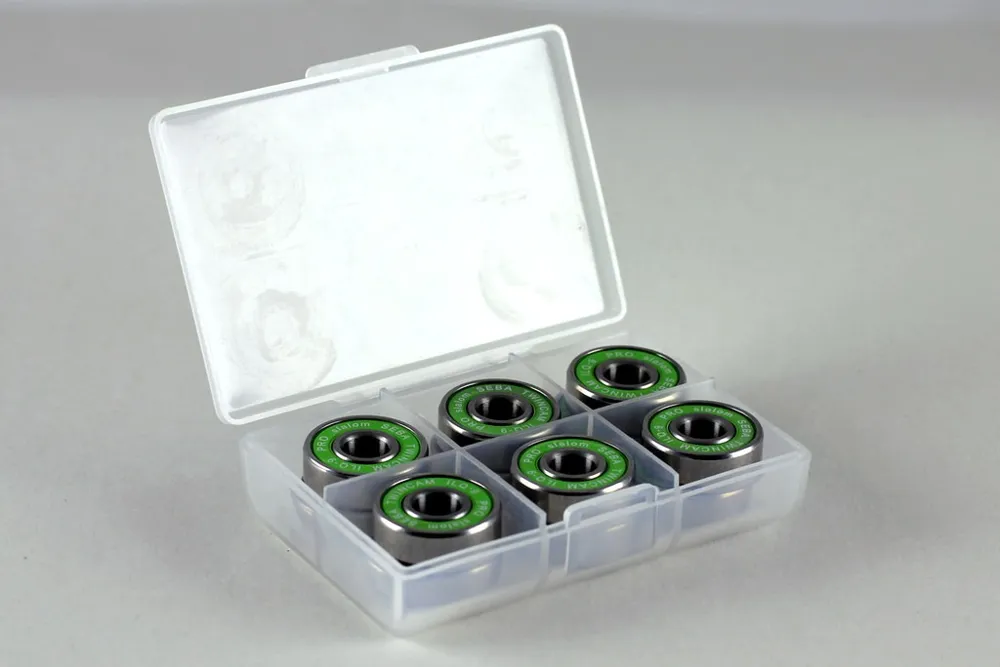
Clean bearings when a wheel feels gritty, sounds rough or loses its spin, after any wet session, and otherwise every couple of months. A pair of quads has 16 bearings, two per wheel, so set aside an hour or so plus drying time. Our bearing cleaning guide covers shields, solvents and oil versus grease in detail; here is the quad version using the Bones cleaning unit, following Bones' published instructions.
- Remove the wheels and bearings. Take off the axle nuts, slide the wheels off and pop out both bearings and any spacer. Keep the nuts and spacers in a dish.
- Remove the shields. Bones' rubber shields pry up from the center with a push-pin or press out from the back with a paper clip. Wipe the shields with a cloth or soapy water only. Bones says never to clean rubber shields with solvent. If your shields aren't removable, don't force them.
- Load the unit. Stack bearings on the unit's axle, alternating bearing and spacer, until all 8 are on, ball side up, and finger-tighten the wing nut. A pair of quads means two loads.
- Add cleaner and shake. Fill the unit about one-third full. Bones recommends acetone, methyl ethyl ketone, citrus cleaner or denatured alcohol, and says to avoid petroleum products such as paint thinner, gasoline, kerosene and turpentine. Shake for about 30 seconds, spin the bearings, and repeat until they run clean.
- Dry them fully with a lint-free towel or compressed air, wearing gloves and working somewhere well ventilated.
- Lube right away. Bones calls for two drops of Speed Cream per steel bearing (one for ceramics), then a spin to spread it. Bones says to dry and lube bearings as soon as possible to prevent rust. Press the shields back in gently.
- Refit and set the axle nuts so the wheel spins freely with no side play (see the trucks section below).
If a bearing is still rough, rusted or noisy after cleaning, replace it; see how long skate bearings last and skate bearings (check your axle size first, since some plates use 7mm axles). The kit:
Bones Cleaning Unit Bundle
A sealed container with a central axle that holds 8 bearings and spacers for soaking and shaking in solvent. It keeps the cleaner contained, and you run it twice for a pair of quads.
Good to Know
- Works for roller skate and skateboard bearings
- Bones publishes step-by-step instructions
Watch Out For
- Check the listing for what's included
- Never use petroleum-based cleaners in it
Bones Speed Cream
Bones' bearing lubricant for use after cleaning. Bones' instructions call for two drops per bearing, so one bottle goes a long way.
Good to Know
- Made for skate bearings
- Pairs with the cleaning unit
Watch Out For
- Too much lube attracts dirt
How to Rotate Quad Skate Wheels
Wheels wear unevenly because you push, turn and stop more on some than others. Rotating them spreads the wear so the whole set lasts longer and rolls more evenly. Skates.co.uk suggests every 3 to 4 weeks for regular skaters; rotate sooner if you see flat spots, thinning edges or a loss of grip on some wheels.
- Look first. Lay the eight wheels out in their positions and note which edges and which corners are worn most.
- Swap front and back on the same skate.
- Swap between left and right skates, so a wheel that was on the inside of one foot moves to the other side. This puts the worn edge where it takes less load.
- Check the hub. Some wheels are made to face one way, so check the maker's guidance before flipping a wheel inside-out.
- Set the axle nuts. Snug, with no wobble, and the wheel still spins freely.
Roller Skate Nation says to check wheel lock nuts before every session, never to overtighten them (it warps bearings) and never to tighten them to slow the wheels down. It also recommends fitting a fresh set of lock nuts with each wheel rotation. Replace wheels that are chunked, cracked at the hub or worn to a cone shape. Choosing replacements for pavement is covered in best outdoor roller skate wheels.
Toe Stop Adjustment and Replacement
Toe stops loosen as you brake on them and wear on one side. Moxi suggests checking them before each session and rotating them now and then for even wear; Skates.co.uk suggests swapping them between skates too.
Adjusting Height
- Loosen the lock. Hold the toe stop with one hand and loosen the lock nut with a skate key or wrench. On plates with a pinch bolt, loosen the bolt with an Allen key.
- Screw the stop in or out. Out brings it closer to the floor; in gives more clearance. SkatePro's rule of thumb: tilt onto the toe stop and you should fit about three fingers between the rear wheel and the floor.
- Keep enough thread in the plate. Roller Skate Nation says the stem must always be at least 1/2 inch into the plate, or it could damage the plate.
- Lock it. Tighten the lock nut against the plate, or tighten the pinch bolt as far as your tool comfortably allows by hand. Set both skates the same.
Replacing a Worn Toe Stop
Replace a toe stop when it is worn down toward the stem, cracked, or no longer grips. For an adjustable stop, iFixit's derby skate guide goes: loosen the nut, twist the old stop out by hand, move the nut, lock washer and washer onto the new stop, start the threads slowly by hand (the threads are soft metal and can chip), then tighten the nut. It warns not to overtighten, which can damage the threads on the stop or the plate. Fixed bolt-on toe stops come off with a screwdriver instead; turning them a quarter to half turn spreads wear. Match the stem type and length to your plate as explained in the parts guide, and see spare options in roller skate accessories.
Trucks, Cushions and Kingpin Nuts
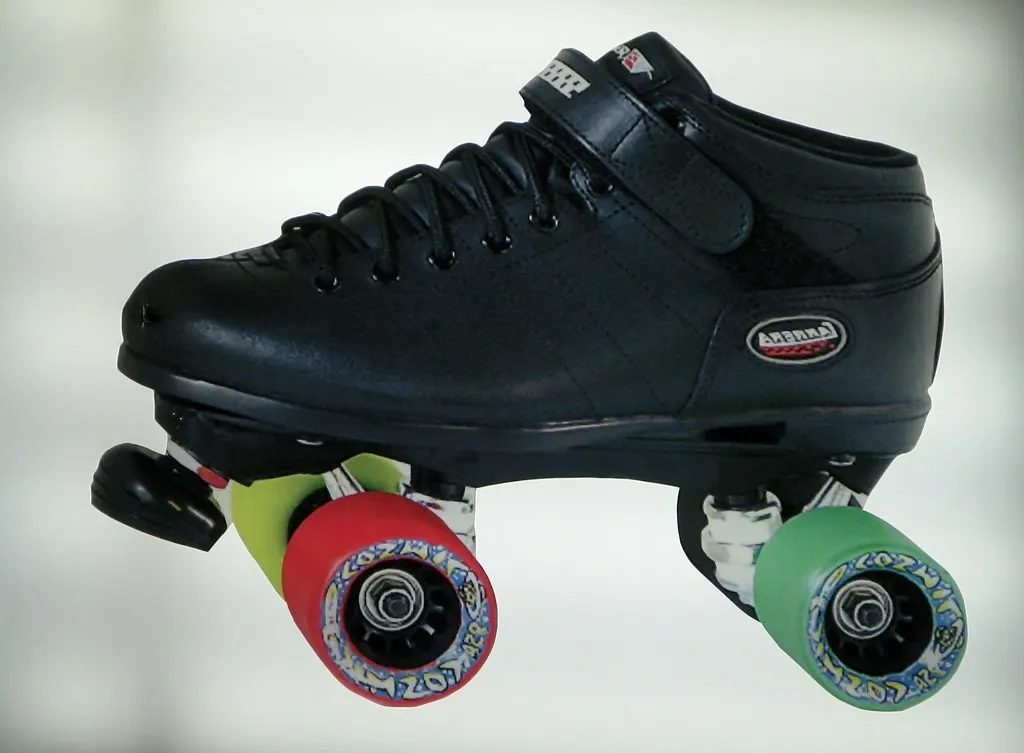
Trucks are tuned with the kingpin (action) nut, which squeezes the cushions. Our parts guide walks through the full adjustment and how cushion hardness and shape change the feel; maintenance is mostly about keeping that setting from drifting and spotting worn parts.
- Check the action nut. Flip the skate and push each truck side to side. If one feels much looser than before, the nut has backed off. Adjust a quarter turn at a time, front and back matched, and keep at least one thread showing above the nut. Roller Skate Nation's limit: if you can wiggle the truck around with just your hands, it's too loose.
- Check the kingpin lock nut. On plates with standard kingpins, Roller Skate Nation says the kingpin lock nut must be tight against the plate.
- Inspect the cushions. Replace cushions that are cracked, bulging, hardened or loose on the kingpin. Worn cushions make a skate feel sloppy, and Moxi lists them as a possible cause of aches that persist after break-in.
- Inspect the pivot cups. A split or worn cup lets the truck rattle or squeak. Replacement cups are plate-specific.
- Check clearance after changes. Moxi advises making sure the wheels don't touch the plate or boot when you turn, and that the kingpin clears the floor.
Squeaks often come from dry or worn pivot cups or cushions; the fixes are similar to squeaky skateboard trucks.
Plate and Mounting Bolt Checks
The plate is bolted to the sole of the boot. If the mounting hardware works loose, the plate can shift, the boot can flex unevenly and holes in the sole can wear oversize. Skates.co.uk includes checking for loose bolts and plate misalignment in its weekly routine, and checking plates for stripped bolts, cracks or shifting.
- Look and feel: grip the boot and twist the plate gently. It should not move or click.
- Tighten carefully: on most quad skates the mounting bolts pass through the sole and the plate and are held by nuts under the plate. Hold the bolt head still from inside the boot (you may need to lift the insole) and snug the nut. Don't overtighten into a soft sole.
- Stop on damage: a cracked plate, cracks around the bolt holes or a twisted plate mean the skates should not be skated until repaired. Stripped holes and remounting are jobs for a skate shop.
Boot Care: Leather, Suede and Synthetic
The boot is usually the most expensive part of the skate, and how you treat it depends on the material. Check the care label or the maker's site first, and test any product on a hidden spot.
| Material | Clean With | Protect With |
|---|---|---|
| Leather | Soft cloth; leather cleaner for dirt | A leather conditioner or protectant; Riedell suggests Lexol for uppers and Sno Seal for heels and soles |
| Suede | A suede brush, brushed gently | Keep dry; Skates.co.uk suggests blotting stains with vinegar or rubbing alcohol |
| Synthetic (vinyl, faux leather) | Mild soap and warm water on a cloth | Do not soak or submerge the boot |
Riedell says handcrafted leather boots need care after every use, starting with wiping off sweat, and that routine use of leather protectants keeps them looking and feeling newer for longer. Skates.co.uk suggests conditioning leather or treating suede every 1 to 2 months. Scuffed toes on derby and park boots wear fastest; toe guards help, as covered in our accessories guide.
Drying and Deodorizing
Moisture is what turns a pair of skates musty. Riedell warns that wet skates stored in bags or lockers "quickly become victims of mold, mildew and rotting leather."
- Dry at room temperature. Loosen the laces, pull the tongue forward and leave the skates somewhere ventilated and shaded. Stuffing them with paper towels or newspaper speeds things up.
- Skip direct heat. SkatePro says never to use a hair dryer or other heater to dry liners, and Riedell warns that overheating a boot can burn leather or separate the sole from the upper. Radiators and hot cars are just as risky.
- Deodorize overnight. Skates.co.uk suggests removing the insoles and using baking soda overnight, moisture-absorbing sachets or a deodorizing spray.
- After a wet session, dry the boots, then clean and lube the bearings rather than leaving water in them. More on skating in wet weather is in skating in the rain.
If your feet hurt rather than smell, the fix is usually fit or lacing; see why your feet hurt when you skate.
Laces and Closures
A lace that snaps mid-session can throw you off balance, so check for fraying where laces run through the eyelets and hooks, and replace them before they break. Moxi lists worn laces as another possible cause of discomfort after break-in. Check that power straps still hold and that speed hooks aren't bent. Replacement lace lengths by eyelet count are in our roller skate accessories guide, and lacing patterns are in how to lace skate shoes.
How to Store Roller Skates
SkatePro advises storing skates somewhere cool and dry, away from direct sunlight and damp, because heat can warp plastic parts and moisture causes rust and mold.
- Make sure the skates are fully dry first, never straight into a sealed bag.
- Use a ventilated skate bag for carrying and short-term storage (see skate bags).
- Keep them away from heaters, car trunks in summer and damp garages or basements.
- Before a long break, clean and lube the bearings and condition leather boots so they don't go into storage dirty.
- Before the first session back, run through the before-every-session checks in the schedule above.
Wall hooks and racks for boards also work for skates; see how to store a skateboard for ideas.
Inline Skate Maintenance: What's Different
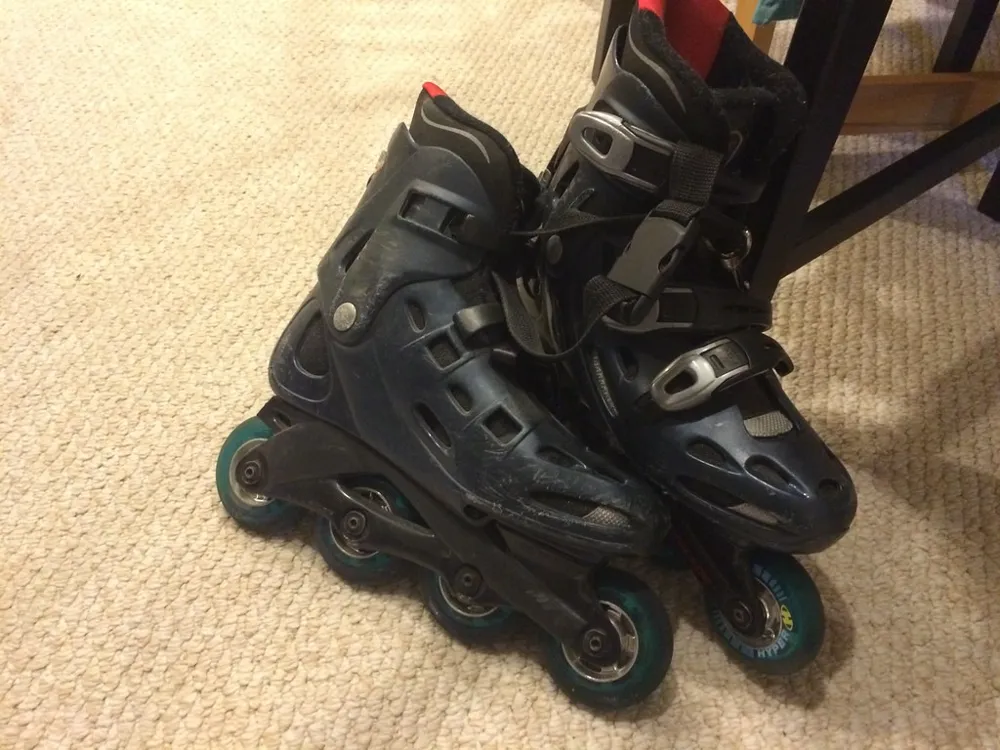
Inline skates share the bearing, boot and storage routines above, but the hardware is simpler: no trucks, cushions, kingpins or toe stops. The main differences:
- Wheel rotation is a bigger job. SkatePro recommends rotating when the inside edges wear noticeably more than the outside, using a cross pattern on 4-wheel skates (1 with 3, 2 with 4) and moving wheels between the left and right skates. K2 describes the same 1-3 and 2-4 swap with each wheel's graphic turned to face the inside, and a different criss-cross pattern for skates that mix two wheel sizes.
- Axles and frame bolts take an Allen key. SkatePro notes that the hex key is used to mount frames, brakes and cuffs as well as axles, so check all of them for looseness.
- The heel brake replaces the toe stop. Replace the pad before it wears too thin to stop you; check your skate's manual for the replacement procedure. Stopping technique is covered in how to stop on rollerblades.
- Liners can come out. SkatePro says washable liners should be washed at no more than 30°C (86°F) and air-dried, never with a hair dryer or heater.
Replacement wheels are compared in best rollerblade wheels, and rollerblades vs roller skates sets the two side by side.
Common Roller Skate Problems and Quick Fixes
| Problem | Likely Cause | Fix |
|---|---|---|
| Wheel spins slowly or grinds | Dirty or dry bearings, or an overtightened axle nut | Back the nut off slightly; clean and lube the bearings |
| Wheel wobbles | Loose axle nut, missing spacer or worn bearing | Tighten the nut until play disappears; check spacer and bearings |
| Skates won't turn | Action nuts too tight or cushions too hard | Loosen in quarter turns; try softer cushions |
| Skates feel wobbly or twitchy | Action nuts too loose or worn cushions | Tighten in quarter turns; replace cracked cushions |
| Squeaking or clicking | Dry or worn pivot cups or cushions, or loose hardware | Check pivot cups and cushions; tighten mounting and kingpin nuts |
| Toe stop spins or works loose | Lock nut or pinch bolt not tight | Reset height and tighten the lock against the plate |
| Wheels rub the boot when turning | Trucks too loose or wheels too large for the setup | Tighten trucks or check wheel size against the plate |
| Boots smell | Moisture trapped after sessions | Air-dry open after every session; deodorize overnight |
When to Replace Parts or Visit a Skate Shop
Most routine jobs only need a skate tool and some patience. Replace consumable parts as they wear, using the checklist in our roller skate parts guide: wheels, toe stops, cushions, pivot cups, bearings, axle nuts and laces all wear out on their own schedules.
Take your skates to a skate shop for stripped axle or kingpin threads that a re-threader won't fix, cracked plates or trucks, plate remounting, and boots that are coming apart at the sole. Don't skate on a cracked plate, truck or kingpin.
Once your skates are tuned, put them to work with how to roller skate and how to roller skate faster, or browse every guide on the roller skating hub.
Frequently Asked Questions
How often should you clean roller skate bearings?
Skates.co.uk suggests every 2 to 3 months, and more often if you skate outdoors. Clean them sooner if a wheel feels gritty, noisy or slow to spin, or after skating through water.
How often should I rotate my roller skate wheels?
A common guideline is every 3 to 4 weeks for regular skaters. Rotate sooner if you see uneven edges, flat spots or a loss of grip on some wheels.
How tight should the axle nuts be on roller skates?
Snug enough that the wheel has no side-to-side wobble, but loose enough that it spins freely. Overtightened axle nuts can damage bearings, so never tighten them to slow the wheels down.
Can I get my roller skates wet?
Avoid it where you can, because water rusts bearings quickly. If they do get wet, dry the boots at room temperature and clean, dry and lube the bearings as soon as possible.
How do I stop my roller skates from smelling?
Unlace them, pull the tongue forward and remove the insoles after each session so they air out. Baking soda overnight, moisture-absorbing sachets or a deodorizing spray help with lingering odor.
How far should a toe stop be screwed in?
Roller Skate Nation says an adjustable toe stop stem must always be at least half an inch into the plate, or it could damage the plate. Set the height you want, then lock it with the lock nut or pinch bolt.
Can I use WD-40 on roller skate bearings?
It is not a bearing lubricant. Clean bearings with a recommended solvent, dry them fully, then add a couple of drops of skate bearing lubricant such as Bones Speed Cream.