Roller Derby Rules Explained for New Fans and Skaters (2026)
Two teams, one oval track and a jammer in a star helmet trying to lap the pack. Here's how flat track roller derby is played under the WFTDA rules.
Roller Derby Rules at a Glance
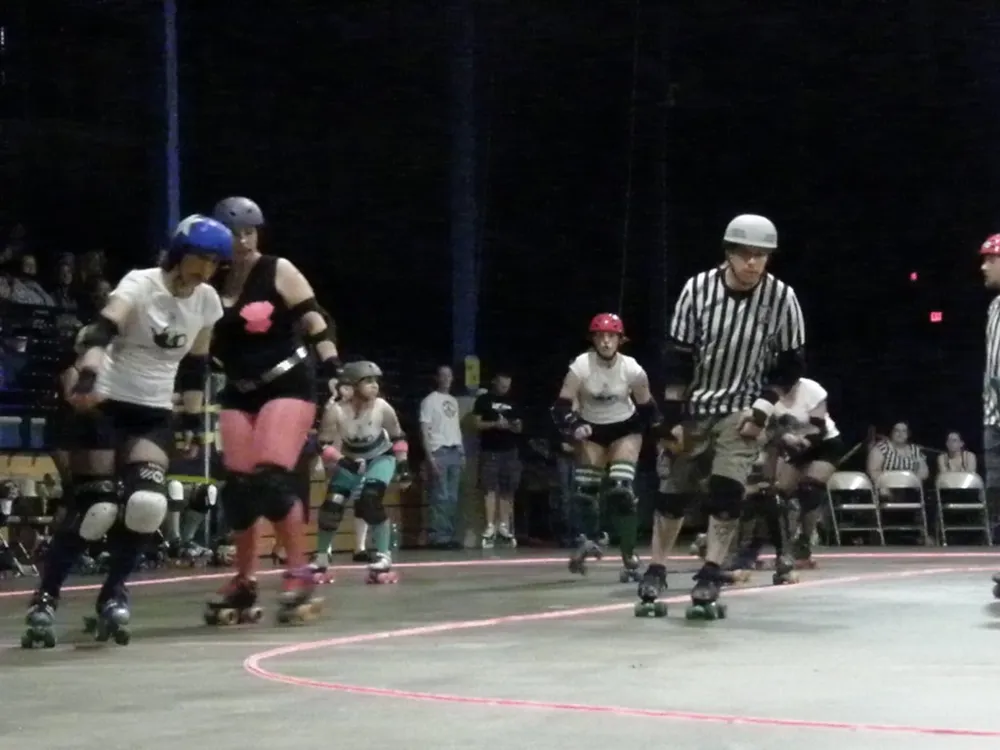
Roller derby looks like chaos the first time you watch it, but the rules are simpler than they seem. Two teams skate counterclockwise around an oval track. Each team sends out one jammer, who scores, and up to four blockers, who try to stop the other jammer while helping their own get through. Most leagues play flat track derby under The Rules of Flat Track Roller Derby, published by the Women's Flat Track Derby Association (WFTDA). This guide summarizes the edition dated January 1, 2025, the current version on rules.wftda.com when we checked in November 2026. It is a plain-English summary, not the rulebook, so check the official site for the full text and any updates.
| Rule | WFTDA Flat Track (2025 Edition) |
|---|---|
| Game length | Two 30-minute periods |
| Jam length | Up to 2 minutes, with 30 seconds between jams |
| Skaters per team on track | Up to 5: 1 jammer and up to 4 blockers (one can be the pivot) |
| Scoring | 1 point per opposing blocker lapped, on each scoring trip |
| Lead jammer | First jammer out of the pack; can end the jam early |
| Pack | Largest group of blockers from both teams within 10 feet of each other |
| Engagement zone | 20 feet in front of and behind the pack |
| Penalty | 30 seconds of jam time in the penalty box |
| Foul-out | 7 penalties |
| Team timeouts | 3 per game, 60 seconds each, plus 1 official review per period |
| Skates | Quad roller skates only |
The Flat Track Layout
A flat track is marked on any smooth floor, such as a sports court, rink or convention hall, using rope or raised boundary material and tape. That portability is a big reason the sport spread so fast in the 2000s. WFTDA's regulation track layout guide sets out the key measurements:
| Track Feature | Regulation Measurement |
|---|---|
| Overall footprint | 108 by 75 feet with a 10-foot outer officiating lane (98 by 65 feet with a 5-foot lane, allowed only with an acceptable barrier) |
| Inside arc radius | 12 feet 6 inches, with the two inside arc points 35 feet apart |
| Outside arc radius | 26 feet 6 inches |
| Track width in the turns | 13 feet at the turn entrance, 15 feet at the turn exit |
| Pivot line to jammer line | 30 feet |
| Penalty box | At least 15 feet from the outer track line |
Markers at 10 and 20 feet from the pivot line on each straightaway help referees judge distances in the pack. The infield inside the track is where the inside referees skate and where team benches may sit.
How a Game Is Structured
A game (still often called a bout) is two 30-minute periods. Each period is broken into jams, short bursts of play that last up to two minutes. Between jams, teams get 30 seconds to swap skaters and line up. A jam starts with one short whistle and ends with four short whistles. The team with more points when time runs out wins.
Lining Up for a Jam
Blockers line up between two lines on the straightaway: behind the pivot line and in front of the jammer line. The jammers line up behind the jammer line, 30 feet back. The pivot is the only skater allowed to start touching the pivot line.
Timeouts, Reviews and Overtime
Each team gets three 60-second team timeouts per game and one official review per period, which it can keep if the review shows an officiating error (once per period). If the score is tied at the end of the second period, the game goes to an overtime jam with a 60-second lineup and no lead jammer. More overtime jams follow until the tie is broken.
Positions: Jammer, Pivot and Blockers
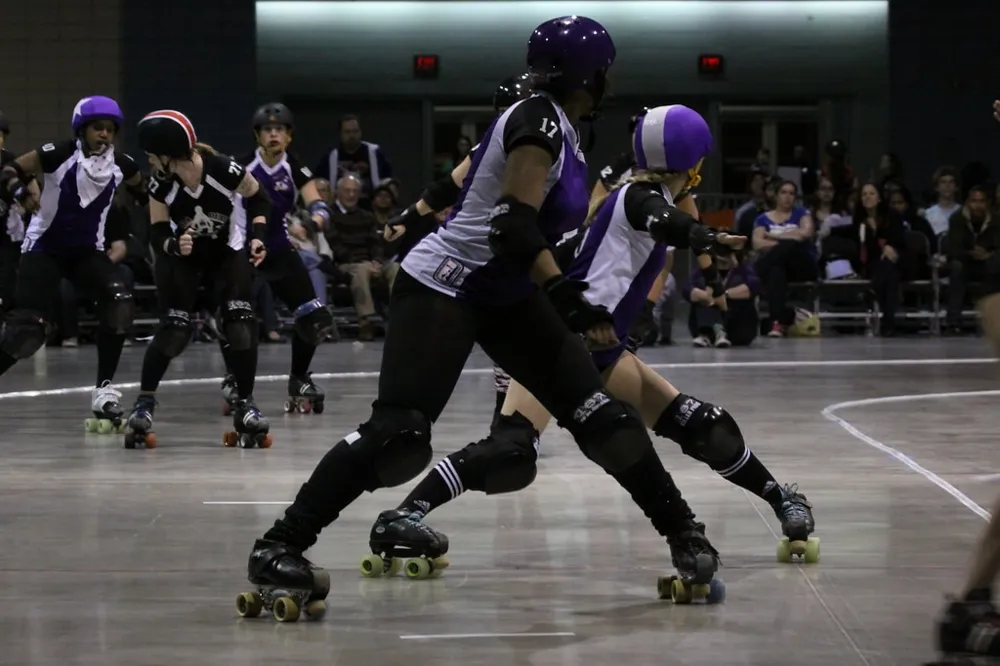
Each team puts up to five skaters on the track per jam, and every skater plays both offense and defense at the same time.
| Position | Helmet Cover | Job |
|---|---|---|
| Jammer | Star | The only skater who scores. Breaks through the pack, laps around and passes opposing blockers for points. |
| Pivot | Stripe | A blocker who can take over as jammer through a star pass. |
| Blockers | None | Up to four per team (including the pivot). Stop the opposing jammer and open gaps for their own jammer. |
The Star Pass
A jammer who is stuck can hand the star helmet cover to their pivot, who then becomes the jammer for the rest of the jam. The pass is only legal when both skaters are upright, in bounds and in play, and neither is heading to or queued for the penalty box. The former jammer becomes a blocker.
The Pack and the Engagement Zone
The pack is the largest group of in-bounds blockers from both teams skating within 10 feet of each other. Blockers can only block and assist while they are part of the action around the pack, inside the engagement zone, which extends 20 feet in front of the foremost pack skater and 20 feet behind the rearmost one.
This is why you see blockers slow down, speed up or stop: a team that deliberately breaks up the pack or skates out of play to escape it can be penalized. Skaters who fall or step out of bounds must get back legally, and a skater is out of bounds when any part of their body or gear (other than one arm or hand) touches the floor outside the boundary.
How Scoring Works
Only jammers score, and points come in trips through the pack. A trip ends when the jammer exits the front of the engagement zone.
- Initial trip: the jammer's first pass through the pack earns no points. It decides who becomes lead jammer.
- Scoring trips: after lapping around, the jammer earns one point for each opposing blocker they pass a second time (lapping them). Passes are judged by the hips, moving counterclockwise.
- Four points max per trip: there are at most four opposing blockers, so four points is the most on one trip. Passing all four is often called a grand slam.
Jammers also collect points for opponents they had no chance to pass, such as a blocker sitting in the penalty box, often called "not on the track" (NOTT) points. Since the 2019 rules update, passing the opposing jammer no longer scores a point; only blockers count. A jammer in the penalty box can't score until they return, which gives the other team a power jam, when only one team can score.
Lead Jammer and Calling Off the Jam
The first jammer to get out of the pack on the initial trip is declared lead jammer. Lead matters because the lead jammer can call off the jam at any time, usually by placing their hands on their hips. Teams call it off to protect a lead, stop the other jammer scoring, or end a jam before a teammate's penalty hurts them.
A jammer loses lead status if they get a penalty or remove the star helmet cover (or a teammate removes it). A jammer who exits the front of the engagement zone on the initial trip without earning lead can't become lead jammer later in that jam.
Legal and Illegal Contact
Roller derby is a full-contact sport, but contact is tightly limited by which body part hits and where it lands.
| Legal | Illegal | |
|---|---|---|
| Blocking with (your body) | Torso, arms above the elbow, legs above mid-thigh | Head, extended forearms, hands, elbows, knees, lower legs, feet |
| Target zones (their body) | Chest, front and sides of the torso, arms, hands, hips, front and sides of the legs above mid-thigh | Head, back, legs below mid-thigh (including knees, lower legs and feet) |
Blocks also have to come from a legal position. Skaters can't block while down, out of bounds, out of play, airborne or skating clockwise, and teammates can't link arms or grab each other to form a wall that stops an opponent (a multiplayer block). Not every block is a hit: positional blocking, where a skater simply uses their body to get in the jammer's way, is a core skill.
Officials judge most contact penalties by impact. An illegal hit draws a penalty when it has a real effect, such as knocking an opponent badly off balance, changing their path or speed, or gaining position. Some actions, like forceful contact to the head or neck, are penalized regardless. The rules say penalties should not be called for actions with little or no impact on the game.
Penalties and the Penalty Box
When a referee calls a penalty with a verbal cue and hand signal, the skater leaves the track right away and goes to the penalty box. Each penalty costs 30 seconds of jam time. The timer only runs during jams, and the last 10 seconds must be served standing. Up to two blockers per team can sit in the box at once; a third waits in queue. A skater who collects seven penalties fouls out, and only the head referee can expel a skater outright for a serious act.
| Penalty Group | Examples |
|---|---|
| Contact | Hitting an illegal target zone (back, head, below mid-thigh), blocking with an illegal zone (head, forearm, lower legs), multiplayer blocks, unsporting contact such as elbow jabs |
| Game structure | Illegal positioning (destroying or delaying the pack), gaining position by cutting the track through the out-of-bounds area, interfering with the flow of the game, other illegal procedures |
| Misconduct | Abuse or disrespect, deceiving or ignoring officials, negligent forceful contact with an official |
If both jammers end up in the box, their time is shortened so that, whenever possible, at least one jammer is on the track. If they sit down at the same moment, both are released immediately.
Who Officiates a Game
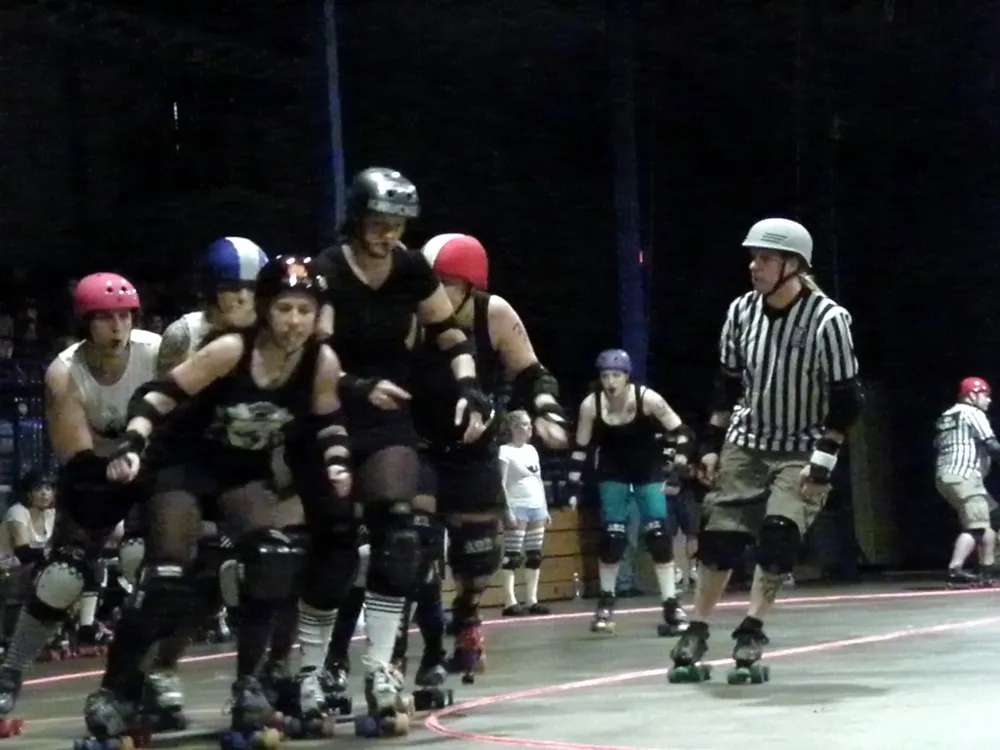
Skating referees wear stripes and skate both inside and outside the track. They include a head referee, two jammer referees (one per jammer, who track lead and report points) and pack referees who watch the blockers. Wikipedia's summary of the WFTDA setup describes three to seven skating referees per game. The rules themselves only require enough officials to track the game in real time.
Behind them is a crew of non-skating officials (NSOs) who run the scoreboard and clocks, keep score, track penalties and lineups, and time skaters in the penalty box. Many leagues need volunteer officials, which is a common way to get involved without playing.
Gear the Rules Require
WFTDA rules require quad roller skates; inline skates aren't allowed. Skaters must also wear a helmet, mouthguard, wrist guards, elbow pads and knee pads, and can't take any of it off during play (only the mouthguard may come out in the penalty box). Leagues set their own extra standards, such as helmet certification, so check before you buy. Our roller derby skates guide covers what makes a derby skate, and roller skate accessories covers pads, toe guards and gear bags.
Other Roller Derby Rule Sets
WFTDA's rules are the most widely used, but they aren't the only ones.
- MRDA: the Men's Roller Derby Association began in 2007 as the Men's Derby Coalition and took its current name in 2011. Its open-gender member leagues play under the flat track rules originally written by WFTDA, and WFTDA has released an MRDA-branded edition of the rules.
- JRDA: the Junior Roller Derby Association governs derby for skaters up to 18 years old in the US. It uses WFTDA's rules with addenda and splits play into skill levels, from levels with no intentional contact (positional blocking) up to full contact.
- Banked track: a few leagues still skate on raised, sloped tracks like the ones used in the 1930s. The Roller Derby Coalition of Leagues (RDCL) supports women's banked-track derby, so check the rules each banked league uses.
- USA Roller Sports and World Skate: USA Roller Sports (USARS) is the US national governing body for roller sports and has held its own roller derby national championship since 2012. World Skate, the IOC-recognized international body, released its first roller derby rules for the 2017 World Roller Games in China.
Check which rule set a league or tournament uses before you play or officiate there; the core idea of jammers lapping blockers is shared, but details differ.
How to Get Started in Roller Derby
- Watch a game. Seeing the pack, the jammer referees' signals and a star pass live makes the rules click quickly.
- Find a league. Check the WFTDA and MRDA websites for member leagues near you, and search locally too, since many independent and junior leagues run their own programs. Junior skaters can look for a JRDA program.
- Join a beginner intake. Most leagues run a recruit or "fresh meat" program that teaches skating basics, safe falls, stops and pack skills before contact. Some lend gear for the first sessions.
- Pass the league's skills check. Many leagues assess skating and safety skills before clearing new skaters for contact. Requirements vary, so ask your league for its current checklist.
- Sort out insurance and gear. Many leagues require skater insurance before you practice; ask which provider they accept. Then buy skates that fit and the required pads, helmet and mouthguard.
Not ready to skate? Referees and NSOs learn the same rules and are always welcome. If you're brand new to wheels, start with how to roller skate and how to stop on roller skates, then build speed with how to roller skate faster.
Where the Rules Came From
Roller derby began as a 1930s endurance race and became a contact sport late in that decade, but today's flat track game grew out of the early-2000s revival in Austin, Texas. The group that became WFTDA formed in 2004 and took its name in November 2005, and its first shared rules were published in early 2006. The full story is in our history of roller skating.
Keep Exploring
Browse more quad and inline guides in the roller skating hub, compare rollerblades vs roller skates, or check fit before buying with our roller skate size chart.
Frequently Asked Questions
How long is a roller derby game?
Under WFTDA rules a game has two 30-minute periods, split into jams that last up to two minutes each, with 30 seconds between jams. With timeouts and halftime, the whole event usually runs well over an hour.
How many players are on the track in roller derby?
Each team fields up to five skaters per jam: one jammer and up to four blockers, one of whom can be the pivot. That makes up to 10 skaters on the track at once.
How do you score points in roller derby?
Only the jammer scores. After a first pass through the pack that earns no points, the jammer scores one point for each opposing blocker they lap on every later trip, so four points is the most on a single trip.
How long is the penalty box in roller derby?
Each penalty is 30 seconds of jam time in the penalty box, and the last 10 seconds must be served standing. The clock pauses between jams.
Can you hit with your elbows in roller derby?
No. Skaters can't block with their head, forearms, hands, elbows, knees, lower legs or feet, and they can't hit an opponent's head, back, knees, lower legs or feet.
Can you play roller derby on inline skates?
Not under WFTDA rules. Skaters must wear quad roller skates plus a helmet, mouthguard, wrist guards, elbow pads and knee pads.
Do you need to know how to skate to join roller derby?
No. Many leagues run beginner programs, often called fresh meat, that teach skating, falling and stopping before any contact. Ask your local league what it expects on day one.