Roller Skating History: A Complete Timeline (2026)
Roller skates began as a stage trick and a hard-to-steer novelty. Here's how they became rink crazes, a contact sport, a disco icon and a pandemic comeback.
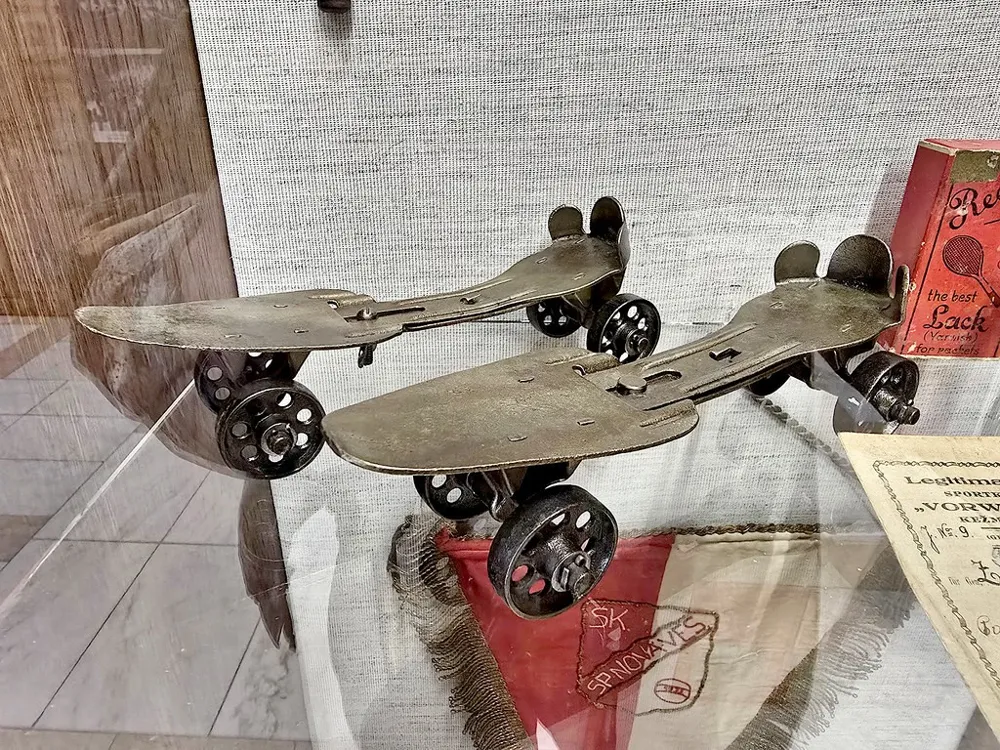
Roller Skating History at a Glance
Roller skating is close to three centuries old. Its story runs in booms and quiet spells: a stage novelty in the 1700s, a rink craze in the 1860s and 1880s, a dance and derby scene in the mid-1900s, roller disco in the 1970s, the inline boom of the 1990s, and a big comeback in 2020. Here are the key dates, with the shakier ones marked.
| Year | Milestone |
|---|---|
| 1743 (disputed) | First reported use of wheeled skates, on a London stage; poorly documented |
| About 1760 | John Joseph Merlin experiments with wheeled skates in London |
| 1819 | Charles-Louis Petitbled files the first known roller skate patent in France (three wheels in a line) |
| 1823 | Robert John Tyers patents the five-wheel "Volito" in England |
| 1849 | Skates appear in Meyerbeer's opera Le Prophète in Paris |
| 1863 | James Leonard Plimpton patents his four-wheel turning (rocking) skate |
| 1866 | First public roller rink reported in Newport, Rhode Island |
| 1876 | A toe stop is patented |
| 1884 | Ball-bearing roller skates patented in the US |
| 1935 | Leo Seltzer stages the Transcontinental Roller Derby in Chicago |
| 1937 | The Roller Skating Rink Operators Association (now the Roller Skating Association) is founded |
| 1948 | Roller derby debuts on New York television |
| 1965 | Montgomery Ward sells the Chicago Roller-Blade, an early inline skate |
| 1970s | Polyurethane wheels arrive and roller disco booms |
| 1983 | Rollerblade adds a heel brake to its inline skates |
| 1992 | Roller hockey is a demonstration sport at the Olympics |
| 1996 | Inline skate sales peak |
| Early 2000s | Modern roller derby revival begins in Austin, Texas |
| 2004–2005 | The group that becomes the Women's Flat Track Derby Association forms |
| 2020 | Pandemic-era comeback driven by outdoor activity and TikTok |
Stage Skates and John Joseph Merlin (1700s)
The earliest roller skate stories are the hardest to pin down. A 1743 London stage performance is often called the first recorded use of wheeled skates, but the claim is poorly sourced and is best treated as legend.
The better-known story belongs to John Joseph Merlin, a Belgian clock and instrument maker who moved to London around 1760. He is reported to have rolled into a masquerade party on his wheeled skates while playing the violin, then, unable to steer or stop, crashed into a large mirror. National Geographic and JSTOR Daily both tell this story, but neither cites a primary source, and no drawings of Merlin's skates survive, so nobody knows how his wheels were arranged. What sources agree on is that his skates were hard to steer, had no brakes and did not catch on.
National Geographic also mentions a Dutch experimenter who fixed wooden "skeelers" to his shoes in the 1700s, and a Paris-made patin à terre (ground skate) from around 1790, credited to Maximiliaan Lodewijk van Lede.
The First Patents: Inline Skates Came First (1819–1860s)
Early roller skates were mostly inline, long before the word "rollerblade" existed.
- 1819: Charles-Louis Petitbled filed the first known roller skate patent in Paris, for "land skates" with three wheels in a single line.
- 1823: Robert John Tyers of London patented a five-wheel skate, sold as the "Volito."
- 1828: Jean Garcin patented the "Cingar" skate. It was judged too similar to Petitbled's design, and his patent was voided in 1832.
- 1840s: Meyerbeer's opera Le Prophète (Paris, 1849) used skaters on wheels to imitate ice skating on a frozen lake, helping spark a skating fad in Europe.
- 1860–1861: The first US roller skate patent went to Reuben Shaler in 1860, and Henry Pennie patented a two-row skate in 1861.
All of these shared one problem: they could not turn well. That changed with a design from Massachusetts.
James Plimpton's Rocking Quad Skate (1863)
In January 1863, James Leonard Plimpton of Massachusetts patented a four-wheel skate with its wheels in two pairs. According to the National Museum of Roller Skating, each pair pivoted on a mechanism dampened by a rubber cushion, so a skater could steer just by leaning. That made turns and the "scissors" push easy, and in the museum's words, a skater could finally move around the floor as if on ice.
This is the basic layout every quad skate still uses: a plate with two trucks that turn when you lean, with rubber cushions controlling how easily they turn. See how those parts work today in our roller skate parts guide. Plimpton also promoted skating as a respectable social pastime and, by some accounts, held more than 20 US skate patents.
Rinkomania: The First Rink Boom (1860s–1880s)
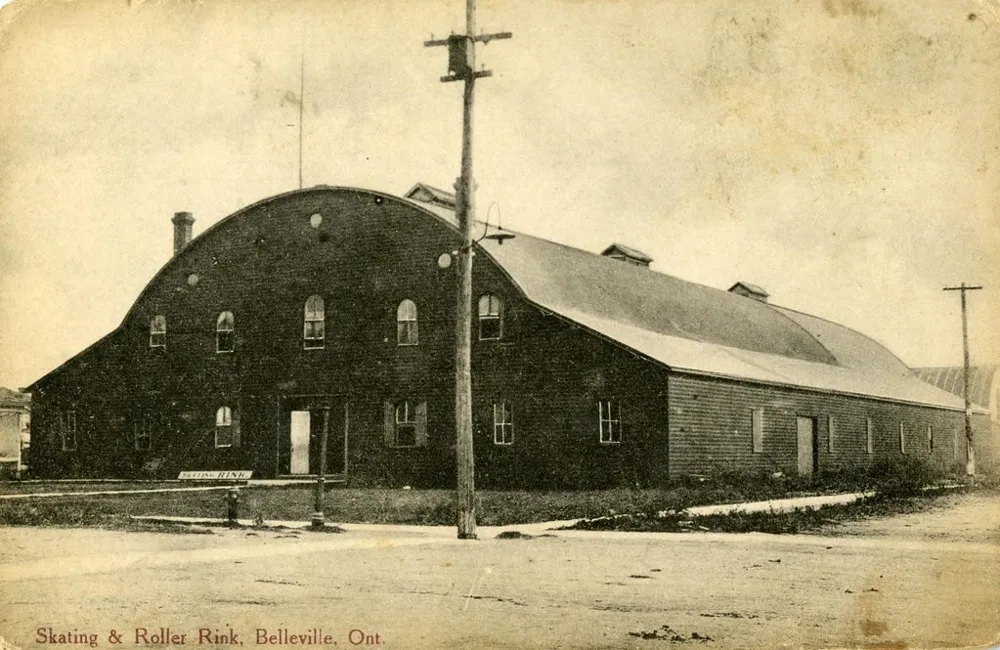
Plimpton's skate set off what writers of the time called "rinkomania." National Geographic reports that the first public roller rink opened at the Atlantic House in Newport, Rhode Island, in 1866. By 1880, London reportedly had about 70 rinks, Paris 40 and New York City at least 20.
Not everyone approved. In 1885, a Pennsylvania newspaper ran a piece in which some preachers called rinks "pits of perdition," while a Scientific American article that year concluded that moderate skating did little medical harm. Skating also turned competitive: multi-day endurance races with cash prizes were held in the mid-1880s, including a six-day race at Madison Square Garden in 1885.
By the turn of the 20th century, huge rinks operated at venues like the Chicago Coliseum and Madison Square Garden. In 1913, doctors writing in the British Medical Journal recommended indoor rink skating as exercise, and a 1917 Scientific American piece even promoted skates for commuting.
Better Parts: Toe Stops, Ball Bearings and Brakes
Many parts skaters now take for granted date from this era:
| Year | Innovation | Why It Mattered |
|---|---|---|
| 1863 | Leaning trucks with rubber cushions | Steering by leaning; the core of the quad skate |
| 1876 | Toe stop patented | Stopping and toe work; not standard until the mid-20th century |
| 1884 | Ball-bearing skates (George Burton and Levant Richardson patents) | Much smoother, faster rolling |
| 1893 | Heel brake patented | An early heel brake design |
| 1970s | Polyurethane wheels | Grip and smoothness that replaced metal and older wheels |
The bearings in a modern skate descend from those 1880s patents; learn how they work and how to care for them in roller skate maintenance.
Roller Derby Is Born (1935)
The word "derby" was already used for skating endurance races by the 1920s. In 1935, promoter Leo Seltzer staged the Transcontinental Roller Derby in Chicago: a month-long simulated cross-country race between two-person teams circling a track.
In the late 1930s, writer Damon Runyon reportedly persuaded Seltzer to change the rules to encourage contact between skaters. By 1939, two five-person teams shared the track and scored by lapping opponents, an early form of the lapping-to-score idea behind today's jammers. Roller derby was reportedly watched by more than 5 million spectators in about 50 US cities in 1940, and it debuted on New York television on November 29, 1948. Its popularity faded in the late 1950s and 1960s, even as scripted storylines were added to draw crowds.
For how the modern game is played, see roller derby rules.
The Golden Age of Rinks (1930s–1960s)
The Roller Skating Rink Operators Association was founded in the US in 1937. It is now the Roller Skating Association, based in Indianapolis. After the Great Depression and World War II, National Geographic describes a "golden age" in the US with about 5,000 rinks and 18 million skaters.
Rinks became social hubs. By the late 1950s and 1960s, roller skating had moved into rock 'n' roll teen dance halls. Artistic skating, the roller equivalent of figure skating, and roller speed skating developed into organized competitive sports.
Rink Culture, Segregation and Black Skate Styles
Rink history also includes exclusion. JSTOR Daily, citing historians, describes rinks that barred Black skaters, protests by Black communities against those policies, and rinks that stayed segregated into the Civil Rights era. After the Civil Rights Act, some rinks kept a de facto line through separate "urban" or "adult" nights.
Black skaters built their own rink culture in response, developing regional styles tied to specific cities, a history explored in the documentary United Skates. Many of the dance and jam moves on our roller skating tricks page trace back to those scenes.
Roller Disco and Urethane Wheels (1970s)
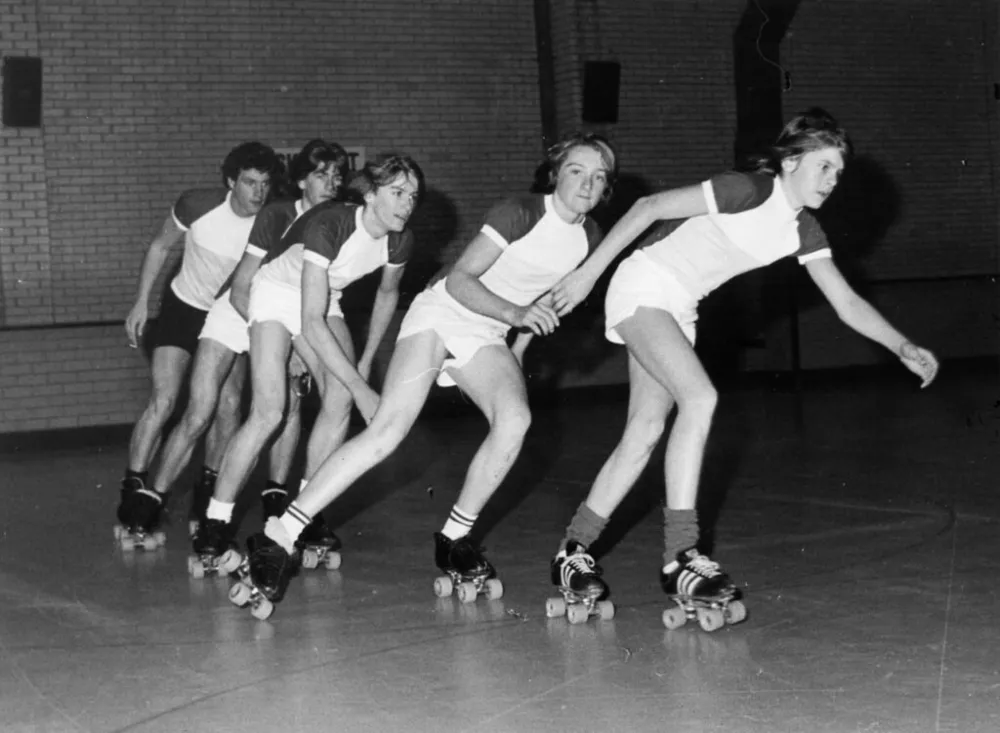
The 1970s brought the biggest change to the ride since Plimpton. Large polyurethane wheels replaced metal and older composite wheels, giving far more grip and a smoother roll on both rink floors and pavement. The same material had just revived skateboarding (see skateboarding history).
Better wheels plus disco music produced roller disco, which boomed in the 1970s and made roller skating an icon of the era. Popularity then cooled, and quad skating declined in the early 1990s as inline skates took over.
Inline Skates and the Rollerblade Boom (1980s–1990s)
Inline skates never fully disappeared. In 1965, Montgomery Ward sold the Chicago Roller-Blade, an inline skate that was soon discontinued, and in the 1970s another inline design, the Super Sport Skate, was on the market.
In 1979, Scott Olson, a Minneapolis hockey player, found the Super Sport Skate and began selling and modifying it with his brother Brennan. Key steps followed:
- 1981: Olson formed a company and obtained rights to the Chicago Roller-Blade patent in exchange for a share of future profits.
- 1983: Heel brakes appeared on skates sold under the Rollerblade name.
- 1988: Rollerblade, Inc. released the Lightning skate with a fiberglass-reinforced frame.
- 1991: The group that became the International Inline Skating Association was founded.
- 1992: A key patent expired, letting more makers into the market.
- 1996: Inline skate sales peaked.
A 1998 survey reported that 32 million Americans over age six tried inline skating that year, and "rollerblade" became the everyday word for any inline skate. Roller hockey also surged and was a demonstration sport at the 1992 Olympics. For how quads and inlines compare today, read rollerblades vs roller skates, and for current models see the best rollerblades.
The Roller Derby Revival (2000s)
After short-lived TV versions like RollerGames (1989) and RollerJam (1999), roller derby was reborn in the early 2000s in Austin, Texas, as an all-female, amateur, skater-run sport. It spread fast:
- April 2004: Leagues formed the United Leagues Coalition, an informal online network.
- November 2005: It renamed itself the Women's Flat Track Derby Association (WFTDA), starting with 22 member leagues. Its first shared rules were published in early 2006.
- 2006: More than 135 leagues were reported in the US.
- 2009: The film Whip It brought the sport to a wider audience.
- December 2011: The first Roller Derby World Cup was held in Toronto.
Most modern leagues skate on a flat track rather than a banked one, so they can play on ordinary smooth floors. Men's and junior derby followed. If you're thinking of joining, start with roller derby skates.
Roller Sports and the Olympics
Roller sports have knocked on the Olympic door several times. Roller hockey was a demonstration sport at the 1992 Olympics, roller skating was considered for the 2012 Games, and the IOC considered roller derby for 2020, but none became a full medal event. World Skate is the IOC-recognized governing body for roller sports, including skateboarding, which debuted at the Tokyo 2020 Games (see Olympic skateboarding). Check the IOC's site for the current program, since sports are added Games by Games.
The 2020 Roller Skating Resurgence
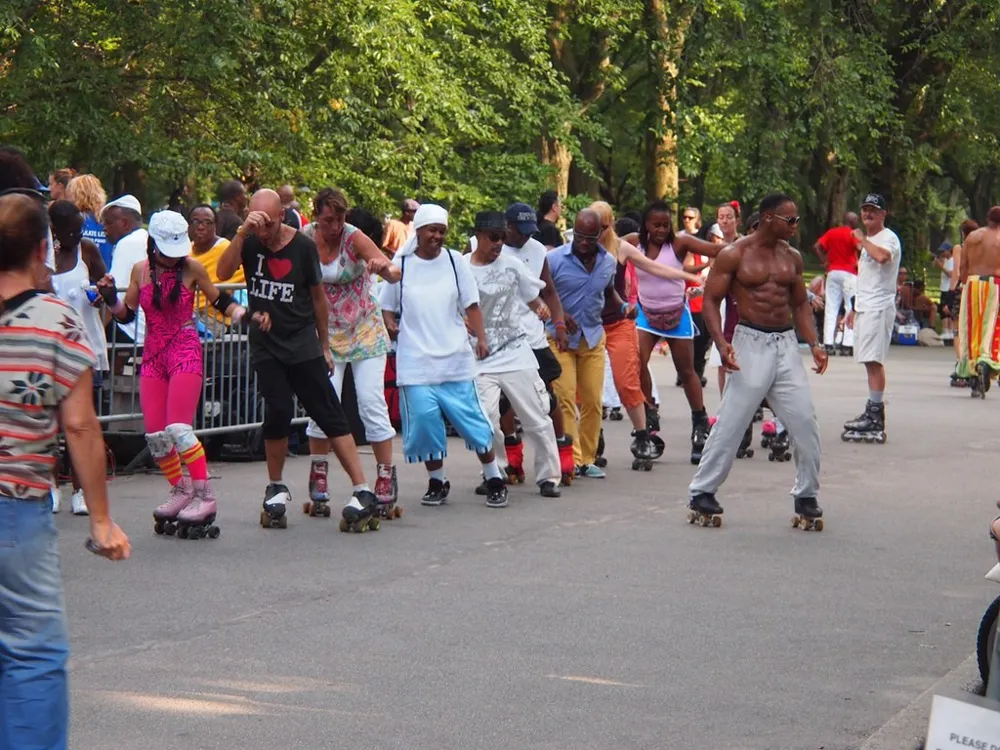
In 2020, roller skating had its biggest comeback in decades. During the COVID-19 pandemic, people looked for safe outdoor activities, and skate sales rose. Viral TikTok skating videos and nostalgia for the 1970s and 1980s added fuel, and many brands sold out and took back-orders, according to reports compiled on Wikipedia.
Much of the attention went to quad skates and dance-style skating. If the boom brought you in, start with how to roller skate, the best roller skates and outdoor roller skate wheels.
How to Roughly Date Vintage Roller Skates
Old skates are popular with collectors and decorators. Exact dating needs maker marks and catalogs, but the history above gives some broad clues:
| Feature | What It Suggests |
|---|---|
| Inline wheels on a wooden or metal sole | Possibly an early design (1800s) or a novelty skate |
| Metal wheels | Older than the 1970s, before polyurethane became standard |
| Leaning trucks with rubber cushions | Plimpton-style design, used from 1863 to today |
| No toe stop | Many older or speed-style skates; toe stops became standard in the mid-20th century |
| Large, soft, colorful urethane wheels | 1970s or later |
| Molded inline boot with a heel brake | 1980s or later |
Treat these as rough guides only. Reissues and retro styles copy old looks, so check maker stamps and ask a museum or specialist before paying a premium.
Where to See Roller Skating History
The National Museum of Roller Skating in Lincoln, Nebraska, has exhibits on Plimpton and his inventions, plus online exhibits, an oral history project and a championship archive. Check its website for current hours and admission before you visit. Local history museums often hold old rink photos and skates too.
Keep Exploring
Browse every guide in our roller skating hub, compare roller skating vs ice skating, or read how a different wheeled sport grew up in skateboarding history.
Frequently Asked Questions
Who invented roller skates?
No single inventor is certain. John Joseph Merlin, a Belgian inventor in London, is usually credited with early wheeled skates around 1760, but no drawings survive. The first known patent was filed in France in 1819 by Charles-Louis Petitbled.
When were quad roller skates invented?
James Leonard Plimpton of Massachusetts patented his four-wheel turning skate in January 1863. It let skaters steer by leaning, which made the modern quad skate possible.
When did the first roller rink open?
National Geographic reports that the first public roller rink opened at the Atlantic House in Newport, Rhode Island, in 1866. Rinks then spread quickly across the US and Europe.
When did roller derby start?
Leo Seltzer staged the Transcontinental Roller Derby in Chicago in 1935 as a long endurance race. It became a contact sport in the late 1930s, and the modern amateur revival began in Austin, Texas, in the early 2000s.
When were rollerblades invented?
Inline skates date back to the 1700s and 1800s, but the Rollerblade brand came out of Minneapolis in the early 1980s, when Scott Olson and his brother Brennan improved an existing inline design. Rollerblade added heel brakes in 1983.
Why did roller skating become popular again in 2020?
During the COVID-19 pandemic people looked for safe outdoor activities, and viral skating videos on TikTok plus 1970s and 1980s nostalgia drove demand. Many brands sold out and took back-orders.
Is roller skating an Olympic sport?
Not as a full medal event. Roller hockey was a demonstration sport at the 1992 Olympics, and roller derby was considered for 2020, but neither was added. Skateboarding, governed by World Skate, has been an Olympic sport since Tokyo 2020.