Build Your Own Custom Stunt Scooter, Part by Part (2026)
Every part of a custom pro scooter explained, from SCS, HIC, IHC and ICS compression to bar height, wheel size and clamps, plus a compatibility checklist and a step-by-step build order.
What You Need to Build a Custom Stunt Scooter
A custom stunt scooter is one you build from individual parts instead of buying a complete. You choose each component for your height, riding style and the tricks you want to learn. The catch is compatibility: the compression system, fork, bars and clamp all have to match each other, and the wheels have to fit both the fork and the deck. SkatePro's parts list for a custom build looks like this:
| Part | Quantity | What It Does |
|---|---|---|
| Deck | 1 | The platform you stand on; usually comes with the brake and rear axle |
| Fork | 1 | Holds the front wheel and passes up through the headset |
| Headset | 1 | Bearings in the deck's headtube that let the bars turn |
| Compression system | 1 | Pulls the fork up tight against the headset so nothing rattles |
| Bars | 1 | The handlebars, in different heights, widths and diameters |
| Clamp | 1 | Squeezes the bars onto the fork |
| Wheels | 2 | Front and rear, usually 100 to 125mm with metal cores |
| Bearings | 4 | Two per wheel |
| Spacers | 2 | One between the bearings in each wheel |
| Grips | 1 pair | Rubber grips for the bar ends |
| Griptape | 1 sheet | Sandpaper-like top layer so your shoes stick to the deck |
Optional extras include pegs, bar ends and a different brake or fender. If you are new to pro scooters, start with our best stunt scooters guide to see what a good complete looks like, then come back here to build or upgrade one.
Custom Build or Complete Scooter?
A complete scooter is ready to ride out of the box and is usually the cheaper way to start. A custom build costs more but lets you:
- Pick exact bar height and width for a rider who falls between complete sizes.
- Choose a deck length for park or street riding.
- Run the compression system you prefer, such as SCS for strength.
- Replace one worn part at a time instead of a whole scooter.
Many riders do both: they start on a complete, then swap parts as they break or as the rider grows. Every swap follows the same compatibility rules below.
Start With the Compression System
Choose compression first, because it decides which fork, bars and clamp you can use. Compression is the system that pulls the fork up against the headset so the front end stays tight. The four you'll see are SCS, HIC, IHC and ICS. Brands spell out some of these acronyms differently, so go by the system name on the product listing.
| System | Bars | Fork | How It Works | Trade-Offs |
|---|---|---|---|---|
| SCS | No slit; standard or oversized with the matching SCS clamp | SCS or HIC fork (same fork tube) | A large four-bolt clamp is also the compression; a bolt threads into the fork | Strongest and most robust; heaviest |
| HIC | Oversized with a slit (about 35mm outside, 32mm inside) | HIC or SCS fork | An oversized shim sits over the fork tube inside the bars | Lighter than SCS; the bar slit is a weak point |
| IHC | Standard with a slit (28mm inside) | IHC fork with a slimmer tube | A smaller shim and a compression ring sit in the headset | Light; not compatible with SCS |
| ICS | Slit, with a star nut inside the bar | ICS fork; bolt goes up through the fork | A long bolt runs from under the fork into the bars | Lightest and fewest parts; less durable and now uncommon |
A few notes from retailer guides:
- SCS forks and HIC forks share the same fork tube, so many are sold as SCS/HIC. SCS forks are often shorter so the tube reaches about the middle of the clamp, while HIC forks need a longer tube that passes the bar slit.
- Slit bars on SCS: SCS needs bars with no slit, but many HIC and IHC bars ship with an SCS adapter sleeve, according to SkatePro.
- IHC to HIC: running oversized bars on an IHC fork needs a conversion kit, and Dogg Scooters warns that not every kit fits every fork.
- ICS-10: a version of ICS with a larger M10 bolt, which SkatePro describes as slightly more durable than the M6 original.
- Mini HIC also exists; it installs like IHC with a different shim size.
As a rough guide, SCS suits heavier and street riders who prioritize strength, HIC and IHC suit park riders who want a lighter front end, and ICS is mostly found on older or lighter setups.
Deck: Length, Width and Headtube
The deck sets your foot space and much of how the scooter feels. Most stunt decks are aluminum, and SkatePro notes that the brake and axle usually come included.
| Deck Spec | Park | Street |
|---|---|---|
| Length | About 18–20.5 inches | About 21–24 inches |
| Width | About 4.5–5 inches | About 5.5–7 inches |
| Feel | Lighter, easier to whip and spin | More stable, more room for grinds and landings |
Ranges from Skates.co.uk's deck guide; Scooter Hut lists pro deck widths from about 115mm to 152mm. When you compare decks, check:
- Headset type: most modern decks have an integrated headtube, and integrated headtubes only fit integrated headsets.
- Headtube angle: the angle sets how far the bars lean toward you. Skates.co.uk notes around 84° gives steeper steering and more leverage for nose manuals, while around 82° feels quicker for tailwhips.
- Maximum wheel size and axle width at the rear dropouts.
- Ends: boxed ends give more grind surface for street; angled or open ends save weight.
- Concave: a deeper concave holds your feet in place, while a flatter deck feels more relaxed.
- Peg compatibility: not every peg fits every deck.
Foot space, the usable area between the headtube and the brake, matters more than overall length. Stand on a tape measure the way you ride to see how much room you need.
Bars: Height, Width and Diameter
Bars are the part riders customize most, and the right size makes tricks easier to control. For a full breakdown of shapes and materials, see our pro scooter bars guide. For a build, get these four things right:
- Height: aim for the bar top to land roughly between your hips and belly button when you stand on the deck. SkatePro suggests that if two heights both fit that range, beginners should pick the taller one for control.
- Width: measure shoulder to shoulder and add one to two inches. Wider bars are more stable; narrower bars spin more easily. Bars that are too wide can be cut down, but bars that are too narrow can't be widened.
- Diameter: standard bars are about 32mm outside and 28mm inside; oversized bars are about 35mm outside and 32mm inside. Many aluminum bars are a "mix" size, 35mm outside with a 28mm inside.
- Slit: HIC, IHC and ICS need a slit at the bottom of the bars; SCS needs no slit, or an adapter sleeve.
| Bar Material | Strengths | Drawbacks |
|---|---|---|
| Chromoly steel | Strong, durable, allows true T-bar shapes | Heavy |
| Aluminum | Light; usually a Y-bar with gussets for strength | Less durable and rigid |
| Titanium | Excellent strength for its weight | Costs more; flexes and can snap rather than bend at the end of its life |
T-bars and Y-bars are a matter of preference. Total scooter height also depends on the fork, headset and wheel, so it is measured differently from bar height (see the sizing section below).
Clamps: Matching Bars to Fork
The clamp's inner diameter must match the outer diameter of your bars: an oversized bar needs an oversized clamp, and a standard bar needs a standard clamp (or an oversized clamp with a shim on SCS). Other choices:
- Double or triple clamps: used with HIC, IHC and ICS. Skates.co.uk notes that lighter clamps with fewer bolts suit younger riders and beginners, while triple and quad clamps add holding strength for aggressive riding.
- SCS clamps: the clamp and compression in one unit, usually with four bolts. If the clamp's internal edge sits below the top of the fork, add a headset spacer to raise it.
- Slit alignment: on slit bars, the clamp should cover the full length of the slit.
Tighten clamp bolts evenly a little at a time in a criss-cross pattern, never one bolt all the way first, and don't overtighten them.
Fork and Headset
The fork holds the front wheel and passes through the headset into the bars and clamp. Modern stunt forks are threadless, usually one-piece heat-treated aluminum; SkatePro calls older threaded steel forks obsolete. When you choose a fork, check:
- Compression type: SCS, HIC and IHC forks have a built-in star nut or thread inside the fork tube for the compression bolt. ICS forks take a bolt from below that threads into a star nut inside the bars.
- Fork tube length: long enough to reach into your compression system. Versus Pro Shop gives about 5.75 inches for typical SCS forks and up to about 6.7 inches for HIC-specific forks.
- Maximum wheel diameter: most forks fit 110mm wheels and many fit up to 125mm.
- Wheel width: forks commonly take 24 to 30mm cores. Wider forks can often run narrower wheels with spacers, but a wheel wider than the fork's hub width won't fit.
- Axle standard: most forks use an 8mm axle with 608 bearings. 12STD forks use a 12mm axle and 6001 bearings, often for wheels up to about 125 x 30mm, and many include 8mm adapters.
- Offset: about 10mm offset is the most common and feels stable; zero offset feels more responsive and makes nose manuals easier.
The headset is the set of bearings and cups that lets the fork turn in the headtube. Integrated headsets sit straight in the deck and are the most common. Non-integrated (standard) headsets need cups pressed into the headtube, which is harder to do at home. Most SCS and HIC forks use a 1-1/8-inch tube, so most headsets fit them, while IHC forks need the IHC compression ring that comes with the system. SkatePro notes that its shop uses professional tools to fit the headset and crown race, so ask a shop if you don't have a press.
Wheels and Bearings
Wheels change speed, grip and weight. Our best scooter wheels guide compares specific sets; for a build, check these specs:
| Diameter | Typical Use |
|---|---|
| 100mm | Younger riders, older or entry-level scooters; light and agile |
| 110mm | The most common size; a good all-rounder |
| 115–120mm | Faster and smoother over rough ground; needs a fork and deck with room |
| 125mm | Usually on 12STD forks with a 12mm axle |
- Width: 24mm is standard. 26mm and 30mm cores add stability and grip for street riding but need a fork and deck with clearance.
- Cores: metal (usually aluminum) cores handle impacts; hollow, spoked and honeycomb cores save weight, while solid cores are the strongest. Plastic cores suit casual riding, not stunts.
- Hardness: stunt wheels commonly run about 82A to 88A. Harder wheels roll faster and last longer on smooth parks; softer ones grip better on rough ground.
- Matching sizes: Skates.co.uk advises against mixing wheel sizes front and rear. Scooter Hut notes that a scooter built for 120mm wheels can usually take 110mm later, but not the other way round.
Bearings: each wheel needs two bearings and one spacer, and SkatePro warns that bearings can be destroyed without spacers. On standard 8mm axles, scooters use the same 608 size as skateboards, so skateboard bearings fit; see our skateboard bearings guide and how to clean bearings.
Griptape, Grips, Brake and Pegs
- Griptape: scooter-specific sheets are cut for deck widths, or you can trim a skateboard sheet to fit. Clean the deck first, apply from the front, then trim the edges and cut around the brake and headtube. The method is the same as our grip tape guide, and our griptape picks list popular sheets.
- Grips: slide them on with compressed air, rubbing alcohol or soapy water, and fit bar ends to protect the bar tips.
- Brake: most decks include a rear brake, often a flexible fender-style brake that you press onto the back wheel. Check that it matches your deck and rear wheel size. A fender protects the wheel but doesn't brake.
- Pegs: for grinds on rails and ledges. Check that they suit your deck and axle before you buy.
Size Your Build to the Rider
Lucky Scooters publishes a bar height chart as a starting point, measured from the top of the headset or the base of the clamp, not from the ground:
| Rider Height | Bar Height (Bars Only) | Bar Width |
|---|---|---|
| About 3'6"–4'6" | About 18"–20" | About 18"–20" |
| About 4'3"–5'1" | About 20"–23" | About 19"–22" |
| About 4'6"–5'5" | About 22"–24" | About 19"–23" |
| Over 5' | About 24" and up | About 22" and wider |
The rows overlap, so riders in between can go either way. If you're unsure, Lucky suggests ordering slightly taller and having the bars cut. For the deck, smaller and younger riders usually suit the shorter park lengths above, while taller and heavier riders, or anyone riding street, tend to want a longer, wider deck with more foot space. For total scooter height, SkatePro measures from the bottom of the front wheel to the middle of the clamp (SCS) or the bottom of the clamp (HIC, IHC and ICS), then adds the bar height. Complete scooters are often listed by total height from the ground, so don't compare the two numbers directly. Younger children starting out may be better served by our kids' scooter size guide.
Compatibility Checklist
Most failed builds come from one mismatch. Check every line before you order:
| Part You're Buying | Check This |
|---|---|
| Fork | Compression type (SCS, HIC, IHC or ICS), tube length, max wheel diameter and width, axle size (8mm or 12STD) |
| Bars | Outside and inside diameter (standard, mix or oversized), slit or no slit, height and width |
| Clamp | Inner diameter matches the bar's outer diameter; SCS or non-SCS |
| Compression | Matches the fork and bars; shim size for HIC, IHC or Mini HIC |
| Headset | Integrated or non-integrated to match the deck's headtube |
| Deck | Max wheel size and width, brake included, peg compatibility |
| Wheels | Diameter and core width fit both fork and deck; same size front and rear |
| Bearings | 608 for 8mm axles, 6001 for 12STD; spacers included |
| Griptape | Sheet is wide and long enough for the deck |
Lay all the parts out and test-fit them before assembly. Unused parts are easier to return when they are clean and unbuilt.
Tools You Need
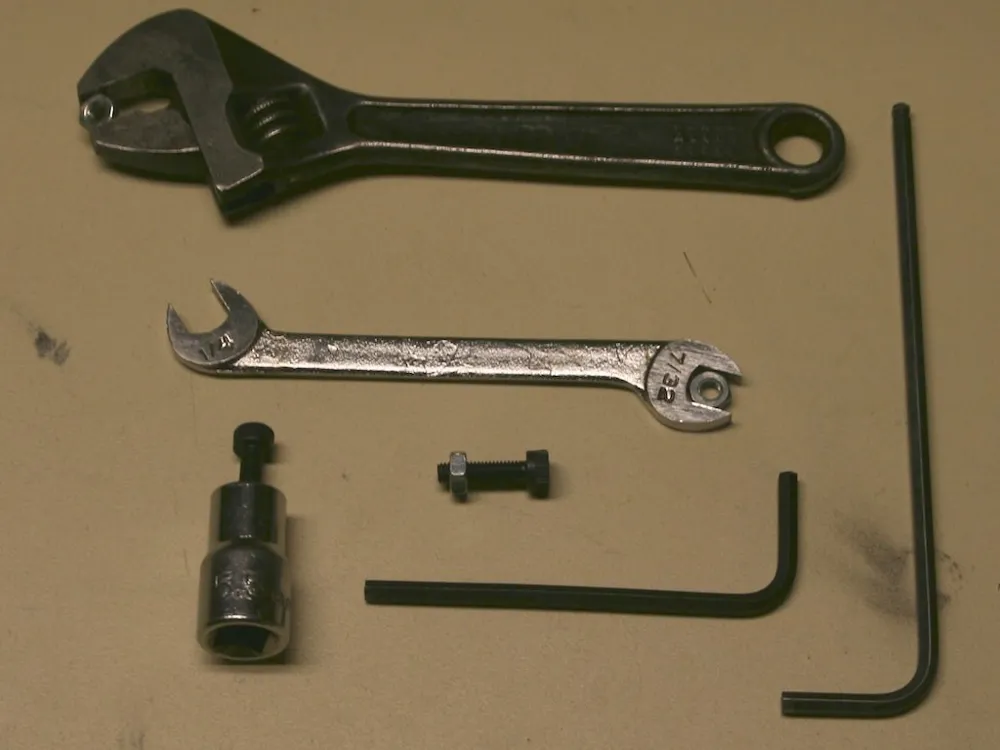
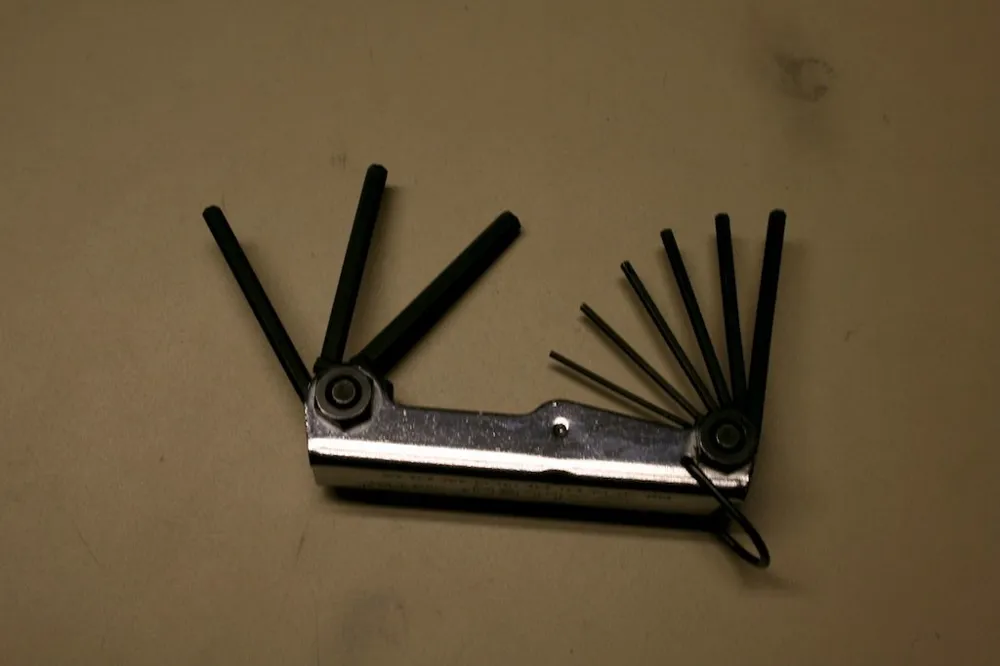
- Hex (Allen) keys: 5mm and 6mm are the most common sizes for clamp and compression bolts; a full metric set covers axles and brakes.
- Sockets or spanners: some axles and pegs use nuts; Dogg Scooters mentions 13mm as a common size.
- Rubber mallet: for gently seating parts without marking them.
- Grease: a little on the headset bearing cups and compression threads.
- Blue threadlocker: ScootWorld suggests it on clamp and compression bolts for hard riders.
- Craft knife and file: for trimming griptape.
- Grip helpers: compressed air, rubbing alcohol or soapy water.
- Headset press or shop help: needed only for non-integrated headsets and crown races.
Work on a clean, flat surface and keep small parts like spacers, shims and the compression ring in a tray.
Step-by-Step Assembly
Builders differ slightly on order, but this sequence, drawn from SkatePro, Ridecore and ScootWorld guides, works for most setups. Expect about two to three hours the first time.
- Apply the griptape. Clean the deck, lay the griptape from the front, press out air, then trim the edges and cut holes for the headtube and brake.
- Fit the headset. Grease the bearing cups. For an integrated headset, drop the lower bearing (or slide it onto the fork) and seat it evenly. Pressed headsets need a press.
- Insert the fork. Slide the fork up through the headtube, then add the top bearing, the compression ring (C-ring) and the top cap.
- Install the compression.
- SCS: put the compression bolt through the top cap into the fork and tighten until the headset is snug but still turns freely. Then slide the SCS clamp over the fork.
- HIC and IHC: slide the shim onto the fork, then thread in the compression bolt or cap and tighten until the play is gone.
- ICS: fit the star nut in the bars, then run the long bolt up through the fork before the front wheel goes on. Tighten slowly, because it pulls the headset upward.
- Check for headset play. Hold the deck, rock the fork back and forth, and turn it side to side. It should spin freely with no knock or rattle. If it rattles, tighten the compression a little more.
- Build the wheels. Press a bearing into one side of each wheel, drop in the spacer, then press in the second bearing. Press evenly so each bearing sits flat and square.
- Mount the wheels. Fit the front wheel in the fork and the rear wheel in the deck. Tighten the axle bolts until the wheels spin freely with no side play. Don't overtighten.
- Fit the bars and clamp. Slide the bars over the fork (and shim), position the clamp over the slit, and snug the bolts evenly.
- Align and tighten. Stand the scooter up, line the bars up square with the front wheel, then tighten the clamp bolts in a criss-cross pattern until the bars can't twist.
- Add grips, bar ends and pegs. Slide on the grips, fit bar ends, and bolt on pegs if you use them.
- Final check. Bounce the scooter on the ground and listen for rattles, check the brake works, and recheck every bolt before the first ride.
Parts and Tools on Amazon
These parts and tools fit common stunt scooter builds. Specs come from the brands' listings; always confirm sizes against your fork and deck.
1. Envy 110mm Diamond Wheels
A pair of 110mm stunt wheels from Envy, the most common pro scooter wheel size, so they suit most forks and decks.
Good to Know
- Common size fits most builds
- Sold as a pair
Watch Out For
- Check bearings are included on the listing
2. Envy Sector 120mm Wheels
Envy's Sector wheels measure 120mm x 26mm and come from its Prodigy X completes. They suit builds with a fork and deck rated for larger, wider wheels.
Good to Know
- Larger size for a faster roll
- 26mm width adds grip
Watch Out For
- Needs fork and deck clearance for 120 x 26mm
3. Bones Reds Bearings
Standard 608 skateboard bearings, which fit scooter wheels on 8mm axles. Bones rates them with its own Skate Rated standard rather than ABEC, and the shields come off for cleaning.
Good to Know
- Fits standard 8mm scooter axles
- Easy to clean
Watch Out For
- Not for 12STD forks, which use 6001 bearings
4. Mob Grip 9x33 Griptape
A standard skateboard sheet that is wide and long enough to trim down for most stunt scooter decks. It has perforations to help let air out during fitting.
Good to Know
- Covers decks up to about 9 inches wide
- Trim to any deck shape
Watch Out For
- Needs trimming and cut-outs for a scooter
5. Park Tool AWS-10 Hex Wrench Set
A fold-up set with 1.5mm to 6mm hex wrenches, covering the 5mm and 6mm bolts on most clamps and compression systems.
Good to Know
- Covers the most common scooter bolt sizes
- Fits in a bag for skatepark fixes
Watch Out For
- No 8mm key or sockets for nut-type axles
Common Build Mistakes
- Mixing compression systems: an IHC fork with HIC bars, or slit bars on SCS without an adapter.
- Wrong clamp size: a standard clamp won't close properly on oversized bars, and an oversized clamp slips on standard bars without a shim.
- Fork tube too short: the tube must reach into the clamp or past the bar slit for the compression to work.
- Wheels that don't fit: too big for the deck or fork, or too wide for the fork.
- Missing spacers: bearings without spacers get crushed when the axle is tightened.
- Tightening the clamp before the compression: set headset tension first, then align and tighten the clamp.
- Uneven or overtightened bolts: can crack clamps or strip threads. Tighten evenly and firmly, not with all your strength.
- Bars too tall or too short: size to the rider now, and remember that bars can be cut down but not lengthened.
Check, Ride and Maintain
New parts settle in, so recheck the clamp, compression and axle bolts after the first few sessions, then before every ride. Re-tighten the compression whenever you feel a knock in the headset. Swap griptape when it's worn smooth, and clean or replace bearings when the wheels stop spinning freely. Skates.co.uk suggests bearings often need replacing every 6 to 12 months with regular riding. Look for cracks around the deck neck, fork and bar welds, and replace any cracked part straight away.
Always wear a certified helmet and pads; see safety gear. Once your build is dialed, work through our scooter tricks for beginners, learn the tailwhip, or set up a home spot with ramps and rails. For more guides, visit the scooters hub. Building a bike instead? Our BMX parts guide follows the same compatibility approach.
Frequently Asked Questions
Is it cheaper to build a custom scooter or buy a complete?
A complete is usually the cheaper way to get riding, because buying every part separately adds up. A custom build makes sense when you want specific parts, a certain size or a setup you can't get as a complete, or when you are replacing worn parts one at a time.
What is the best compression system for a stunt scooter?
There is no single best one. SkatePro describes SCS as the most robust choice for hard riding, while IHC and HIC are lighter and ICS is the lightest but less durable and less common today. Pick one, then buy a fork, bars and clamp that match it.
Can I put HIC bars on an IHC fork?
Not directly. IHC uses standard bars and a slimmer fork tube, while HIC needs oversized bars and an HIC fork. Dogg Scooters notes that a conversion kit can bridge the two, but not every kit fits every fork.
What size wheels should I use on a custom scooter?
110mm is the most common stunt wheel size and fits most forks. Many forks and decks take up to 120 or 125mm, so check the maximum diameter and core width listed for both your fork and deck before you buy.
How long does it take to build a custom stunt scooter?
Guides from builders such as Ridecore and SkatePro suggest allowing about two to three hours, or longer if it is your first build. Pressing in a headset or crown race can take extra time without shop tools.
How tall should stunt scooter bars be?
A common target is bars that reach roughly between your hips and belly button while you stand on the deck. Taller bars feel more stable, while shorter bars are easier to spin and throw around in the park.
Do I need a brake on a stunt scooter?
Most stunt decks come with a rear brake, and beginners should keep it. Some experienced riders run without one, but check your skatepark's rules and only do so once you can stop with your foot under control.