Mountain Bike Brake Upgrades: Picks, Rotors and Fit Checks (2026)
Seven disc brakes from mechanical to four-piston gravity stoppers, and the piston, fluid, rotor, mount and pad choices that decide which one suits your bike.
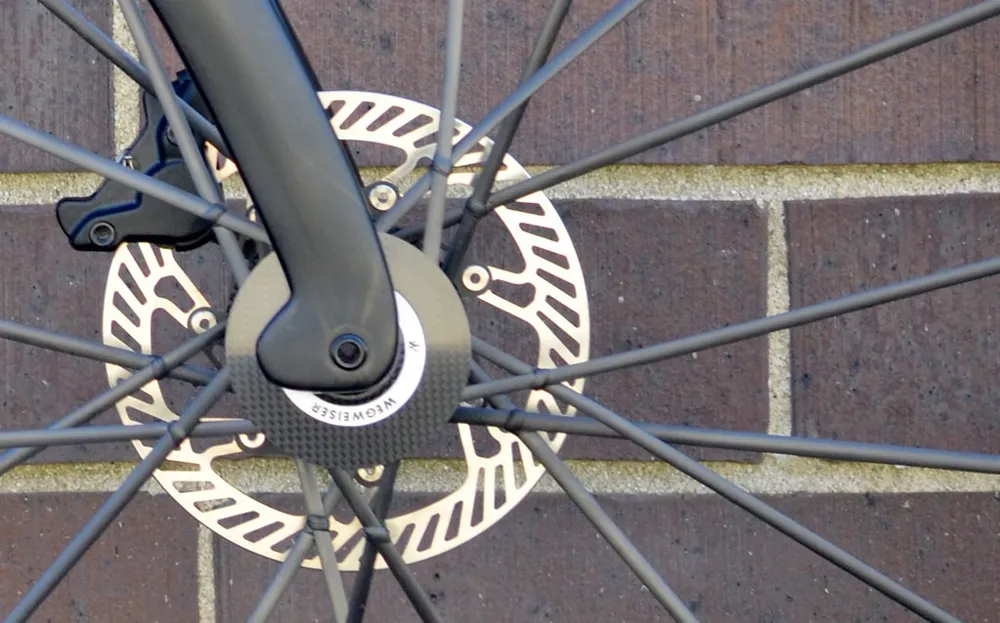
Which Mountain Bike Brakes Should You Buy?
Brakes do more than stop a mountain bike. Strong, consistent brakes let you brake later, hold speed into corners and control the bike on steep, loose ground without tiring your hands. That's why brakes are one of the most common upgrades, especially on entry-level bikes that come with cable-operated discs or basic two-piston hydraulics.
This guide lists seven brakes across the main types, from a mechanical caliper that needs no bleeding to four-piston brakes for enduro and e-MTB riding. Below the picks, we explain everything that decides which brake fits your bike and your riding: hydraulic vs mechanical, two vs four pistons, mineral oil vs DOT fluid, rotor sizes and mounts, caliper mounts, pads, bedding in and bleeding. For a tour of the whole bike, see parts of a mountain bike; for setup and rub fixes, see how to adjust bike brakes.
Shimano Deore M6100/M6120 4-Piston
Best all-round trail upgrade
- Four-piston caliper
- Mineral oil system
- Post mount caliper
SRAM Maven Silver
Best for steep and gravity riding
- Four-piston caliper
- Mineral oil system
- Aimed at gravity riding and heavy e-MTBs
Avid BB7 MTB
Best mechanical disc upgrade
- Cable-actuated, no bleeding
- MTB version for flat-bar levers
- Listed version includes a 160mm rotor
Mountain Bike Brakes Compared
Specs below are from the maker's page or the Amazon listing title for the version we link. Most brakes are sold as front or rear sets with different hose lengths, and some listings include rotors while others don't, so check the exact listing before you buy.
| Brake | Type | Pistons | Fluid | Best For |
|---|---|---|---|---|
| Shimano Deore M6100/M6120 | Hydraulic | 4 | Mineral oil | Trail and all-round upgrades |
| SRAM Code Bronze Stealth | Hydraulic | 4 | DOT 5.1 | Enduro, downhill, e-MTB |
| SRAM Maven Silver | Hydraulic | 4 | Mineral oil (check the lever) | Gravity and heavy e-MTBs |
| SRAM Level Bronze Stealth | Hydraulic | 2 | DOT 5.1 | Cross-country and light trail |
| Magura MT5 | Hydraulic | 4 | Mineral oil | Trail and enduro |
| Tektro Orion HD-M745 | Hydraulic | 4 | See maker | Budget four-piston upgrade |
| Avid BB7 MTB | Mechanical (cable) | Cable caliper | None | Upgrading cable discs without going hydraulic |
The Best Mountain Bike Brakes
1. Shimano Deore M6100/M6120 4-Piston
Shimano's Deore group includes both two-piston (BR-M6100) and four-piston (BR-M6120) calipers paired with the BL-M6100 lever. The set we link is listed as the Deore M6100/M6120 four-piston brake set. Like other Shimano hydraulic mountain bike brakes, it uses mineral oil. Shimano's four-piston calipers use opposed pistons in two diameters, and Shimano markets Servo-Wave lever technology on its brakes. Deore sits below Shimano's SLX and XT four-piston brakes (BR-M7120 and BR-M8120), both of which appear in BikeRadar's brake roundup, and shares their basic layout.
Good to Know
- Four-piston power at Shimano's entry trail level
- Mineral oil is gentler on skin and paint than DOT fluid
- Post mount caliper fits most current MTB forks and frames
Watch Out For
- Check whether the listing is front or rear and the hose length
- Rotors and adapters are usually sold separately
2. SRAM Code Bronze Stealth
Code is SRAM's long-standing four-piston brake for enduro, downhill and e-MTB riding. On the Code Bronze Stealth, SRAM lists DOT 5.1 fluid, steel-backed sintered metal pads as standard (SRAM says they add power and last longer), a SwingLink lever that SRAM says reduces fatigue, tool-free reach adjustment and an aluminum lever blade on a bushing pivot. There is no contact (bite point) adjustment at this level. SRAM lists a weight of 318g per brake, measured with pads but without the clamp, mounting hardware or rotor.
Good to Know
- Sintered pads suit long, steep descents
- Stealth lever body designed to match SRAM's AXS cockpit parts
Watch Out For
- DOT 5.1 must be handled carefully and needs regular bleeds
- No bite point adjustment on the Bronze version
Not available on Amazon when we checked (November 2026); check bike shops and SRAM dealers.
3. SRAM Maven Silver
Maven is SRAM's most powerful mountain bike brake family, aimed at gravity riding and heavy e-MTBs. The version we link is listed as a Maven Silver rear brake with a four-piston caliper, an aluminum lever and post mount hardware. Unlike most SRAM brakes, Maven uses mineral oil rather than DOT fluid; bleed kits are sold specifically for it, so check the fluid printed on the lever before you service it. BikeRadar's roundup includes the higher-end Maven Ultimate and Maven B1 Ultimate.
Good to Know
- SRAM's top-power brake line
- Mineral oil, unlike SRAM's Code and Level
Watch Out For
- More power than most cross-country or light trail riders need
- Check front or rear and hose length on the listing
4. SRAM Level Bronze Stealth 2-Piston
Level is SRAM's lighter brake family for cross-country and trail bikes. The version we link is listed as the Level Bronze Stealth two-piston disc brake. Like most SRAM brakes, Level uses DOT 5.1 fluid. Two-piston brakes like this suit lighter riders, racers and bikes where low weight matters more than all-day descending power. SRAM also sells four-piston Level models, such as the Level Ultimate Stealth 4 Piston in BikeRadar's roundup.
Good to Know
- Light two-piston caliper for XC and light trail
- Four-piston Level versions exist if you want more power
Watch Out For
- Less power and heat capacity than four-piston brakes on long descents
- DOT 5.1 fluid needs careful handling
5. Magura MT5
The MT5 is Magura's four-piston brake, and it appears in both BikeRadar's and Singletracks' roundups. Magura brakes use mineral oil. The kit we link is listed as a front and rear MT5 four-piston hydraulic set with 203mm rotors included, which suits gravity bikes and e-MTBs whose fork and frame allow rotors that large. Magura also sells an MT5e version for e-bikes and the higher-end MT7 four-piston brake.
Good to Know
- Four-piston caliper with mineral oil
- This kit includes front and rear brakes plus 203mm rotors
Watch Out For
- Check your fork's maximum rotor size before fitting 203mm rotors
- Use pads made for Magura's four-piston calipers
Not available on Amazon when we checked (November 2026); check bike shops and Magura dealers.
6. Tektro Orion HD-M745
Tektro makes brakes for many stock bikes, and the Orion HD-M745 is its four-piston mountain bike brake. The version we link is listed as a rear hydraulic lever and four-piston caliper; other listings sell it as a set with 160mm rotors. It's an option for riders who want a four-piston caliper on a budget, or who are replacing a worn Tektro brake on a stock bike. Check Tektro's manual for the fluid type and bleed kit before servicing.
Good to Know
- Four-piston caliper at a budget level
- A like-for-like option if your bike came with Tektro brakes
Watch Out For
- Check whether the listing is front or rear, left or right lever
- Confirm which rotors, if any, are included
7. Avid BB7 MTB
The BB7 is a cable-operated (mechanical) disc caliper from Avid, a brand now owned by SRAM. The version we link is listed as the BB7 MTB front or rear brake with a 160mm rotor; other listings sell the caliper alone with rotor and bracket separate. The MTB version is made for flat-bar mountain bike levers (a separate road version suits drop-bar levers). Unlike a basic cable brake, the BB7 has an adjuster knob for each pad, so you can set pad clearance by hand as the pads wear. The listing also notes Avid's CPS mounting hardware.
Good to Know
- No fluid and no bleeding: just cable and housing
- Both pads can be adjusted without tools beyond a hex key
- Easy to fix on a long trip with basic tools
Watch Out For
- Needs pad adjustment as pads wear
- Less power and control than hydraulic brakes
Higher-end brakes worth knowing about include Shimano's SLX, XT and XTR (BR-M7120, BR-M8120 and BR-M9120/M9220), SRAM's Maven Ultimate and Motive, Hayes Dominion A4 and T4, Hope Tech 4 V4, Magura MT7 and MT Trail SL, TRP DH-R Evo, Formula Cura 4, Trickstuff Direttissima and Brembo's GR-PRO, all of which appear in BikeRadar's or Singletracks' roundups. Most are sold through bike shops and specialist retailers, so check the maker's site for current versions.
Hydraulic vs Mechanical Disc Brakes
Every modern mountain bike brake is a disc brake: a caliper on the frame or fork squeezes pads against a steel rotor bolted to the hub. The difference is how the lever moves the pads.
| Hydraulic Disc | Mechanical (Cable) Disc | |
|---|---|---|
| How it works | Lever pushes fluid through a sealed hose to the pistons | Lever pulls a steel cable that moves the pad |
| Power and control | More power with less hand force; finer control | Less power; feel depends on cable condition |
| Pad wear | Self-adjusts as pads wear | Needs pad adjustment as pads wear |
| Maintenance | Occasional bleed with the right fluid | New cable and housing; simple trailside fixes |
| Typical bikes | Most trail, enduro and e-MTBs | Budget bikes, touring and bikepacking builds |
For off-road riding, hydraulic brakes are the norm because they need much less finger effort for the same stopping power. A good mechanical caliper such as the Avid BB7 is still a real upgrade over a basic cable brake, and some riders prefer cable brakes for remote trips because they can be fixed with a spare cable. If your bike has rim brakes (V-brakes), you usually can't fit discs without a frame and fork that have disc mounts and wheels with disc hubs.
2-Piston vs 4-Piston Brakes
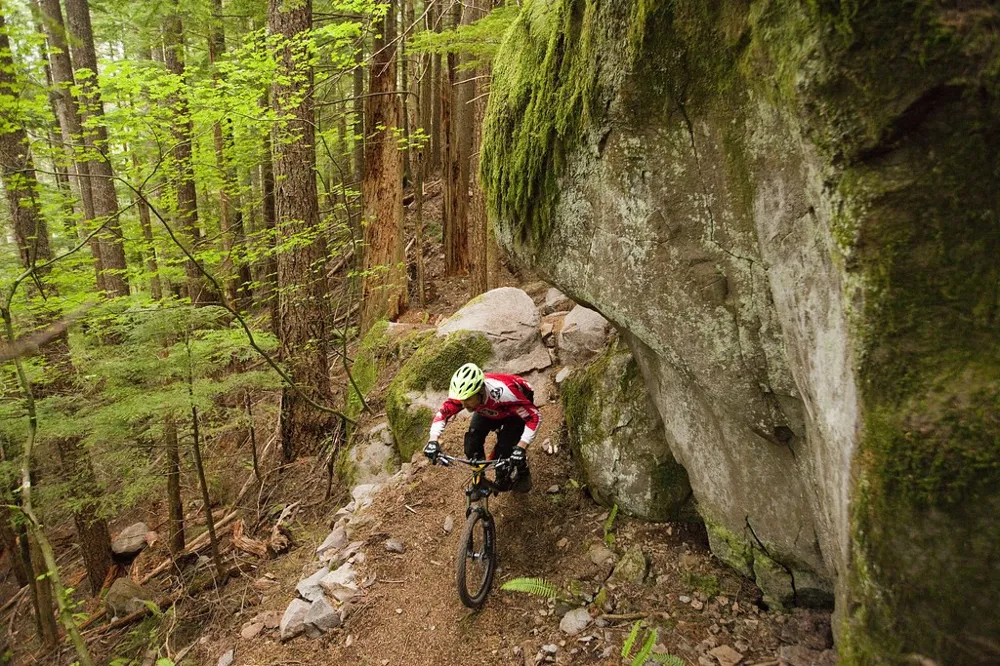
Pistons are the small cylinders in the caliper that push the pads onto the rotor. More piston area means more clamping force for the same lever pull.
- Two-piston brakes (one piston on each side) are lighter and are standard on cross-country race bikes and many lighter trail bikes. Singletracks notes they tend to work well on lighter XC and some trail bikes.
- Four-piston brakes (two pistons on each side, often in two sizes) are standard on most enduro, downhill and e-MTBs and many trail bikes. BikeRadar says they deliver more braking force and better heat dissipation, and four-piston calipers usually take longer pads with more surface area.
Four pistons make the most sense if you weigh more, ride steep or long descents, ride an e-MTB or carry gear. A lighter XC rider on rolling trails may never feel the difference and will save some weight with two pistons. A bigger rotor (see below) is often an easier first step than a whole new brake.
Mineral Oil vs DOT Brake Fluid
Hydraulic brakes use one of two fluid types, and you can't swap between them.
| Mineral Oil | DOT Fluid (DOT 5.1 or DOT 4) | |
|---|---|---|
| Brands that use it | Shimano, Magura, TRP, SRAM Maven | SRAM (most models), Hope, Hayes |
| Handling | Non-corrosive; easier to work with | Harmful to skin and strips paint; wear gloves |
| Water | Doesn't absorb water | Hygroscopic: absorbs water over time |
| Service | Bleed when the lever feels soft or the fluid is old | Usually needs bleeding and flushing more often |
Brand groupings are from Singletracks; handling notes are from BikeRadar. Brands sometimes change fluids between product lines, so always go by the fluid printed on your lever, reservoir cap or manual.
Never mix them. The seals in a brake are made for one fluid type. Putting mineral oil in a DOT brake, or DOT fluid in a mineral oil brake, can make the seals swell or break down and cause the brake to fail. Use the maker's own fluid or one it approves, and never top up a brake with car brake fluid unless the maker specifies that grade.
Rotor Sizes: 160mm to 223mm
Rotor size has as much effect on stopping power as the caliper. A bigger rotor gives the caliper more leverage over the wheel and more metal to absorb and shed heat. BikeRadar puts it this way: bigger rotors exert more force at the tire and have a larger area to cool on long descents, while smaller rotors are lighter but less powerful.
| Rotor Size | Where You See It |
|---|---|
| 140mm | Rare on mountain bikes; some XC race rear brakes |
| 160mm | Cross-country bikes, often at the rear on trail bikes |
| 180mm | Most trail bikes |
| 200mm and 203mm | Enduro, downhill and many e-MTBs |
| 220mm and 223mm | Some downhill bikes and heavy e-MTBs |
The rough guide of 160mm for XC, 180mm for trail and 200mm for downhill comes from BikeRadar; Singletracks notes that most trail bikes have moved toward 180mm rotors. Exact large sizes differ by brand (for example 200mm vs 203mm and 220mm vs 223mm), and adapters are made for one exact size, so match the rotor, adapter and caliper as a set.
Before you go bigger, check your fork and frame maker's maximum rotor size, and the fork's minimum. Many forks set both: our mountain bike forks guide lists a 160mm minimum on the RockShox Recon and Judy, 180mm on the 35 Gold, and a 203mm maximum on the Manitou Markhor. A rotor that's larger than the fork or frame is rated for can overload the mounts.
Rotor thickness matters too. Singletracks notes rotors used to be standardized at 1.8mm; some newer gravity rotors are thicker, which may need a matching caliper or pad setup, so check the brake maker's compatibility list.
Rotor Mounts: 6-Bolt vs Center Lock
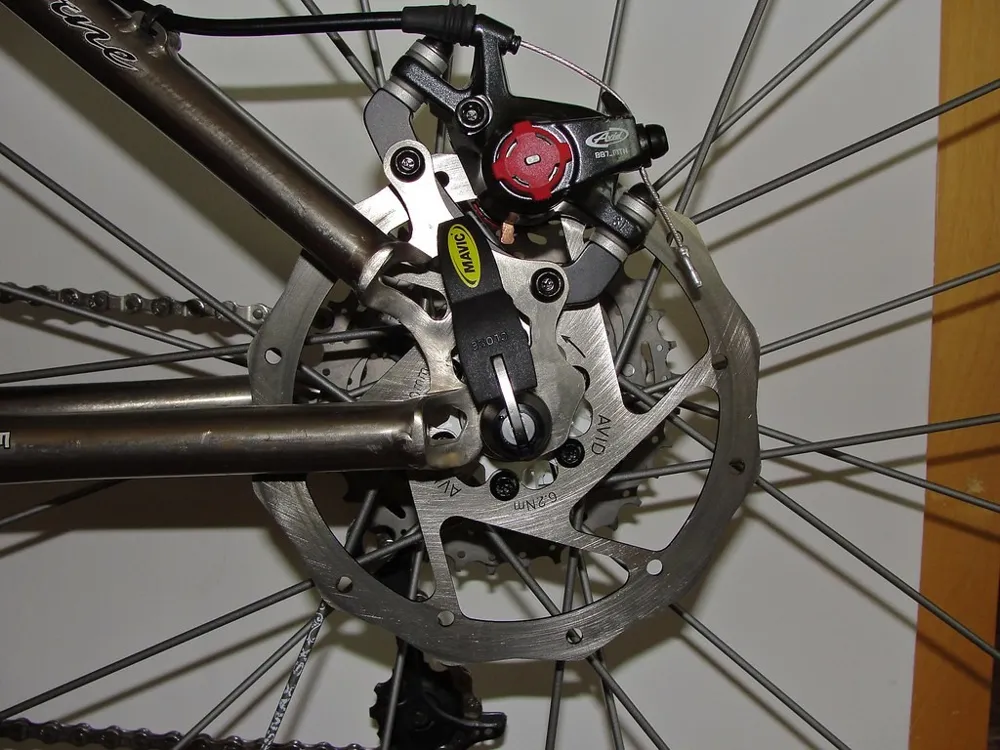
Rotors attach to the hub in one of two ways, and the rotor has to match the hub.
- 6-bolt: the rotor bolts to the hub with six small bolts, usually Torx T25 heads. It's the most widespread standard and works with almost every brake brand.
- Center Lock: Shimano's splined system, where the rotor slides onto splines on the hub and is held by a lockring. It's quicker to fit and remove and is common on Shimano-equipped bikes and many aftermarket wheels.
Adapters let you fit a 6-bolt rotor to a Center Lock hub, but not the other way round. When you buy new wheels or rotors, check which system your hubs use; our mountain bike wheels guide lists the brake rotor mount among the hub checks. Torque rotor bolts or the lockring to the maker's spec, and use thread locker on rotor bolts if the maker says to.
Caliper Mounts: Post Mount vs Flat Mount
The caliper bolts to the fork and frame through a mount, and most mountain bikes use one standard.
| Mount | How It Works | Where You See It |
|---|---|---|
| Post mount | Two threaded posts; the caliper bolts on directly or through a spacer adapter | Almost all mountain bike forks and frames |
| Flat mount | Low-profile mount where the caliper sits flat on the frame or fork | Road, gravel and some cross-country bikes |
| IS (International Standard) | Older tabs that need an adapter to take a post mount caliper | Older mountain bikes |
A fork or frame has a native rotor size: the size the caliper fits with no adapter, often 160mm or 180mm on modern bikes. To run a bigger rotor, you add a post mount adapter that lifts the caliper outward. As Singletracks puts it, the position of the caliper mounts dictates the rotor size, and adapters make it possible to mount larger rotors. Order the adapter for your exact native size and target size, and use the bolts that come with it.
Most mountain bike brakes are sold with post mount calipers. Flat mount calipers are mainly for gravel and road frames, so don't buy one for a post mount bike.
Levers: Reach, Bite Point and Clamps
Lever feel is where brakes differ most in everyday use. Look for these adjustments:
- Reach adjust: moves the lever closer to or further from the bar so one finger falls naturally on the end of the blade. Most brakes have it, often tool-free.
- Contact or bite point adjust: changes how far the lever moves before the pads touch the rotor. It's usually found on mid- and high-end levers and is missing on some budget models, such as the Code Bronze.
- Clamps: hinged clamps can be fitted without removing grips. Shimano's I-Spec and SRAM's MatchMaker systems mount the shifter (and sometimes a dropper remote) directly to the brake lever clamp for a cleaner cockpit, but each only works with its own family of parts.
In the US, the left lever usually works the front brake, though some riders and countries swap it. When you buy a brake set, check which side each lever and hose length is for. Our mountain bike shifters guide covers I-Spec and MatchMaker shifter compatibility, and MTB grips covers lock-on grips that leave room for the lever clamp.
Brake Pads: Organic vs Sintered
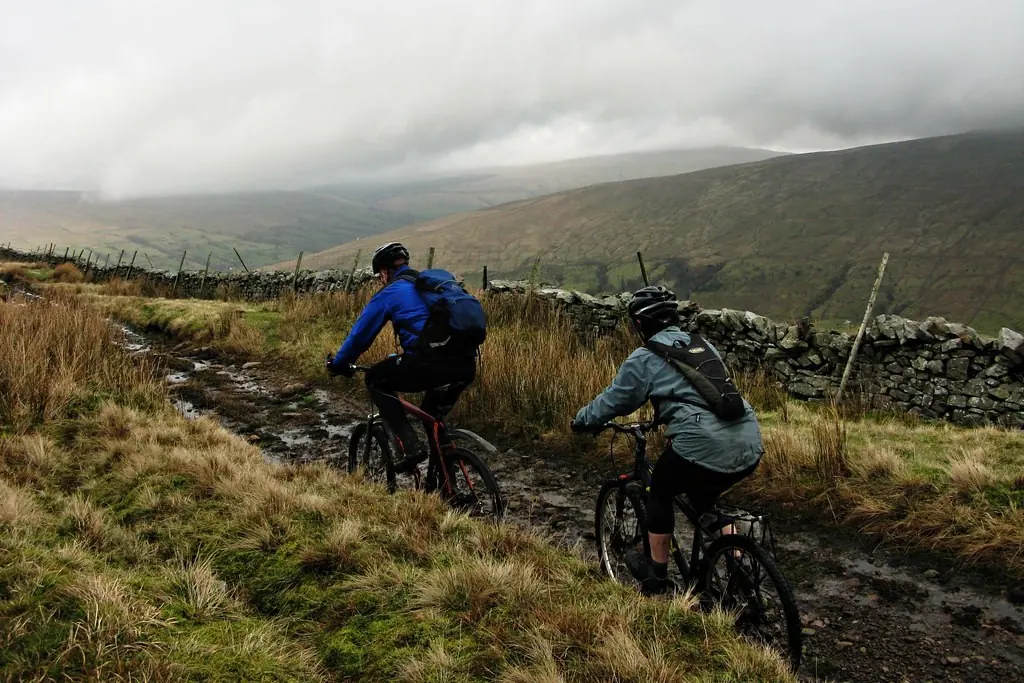
Pads are the part you'll replace most often, and the compound changes how a brake feels.
| Pad Type | Strengths | Trade-Offs | Best For |
|---|---|---|---|
| Organic (resin) | Good initial bite; quiet | Wear faster, especially in wet grit; can fade with heat | Dry trails, XC, lighter riders |
| Sintered (metallic) | Longer life; better with heat and wet conditions | Can be noisier; may need more bedding in | Steep descents, wet riding, e-MTBs, gravity |
| Semi-metallic | A blend of the two | Depends on the maker's mix | All-round trail riding |
BikeRadar sums it up as organic pads giving good bite while sintered pads wear better, and notes sintered pads can sound harsh. Singletracks lists semi-metallic, sintered and organic as the three basic types, with sintered pads typically used by gravity riders. Some pads have cooling fins, which help shed heat on long descents.
Pads are shaped for one caliper, so buy pads that match your brake model. Check your rotor too: some rotors are rated for resin pads only. Replace pads when the pad material is about 1mm thick or less, or if oil or lube gets on them, since contaminated pads rarely recover. Pads that can be removed from the top of the caliper are easier to swap without taking the wheel out.
Bedding In New Brakes
New pads and rotors need bedding in before they reach full power. Bedding in lays a thin, even layer of pad material on the rotor and heats the pads in a controlled way. A common method:
- Find a safe, flat road or path with no traffic.
- Ride at moderate speed and brake firmly down to walking pace without locking the wheel, then release.
- Repeat about 10–20 times for each brake, then do a few harder stops from a higher speed.
- Let the brakes cool before riding trails.
Follow your brake maker's instructions if they differ. Sintered pads may need more stops than resin pads. Re-bed after fitting new pads or a new rotor, or after cleaning contaminated rotors with isopropyl alcohol. Full steps are in how to adjust bike brakes.
Bleeding Hydraulic Brakes: The Basics
Bleeding replaces old fluid and pushes out air bubbles that make a brake feel soft. Signs you need a bleed include a spongy lever, a lever that pulls closer to the bar during a long descent, a bite point that moves from ride to ride, or fluid that's past the maker's service interval.
- Kit: you need the bleed kit for your brand (syringes or a funnel and fittings), the correct fluid, a bleed block to hold the pistons apart, gloves and clean rags. Shimano uses a one-way funnel method; SRAM and others use two syringes.
- Process: remove the wheel and pads, fit the bleed block, push fresh fluid from the caliper up to the lever (or through the funnel), tap and flick the hose to free air, then close the system with the lever set level.
- Afterward: clean any spilled fluid off the caliper and rotor at once, refit the pads, and bed them in again if fluid touched them.
Singletracks says bleeding takes some patience but can be done by a keen home mechanic. If you've never bled a brake, follow the maker's instructions step by step or have a shop do it. Brakes are safety-critical, so test them at low speed before any ride.
Upgrade Compatibility Checklist
Run through these checks before buying new brakes or rotors.
- Brake type: your frame and fork need disc mounts. Hydraulic and mechanical calipers use the same mounts.
- Caliper mount: post mount for most mountain bikes; flat mount mainly on gravel and road frames. Older IS mounts need an adapter.
- Rotor size: stay between your fork's and frame's minimum and maximum, and buy the right post mount adapter for each wheel.
- Rotor mount: 6-bolt or Center Lock to match each hub.
- Complete system: lever, hose and caliper from the same brake. Don't pair a lever from one brand with a caliper from another, and don't mix fluids.
- Hose length and routing: rear hoses are longer; internal routing may mean you need to shorten and re-bleed the hose.
- Lever side and cockpit: front on the side you're used to, with room for your shifter and dropper remote (I-Spec or MatchMaker if you want integrated clamps).
- Pads: resin or sintered to suit your riding and rotor.
- E-MTBs: look for e-bike-rated brakes and rotors, and check whether your bike uses a motor cut-off sensor at the lever.
On a budget bike, upgrading rotors and pads, or moving from cable to hydraulic brakes, is often the best value change. On a very low-cost bike, compare the cost with a better complete bike in our budget mountain bike or hardtail guides first. For e-MTBs, see best electric mountain bikes. More component guides: forks, wheels, tires and dropper posts.
Frequently Asked Questions
Are 4-piston brakes better than 2-piston brakes on a mountain bike?
Four-piston brakes give more power and handle heat better, which suits steep trails, heavier riders and e-MTBs. Two-piston brakes are lighter and are common on cross-country bikes and lighter trail bikes.
Can I mix mineral oil and DOT brake fluid?
No. Each brake's seals are made for one fluid type, and the wrong fluid can damage them and cause brake failure. Use only the fluid your brake maker specifies, which is usually printed on the lever or reservoir cap.
What size rotors should I run on my mountain bike?
As a rough guide, cross-country bikes often use 160mm rotors, trail bikes 180mm and downhill bikes 200mm or larger. Stay within your fork and frame maker's minimum and maximum rotor sizes.
Can I put Shimano brakes on a bike with SRAM brakes?
Yes, as long as the caliper fits your mounts and the rotor size. Brakes are a complete system, so swap the lever, hose and caliper together, and use pads made for the new caliper.
Are organic or sintered brake pads better?
Organic (resin) pads are quieter and bite well but wear faster, especially in wet grit. Sintered (metallic) pads last longer and cope better with heat, but they can be noisier. Many riders run sintered pads for steep or wet riding.
How often should mountain bike brakes be bled?
Follow your brake maker's guidance. Bleed when the lever feels spongy, the bite point wanders or the fluid is old. DOT fluid absorbs water over time, so DOT brakes usually need bleeding more often than mineral oil brakes.
Can I upgrade mechanical disc brakes to hydraulic?
Usually, yes. Disc mounts on the frame and fork are the same for cable and hydraulic calipers, so a hydraulic set will bolt on with the right adapters. Check that the levers fit next to your shifters and that the frame has routing for the hoses.