Best Fingerboards: Tech Deck to Pro Wood Setups (2026)
Toy-shelf Tech Decks, wooden pro completes and the ramps to ride them on, with a plain-English guide to widths, wheels, tape and first tricks.
What to Look for in a Fingerboard
A fingerboard is a working miniature skateboard, roughly 1:8 scale, that you ride with two fingers standing in for your feet. The cheapest boards are plastic toys; the best are hand-pressed wooden decks with metal trucks, bearing wheels and foam grip tape that behave like a real setup. Four things decide how a fingerboard feels:
- Deck width: most boards are about 29 to 34 mm wide.
- Deck material: plastic for toys and kids, wood (or polycarbonate) for serious riding.
- Wheels: plain plastic wheels or bearing wheels that roll longer and smoother.
- Tape: sandpaper-style grip on toy boards, thin foam tape on pro boards.
Our picks run from an easy first board to a pro complete and a ramp set to ride them on. If you're buying for a skater, see our wider list of gifts for skateboarders.
Berlinwood Kacer 33mm Wide Low Complete
Best pro complete
- 33 mm wide
- Wide Low shape
- Hand-pressed German deck brand
Tech Deck Ultra DLX 4-Pack
Best budget pack for trying it out
- Four boards in one pack
- Easy gift for siblings or friends
- Widely available
Fingerboards Compared
| Product | Type | Deck | Width | Best For |
|---|---|---|---|---|
| Tech Deck Performance Series | Complete | Real wood, foam tape | Check listing | First wooden board, kids 6+ |
| Berlinwood Kacer Complete | Complete | Wood, Wide Low shape | 33 mm | Serious riders |
| Tech Deck Competition Wall 2.0 | Ramp set + board | Plastic ramps | N/A | Starter park |
| Blackriver Pro / Advanced Completes | Complete | Wood, popsicle shape | 29, 32 or 33.3 mm | Upgraders and pros |
| FlatFace Polycarbonate Duck Deck | Deck only | Polycarbonate | 34 mm | Custom builds |
| Tech Deck Ultra DLX 4-Pack | Multi-pack | Check listing | Check listing | Gifts, sharing |
| Blackriver Ramps Red Brick Box | Obstacle | Brick-style box | 9.5 x 2 x 2 in. | Grinds and slides |
Specs come from each maker's product page or the Amazon listing title. Designs and included parts change, so check the current listing before buying.
The Best Fingerboards
1. Tech Deck Performance Series (Wood)
Tech Deck's standard boards are plastic, but the Performance Series steps up to a real wood deck with non-slip foam grip tape and smooth-rolling wheels. The listing gives an age of 6 years and up. It's a sensible first board for a kid or a skater who wants something better than a toy without building a pro setup. Graphics come from real skate brands and vary by listing.
Good to Know
- Wood deck and foam tape like pro boards
- Easy to find
- Made for younger riders
Watch Out For
- Width and wheel details aren't always listed
- Graphic may be random on some listings
Not found on Amazon when we checked (November 2026); check toy and skate shops.
2. Berlinwood Kacer 33mm Wide Low Complete
Berlinwood is a German brand founded in Berlin in 1999, according to retailer brand histories, and is known for hand-pressed wooden decks with real concave in beech or maple. Its Wide series covers about 29 to 34 mm, and this complete is listed at 33 mm, Wide Low, a stable width that feels close to a real skateboard. Berlinwood completes are also listed in 36 mm for riders who want an even wider platform.
Good to Know
- Pro-level wooden deck
- 33 mm suits most adult fingers
- Long-running fingerboard brand
Watch Out For
- Check the listing for exact trucks and wheels
- Small parts; not for young children
3. Tech Deck Competition Wall 2.0 X-Connect Park Creator
A fingerboard needs something to ride. This customizable, buildable ramp set comes with an exclusive fingerboard and is listed for ages 6 and up. It belongs to Tech Deck's X-Connect Park Creator range, which also includes half pipe, bowl and grind sets designed to build a bigger park over time; check each listing for compatibility.
Good to Know
- Board included
- Part of the wider X-Connect range
- Good first park for kids
Watch Out For
- Plastic ramps feel different from wood obstacles
Not available on Amazon when we checked (November 2026); check toy retailers.
4. Blackriver Pro and Advanced Completes
Blackriver (also known as BRR) is a German brand best known for fingerboard obstacles and pro trucks. On its own shop, the Pro Complete pairs a handmade wooden deck in 29, 32 or 33.3 mm with BRT 3.0 metal trucks, ball bearing wheels, Riptape Pro fingerboard tape and a tool. The Advanced Complete uses the same widths with a wooden deck, Bollie metal trucks and bearing wheels, and the Bollie Beginner Complete is a 30 mm starter. These are sold mainly through Blackriver and fingerboard shops rather than a single stable Amazon listing.
Good to Know
- Three widths to match finger size
- Clear beginner, advanced and pro tiers
- Tool and tape included
Watch Out For
- Pro tier is a premium buy
- Mainly sold by specialist shops
5. FlatFace Polycarbonate Duck Deck (34mm)
FlatFace is a US fingerboard brand dating to 2007, according to retailer brand histories, and is widely known for its foam tape as well as its decks, trucks and wheels. The Duck Deck is a 34 mm polycarbonate deck sold on its own in several colors. Pro brands selling polycarbonate decks show that "plastic" doesn't automatically mean toy-grade. You'll need your own trucks, wheels and tape.
Good to Know
- Wide 34 mm platform
- Polycarbonate alternative to wood
- Several colors
Watch Out For
- Deck only; build required
Not available on Amazon when we checked (November 2026); check FlatFace's shop.
6. Tech Deck Ultra DLX 4-Pack
A four-board Tech Deck pack is an easy gift for siblings or friends who want to ride together, and a cheap way to try fingerboarding before spending more. Check the listing for the included graphics and parts.
Good to Know
- Four boards in one pack
- Widely available
Watch Out For
- Toy-level feel compared with wooden completes
7. Blackriver Ramps Red Brick Box
A single good obstacle teaches more than a big plastic park. This Blackriver box is listed at 9.5 x 2 x 2 inches with miniature bricks, built for indoor grinds and slides. Blackriver also sells ledges, funboxes, curbs and full parks if you want to add more.
Good to Know
- Realistic brick look
- Good for 50-50s and slides
Watch Out For
- One obstacle, not a full park
Not found on Amazon when we checked (November 2026); check Blackriver's shop.
Fingerboard Sizes: Choosing a Deck Width
Fingerboard decks are sized by width in millimeters, and most fall between about 29 and 34 mm. Wider boards give your fingers more room and feel closer to a real skateboard; narrower boards suit smaller fingers.
| Width | Feel | Good For |
|---|---|---|
| 29 to 30 mm | Narrow | Smaller fingers and kids |
| 32 mm | All-round | Most beginners; a common standard |
| 33 to 34 mm | Wide | Adults, riders coming from real skateboarding, grinds and ledges |
| 35 to 36 mm | Extra wide | Riders who want maximum platform |
Trucks should match the deck width; pro completes ship with trucks "in matching size." Shape matters too: most completes use a popsicle shape like a modern street deck, and some decks come in low or medium concave. For how width works on a full-size board, see our skateboard size chart.
Wood vs Plastic Decks
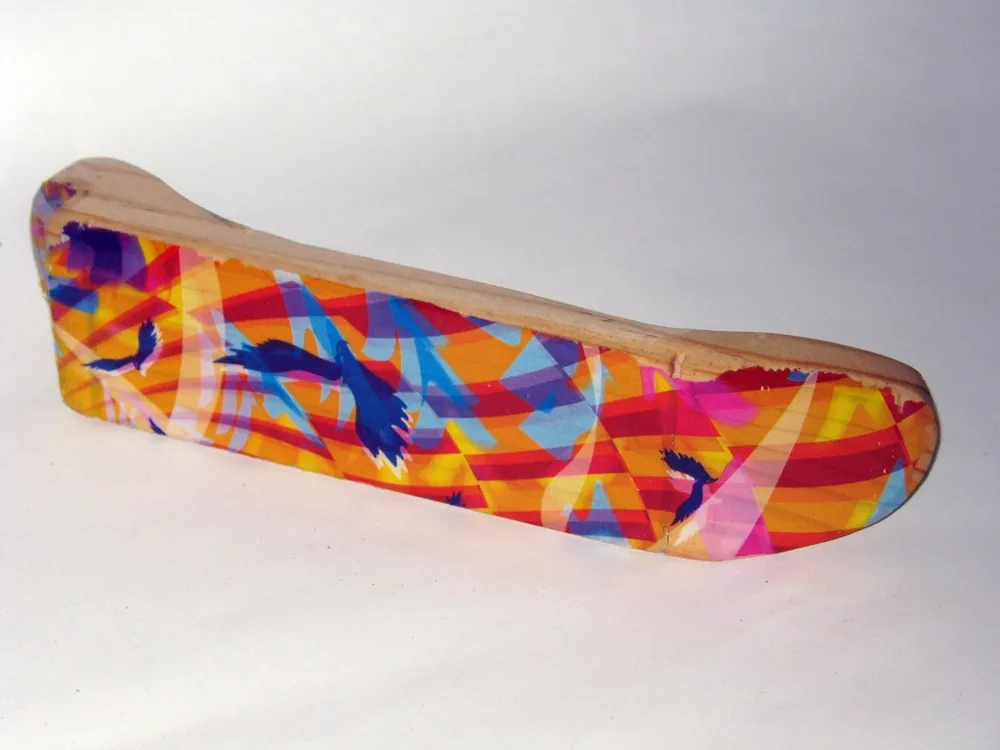
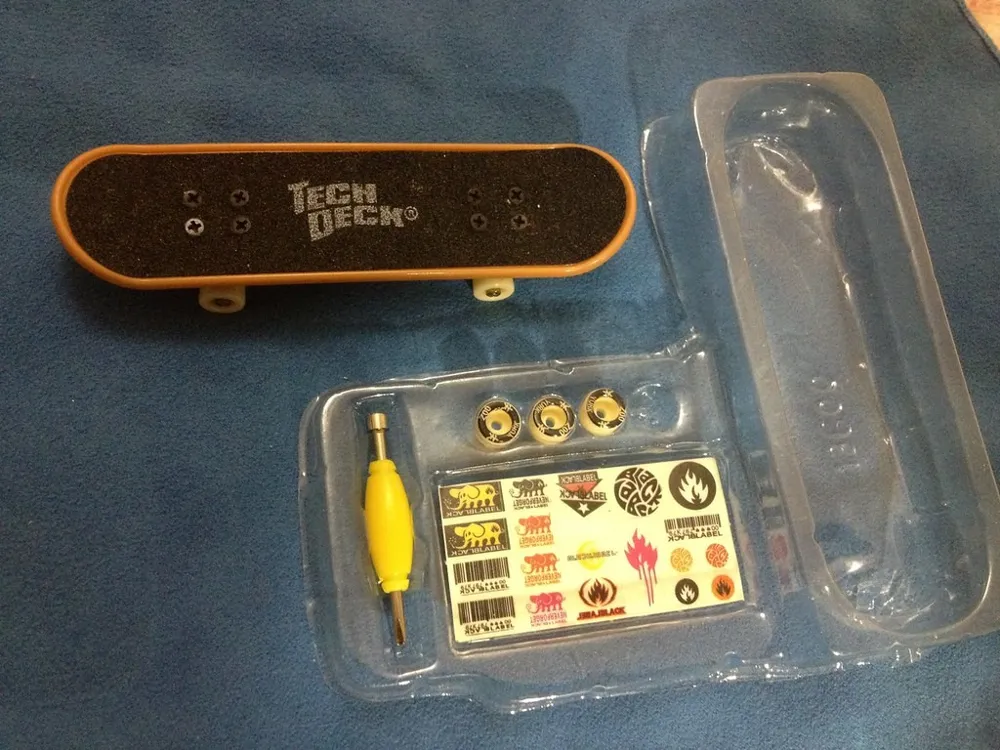
Standard Tech Deck boards are plastic with sandpaper-like grip. They're durable and fine for casual play, but they lack the real concave of a wooden deck. Pro decks are pressed wood, usually maple or beech, shaped like a real deck and much closer to the feel of a real skateboard deck. Wooden boards are what most dedicated fingerboarders ride.
The exception is polycarbonate: pro brands such as FlatFace also sell polycarbonate decks, so plastic doesn't automatically mean toy. If you want one upgrade that changes the most, go from a plastic toy deck to a wooden complete.
Trucks, Bushings and Bearing Wheels
Fingerboard parts mirror a real skateboard's anatomy:
- Trucks: pro trucks are metal, mount with four screws each and have an adjustable kingpin. The tool that comes with most completes tightens both.
- Bushings: small interchangeable pieces in the trucks that set how hard or easy the board turns. It's the same idea as truck tightness on a real board.
- Wheels: toy boards usually have plain plastic wheels. Pro wheels have real ball bearings inside, about 7 to 8 mm in diameter, and are made from urethane or durable plastic. Bearing wheels roll more smoothly than plain toy wheels.
"Bushing wheels" and "bearing wheels" get mixed up in listings. Bushings are part of the trucks; bearings are inside the wheels. A good complete has adjustable bushings and bearing wheels.
Grip Tape: Foam vs Sandpaper-Style
Toy boards use a fine, sandpaper-style grip. Pro boards use thin adhesive foam tape from brands such as FlatFace and Riptape. Foam is the most common choice on pro setups for grip and comfort. Tape is sold separately, so a worn board can be re-taped, much like a full-size deck with skateboard grip tape.
Ramps, Obstacles and Parks

Fingerboarding on a table works, but obstacles are where it comes alive. The common types mirror real skate spots:
| Obstacle | What You Practice |
|---|---|
| Box or ledge | Grinds and slides |
| Rail and stairs | Boardslides, ollies down gaps |
| Quarterpipe or funbox | Transitions and airs |
| Mini ramp or bowl | Kick turns, stalls and lip tricks |
Tech Deck's X-Connect plastic sets are easy for kids to build and expand. Wooden or brick-style obstacles from specialist makers like Blackriver feel closer to real spots and suit wooden pro boards. Start with one box or ledge and add pieces as your tricks grow, the same way skaters build a backyard setup with skateboard ramps.
Basic Fingerboard Tricks to Learn First
Fingerboard tricks share names and logic with skateboard tricks, so the same learning order works. Your fingers do the job of your feet: one pops the tail, the other guides the board.
- Ollie: the foundation. Tutorials commonly suggest spending a week or two on the ollie alone before moving on.
- Shove-it and pop shove-it: the board spins 180 degrees under your fingers.
- Kickflip and heelflip: your first flip tricks.
- Manuals: balance on the back or front wheels.
- Grinds: 50-50, 5-0, nosegrind and smith grind on a ledge or rail.
- Slides: boardslide, noseslide and tailslide.
For what each trick is and how they connect, see our skateboard tricks in learning order and types of skateboard grinds.
Fingerboard Brands at a Glance
| Brand | Origin | Known For |
|---|---|---|
| Tech Deck | US (1998) | Mass-market boards, ramp sets, licensed skate-brand graphics |
| Berlinwood | Germany (1999) | Hand-pressed wooden decks and completes |
| Blackriver / BRR | Germany (2003) | Obstacles, parks and pro trucks |
| FlatFace | US (2007) | Foam tape, decks, trucks and wheels |
| Bollie | Germany | Decks and beginner completes |
| Oak | US | Pro fingerboard wheels |
Origins and founding years are as reported by fingerboard retailers' brand histories. Mixing brands is normal: a Berlinwood deck with Blackriver trucks and FlatFace tape is a typical custom setup. Many fingerboard graphics come from real skate companies; see our guide to skateboard brands.
Age Suitability and Small Parts
Tech Deck boards and X-Connect ramp sets we checked are listed for ages 6 and up, and Blackriver's brick box listing is aimed at older kids and youth. Pro completes from Blackriver and Berlinwood list no age on the maker pages we checked, but they come with tiny screws, wheels and a tool. Keep loose parts away from toddlers and pets, and follow the age grading on the package. For older kids and adults, fingerboarding is a good rainy-day or travel companion to the real thing; see can you skateboard in the rain.
How to Choose Your First Fingerboard
- For a young kid: a Tech Deck board or an X-Connect set with a board included.
- For a first "real" board: a wooden complete with bearing wheels and foam tape in about 32 mm.
- For adults or skaters: a 33 to 34 mm wooden or polycarbonate setup from a pro brand, plus one box or ledge.
- Upgrade order: wooden deck first, then bearing wheels, then foam tape and better trucks.
Frequently Asked Questions
What size fingerboard should I get?
Most fingerboards are about 29 to 34 mm wide, and 32 mm is a common all-round width. Narrower boards around 29 to 30 mm suit smaller fingers, while 33 to 34 mm boards feel more stable and closer to a real skateboard.
Are wooden fingerboards better than plastic ones?
Wooden decks have real concave and are what most serious fingerboarders ride. Plastic boards like standard Tech Decks are fine for kids and casual play, and some pro brands also make polycarbonate decks.
What is the difference between bearing wheels and bushing wheels?
Bearing wheels have tiny ball bearings inside, so they roll more smoothly than plain plastic wheels. Bushings are small parts in the trucks that control how easily the board turns; most completes include both.
What age are fingerboards for?
Tech Deck boards and ramp sets we checked are listed for ages 6 and up. Pro completes come with small screws, wheels and a tool, so keep them away from toddlers and follow the age grading on the package.
Is Tech Deck a good fingerboard brand?
Tech Deck is the best-known mass-market brand and a good way to start. Riders who get hooked usually move to wooden pro completes from brands such as Blackriver, Berlinwood or FlatFace.
What is the first fingerboard trick to learn?
The ollie. Almost every flip trick and grind starts from it, so spend time on clean ollies before moving to shove-its and kickflips.