How Does a Snorkel Work? The Simple Science of Breathing Face-Down (2026)
A snorkel is just a tube, but its length, width and valves are carefully designed. Here's how it lets you breathe at the surface, why it can't be longer, and how to clear it.
How a Snorkel Works in One Sentence
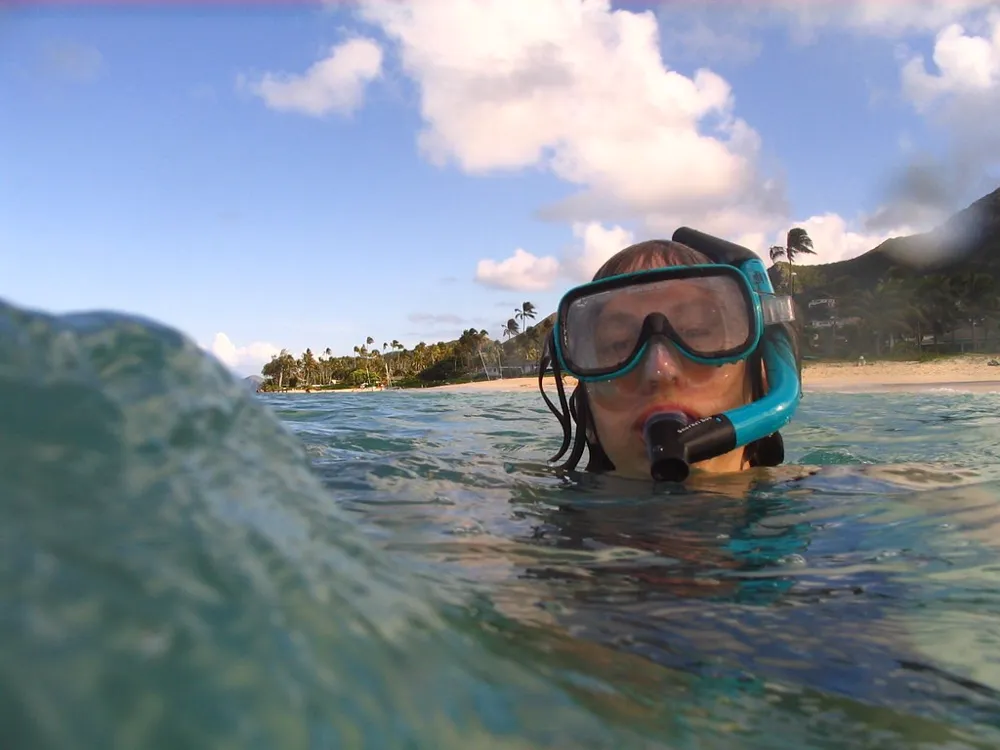
A snorkel is a tube that lets you breathe air from above the water while your face is down in the water, so you can float and watch the underwater world without lifting your head. You breathe through your mouth via the mouthpiece; the top of the tube stays above the surface.
It does not let you breathe underwater. When you dive down, water fills the tube, and you hold your breath until you surface and clear it. New to snorkeling? Start with how to snorkel.
The Parts of a Snorkel
| Part | Where | What It Does |
|---|---|---|
| Barrel (tube) | The main tube | Carries air between the surface and your mouth |
| Mouthpiece | Bottom | Soft silicone or rubber you grip with bite tabs |
| Keeper or clip | About halfway up | Attaches the snorkel to your mask strap |
| Splash guard | Top (semi-dry snorkels) | Deflects spray and small waves |
| Dry valve | Top (dry snorkels) | A float-operated valve that seals when submerged |
| Purge valve | Bottom, below the mouthpiece | A one-way valve that lets water drain out when you exhale |
| Flexible section | Lower tube (some models) | Lets the mouthpiece drop away from your face |
The Physics: Why Snorkels Are Short
Water Pressure on Your Chest
It might seem that a longer tube would let you breathe deeper underwater. It doesn't. When your chest is underwater, water pressure squeezes it, but the air in the snorkel is at normal surface pressure. Even a foot or two below the surface, your breathing muscles struggle to expand your lungs against that difference. Trying to breathe through a long tube at depth is very difficult and can even cause dangerous fluid buildup in the lungs.
Dead Air Space
When you exhale, the last part of your breath stays in the tube, and on your next inhale you breathe that stale air back in first. This "dead space" means a bigger snorkel recycles more exhaled air, which can raise the carbon dioxide you breathe. Breathing slowly and deeply reduces the effect.
The Balance: Length and Width
| Design Choice | Benefit | Drawback |
|---|---|---|
| Longer tube | Top stays clear of waves | More dead air; heavier to breathe through |
| Shorter tube | Less dead air | Waves more likely to wash in |
| Wider bore | Easier to breathe through | More dead air and more water to clear |
| Narrower bore | Less dead air | More breathing resistance |
A good rule of thumb from dive writers: the snorkel should reach from your mouth to just over the top of your head.
Safety Standards
The European standard EN 1972 limits snorkel size:
| Class | Max Length | Max Internal Volume |
|---|---|---|
| Class A (adults) | 38 cm | 230 cc |
| Class B (smaller users, such as children) | 35 cm | 150 cc |
Over the years, standards have nearly halved the maximum length, from about 60 cm to 38 cm, while allowing wider bores.
Types of Snorkels
| Type | How It Works | Best For |
|---|---|---|
| Classic (J-shaped) | An open tube, usually with no valves | Simplicity, freediving, experienced snorkelers |
| Semi-dry | Splash guard on top, often a purge valve | Most recreational snorkelers |
| Dry | Float valve seals the top when submerged, plus a purge valve | Beginners and choppy surface water |
| Flexible | A flexible lower section | Scuba divers who keep the snorkel clear of the regulator |
| Front-mounted | The tube runs up the center of the face | Lap swimming and finswimming |
| Full-face mask | Mask and snorkel combined; breathe through nose and mouth | Casual surface snorkeling only |
Compare valves in dry vs. semi-dry snorkels.
What Makes a Snorkel Breathe Well
- Right length: from your mouth to just over the top of your head. Too short lets water in; too long adds breathing effort.
- Right bore: the widest tube isn't always best. Smaller snorkelers move less dead air through a narrower bore.
- Smooth interior: a smooth inner wall breathes more easily than a ridged one, and flexible sections should be stiff enough not to collapse.
- Comfortable mouthpiece: snorkel mouthpieces generally aren't interchangeable, so pick one that fits your mouth from the start.
- Valve trade-off: a dry top keeps water out but adds a little breathing resistance.
How a Dry Snorkel Keeps Water Out
A dry snorkel's top valve contains a float. When the top dips underwater, the float rises and presses the valve shut, sealing the tube. When you surface, the float drops and the valve opens again. Any water that gets in drains through the purge valve at the bottom when you exhale.
Cressi Supernova Dry
A dry snorkel with a top valve that seals underwater and a purge valve at the bottom, a common pick for beginners.
Check Price on AmazonCressi Gamma
A semi-dry snorkel with a splash guard on top, without a sealing dry valve.
Check Price on AmazonSee more in the best snorkel sets and the best snorkel masks.
How to Clear a Snorkel
The Blast Method
- At the surface, with your face in the water, exhale sharply and forcefully through the snorkel.
- The burst of air shoots the water out of the top.
- Take your next breath slowly and cautiously in case a little water remains, then blast again if needed.
This is the only option when a wave or splash floods the snorkel at the surface.
The Displacement Method
- After a dive, tilt your head back and look up as you rise toward the surface.
- Exhale gently into the snorkel as you ascend, filling it with air.
- When you reach the surface, return your face to the water; most of the water has been pushed out.
Displacement takes less effort but needs practice, and it works best with snorkels that don't have a self-draining mouthpiece. With a purge valve, simply exhaling moves water out through the valve.
Full-Face Snorkel Masks
Full-face masks combine the mask and snorkel so you can breathe naturally through your nose and mouth. They're popular with casual snorkelers, but there are cautions:
- After an unusually high number of snorkeling deaths in Hawaii in 2019, some suspected that certain mask designs might let carbon dioxide build up. That link hasn't been confirmed.
- You can't equalize ear pressure in most full-face masks, so they're not for diving down.
- They can be harder to remove quickly in an emergency.
- A British standard for full-face snorkel masks, BS 8647, was introduced in 2024.
See full-face snorkel masks for more.
A Short History of the Snorkel
| When | Milestone |
|---|---|
| Ancient Greece | Aristotle describes divers using "instruments for respiration" compared to an elephant's trunk |
| 15th century | Leonardo da Vinci sketches breathing tubes |
| 1929 | An early US patent application for a swimming breathing tube |
| 1938–1940 | French inventors patent front- and side-mounted swim snorkels |
| World War II era | German submarines use the Schnorchel air intake, which gives the snorkel its name |
| 1969 | Britain publishes BS 4532, the first national snorkel standard |
| 2024 | BS 8647, the first full-face snorkel mask standard, is introduced |
Snorkeling Safety
- Don't hyperventilate before diving down. Divers Alert Network (DAN) advises no more than one or two deep breaths before going under, because hyperventilating can lead to blackout during a breath-hold.
- Never snorkel alone; always go with a buddy.
- Wear a snorkel vest or life jacket, especially if you're not a strong swimmer. See snorkel vests.
- Check local conditions and stay in marked areas away from boat traffic.
- Know your health: DAN notes heart conditions and high blood pressure raise the risk of sudden cardiac arrest and swimming-induced pulmonary edema; talk to a doctor if you have concerns.
- Avoid remote sites until you're experienced.
Related Guides
Gear up with snorkel fins, plan a trip with the best places to snorkel, and compare snorkeling vs. scuba diving.
Frequently Asked Questions
Can you breathe underwater with a snorkel?
No. A snorkel only lets you breathe air from above the surface while your face is in the water. When you dive below the surface, the snorkel fills with water and you hold your breath.
Why can't snorkels be longer?
Two reasons. Water pressure on your chest makes it much harder to inhale even a foot or two below the surface, and a longer tube holds more stale exhaled air that you'd breathe back in. Safety standards limit adult snorkels to about 38 cm.
How long is a snorkel?
Under the European standard EN 1972, adult snorkels can be up to 38 cm long with up to 230 cc of internal volume, and snorkels for smaller users up to 35 cm and 150 cc.
How do you clear water from a snorkel?
Use the blast method, a sharp, forceful exhale through the snorkel, or the displacement method, tilting your head back as you surface and exhaling so air pushes the water out. Take your next breath cautiously in case some water remains.
How does a dry snorkel work?
A float-operated valve at the top seals the tube when it goes underwater, keeping most water out. When you surface, the valve opens again so you can breathe.
What's the difference between a dry and semi-dry snorkel?
A semi-dry snorkel has a splash guard on top that deflects waves and spray but doesn't seal. A dry snorkel adds a valve that closes completely when submerged. Both usually have a purge valve at the bottom.
Can you breathe through your nose with a snorkel?
Not with a standard snorkel and mask, because the mask covers your nose. You breathe through your mouth. Full-face snorkel masks let you breathe through your nose and mouth.
Are full-face snorkel masks safe?
They're popular, but some experts have raised concerns that some designs may let carbon dioxide build up, a link that hasn't been confirmed. They also can't be equalized for diving and can be harder to remove quickly. If you use one, choose a reputable brand and snorkel cautiously.
Where does the word snorkel come from?
From the German Schnorchel, the air intake tube that let submarines run their diesel engines while just below the surface.