Best Beach Umbrellas That Won't Blow Away (2026)
Wind-ready beach umbrellas from beachBUB, Tommy Bahama, Sport-Brella and AMMSUN, with a guide to anchors, the new ASTM safety label and sun protection.
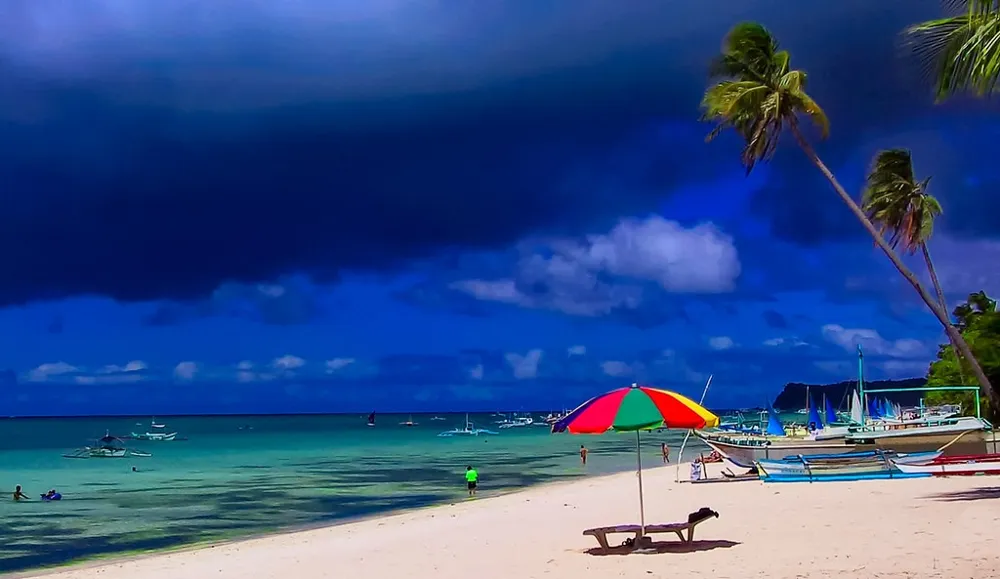
Beach Umbrellas That Stay Put
A beach umbrella is the quickest way to make your own shade. It goes up in a few minutes, packs into a bag and leaves room for chairs and a cooler underneath. The catch is wind. A canopy is a sail on a stick, and an umbrella pushed into loose sand can lift out in one gust and tumble down the beach.
That is why this guide puts anchoring first. Every pick below has a plan for staying in the sand: a sand-filled base, a built-in auger, a screw-in anchor, or stakes and side panels. We also cover the ASTM F3681 label that now appears on some beach umbrella anchors, how to set up safely, and how much sun protection an umbrella really gives. Product details come from each maker's listing; check the current listing before you buy, since specs change.
beachBUB All-in-One Beach Umbrella System
Best for windy beaches
- ULTRA base listed as ASTM F3681-24 compliant
- Sand-filled base, no digging deep
- 7.5 ft canopy, UPF 50+
Tommy Bahama AnchorX Beach Umbrella
Best classic tilting umbrella
- Built-in AnchorX sand anchor
- Wind vents and tilt
- 7 ft UPF 50+ canopy
Sport-Brella Super-Brella
Best for shade and wind blocking
- 8 ft canopy with side panels
- Two zippered vent windows
- Upright or leaning setup
Beach Umbrellas Compared
| Umbrella | Canopy | Anchoring | Tilt | Wind Features | Best For |
|---|---|---|---|---|---|
| beachBUB All-in-One | 7.5 ft, UPF 50+ | ULTRA sand-filled base (listed as ASTM F3681-24 compliant) | No | Heavy base; listed as wind tested to 44 MPH | Windy beaches, rental-free setups |
| Tommy Bahama AnchorX | 7 ft, UPF 50+ | Built-in AnchorX system | Yes | Wind vents | Couples, classic umbrella feel |
| Sport-Brella Super-Brella | 8 ft, UPF 50+ | Pole tip in sand; some versions listed with stakes and tie-downs | Lean-back setup | Side panels, zippered windows | Families, sun from one side |
| AMMSUN 7 ft High Wind | 7 ft, UPF 50+ | Removable screw-in sand anchor included | Yes (push button) | Vent, fiberglass ribs | All-round use, anchor in the box |
| AMMSUN 7.5 ft Ash Wood | 7.5 ft, UPF 50+ | Sand anchor sold separately | No tilt listed | Vent, fiberglass frame | Wood-pole look |
| Sport-Brella Versa-Brella | About 38 x 39 in | Clamps to a chair, cooler or wagon | 4-way swivel | Small, low profile | Shade over one chair |
| AMMSUN Sand Anchor | Accessory | 5-spiral screw anchor | n/a | Fits poles up to 1.5 in | Upgrading an umbrella you already own |
The Best Beach Umbrellas
1. beachBUB All-in-One Beach Umbrella System
The beachBUB is built around its base rather than its canopy. Instead of digging the pole deep, you fill the ULTRA base with sand; it is reported to hold up to about 125 lb of sand, and the pole sits in it. The Amazon listing says the ULTRA base is compliant with ASTM F3681-24, the beach umbrella safety standard, and that the system has been wind tested up to 44 MPH. The canopy is a 7.5 ft UPF 50+ design on an aluminum pole, and the system ships with a carrying case.
The listing covers the frame with a 3-year warranty and the ULTRA base with a lifetime warranty. Note that this umbrella does not tilt, so you move the whole setup as the sun moves, and it needs sand to fill the base, so it is less useful on grass or pebbles.
Good to Know
- Base listed as ASTM F3681-24 compliant
- No deep digging; filling the base does the work
- Long warranty on the base, per the listing
Watch Out For
- No tilt
- Heavier to carry than a basic umbrella (about 9 lb reported)
- Needs sand to work
2. Tommy Bahama AnchorX Beach Umbrella
This is the classic beach umbrella shape with a smarter anchor. The 7 ft canopy is listed with UPF 50+ sun protection, and Tommy Bahama's patent-pending AnchorX system works with built-in wind vents that let air move through the top of the canopy. A tilt function and a telescoping pole let you chase the shade through the afternoon without pulling the umbrella up.
The listing describes powder-coated steel ribs and a polyester canopy, and it comes with a carrying bag. It is a good fit for two people who want a quick, familiar umbrella that holds better than a bare pole.
Good to Know
- Anchor built into the design
- Vented canopy and tilt
- Carry bag included
Watch Out For
- Smaller shade than a family shelter
- Listing does not mention an ASTM F3681 label; check the current listing
3. Sport-Brella Super-Brella
The Super-Brella sits between an umbrella and a tent. Its 8 ft UPF 50+ canopy has Sport-Brella's signature side panels, which you can drop to block low sun and wind from one side, plus two zippered windows to let air through so it is less likely to tip in a breeze. A silver-colored liner helps reflect heat, and the telescoping pole lets you set it upright or leaning back like a shelter.
Sport-Brella's wholesale listings describe it at roughly 8 to 9 lb with a carry bag, folding to about 54 inches long. Some versions are listed with steel ground stakes and tie-down cords; others rely on a low-profile pole tip, so check what is included in the box you buy. In wind, staking and guying it out matters more than with a vented umbrella, because the side panels catch air.
Good to Know
- Most shade of our picks
- Side panels for wind and low sun
- Upright or leaning setup
Watch Out For
- Side panels catch gusts if not staked
- Included anchoring varies by version
4. AMMSUN 7 ft High Wind Beach Umbrella With Sand Anchor
If you want an anchor in the box without paying for a premium system, this AMMSUN umbrella comes with a portable, removable sand anchor that screws into the sand and then takes the pole. The listing describes a UPF 50+ polyester canopy with a silver UV coating, an aluminum pole (1.10 and 1.26 inch sections) with height adjustment, 8 fiberglass ribs, an air vent and a push-button tilt that tilts two ways.
A sewn-in strap and a carry bag keep it tidy when packed, and the anchor folds to fit in the bag. Fiberglass ribs are designed to flex in gusts rather than stay rigid.
Good to Know
- Screw-in anchor included
- Tilt and vent
- Fiberglass ribs
Watch Out For
- Listing does not mention an ASTM F3681 label
- Standard two-person shade size
5. AMMSUN 7.5 ft High Wind Beach Umbrella With Ash Wood Pole
This one is for people who like the look of a resort umbrella. It pairs an ash wood pole with a fiberglass frame, and the upper and lower pole sections join with a steel ball and a thickened aluminum cover. The UPF 50+ polyester canopy is listed as water-resistant, and an air vent helps stability in wind. It comes with a carry bag with a widened shoulder strap.
The anchor is not included: AMMSUN recommends its separate sand anchor (below), and you should plan on one, since a pole alone is the weakest way to hold an umbrella in sand.
Good to Know
- Wood pole look with fiberglass ribs
- Vented canopy
- Larger 7.5 ft canopy
Watch Out For
- Sand anchor sold separately
- No tilt mentioned in the listing
6. Sport-Brella Versa-Brella
Not every beach day needs a full umbrella. The Versa-Brella is a small clamp-on shade with a canopy of about 38 x 39 inches at its widest, weighing about 1.8 lb, per Sport-Brella. Its heavy-duty clamp opens to 1.5 inches and fits round and square tubes, so it can attach to a beach chair, cooler, wagon or bleacher. A four-way swivel with push-button hinges aims the shade, and the canopy has a UPF 50+ silver liner.
It shades one person, not a group, and anything it clamps to has to be stable. It pairs well with a beach chair when you walk a long way and want to travel light.
Good to Know
- Very light and compact
- Clamps to chairs, coolers and wagons
- Swivels to follow the sun
Watch Out For
- Shade for one person
- Only as steady as what it clamps to
7. AMMSUN Beach Umbrella Sand Anchor
If you already own an umbrella, a screw-in anchor is the cheapest upgrade. This one is made of ABS plastic, which will not rust, with a 5-spiral screw that you twist into the sand. It fits umbrellas with a pole diameter of 1.5 inches or less and holds the pole with a thumbscrew. It is light enough to carry in a beach bag and also works in lawns and gardens.
The listing does not mention ASTM F3681, so it is a general anchor rather than a labeled, standard-tested one. Check that your pole fits before buying.
Good to Know
- Upgrades almost any umbrella
- Rust-free plastic
- Small and light
Watch Out For
- No ASTM F3681 label mentioned
- Poles over 1.5 in won't fit
Beach Umbrella vs Canopy vs Tent
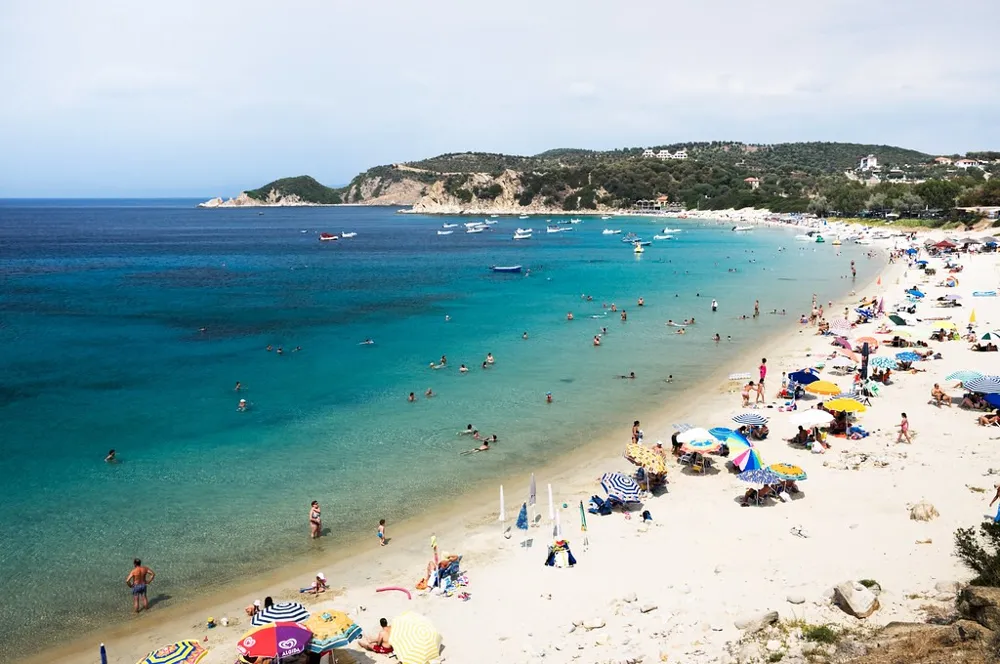
Before you choose a model, make sure an umbrella is the right kind of shade. Here is how the main options compare:
| Beach Umbrella | Umbrella Shelter (Side Panels) | Open Canopy | Beach Tent | |
|---|---|---|---|---|
| Shade area | Small to medium | Medium | Large | Medium |
| Wind protection | None | From one side | Little | Good |
| Setup time | Fastest | Quick | Moderate | Moderate |
| Carry weight | Lightest | Light to moderate | Moderate | Moderate |
| Follows the sun | Tilt or move it | Lean it | Reposition | Reposition |
| Privacy | No | Partial | No | Yes |
An umbrella suits one or two people who want shade fast. Groups, families with nappers and anyone on a very windy coast may do better with a canopy or tent; see our beach tent guide for those. Also check local rules: some beaches limit canopy size or tents.
How to Choose a Beach Umbrella
Canopy Size and Shade
Beach umbrella sizes often refer to the arc (measured over the top of the canopy), so the actual shadow on the ground is smaller than the number suggests. A 7 to 7.5 foot canopy is the common size for two people with chairs. For a family, look at umbrella shelters with side panels or a canopy. For one chair, a clamp-on umbrella is enough. Remember the shadow moves through the day and stretches out in the late afternoon.
Anchoring
This is the most important feature. The options, from weakest to strongest in most sand:
- Pole tip only: pushed or twisted into the sand. Fine on a calm day if buried deep, weak in gusts.
- Screw-in sand anchor: a corkscrew auger that you twist in, then drop the pole into. Cheap and effective.
- Built-in anchor: an auger or anchor system designed into the pole, as on the Tommy Bahama AnchorX.
- Sand-filled base: a bag or base you fill with sand, as on the beachBUB. It uses the weight of the sand rather than depth.
- Stakes and tie-downs: used on shelters with side panels; guy lines add a lot of hold.
Look for an anchor labeled for ASTM F3681 if you can find one (more below).
Wind Vents
A vent is a second, raised layer of fabric at the top of the canopy. It lets air escape upward instead of building pressure under the canopy, which helps the umbrella stay down and reduces the chance of it turning inside out. Most beach-specific umbrellas now have one.
Pole and Ribs
- Aluminum poles are light and resist rust.
- Wood poles look classic and are stiff, but need to be dried after use.
- Fiberglass ribs flex in gusts and spring back; steel ribs are stiffer and may bend if overloaded.
- Telescoping poles let you set the height for chairs or lounging on a towel.
Tilt
A tilt joint lets you angle the canopy toward low sun or into the wind without moving the pole. Push-button tilts are the easiest to use. Umbrellas without tilt, such as the beachBUB, have to be repositioned as the sun moves.
Fabric and UPF Rating
Look for a UPF 50+ canopy. Polyester is the common fabric, and some canopies add a silver liner or coating that reflects heat. A water-repellent finish helps the umbrella double as rain cover.
Weight and Portability
You will carry the umbrella from the car, often with chairs and a cooler. Basic umbrellas are the lightest, while anchor systems and shelters add weight. A carry bag with a shoulder strap makes a big difference, and a beach wagon helps if you bring the whole kit.
Sand Anchors and the ASTM F3681 Standard
Flying beach umbrellas are a real hazard, not just an annoyance. A US Consumer Product Safety Commission (CPSC) safety poster estimates about 2,800 emergency room injuries from beach umbrellas between 2010 and 2018, and the CPSC has warned that airborne umbrellas have caused serious cuts, impalements and deaths.
In response, ASTM International published ASTM F3681, a voluntary consumer safety standard for beach umbrellas and anchor devices, in 2024 (F3681-24), with a revised version (F3681-25) following in 2025. According to the CPSC's 2024 safety alert:
- A compliant umbrella and anchor system must provide a resisting force of at least 75 lb, or stay secure in winds up to 30 MPH, when the compliant anchor is installed in sand.
- Compliant anchors carry a label stating that the anchor meets ASTM F3681 for wind speeds up to 30 MPH, and the label also gives the largest canopy area the anchor is suitable for.
- The safety level only applies when the anchor is actually installed and used as the maker describes.
The standard is voluntary, so many umbrellas and anchors on the market do not carry the label. When you buy or rent, the CPSC suggests choosing an anchor with the ASTM F3681 label and matching it to your canopy size. Treat 30 MPH as a design benchmark, not a promise: gusts can exceed it, and the CPSC still advises closing the canopy when the umbrella becomes unstable.
How to Set Up a Beach Umbrella in Wind
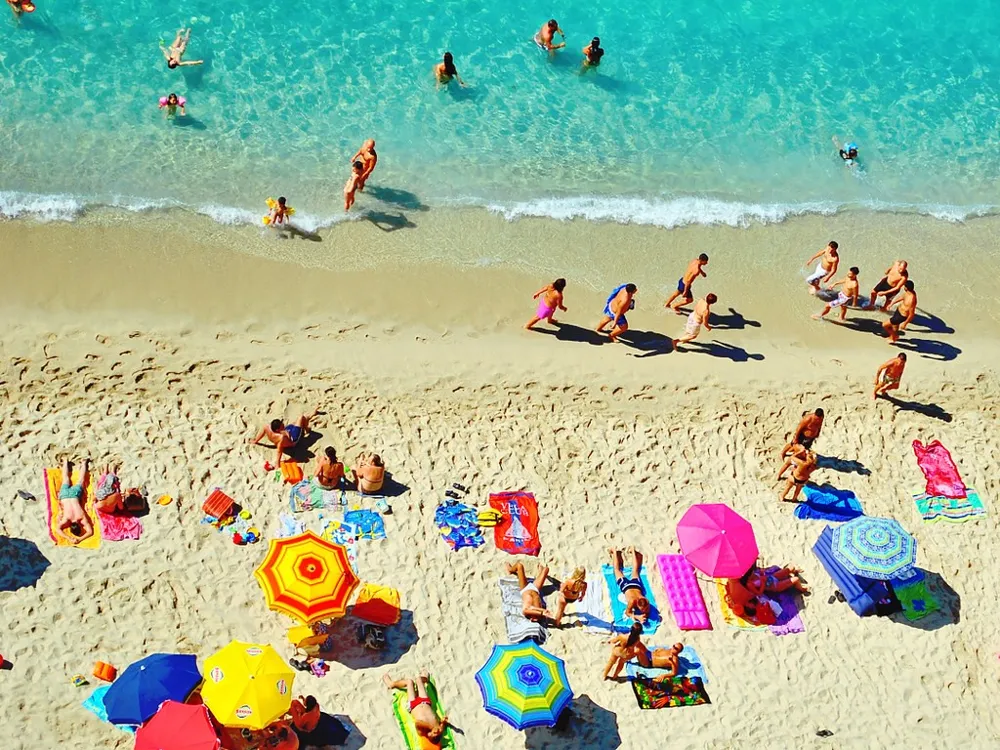
- Read the wind first. Check which way it is blowing before you unpack, and note how hard it is gusting.
- Install the anchor. Screw in the sand anchor or fill the sand base fully, following the maker's instructions. Check the anchor for cracks or damage first.
- Bury the pole deep. The CPSC advises rocking the pole back and forth to work it into the sand until it is buried at least 2 feet deep.
- Tilt into the wind. Angle the umbrella so the canopy faces into the wind, which helps keep air from getting underneath and lifting it.
- Open and lock the canopy. Make sure the runner and tilt joint are locked so the canopy can't flip.
- Stake and guy out shelters. For umbrellas with side panels, use the stakes and tie-down cords.
- Watch for gusts. If the umbrella starts to rock or lift, close the canopy right away and lay it down.
- Take it down to leave. Never leave an open umbrella unattended on a breezy day.
A common mistake is relying on the pole tip alone in dry sand, or pushing it only a few inches deep. Another is pointing the open side of the canopy into the wind, which turns it into a sail.
How Much Sun Protection Does an Umbrella Give?
A canopy's UPF (Ultraviolet Protection Factor) shows how much UV gets through the fabric. A UPF 50 fabric lets through about one-fiftieth of UV radiation, blocking about 98%. The Skin Cancer Foundation rates UPF 30 to 49 as very good protection and UPF 50+ as excellent.
But the shade under a canopy is not the whole story. In a 2017 randomized trial published in JAMA Dermatology, 81 people spent about 3.5 hours at midday on a Texas lake beach either under a beach umbrella or wearing SPF 100 sunscreen. About 78% of the umbrella group and 25% of the sunscreen group had some sunburn, and the authors concluded that neither method alone prevented sunburn completely. (The study was partly funded by the sunscreen's maker.)
The practical takeaway: use the umbrella and sunscreen, a hat and sunglasses, reapply sunscreen through the day, and drink plenty of water. If you'll be swimming near coral, our reef-safe sunscreen guide covers mineral options and water-resistance labels. For a deeper look at shelter fabrics, see the UPF section in our beach tent guide.
Care and Storage
- Close it before packing and shake out sand so grit does not wear the fabric or jam the tilt joint and runner.
- Rinse off salt with fresh water now and then, especially metal joints, springs and screws.
- Dry it fully before storing to prevent mildew, and dry wood poles so they do not swell or crack.
- Check the anchor and ribs before each trip; replace a cracked anchor or bent rib.
- Store it out of the sun. UV slowly breaks down canopy fabric and fades color, which can lower protection over time.
An umbrella is one part of a good beach day. Set a low beach chair in its shade, keep drinks cold in a beach cooler parked under the canopy, haul everything in a beach wagon, and bring a few beach games or a bodyboard for when you leave the shade. Before swimming, it is also worth reading up on rip currents.
Frequently Asked Questions
How do you keep a beach umbrella from blowing away?
Use a proper anchor: a screw-in sand anchor, a sand-filled base or a built-in auger, and bury the pole at least 2 feet deep. Tilt the canopy into the wind and close it right away when gusts pick up.
What is ASTM F3681?
It is a voluntary US safety standard for beach umbrellas and anchor devices, first published in 2024. Compliant anchors are labeled as meeting ASTM F3681 for wind speeds up to 30 MPH, along with the largest canopy they are meant for.
Can you get sunburned under a beach umbrella?
Yes. In a 2017 JAMA Dermatology study, most people sitting under a beach umbrella still had some sunburn after about 3.5 hours at midday. Use sunscreen, a hat and sunglasses in the shade too.
What size beach umbrella do I need?
A 7 to 7.5 foot canopy is the common size for two people. Pick larger shelters with side panels for families, and a small clamp-on umbrella if you only need shade over one chair.
Are vented beach umbrellas better in wind?
A vent lets air escape through the top of the canopy instead of lifting it, so vented umbrellas tend to be more stable. A vent does not replace a good anchor.
Is a beach umbrella or beach tent better?
An umbrella is faster to set up and lighter to carry, but gives less shade and no wind protection. A tent or canopy gives more shade for groups and privacy, but takes longer to pitch.
How deep should a beach umbrella go in the sand?
The CPSC advises burying the pole at least 2 feet deep, rocking it back and forth to work it down. Sand anchors and weighted bases make that easier and hold better than the pole tip alone.